Kitchen Gear Basics: A Common-Question Explainer
A general, educational look at how task fit, material care, cleaning, storage, and food-safety tools shape everyday kitchen-gear choices.
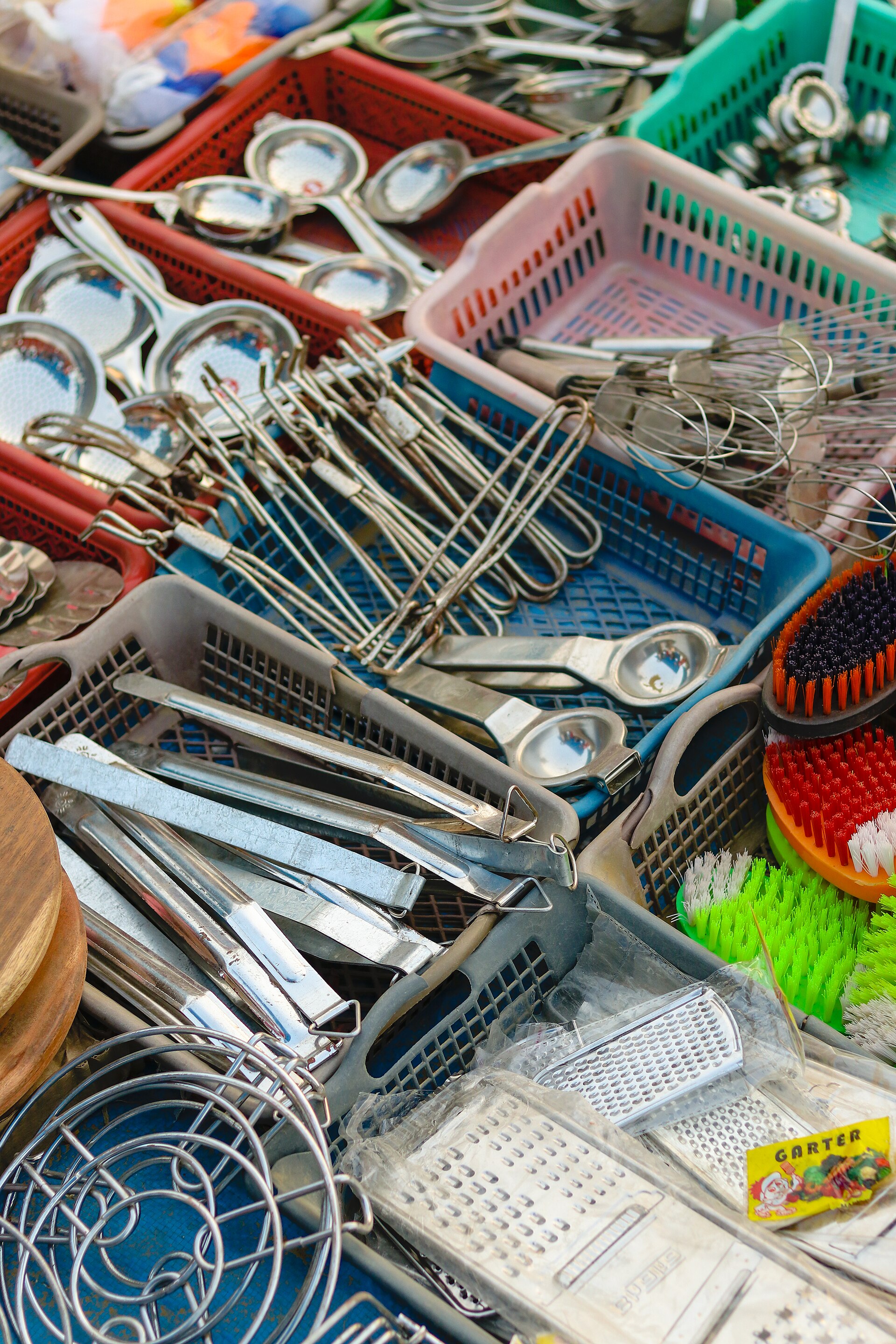
Cover: Own work · Wikimedia Commons · CC BY-SA 4.0
Question: What should people consider when choosing and maintaining basic kitchen gear?
Start with the tasks, not the tool count
A common first question is whether a kitchen needs many specialized tools or a smaller set that matches everyday cooking. Public food-safety and consumer resources tend to frame kitchen equipment around the tasks it supports: preparing ingredients, cooking, holding food, cleaning, and storing leftovers. A useful approach is to list the cooking methods and storage routines a household actually uses, then consider gear that fits those patterns and the available space. This can reduce duplicate purchases and make cleaning and storage easier to manage.
Compare materials and construction as trade-offs
Kitchen gear materials differ in weight, heat response, handle comfort, cleaning needs, and compatibility with a cooktop. Instead of treating one material as universally better, it can help to compare how a piece is built, whether its care instructions fit the household, and whether replacement parts or repairs are available. Manufacturer care guidance is important because finishes and coatings may have specific cleaning or use limitations. Public food-safety resources also emphasize that food-contact surfaces need to be cleanable and in good condition.
Plan for cleaning and storage from the beginning
Cleaning and storage are part of gear selection, not afterthoughts. Items that are hard to clean, trap moisture, or crowd counters may see less use. FoodSafety.gov and USDA FSIS materials highlight cleanliness in the kitchen and the importance of keeping food-contact surfaces clean. A practical educational lens is to consider whether an item can be cleaned according to its instructions, dried thoroughly, and stored without damaging edges or surfaces. Knife storage, cutting-board handling, and container organization are common examples where routine and space planning matter.
Include food-safety tools in the basic kit
Some kitchen gear supports food-safety awareness rather than cooking style. Public guidance from USDA FSIS and FDA discusses food thermometers, clean surfaces, and avoiding cross-contact between raw foods and ready-to-eat foods. Separate cutting boards or clear separation routines are often discussed as ways to reduce cross-contact risk. These tools are not a guarantee of safety on their own; they work alongside cleaning, refrigeration, and cooking practices described by public food-safety resources.
Avoid overbuying and keep care realistic
A common question is how to avoid drawers full of rarely used gadgets. One approach is to prioritize gear that is durable, easy to maintain, and suited to repeated tasks. Care instructions, warranty information, and available storage can matter as much as a novel feature. Rather than relying on promotional claims, it is reasonable to check whether an item fits existing cookware, cleaning routines, and storage. Replacing items thoughtfully, and repairing when practical, can be part of a less cluttered kitchen.