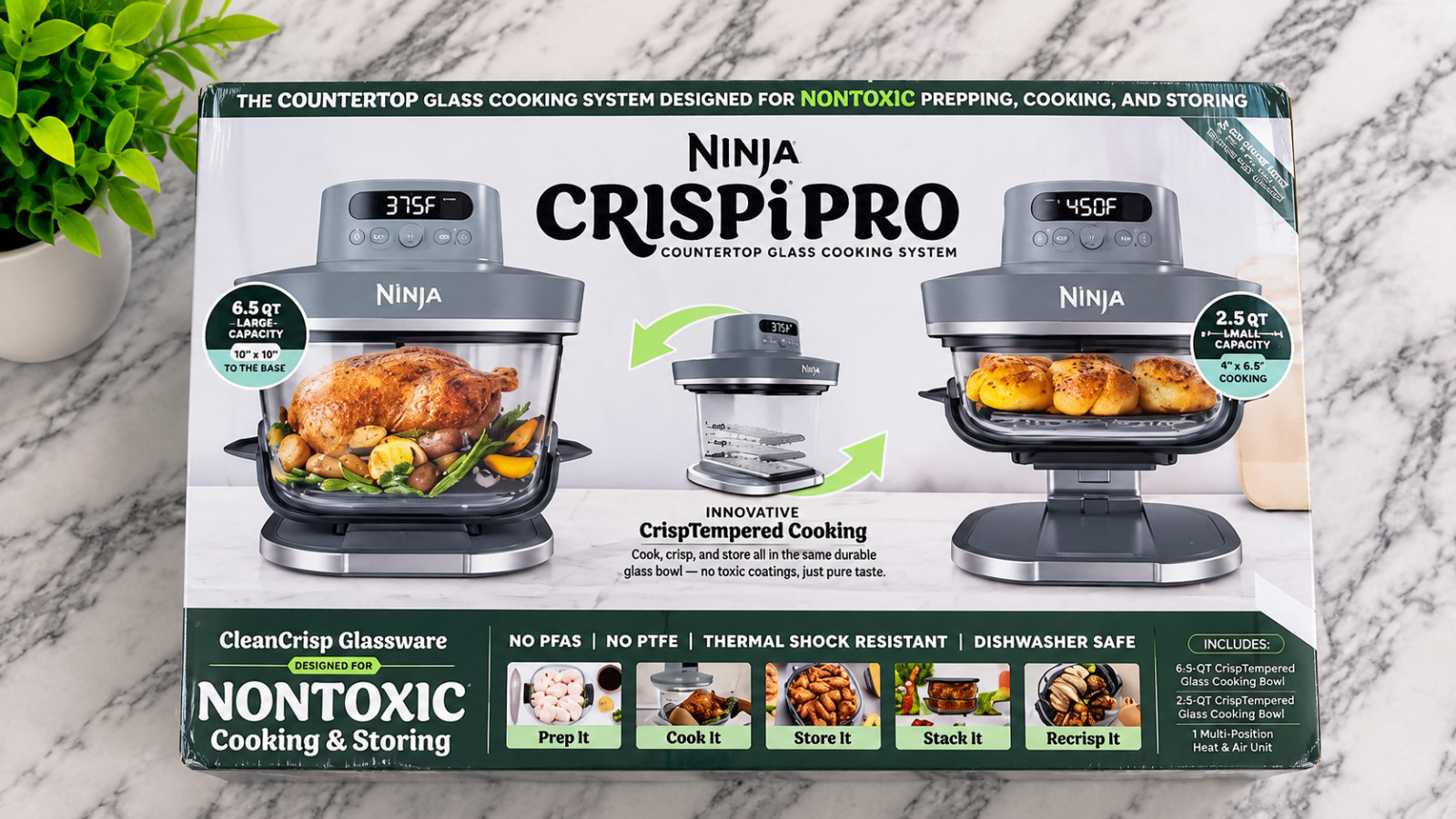

Photos from current listings. Actual item, color, and included accessories may vary.
Air Fryer Non Toxic Buying Guide
Non-toxic air fryers are countertop convection ovens built with food-contact surfaces free of PFAS, PFOA, lead, and cadmium, typically using ceramic, glass, or 304 stainless steel instead of PTFE nonstick coatings. The core trade-off is coating durability versus chemical safety: PTFE and generic nonstick release fumes above 500°F and degrade with scratches, while ceramic and stainless steel avoid fluoropolymers but demand gentler cleaning and can stick without oil. The decision rule is simple: choose a model with a fully ceramic or stainless food chamber and a glass or stainless basket, and reject any air fryer whose interior is unlisted 'nonstick' coated aluminum with no material disclosure.
Key takeaways
- Food-contact material tiers: ceramic-coated aluminum, borosilicate glass, and 304 stainless steel are the three non-toxic constructions; uncoated aluminum and PTFE-coated baskets are the compromise tier.
- Ceramic coatings are PTFE- and PFOA-free but can chip at 400°F+ with metal utensils; glass baskets are chemically inert and dishwasher-safe but heavier and more fragile.
- Stainless steel baskets (304 grade) are the most durable non-toxic option, resist scratching, and tolerate 450°F+ without off-gassing, but require oil for release.
At a glance
- Category
- Air Fryers
- Last updated
- Nov 28, 2026
Current offers
Highlights
- Food-contact material tiers: ceramic-coated aluminum, borosilicate glass, and 304 stainless steel are the three non-toxic constructions; uncoated aluminum and PTFE-coated baskets are the compromise tier.
- Ceramic coatings are PTFE- and PFOA-free but can chip at 400°F+ with metal utensils; glass baskets are chemically inert and dishwasher-safe but heavier and more fragile.
- Stainless steel baskets (304 grade) are the most durable non-toxic option, resist scratching, and tolerate 450°F+ without off-gassing, but require oil for release.
- Independent lab certifications to look for: FDA food-contact compliance, California Prop 65 lead/cadmium clearance, and third-party PFAS-free declarations on the coating or basket.
Best use cases
- Best fit: buy a glass-basket or stainless-steel-basket air fryer if you cook daily at 400°F+ and want zero coating-degradation risk; skip PTFE-coated units regardless of brand.
- Best fit: choose a ceramic-coated basket if you want nonstick release with PFAS-free chemistry and cook below 400°F; skip ceramic if you routinely use metal tongs or scour with abrasive pads.
- Wrong fit: avoid any air fryer with an unlabeled 'nonstick' interior or a plastic food chamber, especially for households with birds (PTFE fumes are lethal to avian pets) or chemical sensitivities.
Buying tips
- Match basket material to your cleaning style: ceramic coatings need soft sponges and hand washing; glass and 304 stainless tolerate dishwasher cycles and metal utensils.
- Size by household: 3–4 qt suits one to two people, 5–6 qt suits three to four, and 8 qt+ dual-basket units suit families or batch cooking; non-toxic materials add weight, so check unit weight before buying.
- Confirm the coating claim is specific: 'PFAS-free ceramic' or 'PFOA-free' on the spec sheet, not just 'non-toxic' in marketing copy; stainless steel should state 304 or 18/8 grade.
- Prefer models with a removable, dishwasher-safe basket and crisper plate in the same non-toxic material; mixed-material interiors (ceramic basket, PTFE rack) reintroduce the risk.
Specs
| Basket Material | Ceramic / Glass / 304 Stainless |
|---|---|
| Coating Chemistry | PFAS-free ceramic vs PTFE nonstick |
| Capacity Tier | 3–4 qt / 5–6 qt / 8 qt+ dual |
| Max Temp | 400–450°F (ceramic) / 450°F+ (steel) |
Related searches
What to check before buying
- Measure your counter footprint and clearance: most 5–6 qt air fryers run 11–13 in wide and need 4–6 in rear vent clearance; glass-basket units are heavier and taller.
- Check your electrical circuit: 1500–1700W models need a dedicated 15A outlet; dual-basket 1800W+ units may trip shared kitchen circuits.
- Verify food-contact materials in the manual or spec sheet: basket, crisper plate, and interior wall should all list ceramic, glass, or 304 stainless; reject unlisted 'nonstick'.
- Confirm replacement parts availability for the basket and crisper plate in the same non-toxic material before buying, since coating wear is the main failure point.
FAQ
Data sources: eBay / Amazon listings and product attribute feeds. Updated Nov 28, 2026.
Some links on this page are affiliate links. If you buy after clicking one, we may earn a commission at no extra cost to you. This does not change which products appear here or their order. Affiliate disclosure.