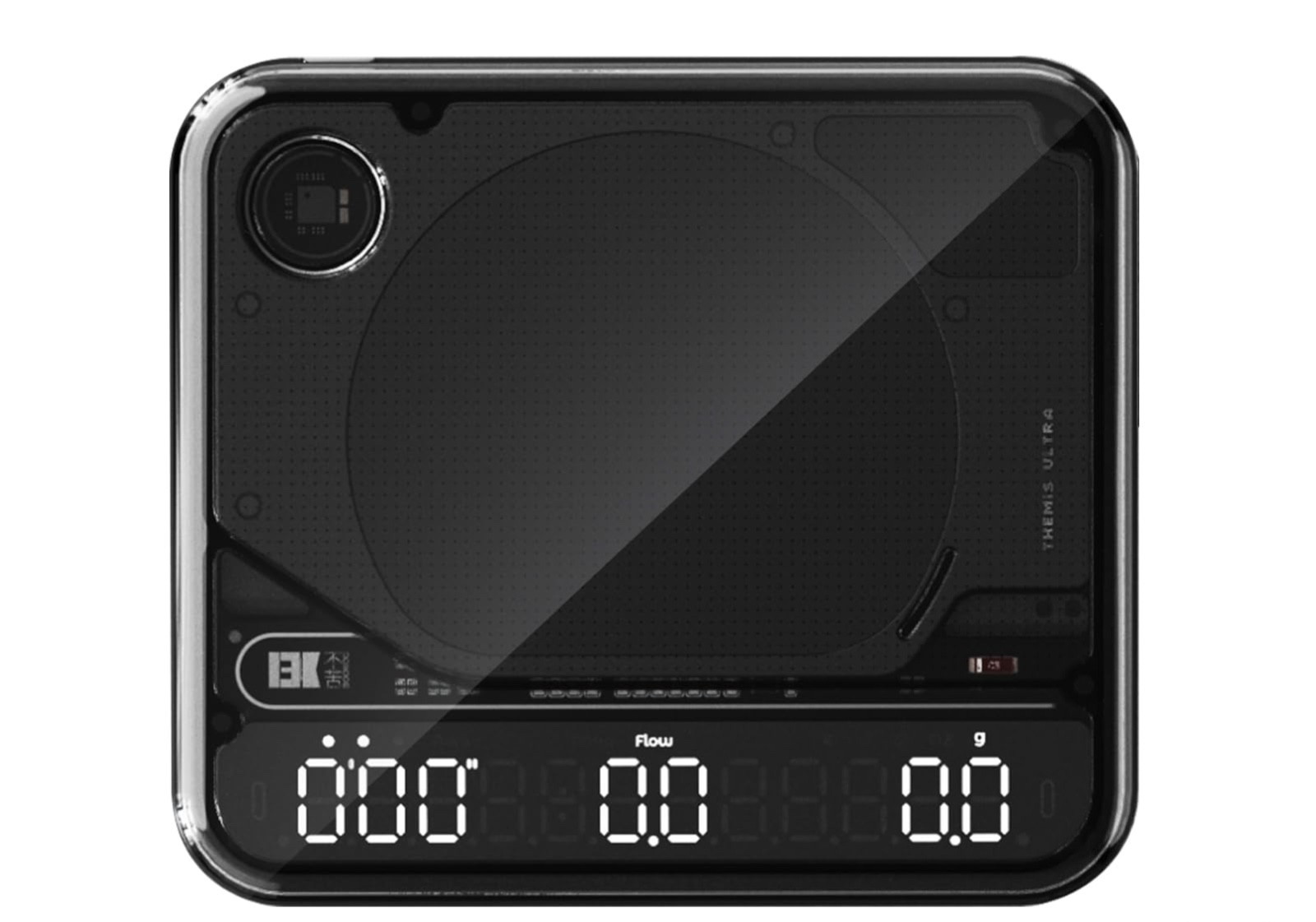

Photos from current listings. Actual item, color, and included accessories may vary.
Espresso Scale Buying Guide
An espresso scale is a compact, high-resolution digital scale built to weigh 18–20 g doses and 36–40 g yields in real time, where the decisive trade-offs are load-cell resolution, response speed, and brew-proof sealing. Buy a 0.1 g-resolution scale with a fast, stable readout and a flow-rate timer for dialing in; skip 1 g kitchen scales and slow Bluetooth-only designs that lag behind the shot.
Key takeaways
- 0.1 g resolution is the entry bar for espresso: a 1 g scale cannot resolve a 0.5 g yield drift that changes extraction time by seconds.
- Response speed separates tiers: fast load cells settle in under 0.5 s, while slow scales lag 1–2 s and hide the first drip of a 25–30 s shot.
- Sealing grades matter: IP67 or fully sealed housings survive steam and spills; open-button designs wick water into the load cell and fail within months.
At a glance
- Category
- Coffee Scales
- Last updated
- Nov 28, 2026
Current offers
Highlights
- 0.1 g resolution is the entry bar for espresso: a 1 g scale cannot resolve a 0.5 g yield drift that changes extraction time by seconds.
- Response speed separates tiers: fast load cells settle in under 0.5 s, while slow scales lag 1–2 s and hide the first drip of a 25–30 s shot.
- Sealing grades matter: IP67 or fully sealed housings survive steam and spills; open-button designs wick water into the load cell and fail within months.
- Flow-rate and auto-tare modes (e.g., Fellow Tally Pro, BOOKOO Themis) are firmware features, not hardware—confirm the mode exists before paying for a premium body.
Best use cases
- Best fit: pour-over and drip brewers wanting a single 0.1 g scale with a wide 1–2 kg capacity and a built-in timer—pick a sealed metal-top unit.
- Best fit: espresso-only setups dosing 18–20 g in and 36–40 g out—pick a compact 0.1 g scale with auto-tare and flow-rate display under 0.5 s response.
- Wrong fit: buying a 1 g kitchen scale to save space—it cannot resolve dose or yield changes and will produce inconsistent shots.
- Wrong fit: a large 3 kg+ capacity scale on a drip tray—the deck overhangs the tray, tips the cup, and blocks the portafilter.
Buying tips
- Match deck footprint to your drip tray: espresso scales run roughly 100–150 mm wide; measure tray clearance before buying a wider unit.
- Require 0.1 g resolution and at least 500 g capacity; 2–3 kg capacity suits pour-over but adds size that crowds espresso trays.
- Check response and stability specs: prefer scales that settle under 0.5 s and hold zero when the portafilter is set down.
- Choose IP67 or sealed metal-top construction for steam environments; Bluetooth is optional, since on-scale readouts beat phone lag during a shot.
Specs
| Resolution | 0.1 g (espresso minimum) |
|---|---|
| Response Time | Under 0.5 s settle |
| Sealing Grade | IP67 / sealed metal top |
| Capacity | 500 g–3 kg by use case |
Related searches
What to check before buying
- Measure drip tray width and height clearance: the scale plus cup must fit under the portafilter without tilting.
- Confirm the scale's deck size and weight fit your machine's tray rails so it sits flat and does not overhang.
- Verify the scale is rated for steam and spill exposure (IP67 or sealed buttons) if it lives on the espresso tray.
- Check the charging standard and battery type (USB-C rechargeable vs coin cell) and that a timer/auto-tare mode is included.
FAQ
Data sources: eBay / Amazon listings and product attribute feeds. Updated Nov 28, 2026.
Some links on this page are affiliate links. If you buy after clicking one, we may earn a commission at no extra cost to you. This does not change which products appear here or their order. Affiliate disclosure.