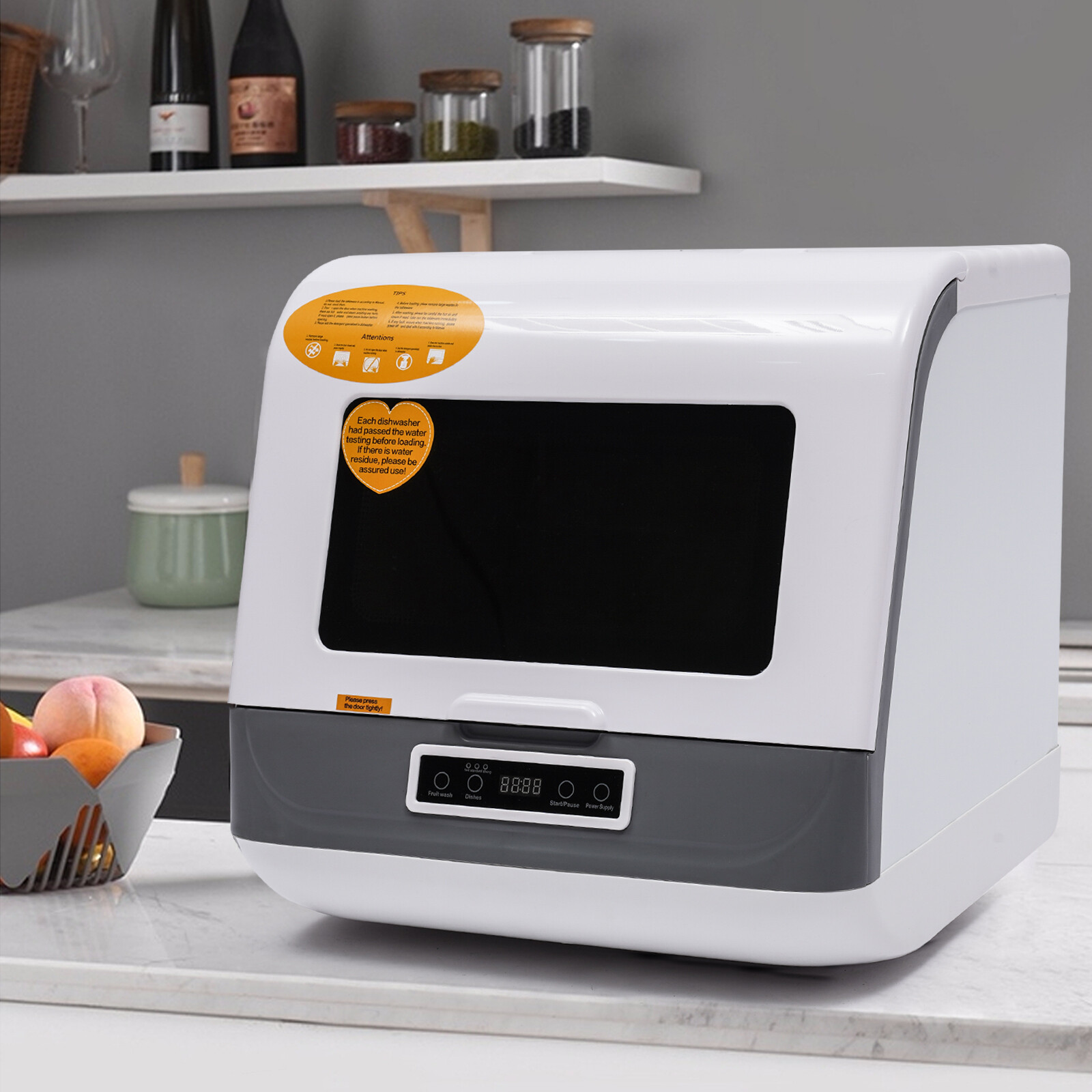

Photos from current listings. Actual item, color, and included accessories may vary.
Dishwasher Machine Buying Guide
A dishwasher machine is a dedicated appliance that automates washing, rinsing, and drying, and the core trade-off is between freestanding/undercounter full-size capacity and compact countertop units that fit limited spaces. Full-size models deliver superior cleaning power, drying performance, and efficiency per load, while compact models trade capacity and wash quality for portability and no-installation convenience. The decision rule: choose a full-size built-in or freestanding unit for daily family dishware; choose a countertop model only when plumbing or space prohibits a full-size unit and you accept smaller loads and manual fill/drain cycles.
Median $163.11
Key takeaways
- Full-size dishwashers are 24 in wide (standard) or 18 in slimline, and require a 120V dedicated circuit, hot-water supply, and drain connection—countertop units typically fill manually and drain to sink.
- Countertop capacity is measured in place settings (2–6) and uses 5–6 L per cycle, while full-size units handle 12–16 settings at 9–12 L per cycle with lower per-item energy use.
- Drying methods differ: full-size units use heated dry or condensation drying with stainless tubs; compact units often rely on residual heat and plastic tubs, which retain moisture and odor.
At a glance
- Category
- Dishwashers
- Last updated
- Nov 28, 2026
Current offers
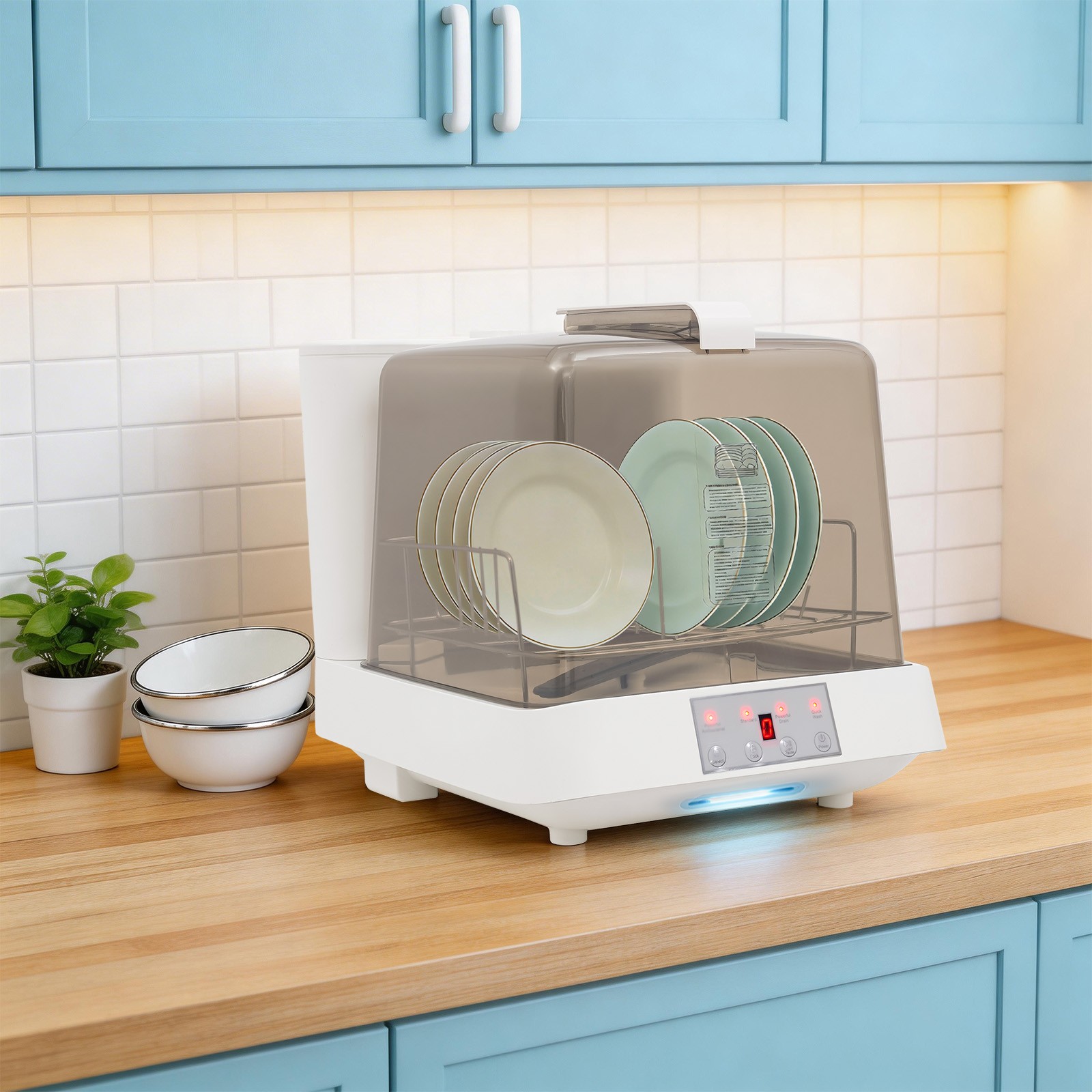
Highlights
- Full-size dishwashers are 24 in wide (standard) or 18 in slimline, and require a 120V dedicated circuit, hot-water supply, and drain connection—countertop units typically fill manually and drain to sink.
- Countertop capacity is measured in place settings (2–6) and uses 5–6 L per cycle, while full-size units handle 12–16 settings at 9–12 L per cycle with lower per-item energy use.
- Drying methods differ: full-size units use heated dry or condensation drying with stainless tubs; compact units often rely on residual heat and plastic tubs, which retain moisture and odor.
- Wash systems scale with size: full-size models use alternating spray arms and filtration with 3–6 cycles; countertop units use fixed lower spray arms and 3–5 programs, limiting upper-rack cleaning.
Best use cases
- Best fit for countertop: studio apartments, RVs, boats, or dorms with no undercounter space and a nearby sink for manual fill and drain—pick 5-program models with stainless interior for durability.
- Wrong fit for countertop: families of 4+ or anyone washing daily cookware; these units require pre-rinsing, cannot fit large pots, and leave water spots without heated drying—step up to a full-size unit.
- Best fit for full-size freestanding: rental kitchens or homes without built-in cabinetry cutouts; choose 24 in width for 12+ settings and third-rack cutlery; select 18 in slimline only when width is capped.
- Wrong fit for full-size: off-grid cabins or spaces lacking hot-water plumbing and a 120V dedicated circuit—these require professional installation and cannot run from a standard outlet shared with other appliances.
Buying tips
- Measure the cutout: standard undercounter requires 24 in width × 24 in depth × 34–35 in height; slimline needs 18 in width. Countertop units need 20–24 in of counter depth and 12–18 in height clearance.
- Choose stainless steel tubs over plastic for full-size and mid-range countertop units—stainless resists staining, retains heat for drying, and lasts 10+ years versus 5–7 for plastic.
- For countertop units, confirm manual fill and drain-to-sink operation; models needing permanent plumbing defeat the portability advantage and cost more to install than they save.
- Match cycle count to need: 3–5 programs suffice for countertop; full-size units with 6+ cycles and a sanitize option (NSF/ANSI 184) are worth it for households with infants or immune-compromised members.
Specs
| Type | Full-size / Slimline / Countertop |
|---|---|
| Width | 18 in / 24 in / 20-24 in countertop |
| Capacity | 8-16 settings / 2-6 countertop |
| Tub Material | Stainless steel vs Plastic |
Related searches
What to check before buying
- Verify door swing and hose reach: full-size units need 2–3 ft of clearance in front; countertop drain hoses must reach the sink (typically 3–5 ft) and the fill pitcher must fit under the faucet.
- Confirm electrical: full-size dishwashers require a dedicated 120V/15A circuit; countertop units draw 10–13A and should not share a circuit with a microwave or coffee maker.
- Check water hardness: above 12 grains/gallon, use rinse aid and a water softener or choose a model with a built-in softener (rare in countertop, common in European full-size).
- For undercounter installs, measure cabinet opening height including flooring—many failures occur when tile or hardwood reduces the 34 in opening below the unit's 33.5 in minimum.
FAQ
Data sources: eBay / Amazon listings and product attribute feeds. Updated Nov 28, 2026.
Some links on this page are affiliate links. If you buy after clicking one, we may earn a commission at no extra cost to you. This does not change which products appear here or their order. Affiliate disclosure.