
Photos from current listings. Actual item, color, and included accessories may vary.
Energy Star Dishwasher Buying Guide
ENERGY STAR dishwashers are certified to use at most 3.2 gallons per cycle and stay under a federal energy budget, which typically means better insulation, efficient pumps, and smart soil sensing. The core trade-off is upfront efficiency versus drying performance and cycle speed—condensation-dry models save energy but leave plastic wet, while heated-dry models use more power. Buy ENERGY STAR if you run loads at least three times a week; skip it only for tiny countertop units where the certified models are scarce and manual washing is already low-volume.
Median $540.62 · Pre-owned listings
Key takeaways
- ENERGY STAR certification caps water use at 3.2 gallons per cycle for standard 24-inch models and requires a maximum annual energy use around 240–270 kWh depending on size.
- Built-in 24-inch units overwhelmingly use condensation drying with a stainless-steel tub; portable and countertop units often add a heated dry element that can erase efficiency gains.
- Noise ratings above roughly 50 dBA indicate basic sound insulation; 44–47 dBA models use better pump damping and cabinet blankets and are worth the step up for open-plan kitchens.
At a glance
- Category
- Dishwashers
- Last updated
- Nov 27, 2026
Current offers
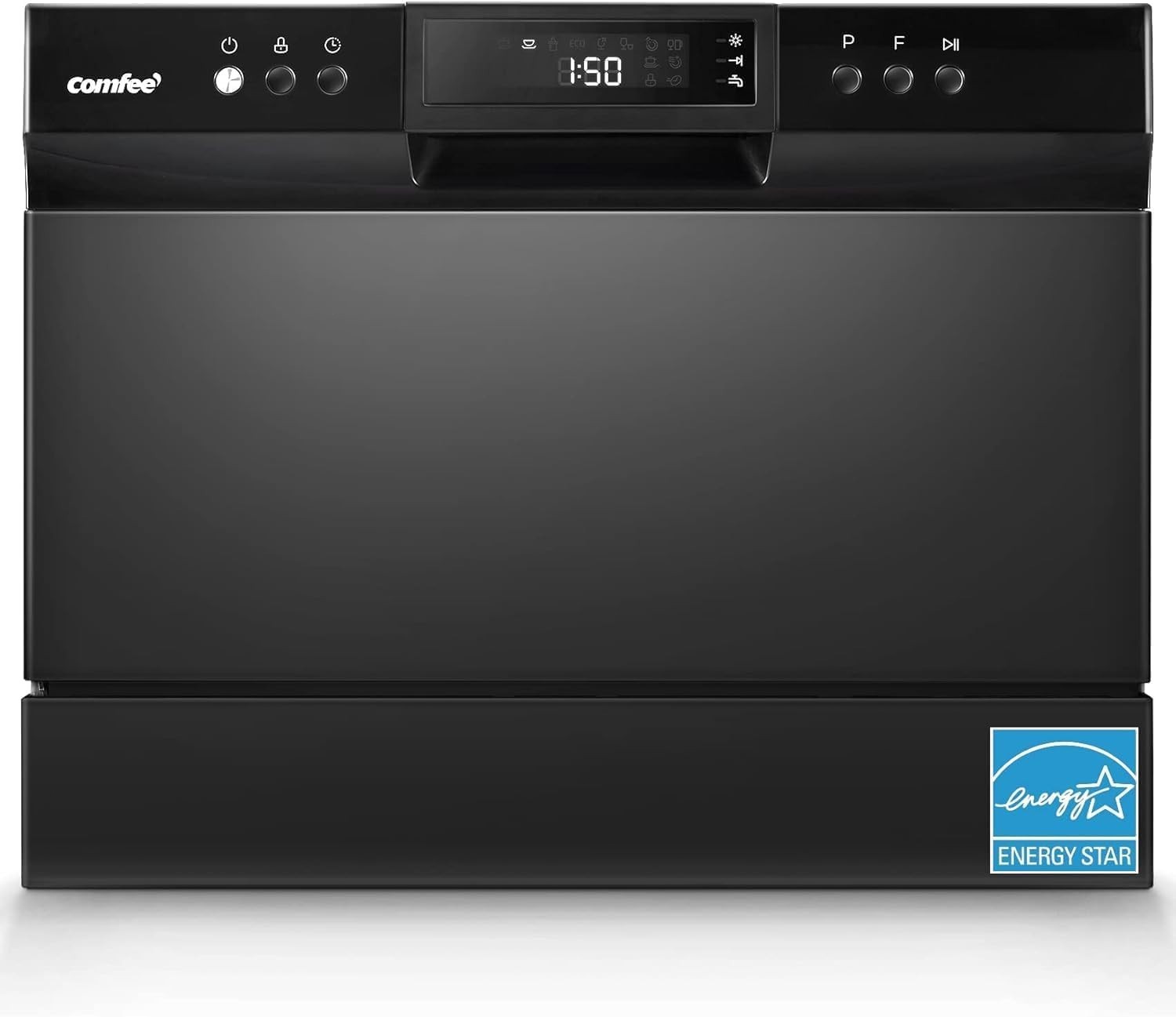 Countertop Dishwasher, Energy Star Portable Dishwasher, 6 Place Settings & 8 Was$362.65Last checked Nov 18, 2026View on eBay
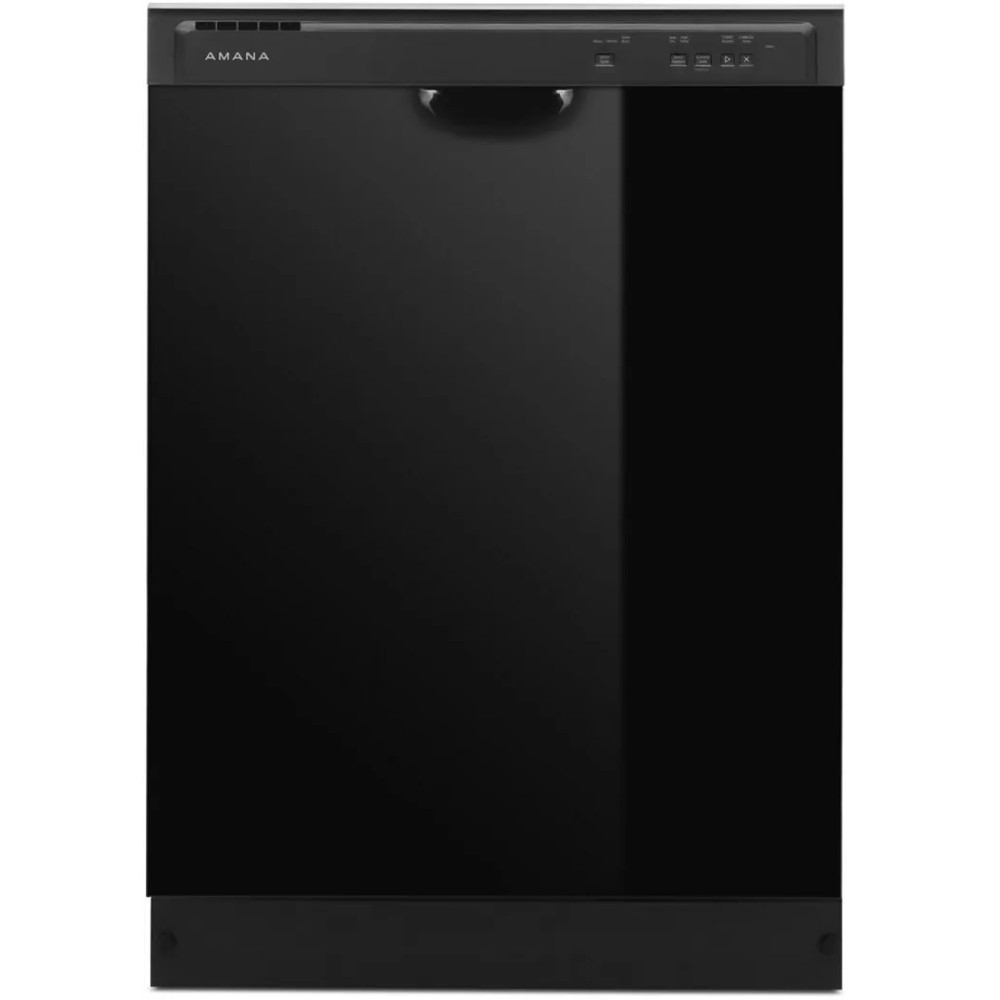 Amana 24" Built-In Dishwasher ADFS2524RB 59 dBA ENERGY STAR Black$482.19Last checked Nov 18, 2026View on eBay
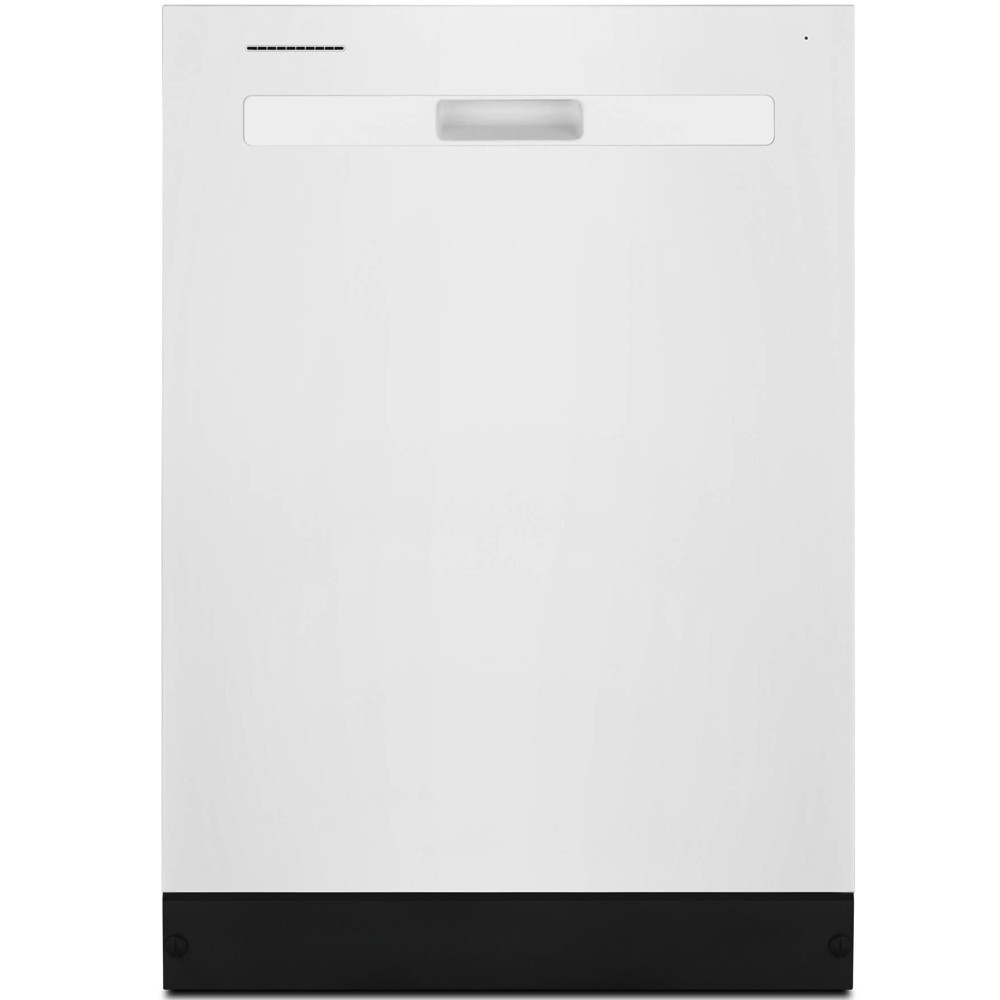 Whirlpool 24" Top Control Dishwasher WDP540HAMW 55 dBA White ENERGY STAR$599.05Certified - Refurbished · Last checked Nov 21, 2026View on eBay
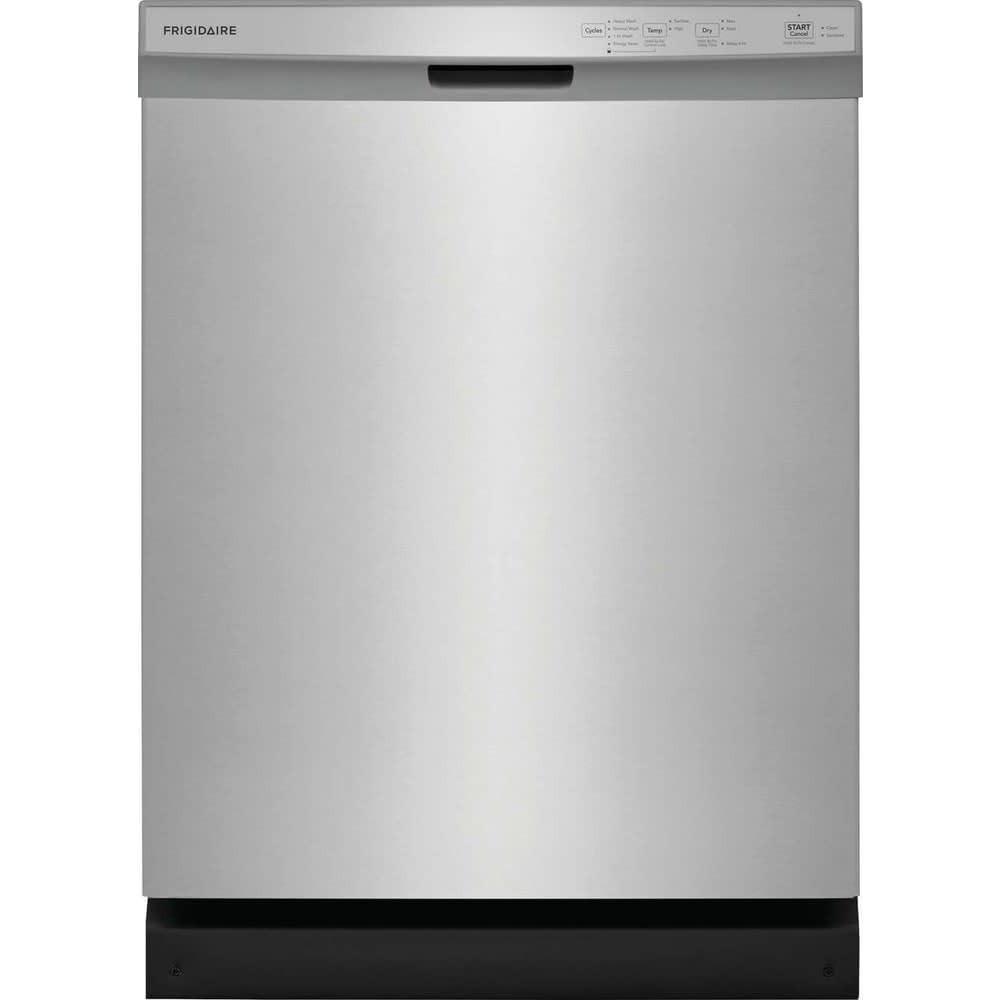 Frigidaire 24" Built-In Dishwasher FDPC4314AS 54 dBA Stainless Steel ENERGY STAR$647.75Last checked Nov 17, 2026View on eBay
Highlights
- ENERGY STAR certification caps water use at 3.2 gallons per cycle for standard 24-inch models and requires a maximum annual energy use around 240–270 kWh depending on size.
- Built-in 24-inch units overwhelmingly use condensation drying with a stainless-steel tub; portable and countertop units often add a heated dry element that can erase efficiency gains.
- Noise ratings above roughly 50 dBA indicate basic sound insulation; 44–47 dBA models use better pump damping and cabinet blankets and are worth the step up for open-plan kitchens.
- Third-rack cutlery trays and adjustable upper baskets are the practical differentiators between budget and mid-tier ENERGY STAR models—they affect loading flexibility more than the efficiency label itself.
Best use cases
- Best fit: a family of three or more running a full load daily should choose a 24-inch built-in ENERGY STAR model with a stainless tub and at least a 14-place-setting capacity.
- Best fit: renters or small kitchens with no under-counter plumbing should pick a portable ENERGY STAR unit that connects to the faucet and drains into the sink—skip built-in-only models.
- Wrong fit: a one- or two-person household that runs the dishwasher twice a week will not recover the efficiency premium; a compact countertop unit or manual washing is the smarter spend.
- Wrong fit: buyers who insist on bone-dry plastic containers should skip condensation-dry ENERGY STAR models and look for one with a heated dry option, accepting slightly higher energy use.
Buying tips
- Match the cutout: standard built-ins need a 24-inch-wide opening, 34–35 inches high, and 24 inches deep; measure the rough opening before choosing a model with a top-control panel that adds height clearance.
- Check the electrical: most built-in dishwashers need a dedicated 120V, 15-amp circuit; portable units run on a standard 120V outlet but should not share a circuit with a microwave or coffee maker.
- Prefer a stainless-steel tub over plastic—stainless holds heat better for condensation drying, resists staining, and is standard on quieter 44–47 dBA tiers.
- Look for a soil sensor and at least five wash cycles; sensor-equipped models adjust water and time automatically, which is what actually delivers the ENERGY STAR savings in real use.
Specs
| Water Use (ENERGY STAR) | ≤ 3.2 gal/cycle (standard) |
|---|---|
| Annual Energy Cap | ≈ 240–270 kWh (standard) |
| Typical Noise Range | 44–59 dBA |
| Tub Material | Stainless steel vs plastic |
Related searches
What to check before buying
- Measure your cabinet opening width, height, and depth, plus the distance to the water supply and drain—portable models need a nearby faucet with a threaded aerator.
- Confirm your electrical circuit: a dedicated 120V grounded outlet for built-ins; check that the outlet is not switched or shared with a disposal.
- Decide on drying needs: note whether your household loads mostly plastic (choose heated dry) or glass and ceramic (condensation dry is fine).
- Plan for the door swing and loading clearance—countertop units need about 18 inches of counter depth and a sink within hose reach.
FAQ
Data sources: eBay / Amazon listings and product attribute feeds. Updated Nov 27, 2026.
Some links on this page are affiliate links. If you buy after clicking one, we may earn a commission at no extra cost to you. This does not change which products appear here or their order. Affiliate disclosure.