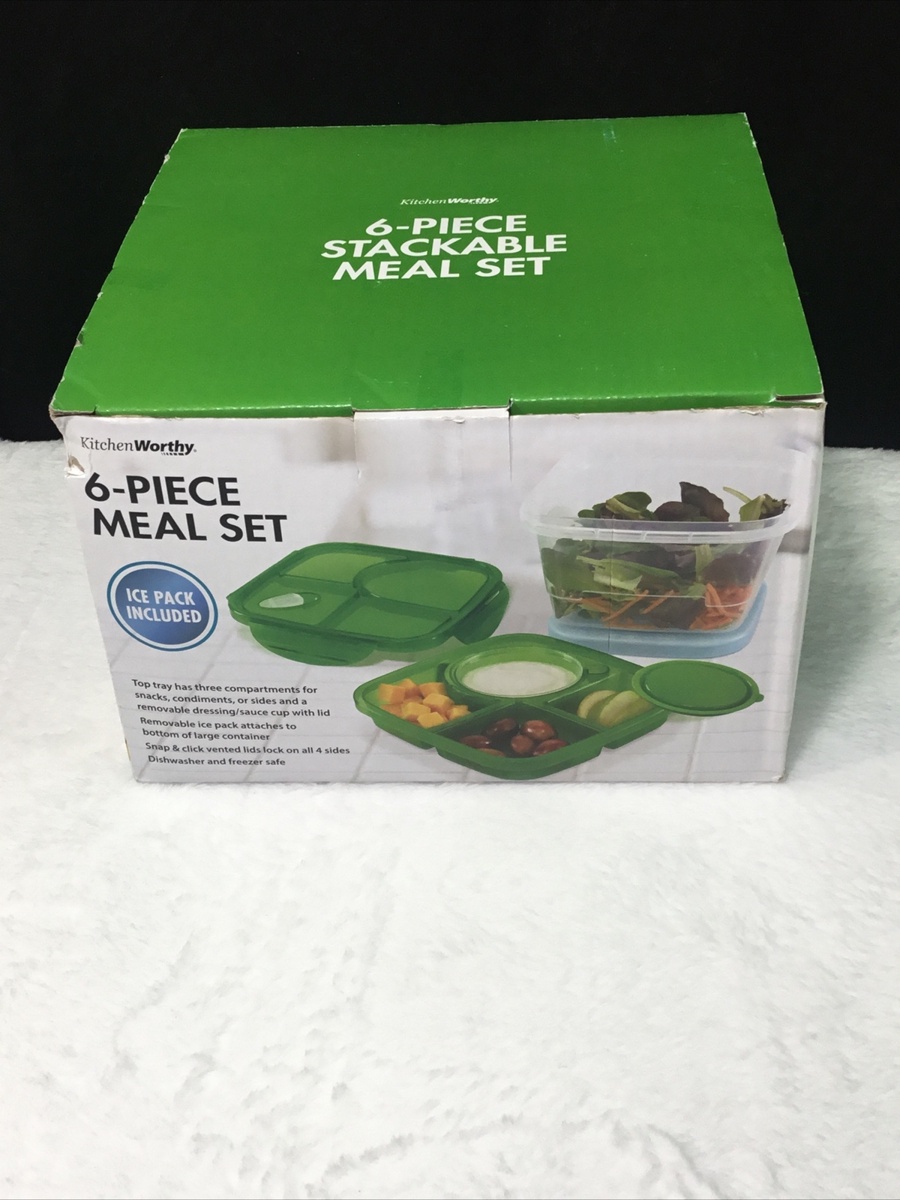

Photos from current listings. Actual item, color, and included accessories may vary.
Ice Pack Lunch Box Buying Guide
An ice pack lunch box is an insulated carrier paired with a removable freezer gel pack, designed to hold food at safe temperatures below 40°F for several hours. The core trade-off is insulation R-value versus gel-pack thermal mass: thicker closed-cell foam or vacuum panels extend cold retention, while a larger, denser gel pack provides more latent cooling capacity. Choose a hard-sided cooler with a high-density gel pack rated for 8+ hours if you commute or work outdoors; skip thin fabric bags with small ice sheets unless you only need 2–3 hours of cold.
Key takeaways
- Gel-pack thermal mass is rated by weight and freezing point: 16–24 oz high-density gel packs hold 8–12 hours in a 6–10 L insulated bag, while 4–8 oz thin sheets last 2–4 hours.
- Closed-cell EPE or PU foam insulation at 0.5 in (12 mm) thickness provides roughly double the cold retention of 0.2 in (5 mm) PE foam liners in the same bag volume.
- Hard-sided rotomolded or PP coolers with gasketed lids retain ice 2–3× longer than soft-sided fabric bags of equal internal volume, but add 1.5–2.5 lb of empty weight.
At a glance
- Category
- Food Preparation
- Last updated
- Nov 28, 2026
Current offers
Highlights
- Gel-pack thermal mass is rated by weight and freezing point: 16–24 oz high-density gel packs hold 8–12 hours in a 6–10 L insulated bag, while 4–8 oz thin sheets last 2–4 hours.
- Closed-cell EPE or PU foam insulation at 0.5 in (12 mm) thickness provides roughly double the cold retention of 0.2 in (5 mm) PE foam liners in the same bag volume.
- Hard-sided rotomolded or PP coolers with gasketed lids retain ice 2–3× longer than soft-sided fabric bags of equal internal volume, but add 1.5–2.5 lb of empty weight.
- Food-safety threshold: perishables must stay at or below 40°F (4°C); a lunch box with a single 8 oz gel pack in a thin bag will exceed 40°F within 2–3 hours in a 75°F room.
Best use cases
- Best fit: office commuter carrying yogurt, deli meat, or dairy — pick a soft-sided bag with 0.5 in foam and a 16 oz high-density gel pack; skip thin grocery-style totes.
- Best fit: construction or outdoor worker in 80°F+ heat — choose a hard-sided 10–20 qt cooler with a 24 oz gel pack or block ice; skip any fabric bag without a gasketed lid.
- Best fit: school lunch for a child — use a compact 4–6 L bag with a 6–8 oz slim gel pack and leak-proof latches; skip large 12+ can coolers that exceed locker or backpack dimensions.
- Wrong fit: meal-prep portion-control sets that include only a thin ice sheet — these are for 2–3 hour transport only; upgrade to a separate 16 oz gel pack for all-day cold.
Buying tips
- Match gel-pack weight to carry time: 8 oz per 4 hours for a 6 L bag; 16 oz per 8 hours; 24 oz per 12 hours. Doubling gel mass roughly doubles cold hours in the same insulation.
- Measure internal volume against your containers: a 6-piece portion-control set with 2-cup (16 oz) containers needs at least 8 L of usable space plus 1 in clearance for the gel pack.
- Choose gel packs with a freezing point of 18–22°F (-8 to -6°C) for longer hold; water-ice packs freeze at 32°F and melt faster in warm cars.
- Prefer closed-cell EPE or PU foam over PE air-bubble liners; a 0.5 in (12 mm) foam wall is the minimum for 6+ hour cold retention in a soft bag.
Specs
| Insulation Type | Closed-cell EPE/PU foam vs PE liner |
|---|---|
| Gel Pack Weight | 8 oz (4 hr) / 16 oz (8 hr) / 24 oz (12 hr) |
| Cold Retention | 2–4 hr thin bag / 8–12 hr foam + gel |
| Carrier Build | Hard PP cooler vs soft fabric bag |
Related searches
What to check before buying
- Measure your lunch container footprint and height; add 1 in on each side and 1 in on top for the gel pack, then select a bag with listed internal dimensions at least that large.
- Confirm the bag fits your commute: backpack sleeve or tote straps should accept the loaded external dimensions without exceeding 10 in height for under-desk storage.
- Check gel-pack freezer fit: a 16–24 oz pack needs a flat freezer shelf area of at least 6 × 4 in; slim 8 oz packs fit most freezer doors.
- Verify leak-proofing: look for heat-sealed or screw-cap gel packs and a bag with welded seams or a removable leak-proof liner, especially if carrying liquids or melting ice.
FAQ
Data sources: eBay / Amazon listings and product attribute feeds. Updated Nov 28, 2026.
Some links on this page are affiliate links. If you buy after clicking one, we may earn a commission at no extra cost to you. This does not change which products appear here or their order. Affiliate disclosure.