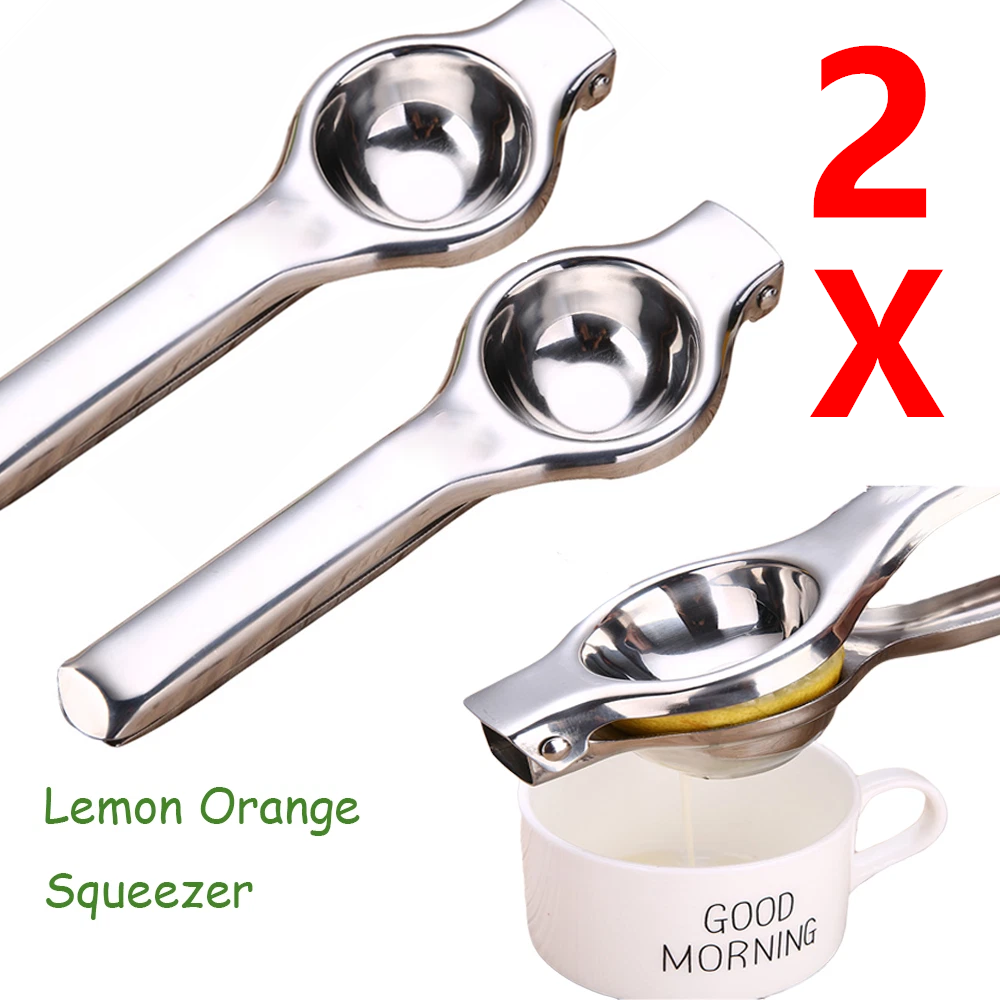

Photos from current listings. Actual item, color, and included accessories may vary.
Manual Citrus Press Buying Guide
A manual citrus press is a lever- or screw-driven juicer that extracts juice by mechanical force, not electricity. The core trade-off is between lightweight handheld squeezers that flex under load and heavy-duty cast-iron or stainless lever presses that deliver stable, high-yield extraction. Choose a weighted lever press with a reinforced pivot and wide cup if you juice daily; choose a simple handheld squeezer only for occasional garnish-level tasks.
Median $22.49
Key takeaways
- Lever presses use a compound linkage to multiply hand force; cast-iron bases above 10 lb stay planted while thin stamped-steel arms bend at the pivot under firm pressure.
- Taller floor-standing models (15–19 in) accept whole grapefruit and pomegranate halves and provide more leverage than short countertop presses limited to lemons and limes.
- Cast iron with a food-safe enamel or powder coat resists acidic citrus corrosion; bare cast iron requires seasoning and can pit if left wet.
At a glance
- Category
- Food Preparation
- Last updated
- Nov 28, 2026
Current offers
Highlights
- Lever presses use a compound linkage to multiply hand force; cast-iron bases above 10 lb stay planted while thin stamped-steel arms bend at the pivot under firm pressure.
- Taller floor-standing models (15–19 in) accept whole grapefruit and pomegranate halves and provide more leverage than short countertop presses limited to lemons and limes.
- Cast iron with a food-safe enamel or powder coat resists acidic citrus corrosion; bare cast iron requires seasoning and can pit if left wet.
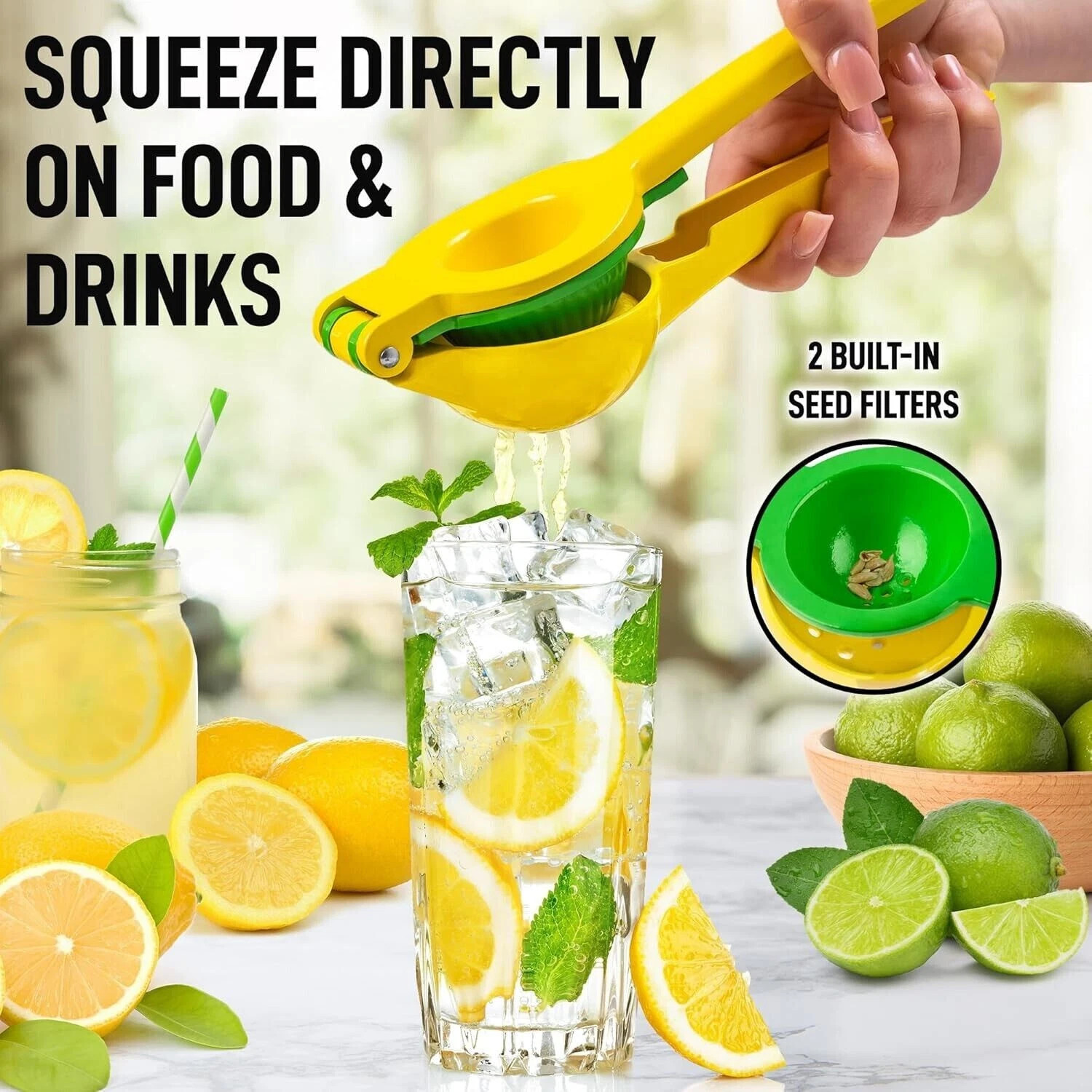
- Cup and strainer geometry matters more than raw weight: a deep cup with a perforated strainer plate catches seeds while letting pulp through, and a wide rim prevents rind from collapsing into the juice.
Best use cases
- Best fit: daily orange or grapefruit juicing for a household — pick a 15–19 in cast-iron lever press with a wide cup and weighted base. Skip lightweight aluminum handheld squeezers, which flex and lose yield.
- Best fit: commercial or high-volume bar use — choose an extra-large commercial-grade cast-iron press with a bolt-down or non-slip base and a long handle for repeated cycles. Skip plastic-bodied or suction-base models that creep under load.
- Wrong fit: occasional lemon wedges for cooking or cocktails — a simple handheld squeezer or wooden reamer is faster to clean and store. A full lever press is overkill and occupies counter space.
- Compromise to avoid: short 8–10 in countertop presses marketed as universal — they lack the leverage and cup depth for whole oranges, so buyers end up applying excessive force and damaging the pivot.
Buying tips
- Match press height to fruit: 15 in models handle lemons through medium oranges; 19 in models clear grapefruit and pomegranate halves without pre-cutting into quarters.
- Check base weight and footprint: a cast-iron base of roughly 10–15 lb with a footprint wider than the cup prevents tipping; suction feet alone fail on textured or wet counters.
- Inspect the pivot and linkage: solid rivets or bolts through a reinforced boss outperform spot-welded joints, which are the first failure point on budget presses.
- Choose coated cast iron or stainless steel over bare cast iron for citrus, since citric acid accelerates rust; enamel or powder coating also simplifies rinsing.
Specs
| Press Type | Lever / Screw / Handheld |
|---|---|
| Material Grade | Cast iron / Stainless / Aluminum |
| Height Class | Countertop <12 in / Floor 15-19 in |
| Cup Capacity | Lemon-lime / Orange / Grapefruit |
Related searches
What to check before buying
- Measure counter or floor clearance: a 19 in press needs roughly 24 in of vertical swing room and a stable surface; confirm the handle does not hit upper cabinets.
- Verify cup diameter against your largest fruit: grapefruit and pomegranate need a cup opening of at least 4–5 in; lemon-only presses can be narrower.
- Check surface stability: glass, polished stone, and slick laminate require rubber-footed or weighted bases; avoid suction-only feet on textured tile.
- Confirm companion parts: some presses ship without a drip tray or strainer insert — ensure the cup, strainer, and tray are included for seed-free juice.
FAQ
Data sources: eBay / Amazon listings and product attribute feeds. Updated Nov 28, 2026.
Some links on this page are affiliate links. If you buy after clicking one, we may earn a commission at no extra cost to you. This does not change which products appear here or their order. Affiliate disclosure.