
Photos from current listings. Actual item, color, and included accessories may vary.
Manual Grain Mill Buying Guide
A manual grain mill is a hand-cranked, burr-based grinder that converts whole grains, corn, coffee, and nuts into flour or meal without electricity, where the decisive trade-off is cast-iron burr geometry and hopper/clamp architecture versus throughput speed and flour fineness. Buyers should prioritize a rigid cast-iron body with an adjustable burr gap and a stable table clamp; wood-bodied or stamped-steel mills with fixed gaps are decorative compromises that fail under repeated dense-grain loads.
Median $89.49
Key takeaways
- Cast-iron burr and body construction absorbs torque and resists burr wobble; stamped steel or thin wood housings flex under dense wheat and corn, producing uneven grinds.
- Burr gap adjustment (typically a knurled screw or dial) is the sole control over flour fineness — fixed-gap mills are limited to coarse meal and cannot produce fine pastry flour.
- Table-clamp mounting transfers crank torque into the bench; clamp jaw opening and cast-iron throat thickness determine stability on countertops up to roughly 2 inches thick.
At a glance
- Category
- Food Preparation
- Last updated
- Nov 27, 2026
Current offers
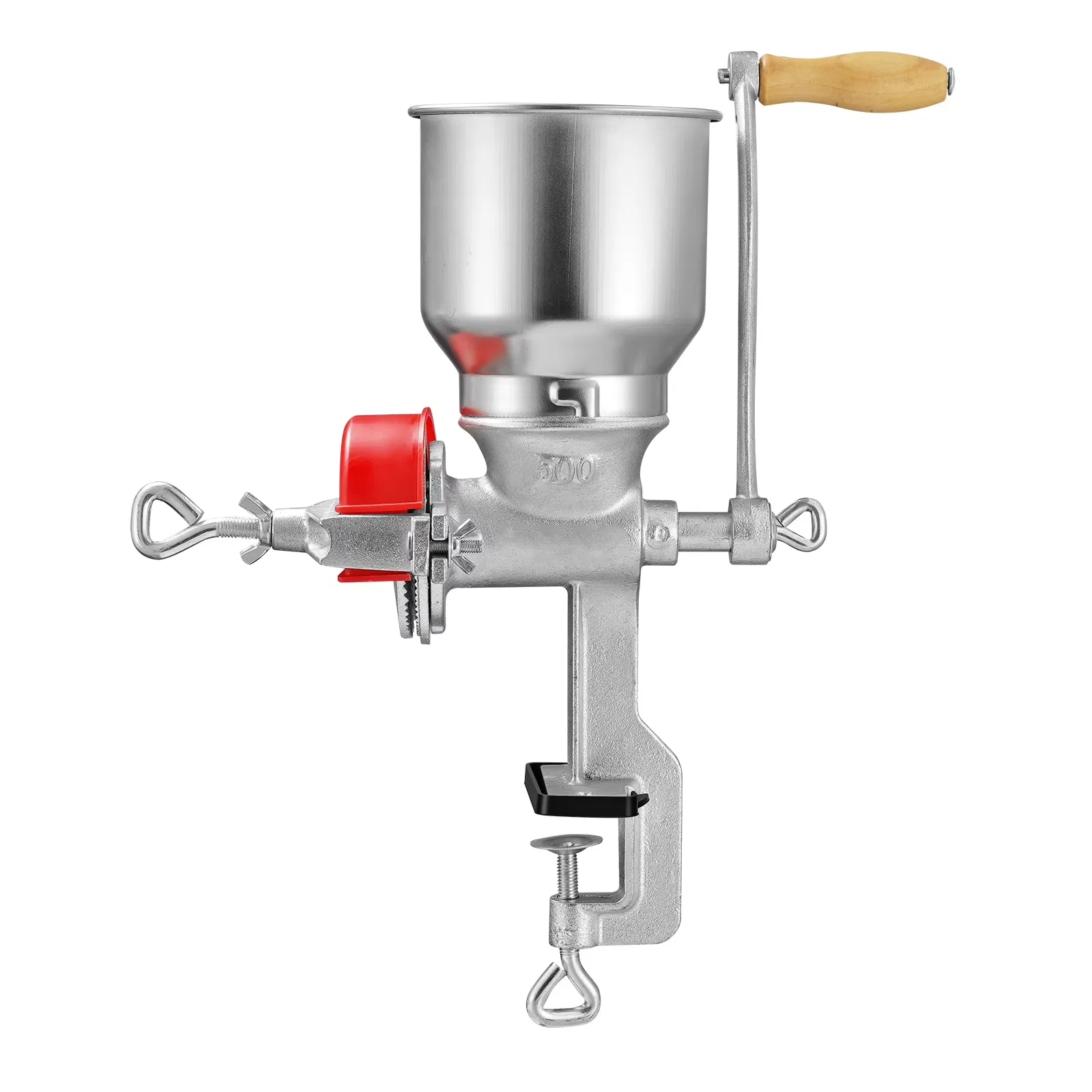 Manual Grain Mill with High Hopper, Hand-Crank Corn Grinder, Durable Cast Iron Wheat Grinding Tool Stable Table Clamp & Protective Dust CoverforGrains, Spices, Coffee Beans, and Nuts$69.99View on Mallflare
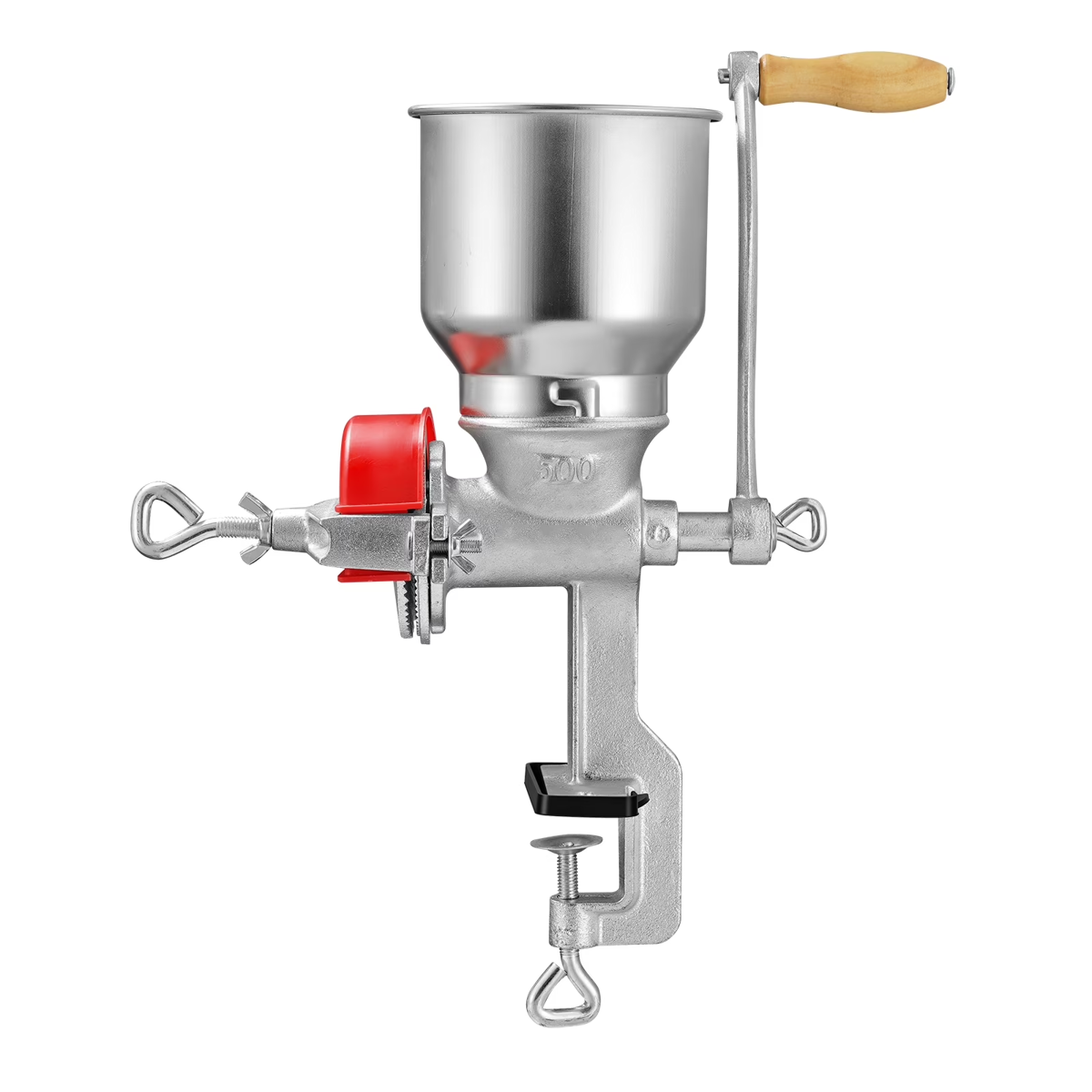 Manual Grain Mill with High Hopper, Hand-Crank Corn Grinder, Durable Cast Iron Wheat Grinding Tool Stable Table Clamp & Protective Dust Cover for Grains, Spices, Coffee Beans, and Nuts$77.99View on Mallflare
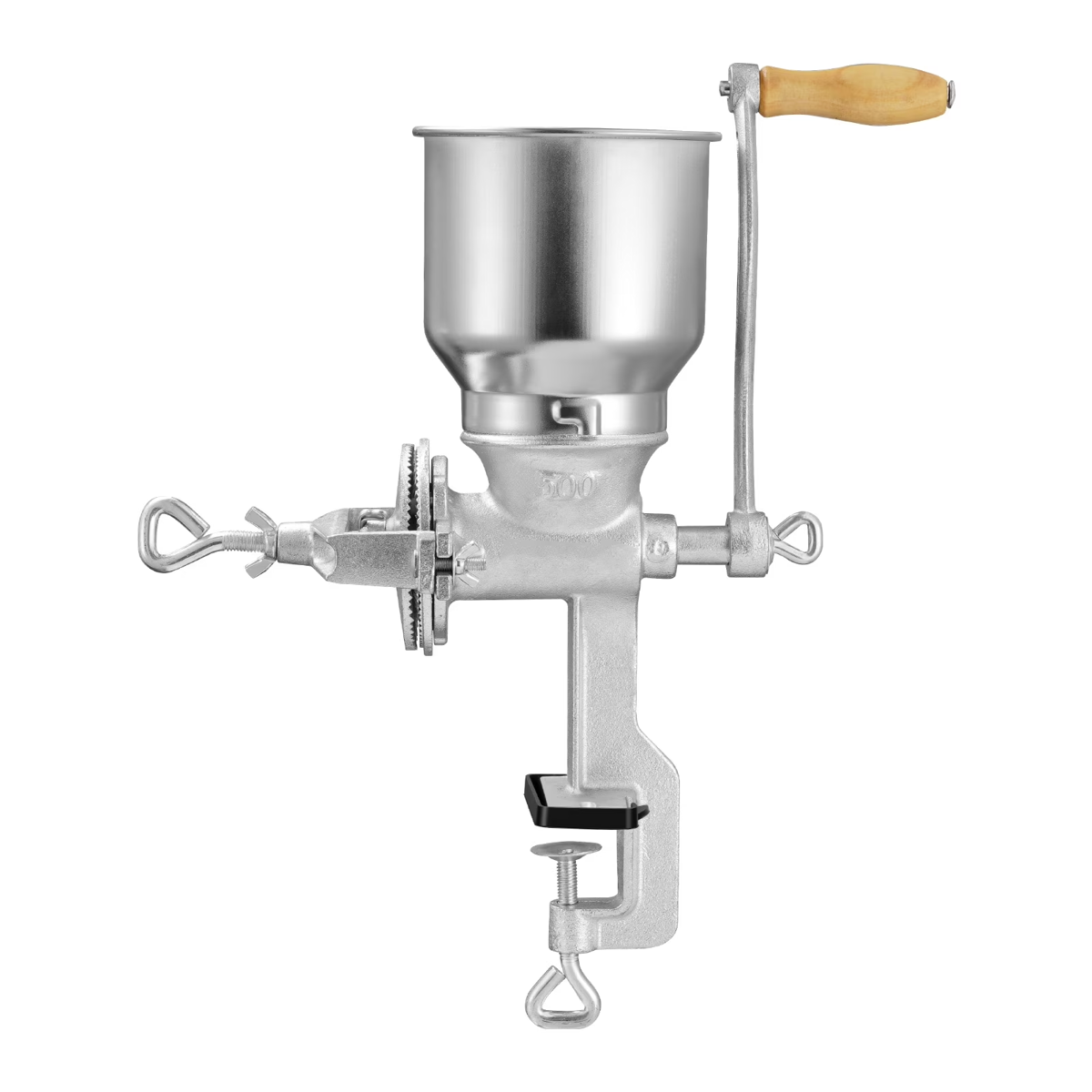 Manual Grain Mill with High Hopper, Hand-Crank Corn Grinder, Durable Cast Iron Grinding Stable Table Clamp for Grains, Spices, Coffee Beans, and Nuts$100.99View on Mallflare
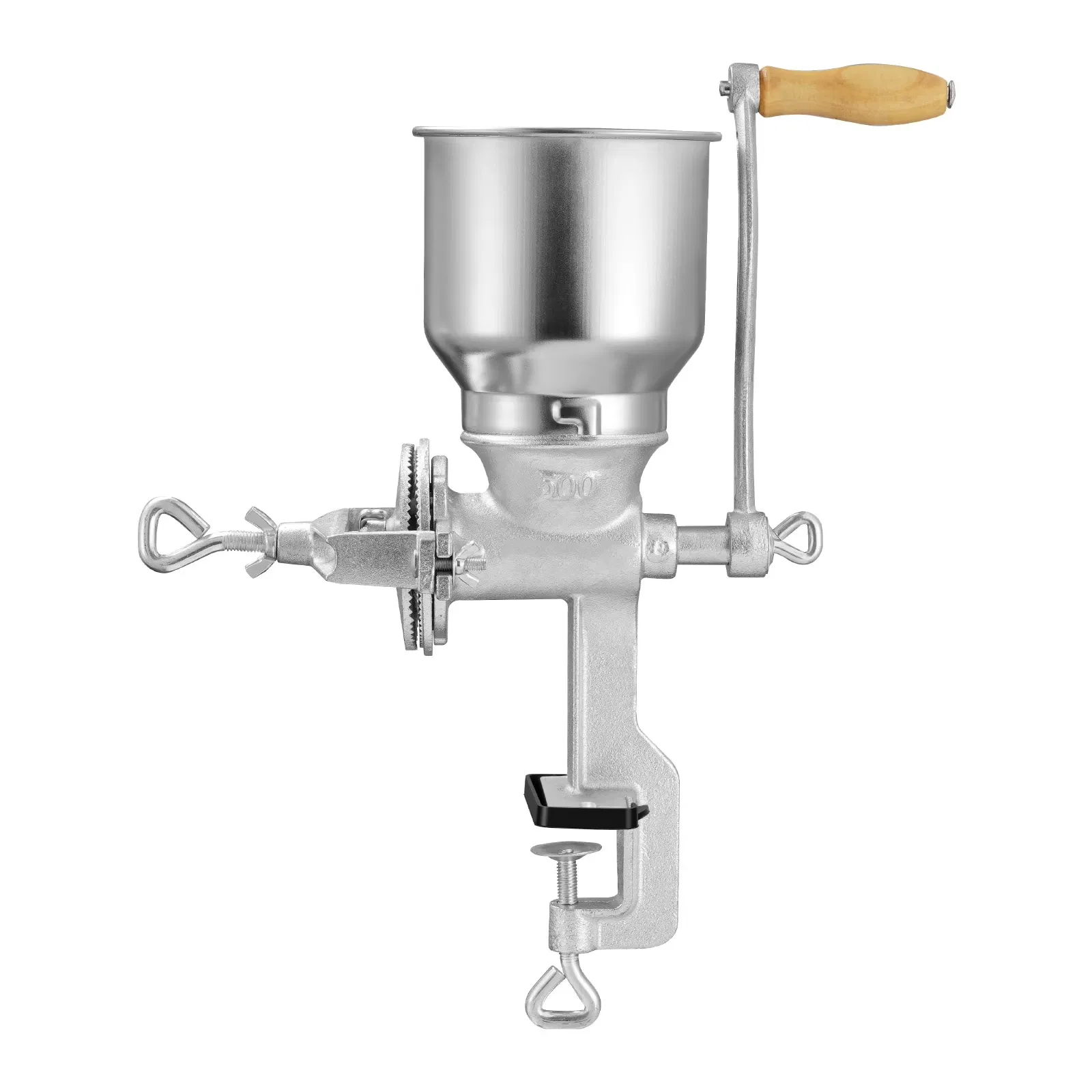 Manual Grain Mill with High Hopper, Hand-Crank Corn Grinder, Durable Cast Iron Grinding Stable Table ClampforGrains, Spices, Coffee Beans, and Nuts$105.99View on Mallflare
Highlights
- Cast-iron burr and body construction absorbs torque and resists burr wobble; stamped steel or thin wood housings flex under dense wheat and corn, producing uneven grinds.
- Burr gap adjustment (typically a knurled screw or dial) is the sole control over flour fineness — fixed-gap mills are limited to coarse meal and cannot produce fine pastry flour.
- Table-clamp mounting transfers crank torque into the bench; clamp jaw opening and cast-iron throat thickness determine stability on countertops up to roughly 2 inches thick.
- High-hopper models hold more grain per fill and reduce refill interruptions, while low-hopper models are shorter and easier to store but require more frequent reloading.
Best use cases
- Best fit: daily home bakers grinding wheat or corn in batches over 2 cups — choose a high-hopper cast-iron mill with adjustable burrs and a wide-jaw table clamp.
- Best fit: occasional spice, coffee, and nut grinding — a low-hopper cast-iron mill with adjustable gap handles small batches and stores compactly.
- Wrong fit: buyers expecting electric-mill speed or commercial flour output — hand mills are manual-throughput tools; for high volume, skip manual and choose an electric stone or burr mill.
- Wrong fit: very thick or lipped countertops — a standard table clamp will not seat; choose a mill with a bolt-through base or a clamp rated for thicker edges.
Buying tips
- Match clamp jaw capacity to your countertop thickness before buying; cast-iron clamps typically span up to about 2 inches, and thicker benches need a bolt-down or extended clamp.
- Choose adjustable burr gap over fixed-gap designs if you need flour finer than coarse meal; fine pastry flour requires tight, consistent burr clearance.
- Prefer cast iron over wood or stamped steel for the body and burrs — cast iron dampens vibration and holds alignment across repeated dense-grain passes.
- Select hopper size by batch: high hopper for 2+ cups per fill, low hopper for small spice/coffee batches and tight storage.
Specs
| Body & Burr Material | Cast iron vs stamped steel / wood |
|---|---|
| Grind Adjustment | Adjustable burr gap vs fixed gap |
| Hopper Capacity | High hopper (large batch) vs low hopper |
| Mounting Type | Table clamp up to ~2 in vs bolt-down |
Related searches
What to check before buying
- Measure countertop or table edge thickness and overhang — confirm the clamp jaw opens wide enough for a secure, wobble-free mount.
- Verify the mill's burr material and adjustment mechanism are cast iron with a visible gap control, not a fixed or plastic component.
- Check hopper capacity against your typical batch size so you are not refilling mid-grind.
- Confirm the crank handle clearance and mill height fit under upper cabinets or on the intended mounting surface.
FAQ
Data sources: eBay / Amazon listings and product attribute feeds. Updated Nov 27, 2026.
Some links on this page are affiliate links. If you buy after clicking one, we may earn a commission at no extra cost to you. This does not change which products appear here or their order. Affiliate disclosure.