
Photos from current listings. Actual item, color, and included accessories may vary.
Onion Chopper Buying Guide
An onion chopper is a manual or electric kitchen tool that dices onions (and other vegetables) into uniform pieces while containing mess and minimizing tearing. The core trade-off is blade quality and mechanism durability versus convenience: stamped blades in thin plastic bodies dull and crack, while hardened stainless blades in reinforced frames or geared mechanisms last. The decision rule: buy a chopper with replaceable or hardened stainless blades, a reinforced (not brittle) container, and a mechanism sized to your volume—skip multi-blade 'N-in-1' kits unless the primary onion blade is thick-gauge and the frame is stiff.
Median $31.74
Key takeaways
- Blade steel grade dictates longevity: hardened stainless (e.g., 420/440-grade) resists bending and corrosion, while stamped mild-steel blades dull after dozens of onions and can shed metal.
- Mechanism type separates tiers: a simple press-lid with a grid blade works for small batches; a geared or pull-cord mechanism reduces hand force but adds plastic wear points that fail under dense loads.
- Container and frame construction determine crack resistance: polypropylene (PP) or Tritan bodies with reinforced ribs survive dishwasher cycles; thin polystyrene or unribbed ABS cracks at hinge and latch points.
At a glance
- Category
- Food Preparation
- Last updated
- Nov 27, 2026
Current offers
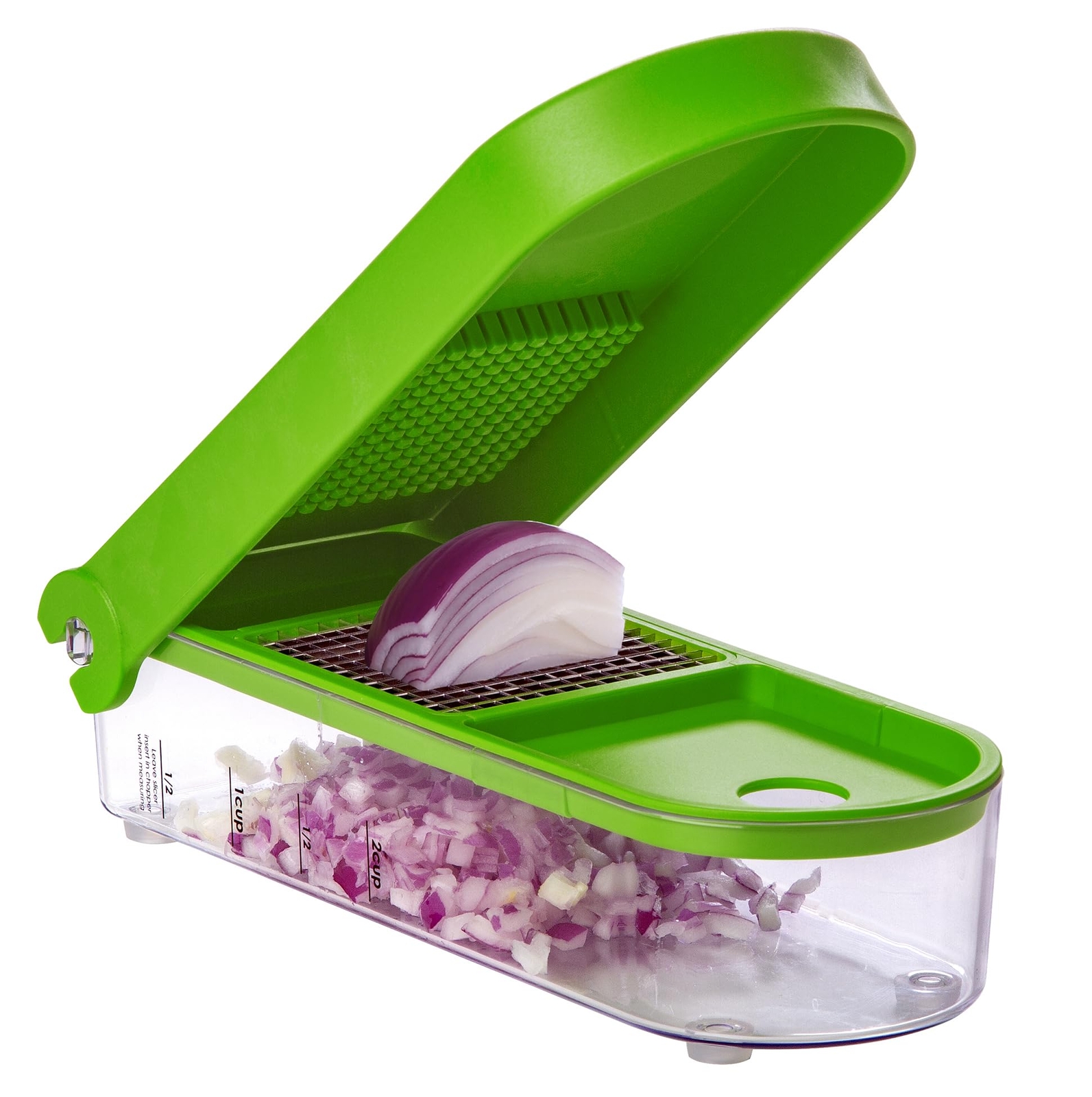 Prep Solutions Onion Chopper Dishwasher Safe Easy Fast Onion Slicer 2 Cups$26.49Last checked Nov 18, 2026View on eBay
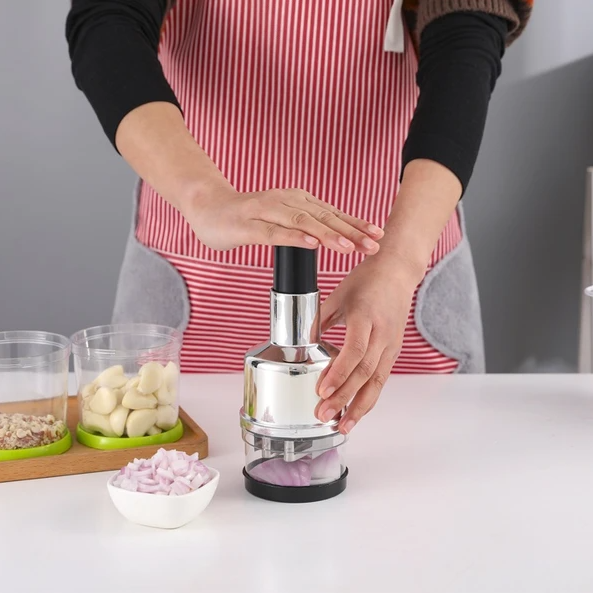 Vegetable Fruit Salad Onion Garlic Food Hand Chopper Cutter Slicer Peeler Dicer$20.99View on Mallflare
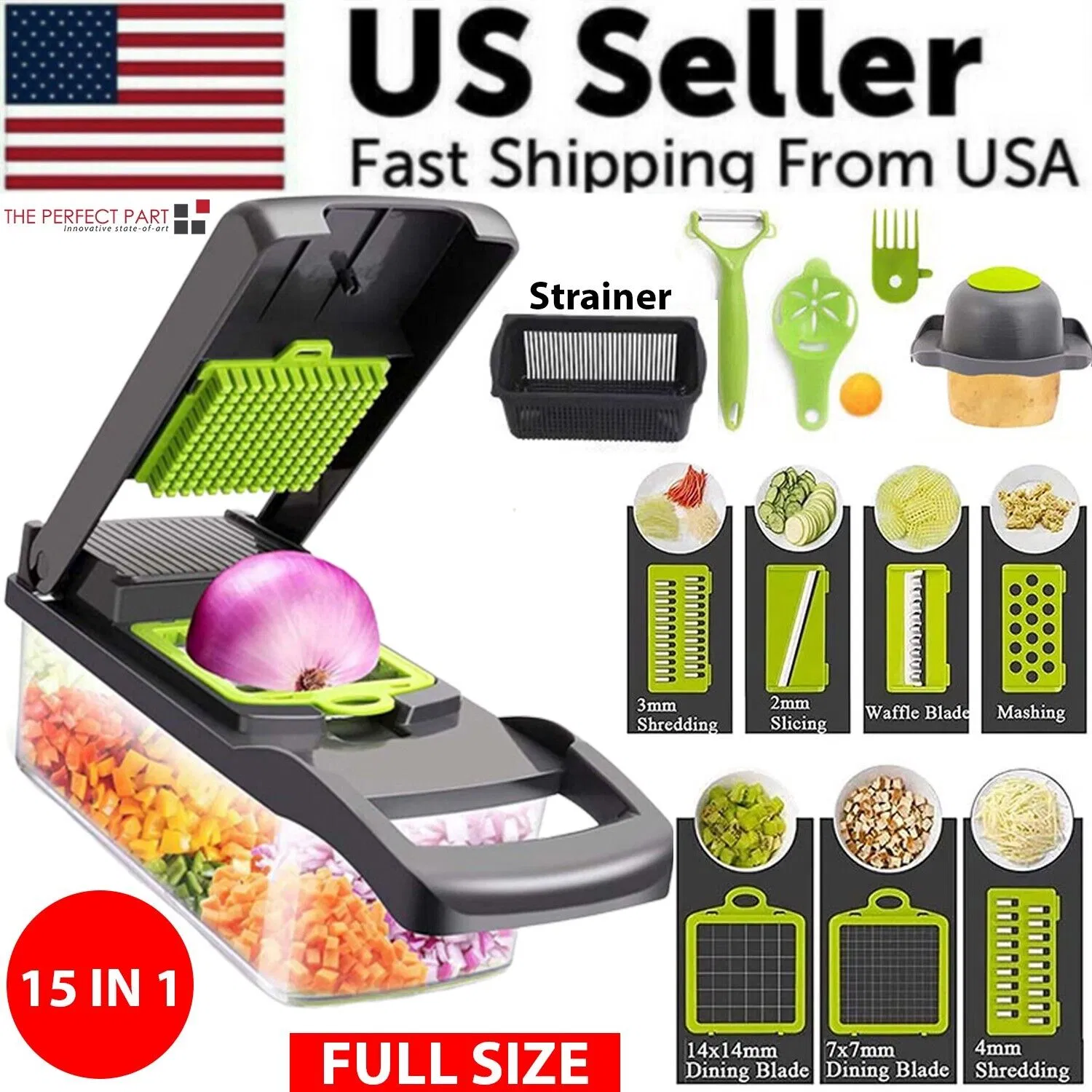 15-In-1 Vegetable Fruit Chopper Cutter Food Onion Veggie Dicer Slicer Kitchen$36.99View on Mallflare
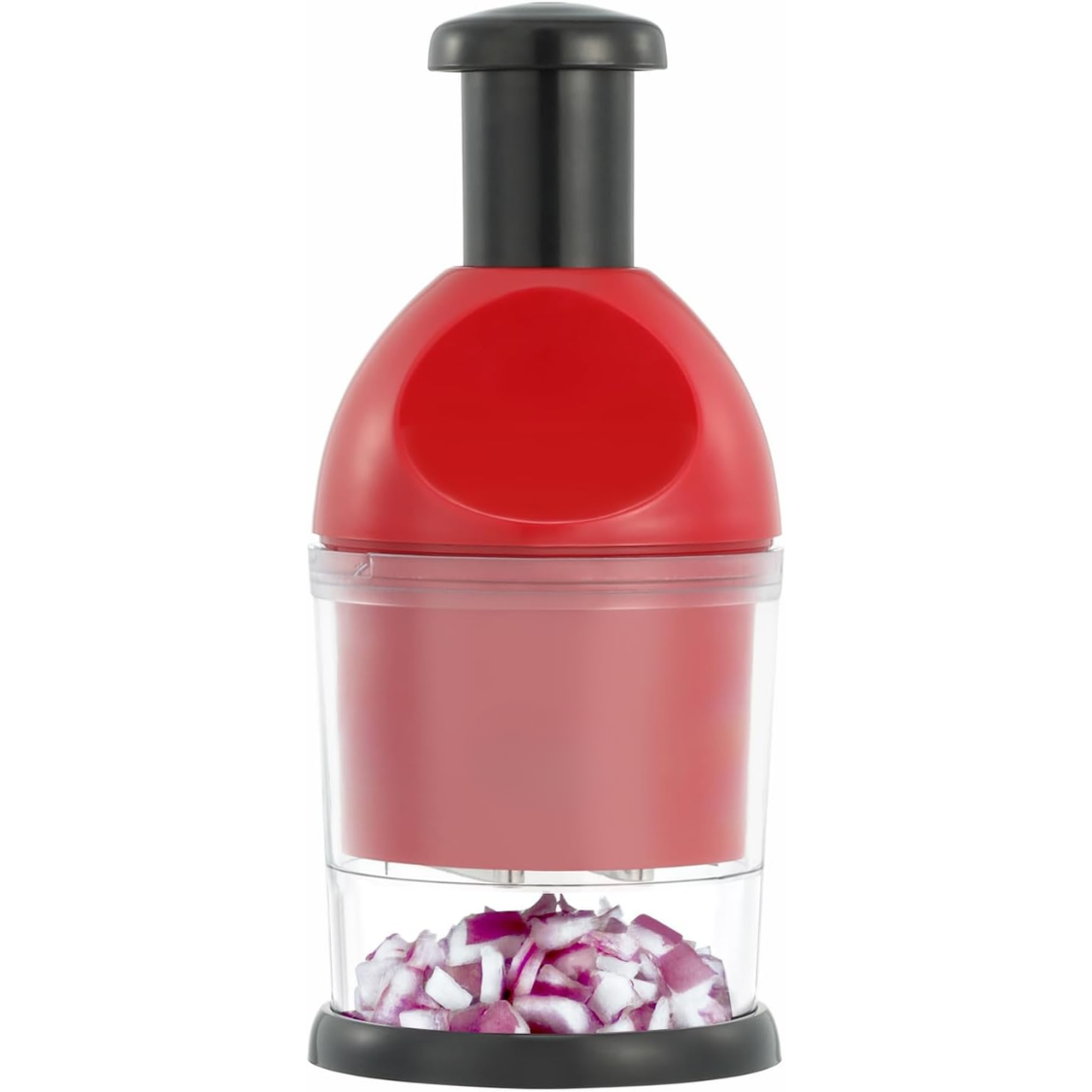 Manual Hand Food Chopper, Easy Clean Vegetable & Onion Cutter, Dishwasher Safe, Red$67.99View on Mallflare
Highlights
- Blade steel grade dictates longevity: hardened stainless (e.g., 420/440-grade) resists bending and corrosion, while stamped mild-steel blades dull after dozens of onions and can shed metal.
- Mechanism type separates tiers: a simple press-lid with a grid blade works for small batches; a geared or pull-cord mechanism reduces hand force but adds plastic wear points that fail under dense loads.
- Container and frame construction determine crack resistance: polypropylene (PP) or Tritan bodies with reinforced ribs survive dishwasher cycles; thin polystyrene or unribbed ABS cracks at hinge and latch points.
- Blade interchangeability and count matter less than primary blade thickness: a 12-in-1 kit with a 0.8 mm onion grid is weaker than a dedicated chopper with a 1.5 mm hardened grid and fewer accessories.
Best use cases
- Best fit: daily cooks dicing 1-3 onions per meal—choose a dedicated press-style chopper with a single hardened stainless grid blade and a 2-cup PP container; skip 12-in-1 kits.
- Best fit: batch meal-preppers processing 5+ onions or firm vegetables—choose a geared or lever mechanism with a thick-gauge grid and a 4-cup+ reinforced container; avoid thin pull-cord models.
- Wrong fit: buyers wanting one tool for onions, cheese, and spiralizing—multi-function kits compromise the onion blade; buy a dedicated onion chopper plus a separate mandoline or grater.
- Wrong fit: households without dishwasher clearance or hand-washing patience—choose a model with removable blades and smooth container walls; open-frame designs trap onion residue.
Buying tips
- Measure your largest expected onion: a 2-cup container handles 1 medium onion; for 3+ onions per session, choose 4-cup or larger to avoid re-loading and overflow.
- Check blade thickness and material: look for hardened stainless steel at 1.2 mm or thicker for the onion grid; thinner stamped blades bend under firm onions and dull quickly.
- Prefer press-lid models with a stiff, ribbed frame and a locking lid; geared or pull-cord mechanisms reduce force but introduce plastic gears that strip under dense loads.
- Verify dishwasher suitability of every removable part—blades, grid, and container—since hand-washing multi-blade assemblies is the main reason choppers get abandoned.
Specs
| Mechanism | Press-lid / Pull-cord / Geared lever |
|---|---|
| Blade Material | Hardened stainless (420/440) vs stamped steel |
| Container Capacity | 2-cup to 4-cup+ (PP/Tritan) |
| Dishwasher Safe | All removable parts / Blades only |
Related searches
What to check before buying
- Counter and storage space: measure cabinet clearance for the assembled height and confirm the container footprint fits your prep area.
- Dishwasher fit: check that the longest blade or grid fits your dishwasher basket flat or diagonally without blocking the spray arm.
- Onion volume per session: count onions per typical meal; choose container capacity at 1 medium onion per 1 cup of diced output.
- Hand strength and counter stability: press-style requires firm downward force; choose a geared or lever model if you have limited grip strength or a slippery countertop.
FAQ
Data sources: eBay / Amazon listings and product attribute feeds. Updated Nov 27, 2026.
Some links on this page are affiliate links. If you buy after clicking one, we may earn a commission at no extra cost to you. This does not change which products appear here or their order. Affiliate disclosure.