
Photos from current listings. Actual item, color, and included accessories may vary.
Onion Dicer Buying Guide
An onion dicer is a manual or lever-action kitchen tool that pushes an onion through a fixed grid of stainless-steel blades to produce uniform cubes, replacing knife work and reducing tear-inducing sulfur exposure. The core trade-off is blade-grid rigidity and press mechanism strength versus container integration and blade interchangeability: flimsy plastic grids dull or bend, while weak presses crush rather than cut dense onions. The clear decision rule is that a dicer with a reinforced stainless blade frame, a compound-lever or wide plunger, and a matching catch container is durable; a thin plastic grid with a small hand-press cap is a compromise.
Median $31.74
Key takeaways
- Blade grid material dictates lifespan: stamped stainless-steel frames with welded cross-blades hold an edge through dense onions, while molded plastic grids flex, crack, and tear rather than cube.
- Press mechanism separates tiers: a compound lever or wide flat plunger applies even force across the grid; a small palm press concentrates force and crushes onion layers instead of slicing them cleanly.
- Dice size is fixed by the grid spacing—commonly 1/4-inch, 3/8-inch, or 1/2-inch—so buyers must match the grid to their intended use rather than expect adjustable cube sizes.
At a glance
- Category
- Food Preparation
- Last updated
- Nov 27, 2026
Current offers
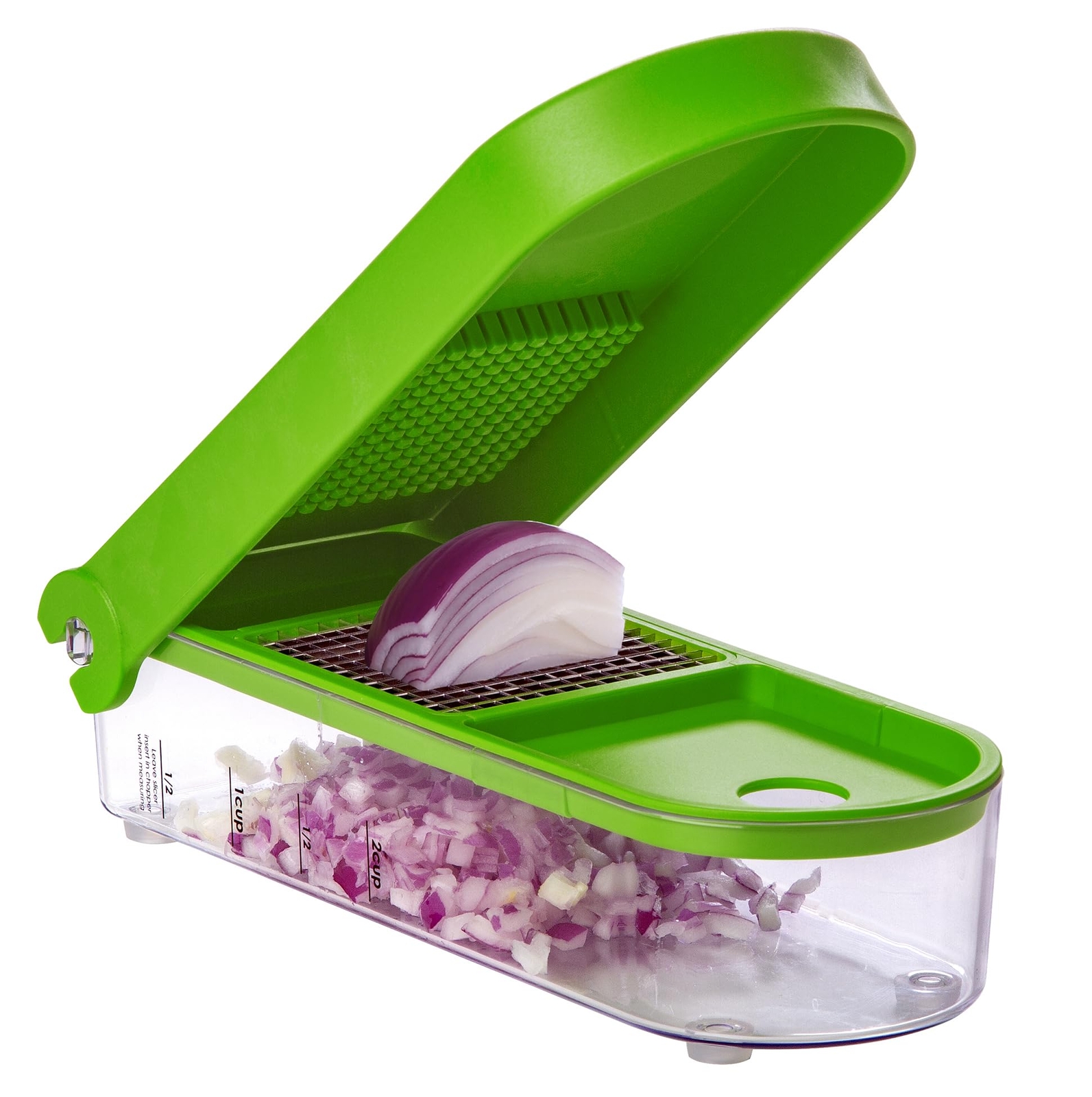 Prep Solutions Onion Chopper Dishwasher Safe Easy Fast Onion Slicer 2 Cups$26.49Last checked Nov 18, 2026View on eBay
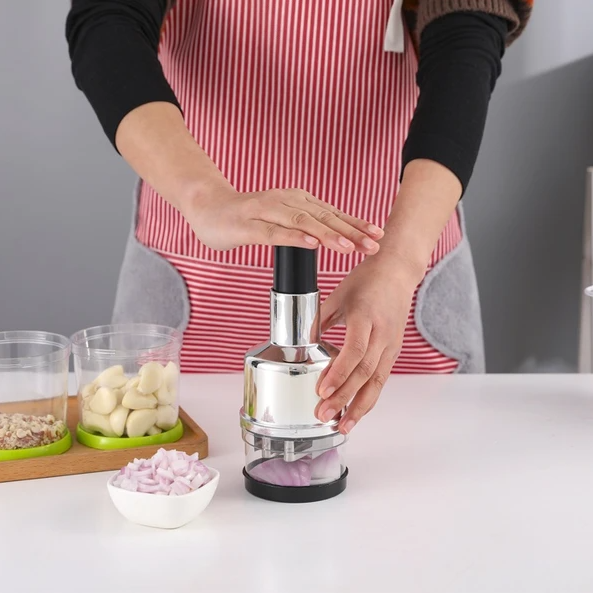 Vegetable Fruit Salad Onion Garlic Food Hand Chopper Cutter Slicer Peeler Dicer$20.99View on Mallflare
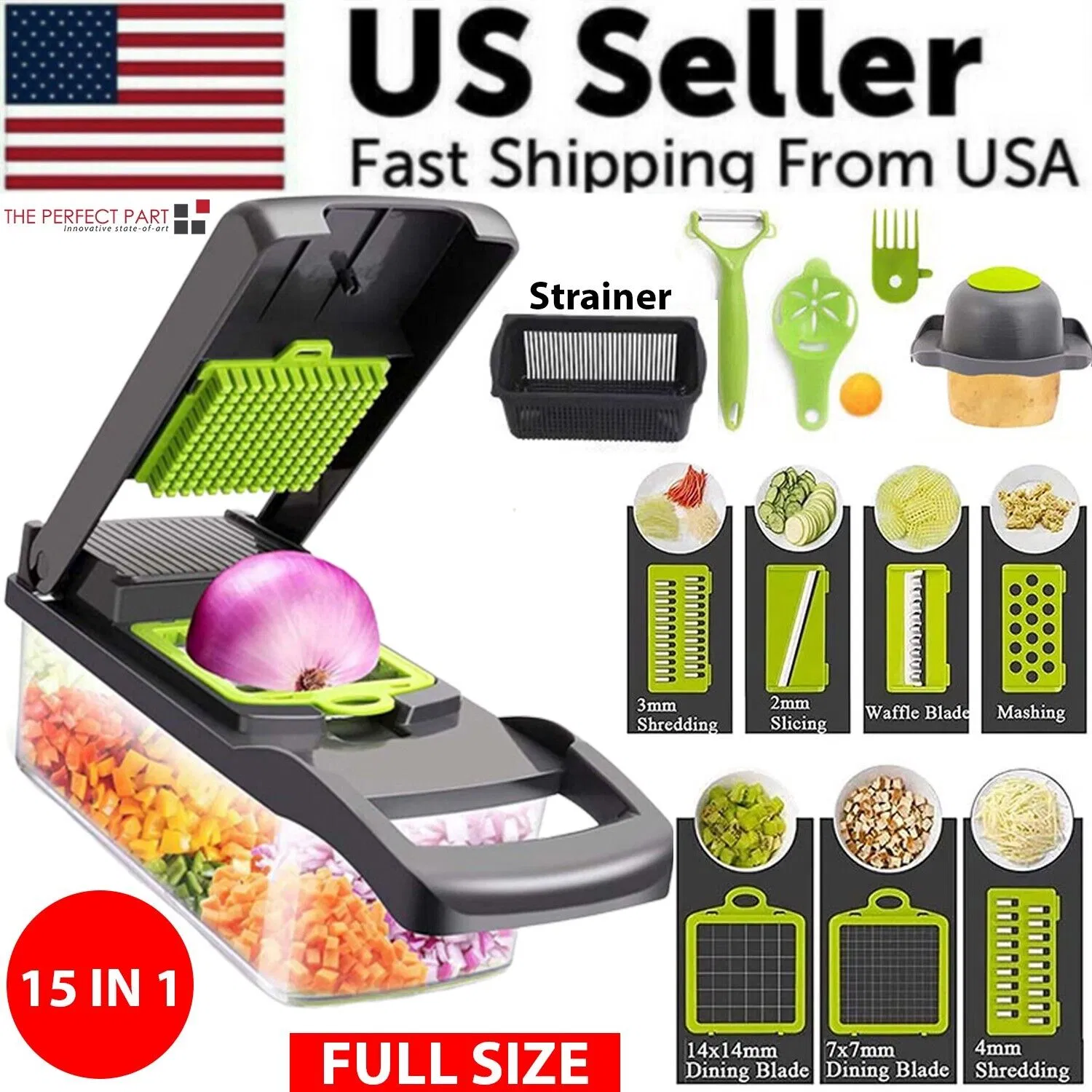 15-In-1 Vegetable Fruit Chopper Cutter Food Onion Veggie Dicer Slicer Kitchen$36.99View on Mallflare
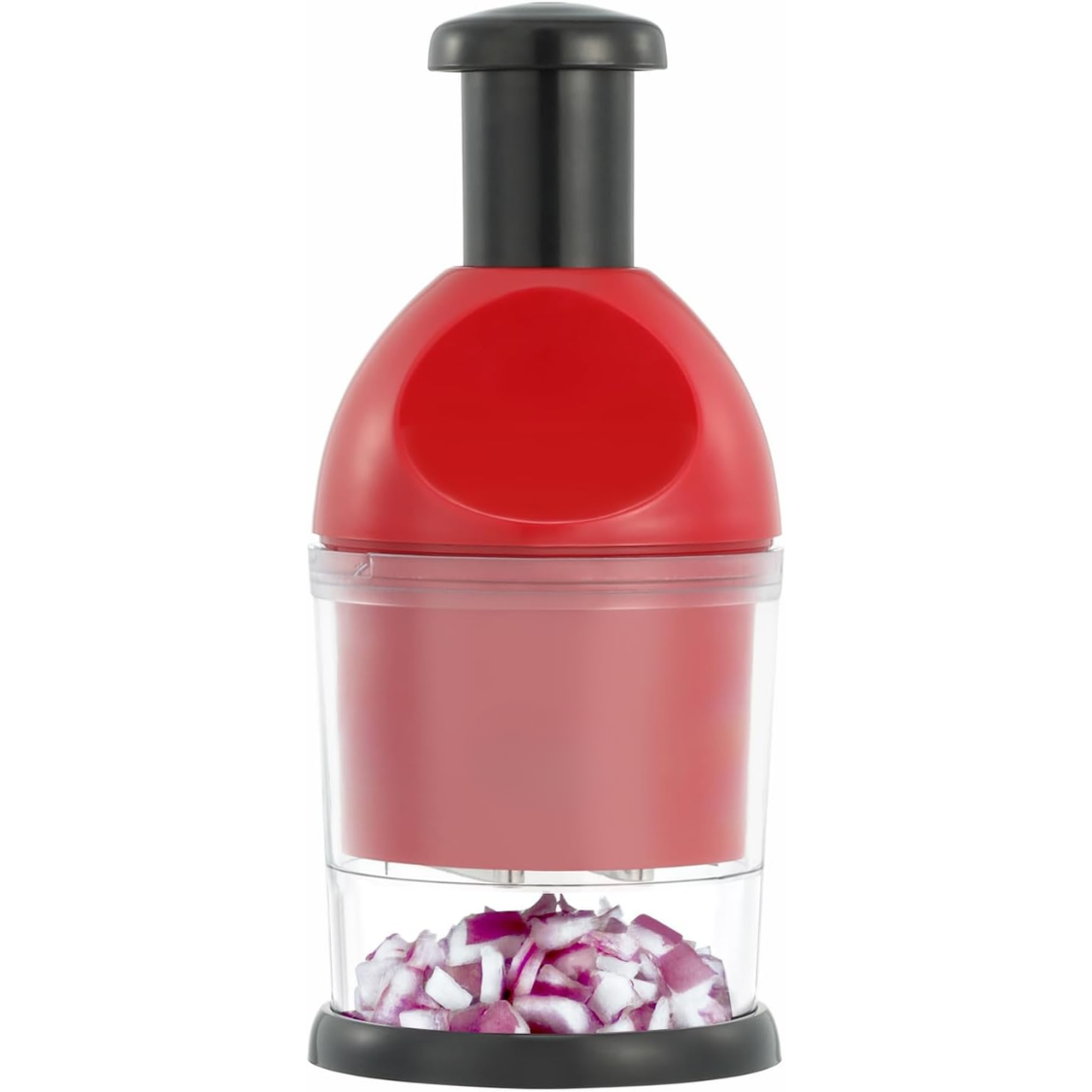 Manual Hand Food Chopper, Easy Clean Vegetable & Onion Cutter, Dishwasher Safe, Red$67.99View on Mallflare
Highlights
- Blade grid material dictates lifespan: stamped stainless-steel frames with welded cross-blades hold an edge through dense onions, while molded plastic grids flex, crack, and tear rather than cube.
- Press mechanism separates tiers: a compound lever or wide flat plunger applies even force across the grid; a small palm press concentrates force and crushes onion layers instead of slicing them cleanly.
- Dice size is fixed by the grid spacing—commonly 1/4-inch, 3/8-inch, or 1/2-inch—so buyers must match the grid to their intended use rather than expect adjustable cube sizes.
- Container integration matters for workflow: a dicer with a snap-fit catch container and drain basket keeps diced onion contained, whereas open-frame dicers require a separate bowl and create mess.
Best use cases
- Best fit: a 1/4-inch stainless-grid hand dicer with a 2-cup catch container for home cooks dicing one to three onions for salsa, mirepoix, or burgers; skip open-frame slicers that lack a container.
- Best fit: a lever-action 1/2-inch commercial-style dicer for thick-cut fries, onion rings, and bulk meal prep where speed and force matter; skip 12-in-1 multi-blade sets if you only need onion cubes.
- Wrong fit: a 15-in-1 or 26-in-1 interchangeable-blade chopper for daily onion dicing, because blade-change fiddling and plastic grid wear reduce durability; pick a dedicated single-grid dicer instead.
- Best fit: a dishwasher-safe dicer with removable blade frame for households that dice onions weekly and want easy cleanup; skip hand-wash-only models with non-removable grids if sanitation is a priority.
Buying tips
- Choose grid spacing by use: 1/4-inch for fine salsa and mirepoix, 3/8-inch for general cooking, 1/2-inch for fries and chunky stews; confirm the grid is stainless steel, not coated plastic.
- Prefer a compound-lever or wide plunger press over a small palm cap—leverage multiplies force so dense onions cut cleanly instead of crushing and releasing more tear-inducing compounds.
- Check container capacity against batch size: a 2-cup catch container handles one medium onion; for three or more onions, choose a larger container or a lever dicer with a wide chute.
- Verify blade-frame removability and dishwasher-safe rating—removable stainless frames clean fully and resist rust, while fixed plastic grids trap onion residue and degrade in heat.
Specs
| Blade Grid | Stainless steel vs plastic |
|---|---|
| Dice Size | 1/4, 3/8, or 1/2 inch fixed |
| Press Mechanism | Compound lever vs hand press |
| Container Capacity | 2-cup catch container typical |
Related searches
What to check before buying
- Measure your largest onion diameter and confirm the dicer's chute or hopper opening accepts it without pre-cutting; typical chutes fit onions up to 3 inches wide.
- Confirm counter clearance and storage space: lever-action dicers need vertical swing room and are taller, while hand-press dicers store in a drawer.
- Check that the catch container fits your workflow—2-cup capacity for small batches, larger for meal prep—and that the base has non-slip feet for stable pressing.
- Verify the blade frame is removable and dishwasher-safe, and that replacement grids are available in your desired dice size for long-term use.
FAQ
Data sources: eBay / Amazon listings and product attribute feeds. Updated Nov 27, 2026.
Some links on this page are affiliate links. If you buy after clicking one, we may earn a commission at no extra cost to you. This does not change which products appear here or their order. Affiliate disclosure.