
Photos from current listings. Actual item, color, and included accessories may vary.
Vegetable Chopper Buying Guide
A vegetable chopper is a manual or electric kitchen tool that dices, slices, and grates produce, replacing knife work for high-volume prep. The core trade-off is blade steel quality and frame rigidity versus blade-count versatility—cheap stamped blades dull and bend, while rigid stainless frames with fewer well-machined inserts outlast 12-in-1 kits with brittle plastic. Buy a chopper with stamped stainless blades (not coated carbon steel) and a reinforced push-block; skip anything with flexible plastic hinges or unhardened blades marketed on blade count alone.
Median $54.99
Key takeaways
- Blade material determines lifespan: hardened stainless steel (grades like 420 or 304) holds an edge through onion and carrot work, while coated carbon-steel blades chip and rust within months.
- Frame construction separates durable units from disposable ones: reinforced ABS or polypropylene bodies with metal hinge pins survive firm pushes; all-plastic snap-fit frames crack at the hinge under dense vegetables.
- Blade-count kits trade precision for versatility: 12-in-1 and 16-in-1 sets include interchangeable inserts for dicing, julienne, and grating, but each insert must lock flush or food wedges under the blade.
At a glance
- Category
- Food Preparation
- Last updated
- Nov 27, 2026
Current offers
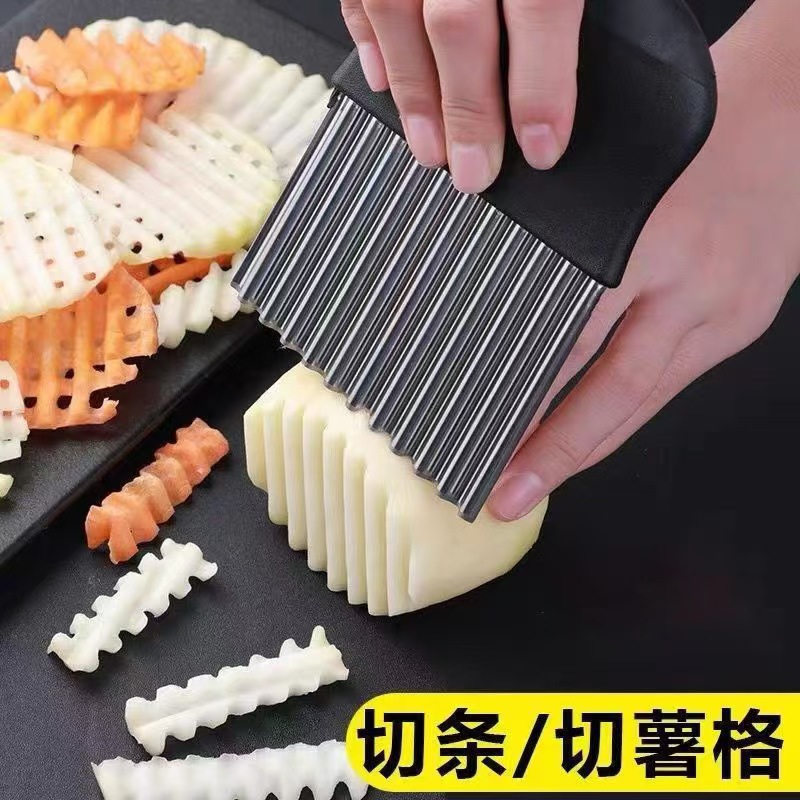 Large Crinkle Cutter - French Fry Slicer - Potato Knife Fruit Vegetable Wavy Chopper - Stainless Steel Blade Cutting Tool$9.99View on Mallflare
 Vegetable Fruit Salad Onion Garlic Food Hand Chopper Cutter Slicer Peeler Dicer$20.99View on Mallflare
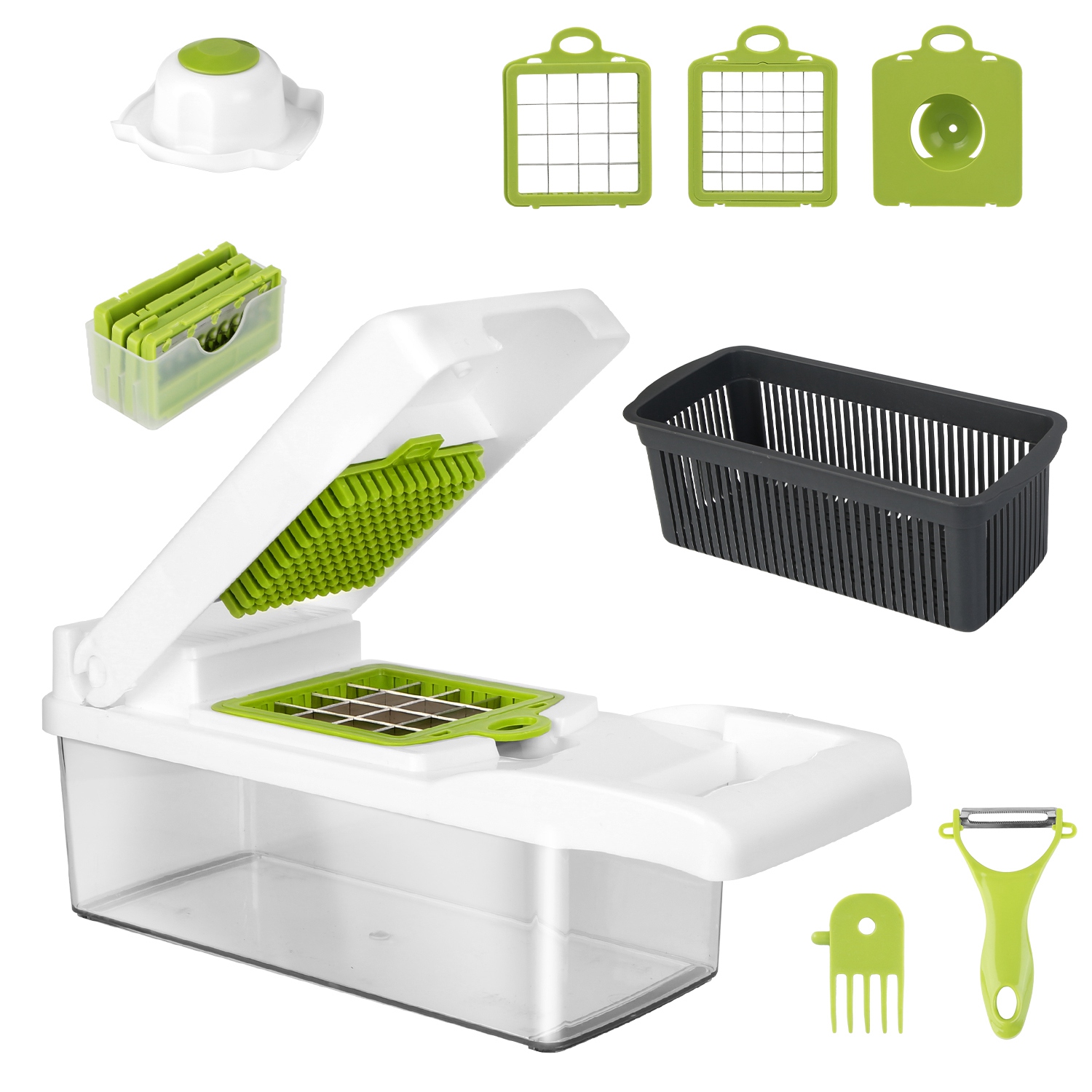 1Set 12 In 1 Vegetable Chopper With Container Kitchen Food Slicer Dicer Grater Peeler Egg Separator Hand Protector For Onion Salad Potato$29.99View on Mallflare
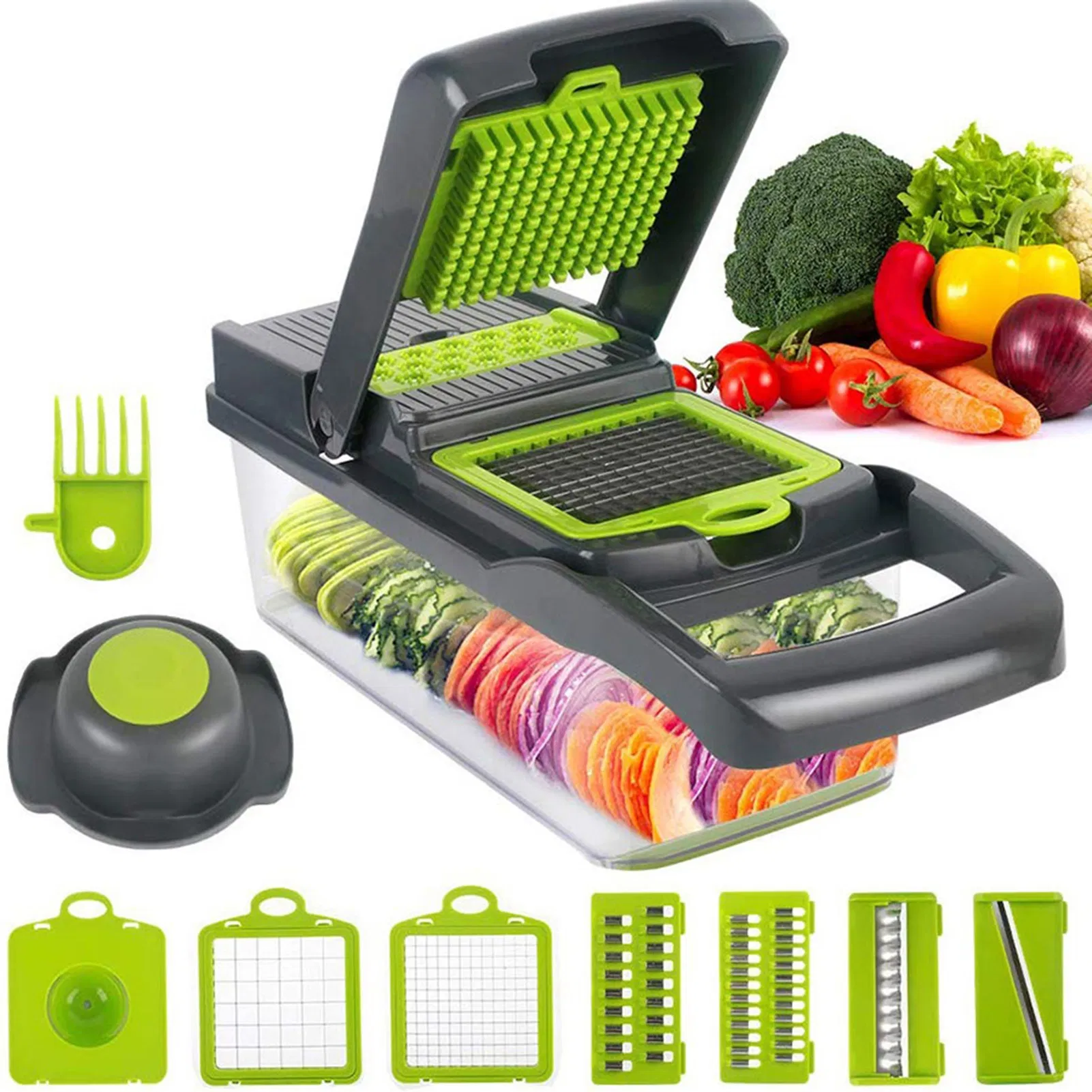 Vegetable Chopper Dicer with Container | Cheese Grater Mandoline Slicer Cabbage Shredder French Fry Cutter Stainless Steel for Veggie Onion Potato Fruit Food, Manual Hand Cooking Gadget for Kitchen$30.99View on Mallflare
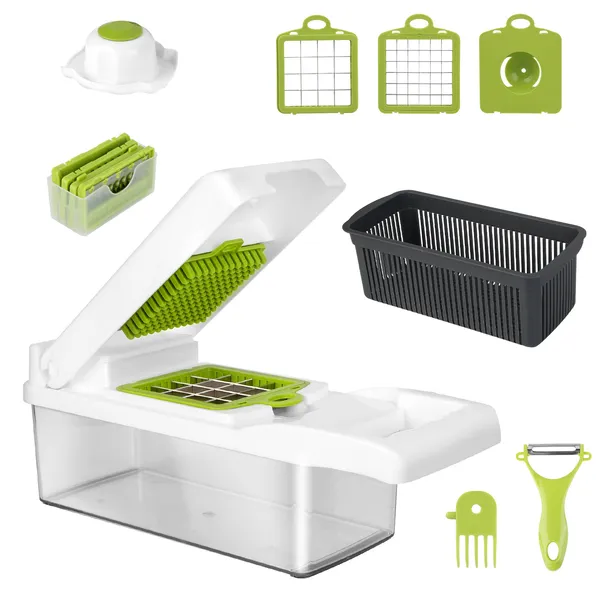 12 In 1 Vegetable Chopper With Container Kitchen Food Slicer Dicer Grater$31.99View on Mallflare
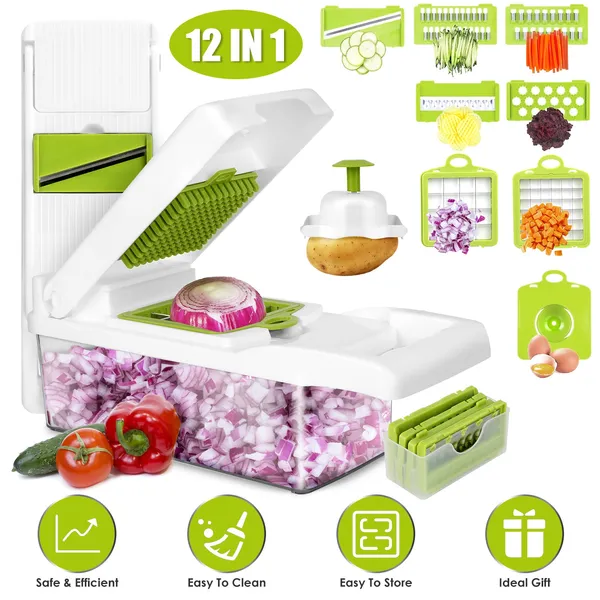 12 In 1 Vegetable Chopper With Container Kitchen Food Slicer Dicer Grater Peeler Egg Separator Hand Protector For Onion Salad Potato GPCT2055Pro$31.99View on Mallflare
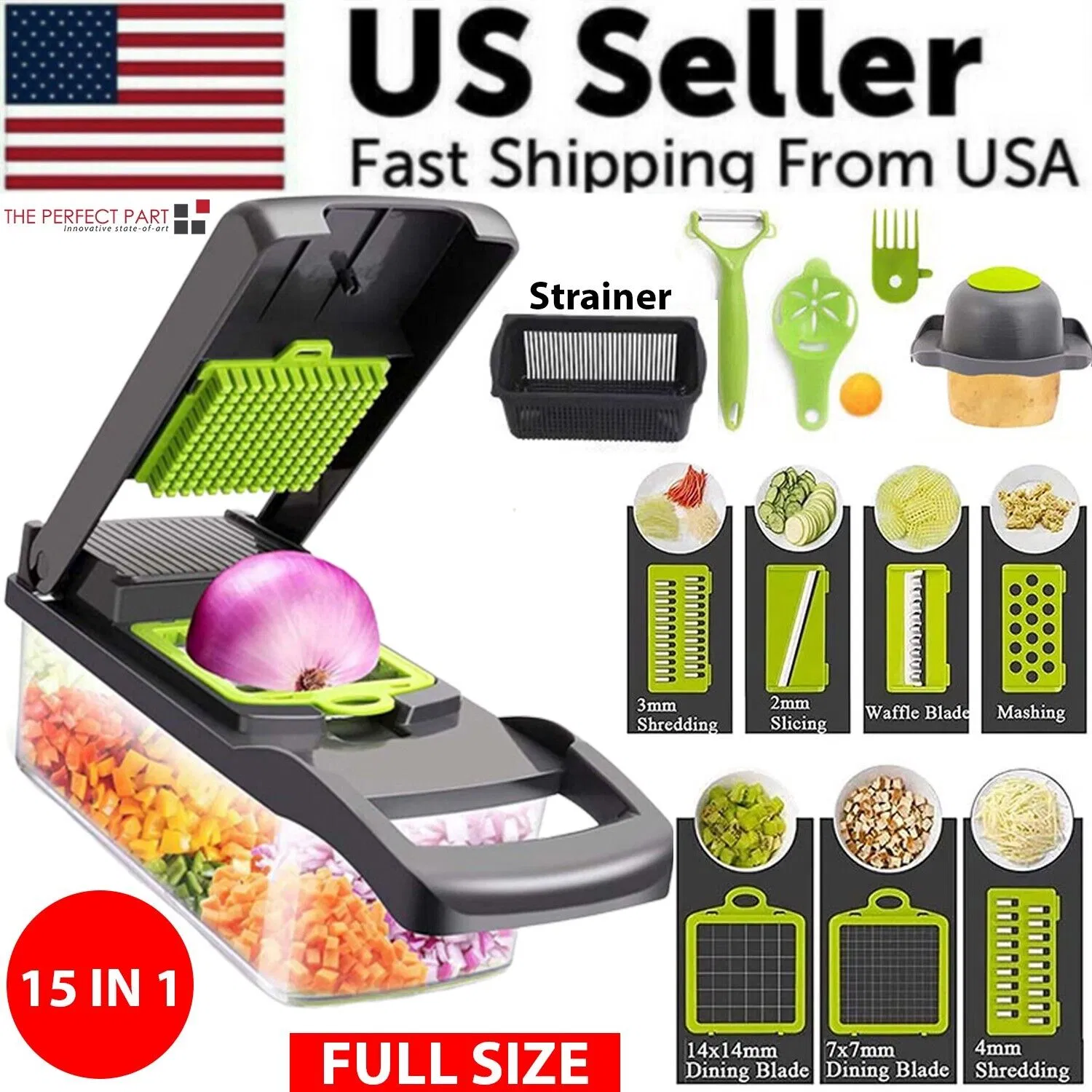 15-In-1 Vegetable Fruit Chopper Cutter Food Onion Veggie Dicer Slicer Kitchen$36.99View on Mallflare
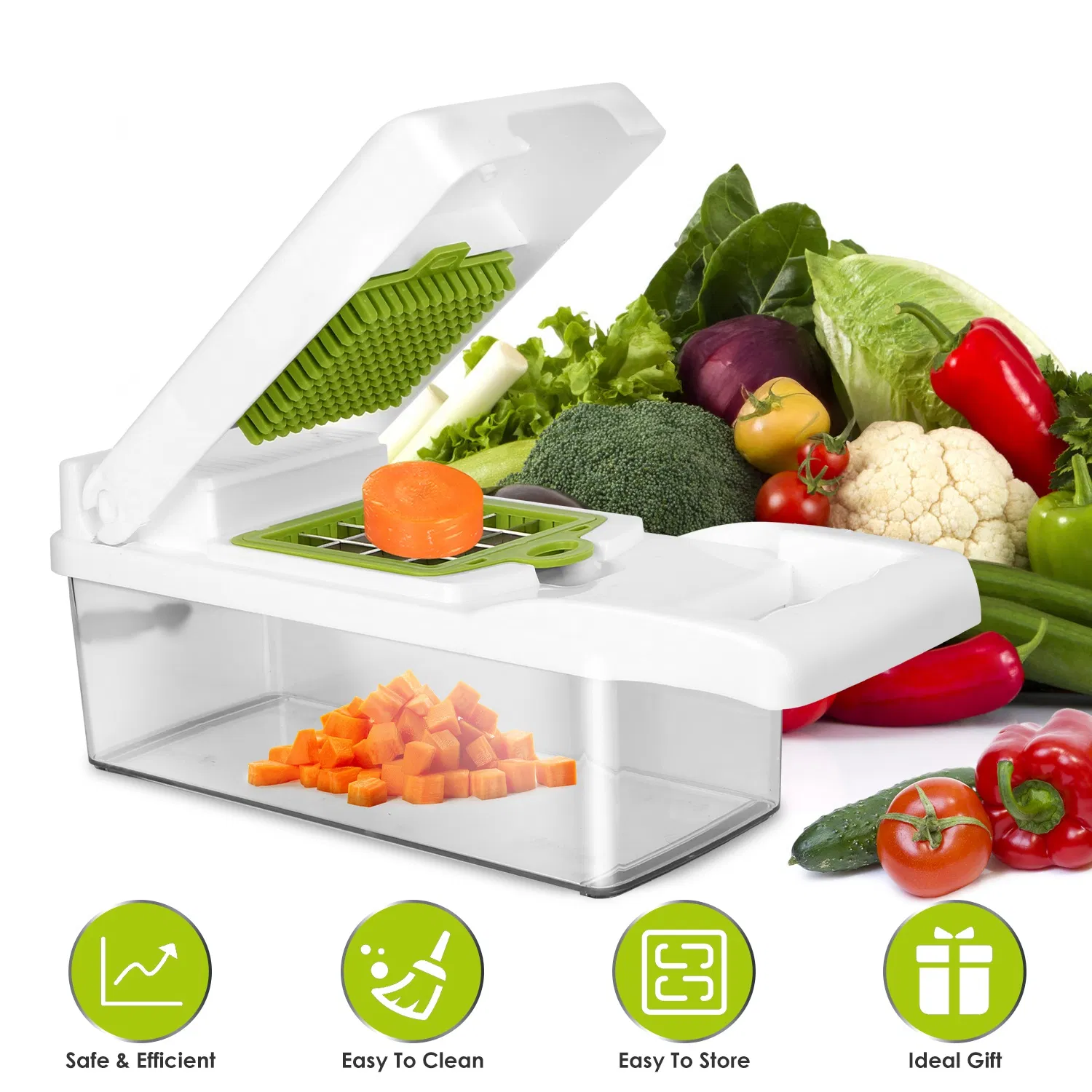 12 in 1 Vegetable Chopper, Multifunctional Food Slicer Dicer Grater with Hand Protector, Egg Separator & Peeler, Kitchen Veggie Cutter for Onion, Cheese, Fruit$37.99View on Mallflare
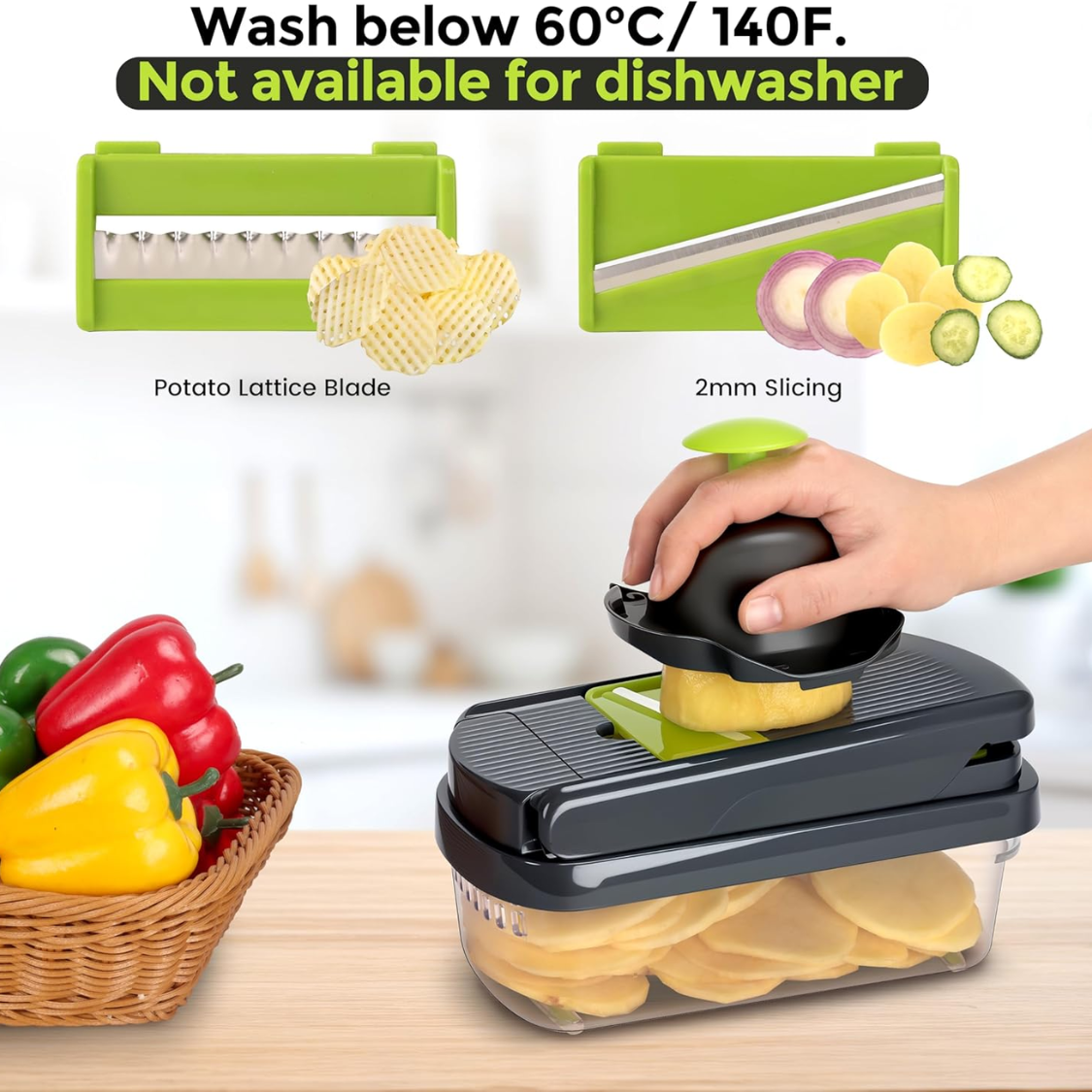 Vegetable Chopper, 12 In 1 Food Veggie Cutter With Container 7 Sharp Blades Dice, Slice, Shred And Grate For Salads, Onions And Meal Prep A Non-Slip Base And Drain Basket$50.99View on Mallflare
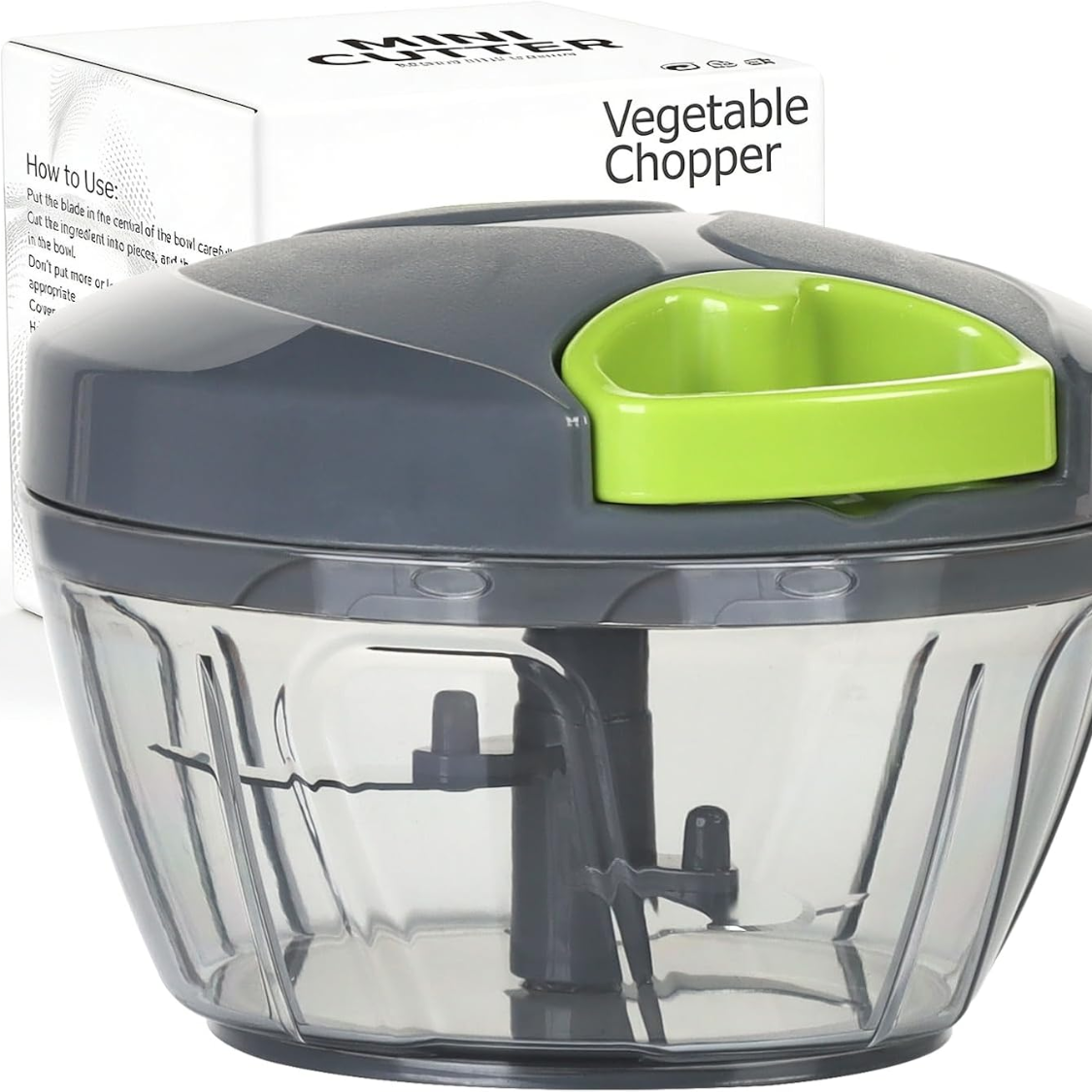 Manual Pull String Food Chopper, 500ml Vegetable Cutter & Garlic Mincer, Grey$52.99View on Mallflare
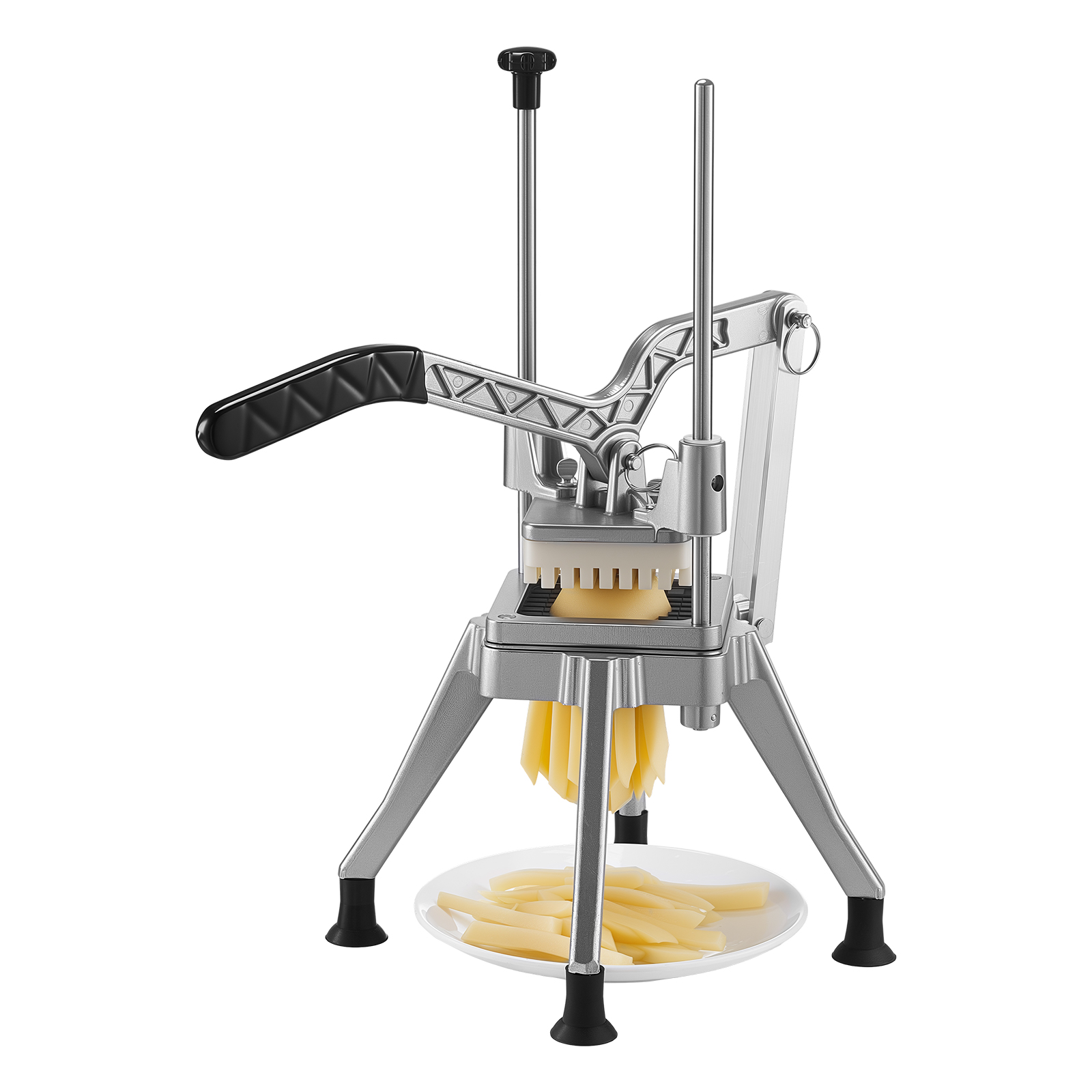 French Fry Cutter, 3/8" Blade Commercial Vegetable Chopper, Lever-Action Dicer With Ergonomic Handle, Stainless Steel Potato Slicer For Classic Cut Fries, Onion, Carrots, Bell Pepper$52.99View on Mallflare
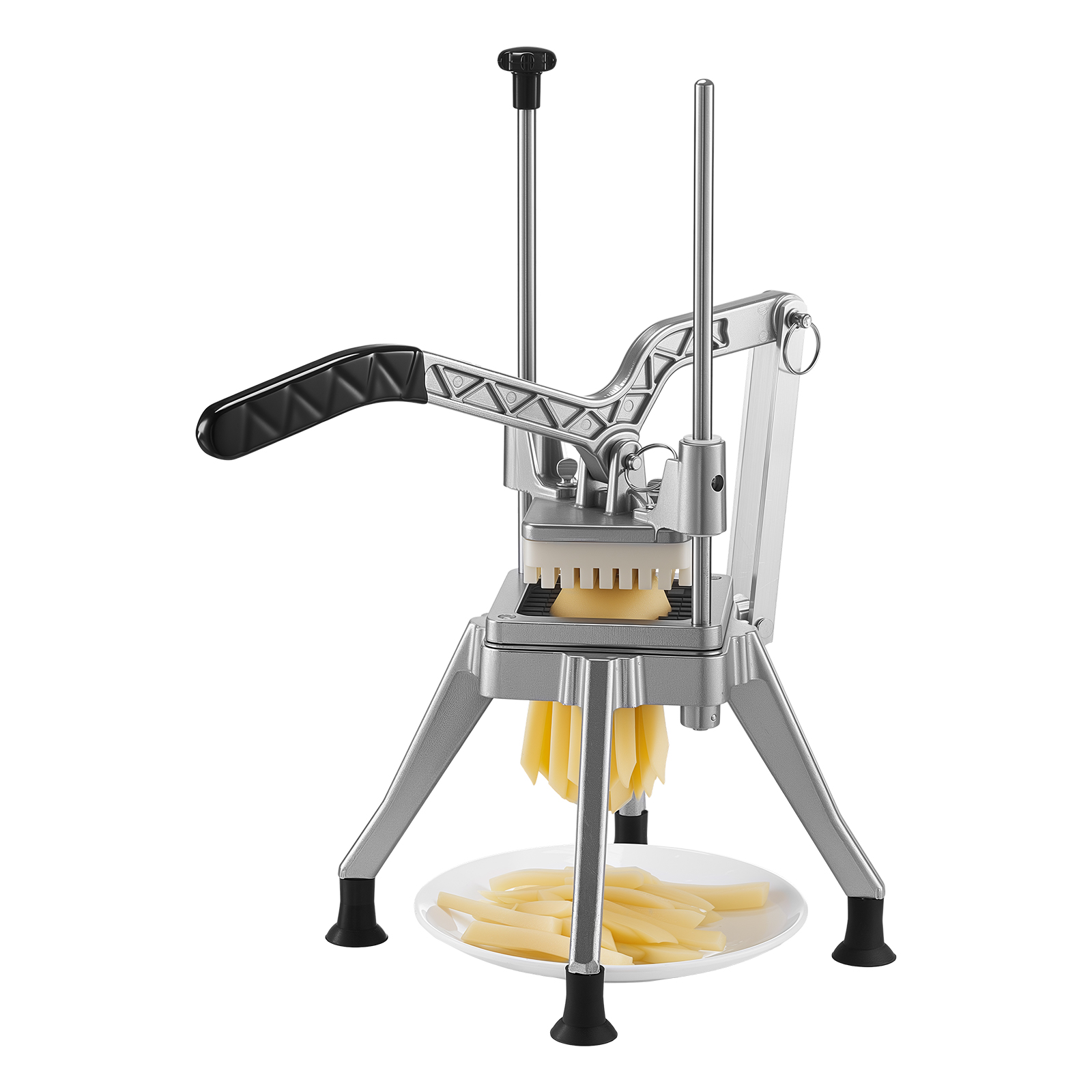 French Fry Cutter, 1/4" Blade Commercial Potato Chopper, Lever-Action Vegetable Dicer With Ergonomic Handle, Stainless Steel Slicer For Thin Cut Fries, Onion, Carrots, Bell Pepper$56.99View on Mallflare
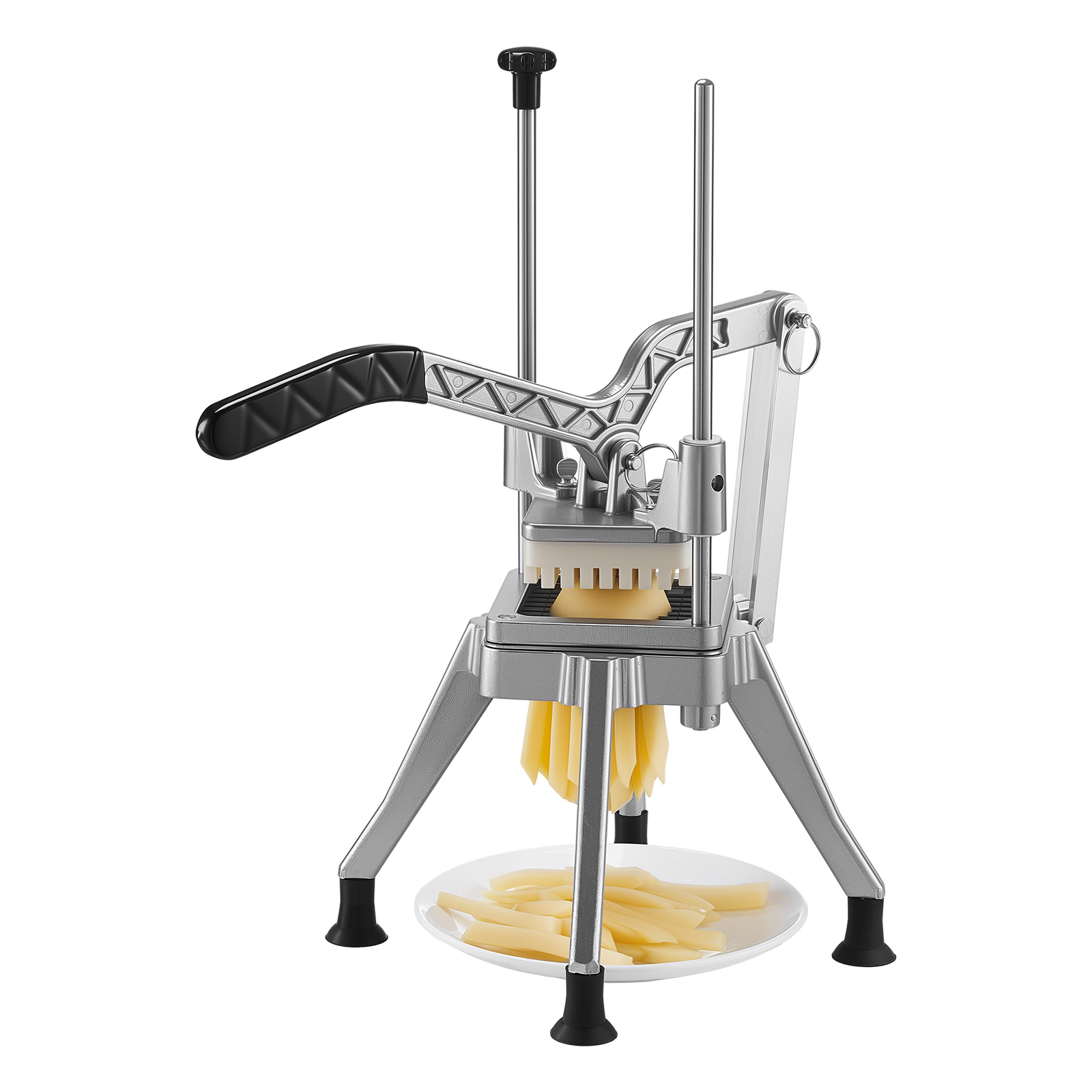 French Fry Cutter, 1/2" Blade Commercial Vegetable Chopper, Lever-Action Dicer With Ergonomic Handle, Stainless Steel Potato Slicer For Thick Cut Fries, Onion, Carrots, Bell Pepper$63.99View on Mallflare
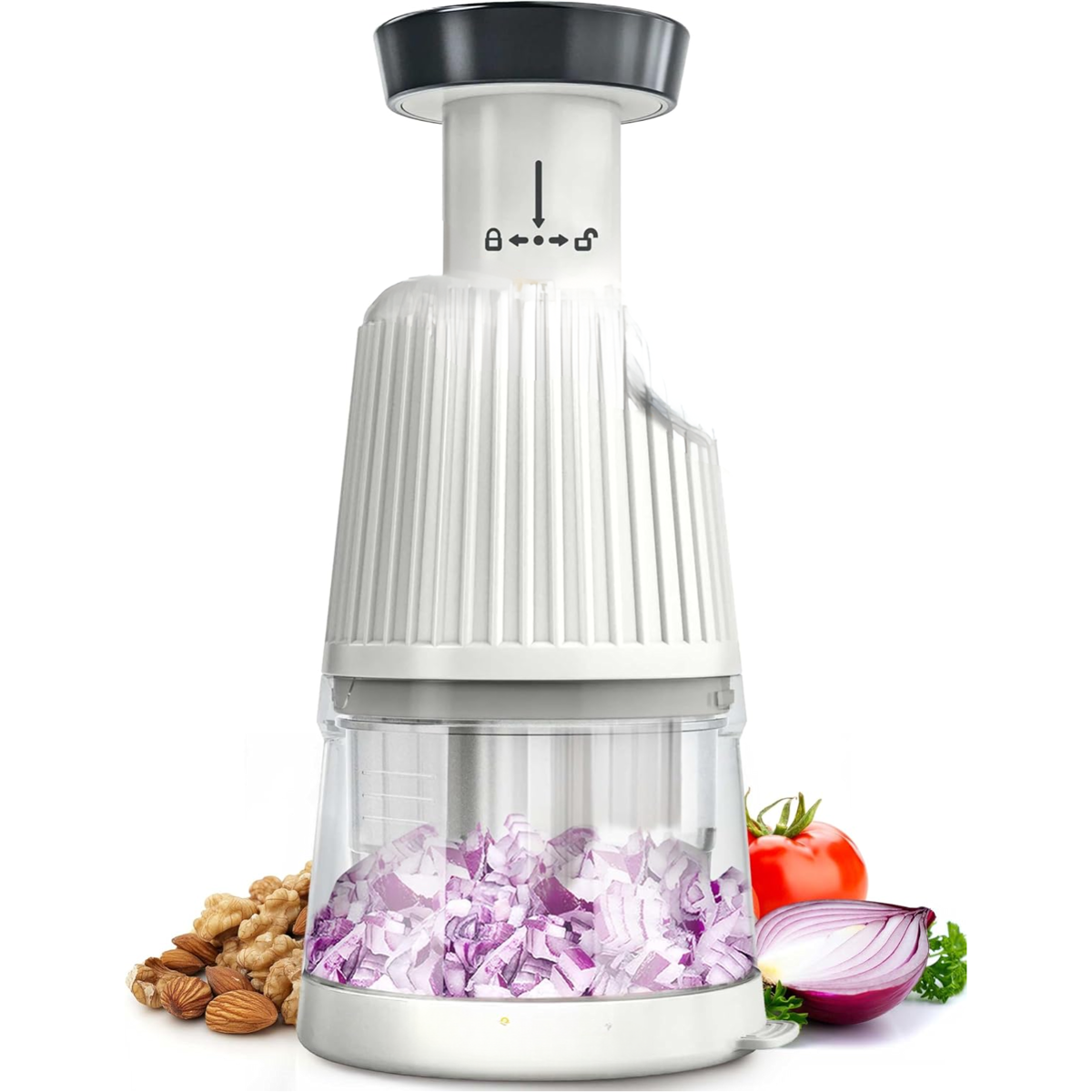 Push Food & Vegetable Chopper, Manual Dicing Cutter For Easy Kitchen Prep$63.99View on Mallflare
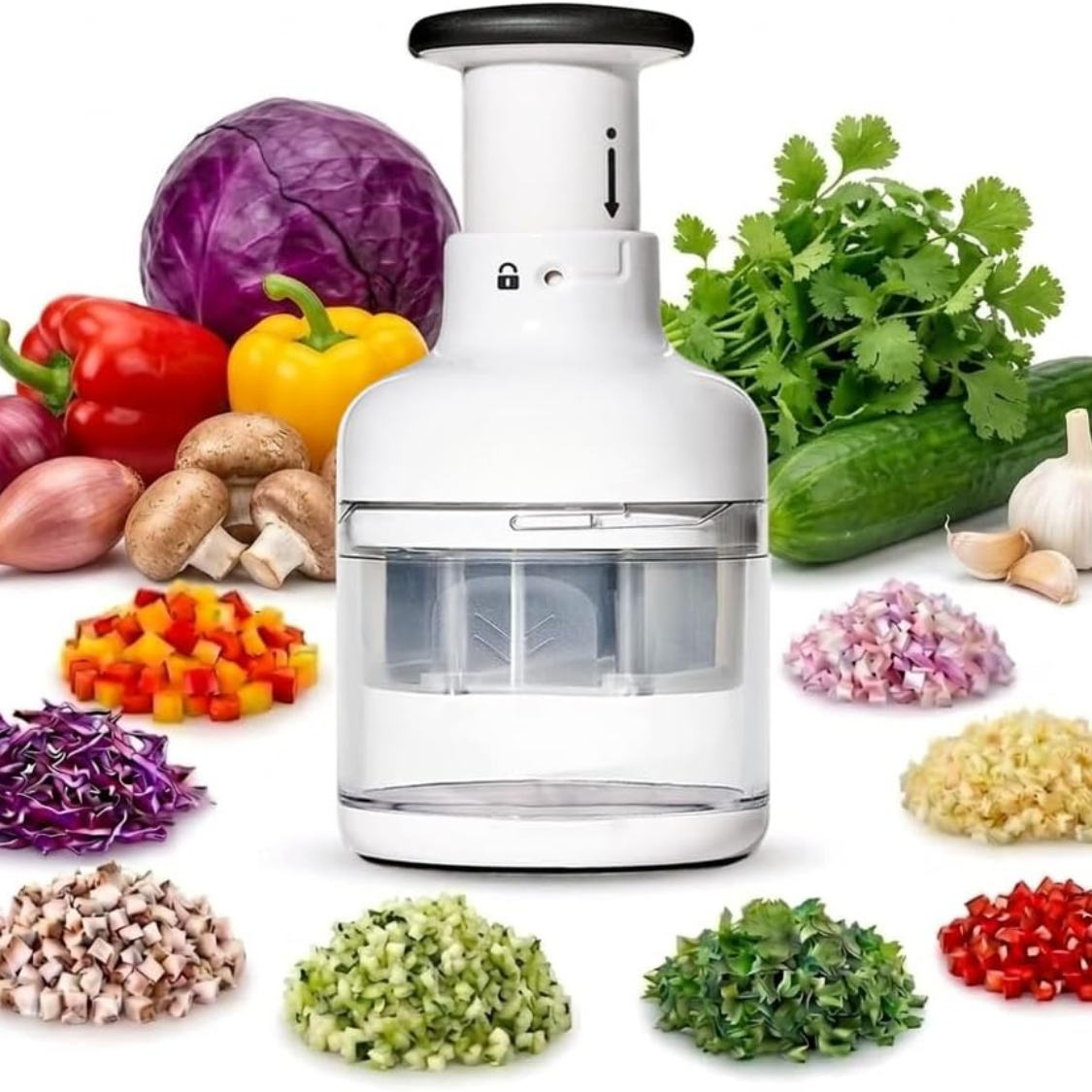 Manual Vegetable, Nut & Garlic Chopper With Container And Lid, Kitchen Food Prep Tool$63.99View on Mallflare
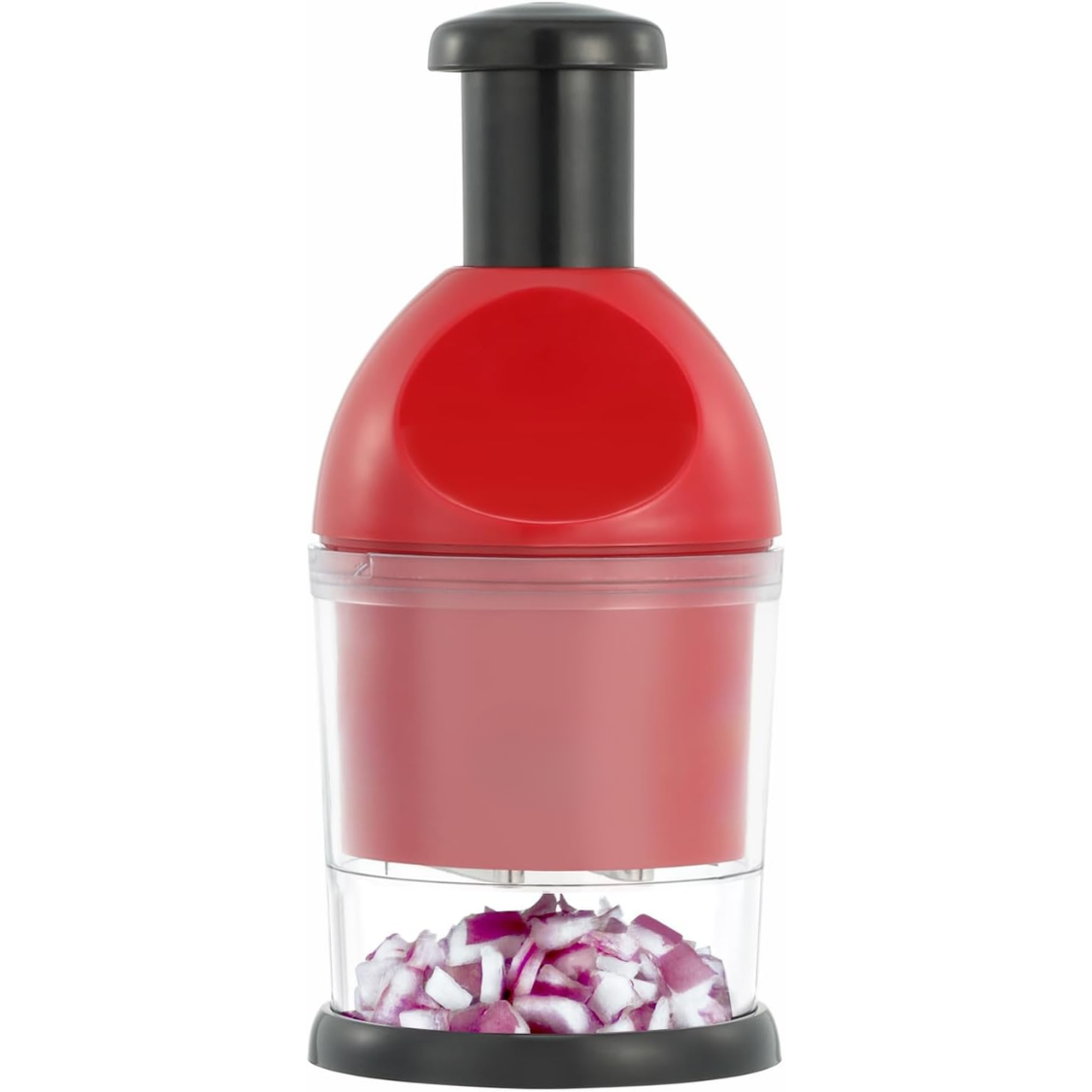 Manual Hand Food Chopper, Easy Clean Vegetable & Onion Cutter, Dishwasher Safe, Red$67.99View on Mallflare
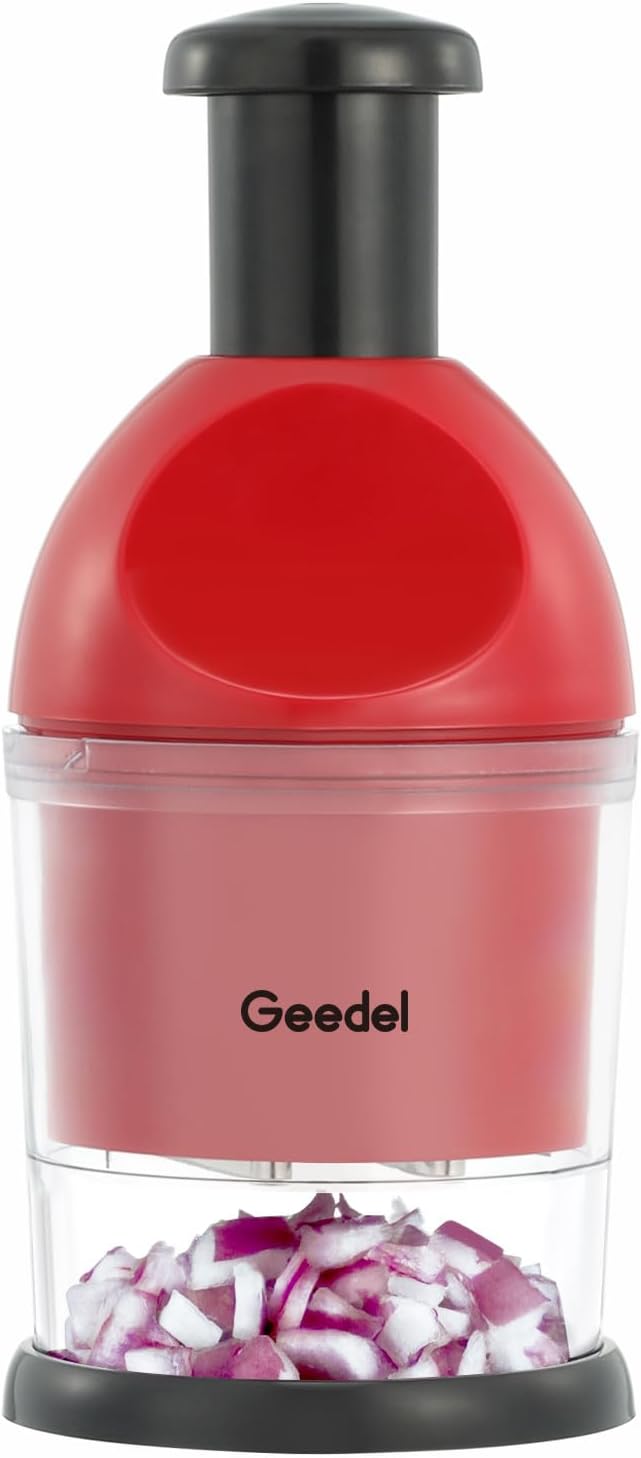 Food Chopper, Manual Hand Vegetable Easy Clean, Dishwasher Safe Slap Onion Cutter For Veggies, Garlic, Nuts & Salads$67.99View on Mallflare
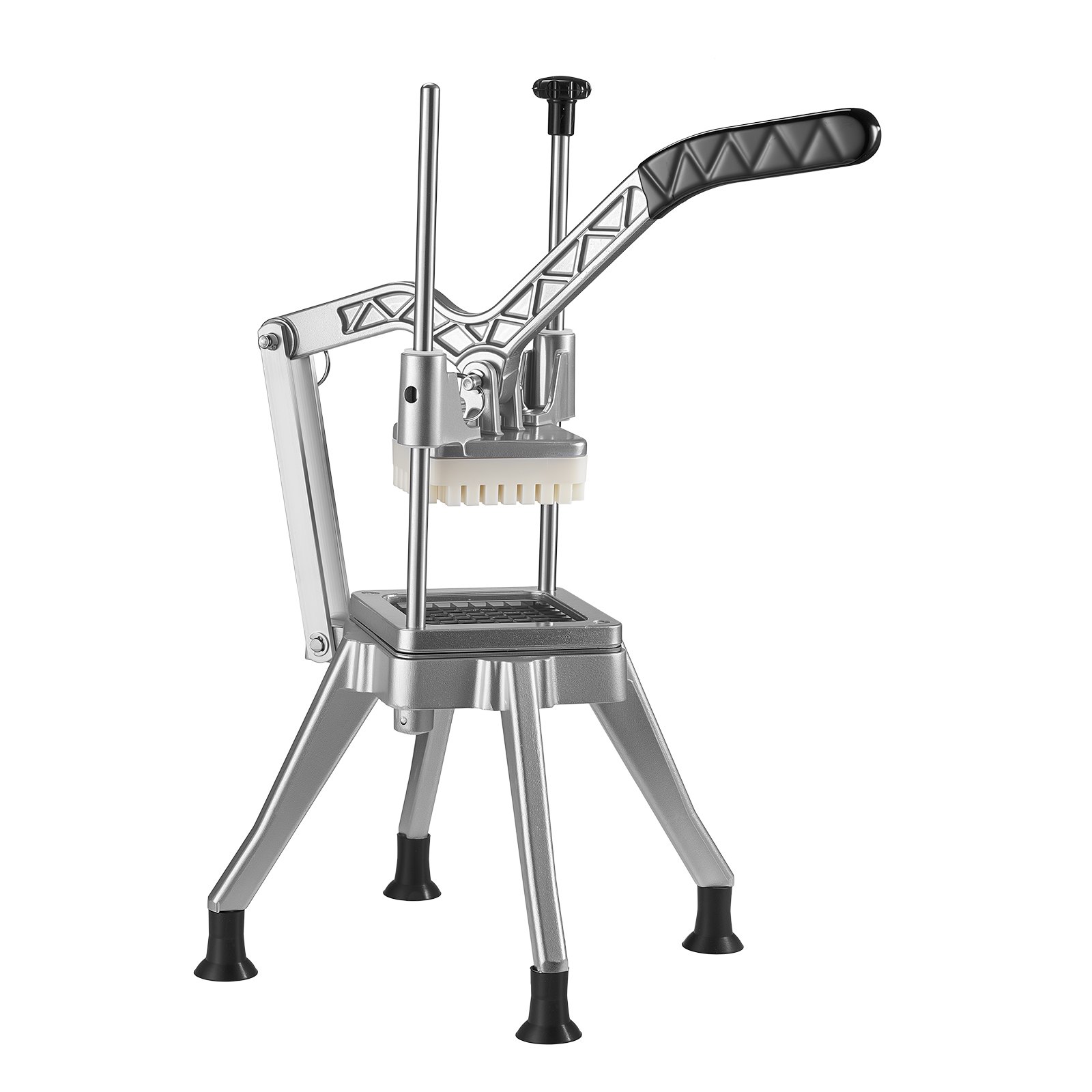 French Fry Cutter, Commercial Vegetable Chopper With 4 Blades (1/2", 3/8", 1/4" & 6-Wedge Corer), Lever Stainless Steel Potato Slicer For Home Thick, Regular & Thin Fries Cut, Onion, Fruit$72.99View on Mallflare
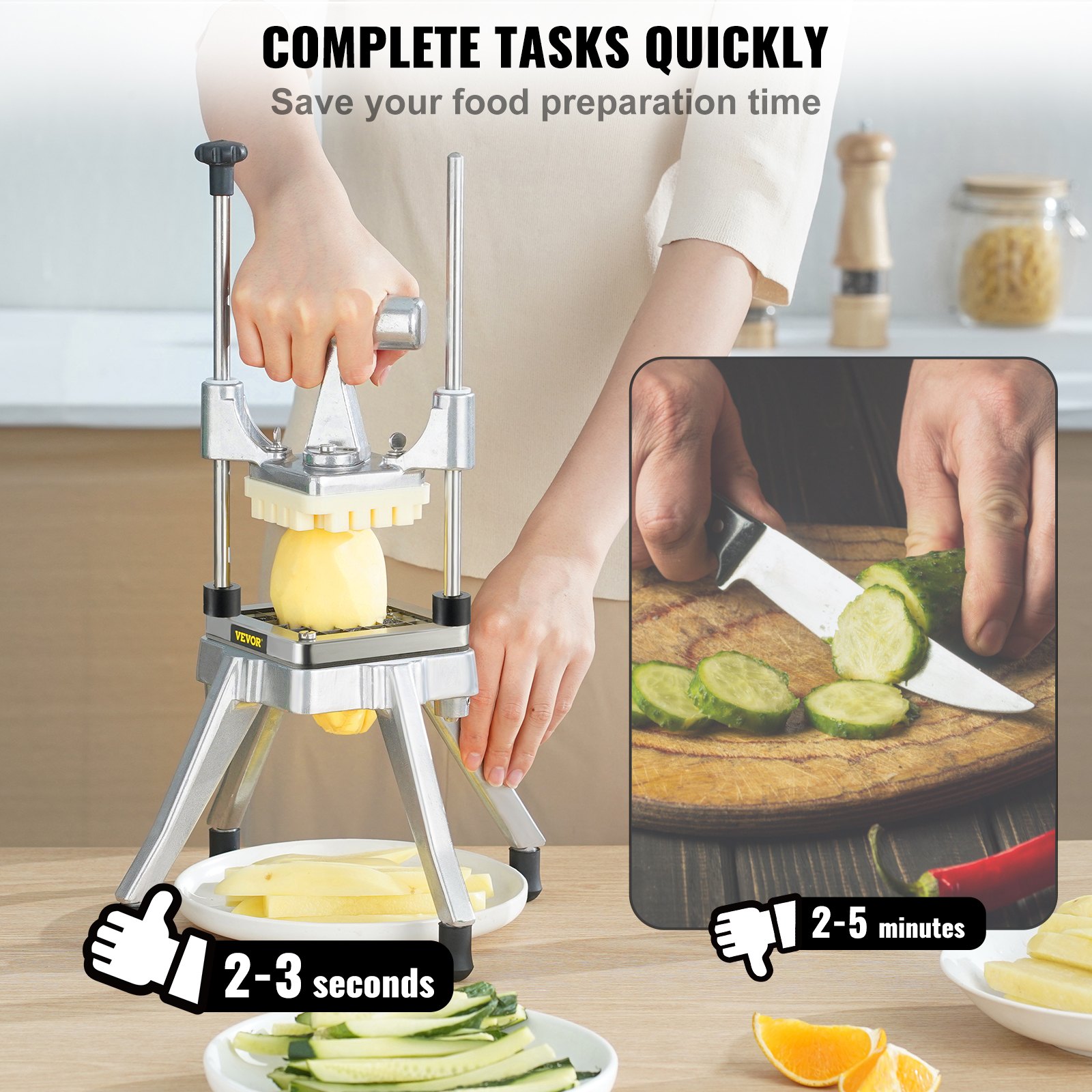 Commercial Vegetable Fruit Chopper, Stainless Steel French Fry Cutter With 4 Blades$88.99View on Mallflare
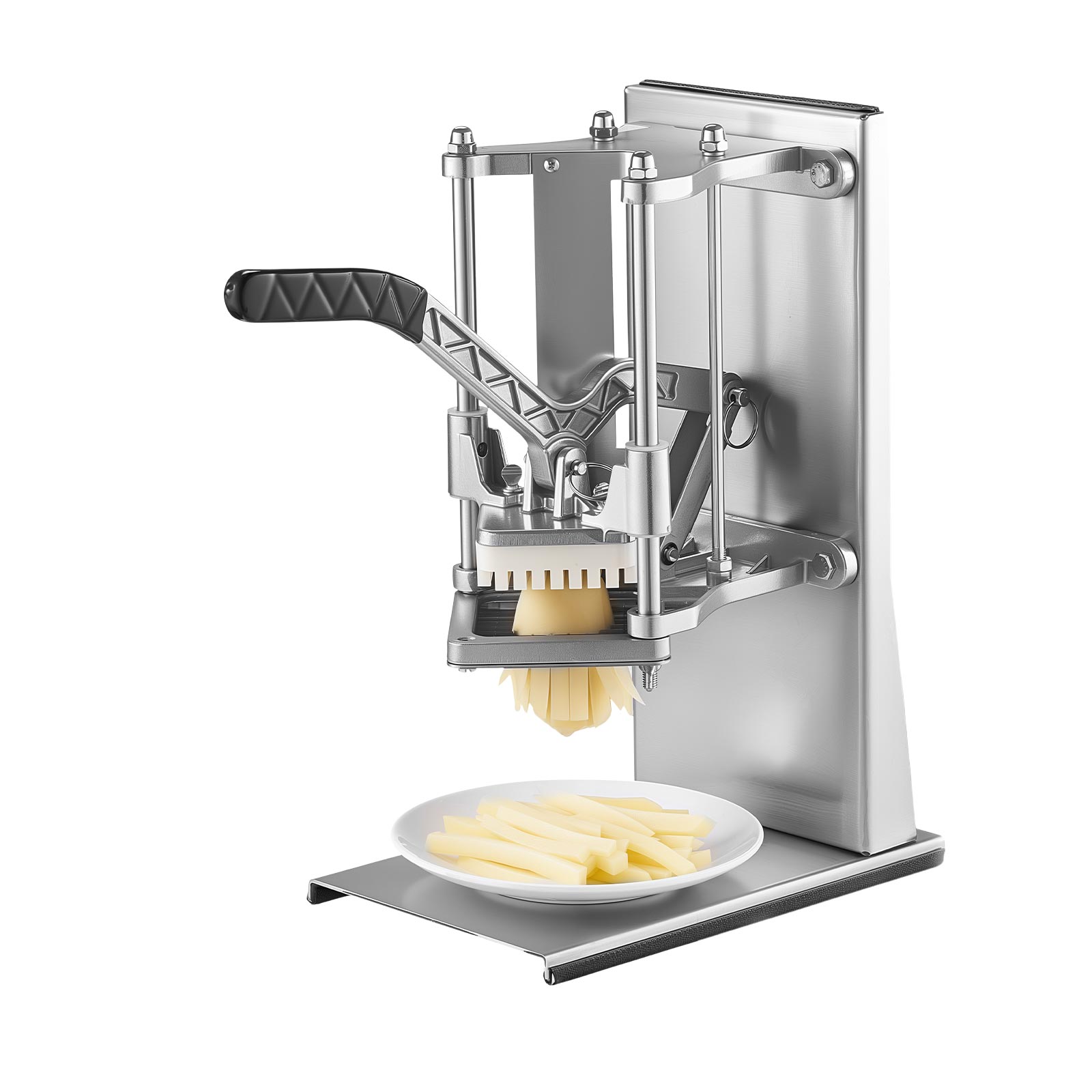 French Fry Cutter, Commercial Vegetable Chopper With 4 Blades - 1/4", 3/8", 6-Wedge Slicer & Apple Corer - Wall Mount Stainless Steel Potato For Home & Restaurant Use$101.99View on Mallflare
Highlights
- Blade material determines lifespan: hardened stainless steel (grades like 420 or 304) holds an edge through onion and carrot work, while coated carbon-steel blades chip and rust within months.
- Frame construction separates durable units from disposable ones: reinforced ABS or polypropylene bodies with metal hinge pins survive firm pushes; all-plastic snap-fit frames crack at the hinge under dense vegetables.
- Blade-count kits trade precision for versatility: 12-in-1 and 16-in-1 sets include interchangeable inserts for dicing, julienne, and grating, but each insert must lock flush or food wedges under the blade.
- Container capacity and lid interlock matter: a 1.5–2 L catch container with a locking lid keeps diced onion contained; friction-fit lids pop off under pressure and spill prep across the counter.
Best use cases
- Best for daily onion, pepper, and potato dicing: a 7- to 12-blade manual chopper with a stainless dicing grid and 1.5 L container—pick this over a single-blade slicer for speed and consistency.
- Best for salad and garnish prep: a mandoline-style chopper with adjustable slice thickness (1–5 mm) and julienne inserts; skip heavy 16-in-1 kits if you only slice cucumbers and cabbage.
- Best for small kitchens with limited storage: a 4-in-1 compact chopper with nesting blades stores in a drawer; avoid full 12-in-1 sets whose loose inserts scatter and get lost.
- Wrong fit: electric food processors if you want quick single-onion dicing with rinse-clean convenience—manual choppers win on cleanup speed and counter footprint for small batches.
Buying tips
- Match blade count to your actual prep: 4–7 blades cover slicing, dicing, and grating; 12+ blade kits add egg separators and peelers that rarely justify the extra storage and misalignment risk.
- Check blade steel grade before buying: look for 420 or 304 stainless; avoid 'stainless steel' claims without a grade on coated or stamped carbon blades that dull on carrots.
- Verify dicing grid size in millimeters: common grids are 6 mm, 10 mm, and 14 mm; choose 10 mm for salsa and salad, 6 mm for fine brunoise, 14 mm for stews and roasting.
- Confirm container volume and lid lock: 1.5–2 L handles a full onion and two peppers; a locking lid with a silicone gasket prevents spills when pressing dense vegetables.
Specs
| Blade Material | 420/304 stainless vs coated carbon |
|---|---|
| Blade Count | 4-7 essential / 12-16 versatile |
| Dice Grid Size | 6 / 10 / 14 mm grids |
| Container Capacity | 1.5-2 L locking lid |
Related searches
What to check before buying
- Measure your tallest drawer or cabinet shelf: 12-in-1 sets with storage cases run 30–35 cm tall; confirm the closed unit and blade case fit before buying.
- Check counter and sink clearance: a chopper with a 2 L container needs roughly 30 cm of counter depth and a basin wide enough to rinse the grid without splashing.
- Verify blade storage: loose inserts need a dedicated case or lid-mounted slots; confirm the kit includes a blade holder to avoid cut fingers in the drawer.
- Confirm hand-protector inclusion: choppers with exposed grating blades should ship with a food holder or cut-resistant glove; skip kits that omit one for grating and mandoline work.
FAQ
Data sources: eBay / Amazon listings and product attribute feeds. Updated Nov 27, 2026.
Some links on this page are affiliate links. If you buy after clicking one, we may earn a commission at no extra cost to you. This does not change which products appear here or their order. Affiliate disclosure.