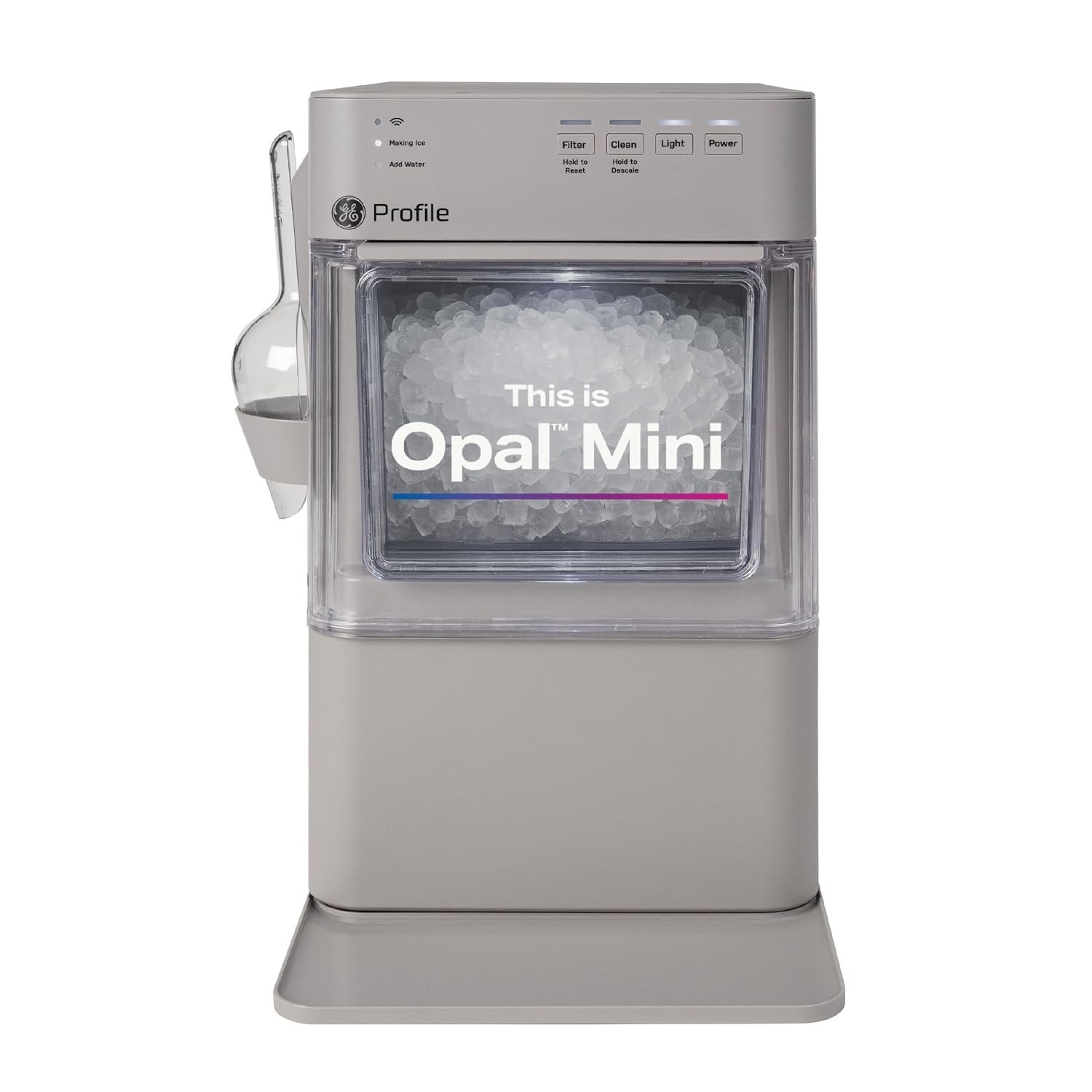

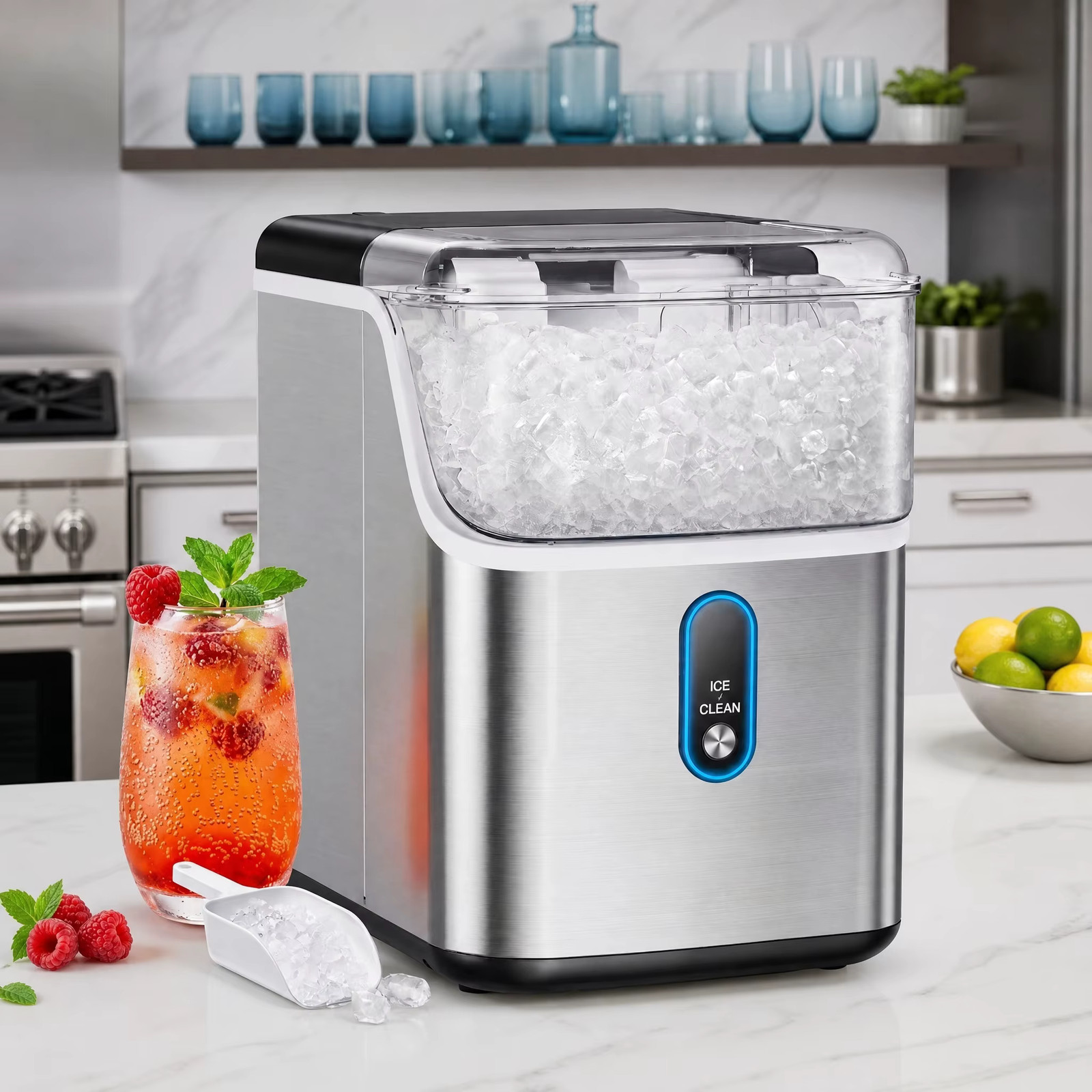
Photos from current listings. Actual item, color, and included accessories may vary.
Pellet Ice Maker Buying Guide
Pellet ice makers produce soft, chewable nugget-style ice by compressing flaked ice through an extruder, unlike hard-cube machines that freeze solid blocks. The core trade-off is production speed and chewable texture versus output volume, drain requirements, and long-term reliability of the auger-and-compressor assembly. Choose a machine with a metal auger, a specified daily output rating, and a gravity or pump drain matched to your counter setup; skip units that list only 'chewable ice' with no output or drain spec.
Median $262.16 · New & pre-owned listings
Key takeaways
- Pellet (nugget) ice is made by scraping a frozen flake barrel with a metal auger and extruding it—units with stainless or coated augers resist jamming and wear better than bare aluminum.
- Daily output is rated in pounds per 24 hours; countertop pellet makers typically run 30–45 lb/day with 2–3 lb internal bins, while undercounter models reach higher capacity with continuous drain.
- Drain method splits into gravity drain (needs counter edge or drilled sink access) versus built-in drain pump (can push water upward, required for enclosed cabinets).
At a glance
- Category
- Ice Makers
- Last updated
- Nov 28, 2026
Current offers
Highlights
- Pellet (nugget) ice is made by scraping a frozen flake barrel with a metal auger and extruding it—units with stainless or coated augers resist jamming and wear better than bare aluminum.
- Daily output is rated in pounds per 24 hours; countertop pellet makers typically run 30–45 lb/day with 2–3 lb internal bins, while undercounter models reach higher capacity with continuous drain.
- Drain method splits into gravity drain (needs counter edge or drilled sink access) versus built-in drain pump (can push water upward, required for enclosed cabinets).
- Cooling architecture matters: compressor-based units deliver consistent nugget hardness and faster recovery; thermoelectric versions are slower and softer but quieter and lighter.
Best use cases
- Best fit: a home kitchen with counter space and a nearby sink for gravity drain—pick a 33–45 lb/day countertop unit with a removable bin and self-clean cycle.
- Best fit: an outdoor bar or basement wet bar without a floor drain—choose a model with an integrated drain pump and a rated ambient temperature range covering that space.
- Wrong fit: a household wanting ice for large coolers or parties—pellet makers top out far below cube machines; step up to a higher-capacity undercounter or commercial nugget unit instead.
- Wrong fit: an unheated garage or RV in freezing climates—most pellet makers specify a minimum ambient temperature; below that, the flake barrel ices up and the auger stalls.
Buying tips
- Calculate daily need at roughly 1–1.5 lb of ice per person per day; a 33 lb/day unit suits 3–5 people, and a 45 lb/day unit suits heavier entertaining.
- Measure cabinet or counter depth before buying: countertop nugget makers commonly run 10–17 in wide and 12–18 in tall, and need 2–4 in rear clearance for airflow.
- For undercounter installs, confirm the cutout height (often 33–34 in standard) and whether the unit vents from the front—rear-venting models fail in enclosed cabinets.
- Prefer units listing a refrigerant type (R600a or R134a) and a metal auger; 'chewable ice' claims without an auger material or output rating signal a weak build.
Specs
| Ice Type | Soft chewable nugget / pellet |
|---|---|
| Daily Output | 30–45 lb/24 hr (countertop class) |
| Drain Method | Gravity drain or built-in pump |
| Auger Material | Stainless or coated metal |
Related searches
What to check before buying
- Counter or cutout dimensions: measure width, depth, height, and door swing, then leave 2–4 in rear/side clearance for compressor airflow.
- Drain path: identify a sink, floor drain, or condensate pump location; gravity drain needs a downward slope, pump drain needs a power outlet nearby.
- Power: confirm a grounded 115V outlet on a dedicated or lightly loaded circuit; pellet makers draw high current during the freeze cycle.
- Water and climate: check ambient temperature range (often 50–90°F) and whether the unit accepts a direct water line or needs manual reservoir fills.
FAQ
Data sources: eBay / Amazon listings and product attribute feeds. Updated Nov 28, 2026.
Some links on this page are affiliate links. If you buy after clicking one, we may earn a commission at no extra cost to you. This does not change which products appear here or their order. Affiliate disclosure.