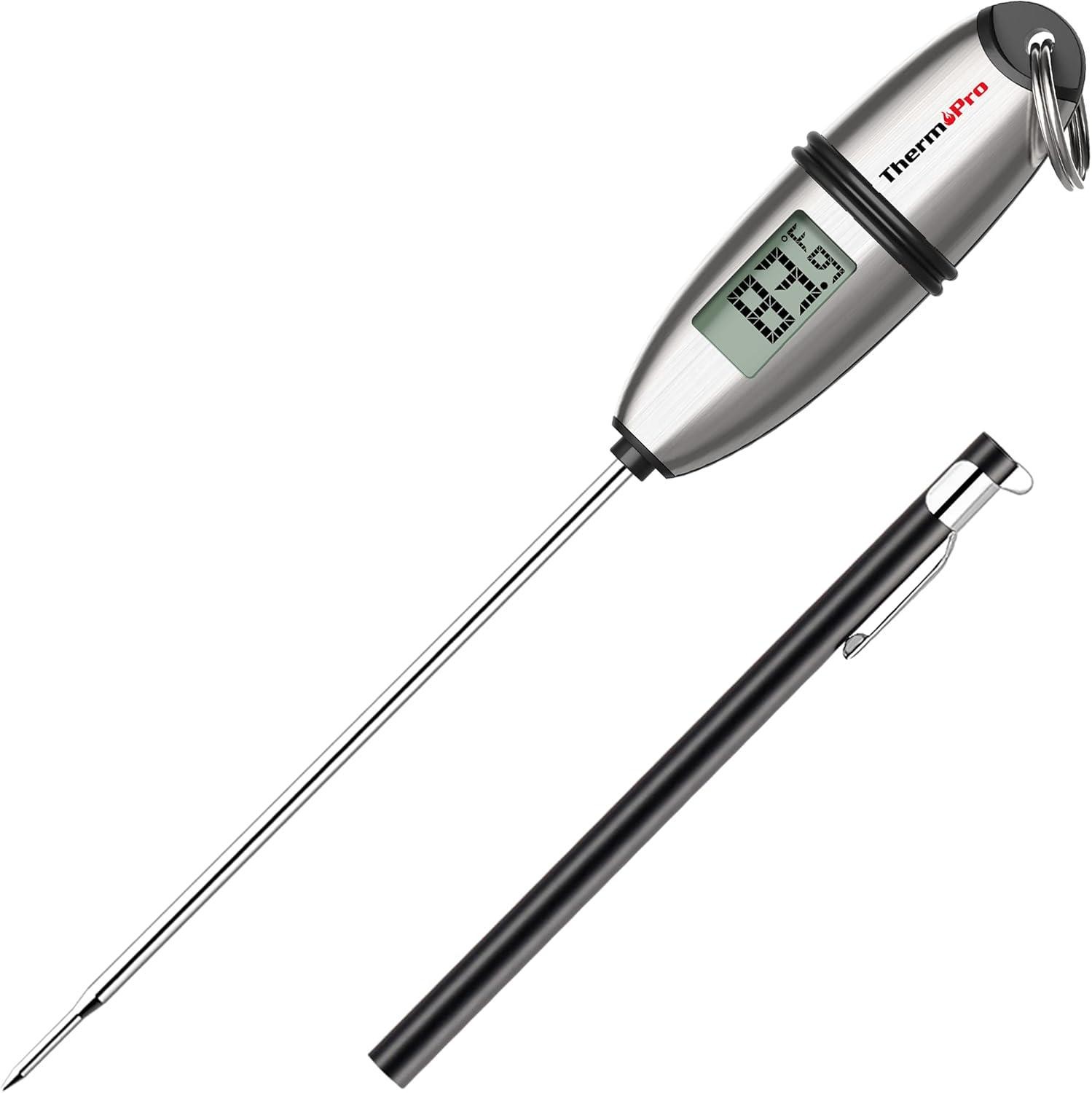

Photos from current listings. Actual item, color, and included accessories may vary.
Cooking Thermometer Buying Guide
Cooking thermometers span instant-read probes, leave-in oven models, and infrared surface scanners, with the core trade-off being response speed and accuracy versus probe durability and heat tolerance. The decision rule is simple: buy a thermocouple or high-end thermistor instant-read for fast spot checks, and a separate leave-in probe for continuous oven monitoring—avoid any model that claims both without a replaceable probe.
Median $13.99
Key takeaways
- Thermocouple sensors read in 1–3 seconds (optimal for searing and thin cuts), while thermistors take 4–8 seconds but cost less and drift less over time.
- Instant-read probes are rated to 500–600°F at the tip but the cable/connector is the failure point—replaceable probes extend unit life indefinitely.
- Leave-in oven thermometers require a heat-rated cable (braided steel or silicone to 500°F+) and a separate display; the probe must not touch oven walls or heating elements.
At a glance
- Category
- Bread Mixers, Scales & Thermometers
- Last updated
- Nov 27, 2026
Current offers
Highlights
- Thermocouple sensors read in 1–3 seconds (optimal for searing and thin cuts), while thermistors take 4–8 seconds but cost less and drift less over time.
- Instant-read probes are rated to 500–600°F at the tip but the cable/connector is the failure point—replaceable probes extend unit life indefinitely.
- Leave-in oven thermometers require a heat-rated cable (braided steel or silicone to 500°F+) and a separate display; the probe must not touch oven walls or heating elements.
- Waterproof rating matters more than IP number on packaging: an IP67 instant-read survives full submersion and dishwasher exposure, while IPX4 only handles splashes.
Best use cases
- Best for fast weeknight protein checks (chicken, steak, fish): choose a 2–3 second thermocouple instant-read with a thin 1.5–2mm tip and backlit display; skip slow 8-second thermistors if you open the oven often.
- Best for sourdough and bread baking: pick a leave-in probe thermometer with a 400°F+ cable and clip, or a dedicated dough-probe model reading 40–250°F; skip infrared guns, which only read surface crust temperature.
- Best for BBQ/smoker low-and-slow: use a dual-probe leave-in with a 500°F+ braided cable and alarm, monitoring both meat and pit ambient; skip single-probe instant-reads for 12-hour cooks because the oven door opens too often.
- Wrong fit: infrared surface thermometers for internal meat doneness—they only read surface temp and cannot tell you if a roast is 145°F at the center; use them only for griddle, oil, or pizza-stone surface checks.
Buying tips
- Accuracy spec: look for ±1°F (±0.5°C) in the 32–212°F range; ±2°F is acceptable for oven leave-ins but too loose for candy or sous-vide.
- Probe diameter: 1.5–2mm tips penetrate thin cuts without squirting juices; 3mm+ probes are for large roasts and leave-in use only.
- Cable heat rating: braided stainless or silicone cables rated to 500°F+ are mandatory for oven use; plastic-jacketed cables fail at 400°F.
- Calibration: any thermometer reading ice-water at 32±1°F and boiling water at 212°F (adjusted for altitude) is field-accurate; models without a calibration screw or reset function should be skipped.
Specs
| Sensor Type | Thermocouple (1-3s) vs Thermistor (4-8s) |
|---|---|
| Accuracy | ±1°F ideal; ±2°F acceptable for ovens |
| Probe Heat Rating | 500-600°F tip; 500°F+ cable for leave-in |
| Waterproof Rating | IP67 (submersible) vs IPX4 (splash) |
Related searches
What to check before buying
- Measure your oven's internal depth and probe cable length: a 40-inch cable reaches from the center rack to a countertop display on most ranges.
- Confirm display mounting: magnetic backs stick to oven doors but fail on stainless; check for a fold-out stand or hook if your range is non-magnetic.
- Verify temperature range against your cooking: candy and deep-fry need 400°F+ rated probes; bread baking needs 40–250°F dough accuracy, not high-heat ratings.
- Check battery type and availability: AAA or CR2032 cells are user-replaceable; sealed rechargeable units with USB-C are convenient but useless mid-cook if depleted.
FAQ
Data sources: eBay / Amazon listings and product attribute feeds. Updated Nov 27, 2026.
Some links on this page are affiliate links. If you buy after clicking one, we may earn a commission at no extra cost to you. This does not change which products appear here or their order. Affiliate disclosure.