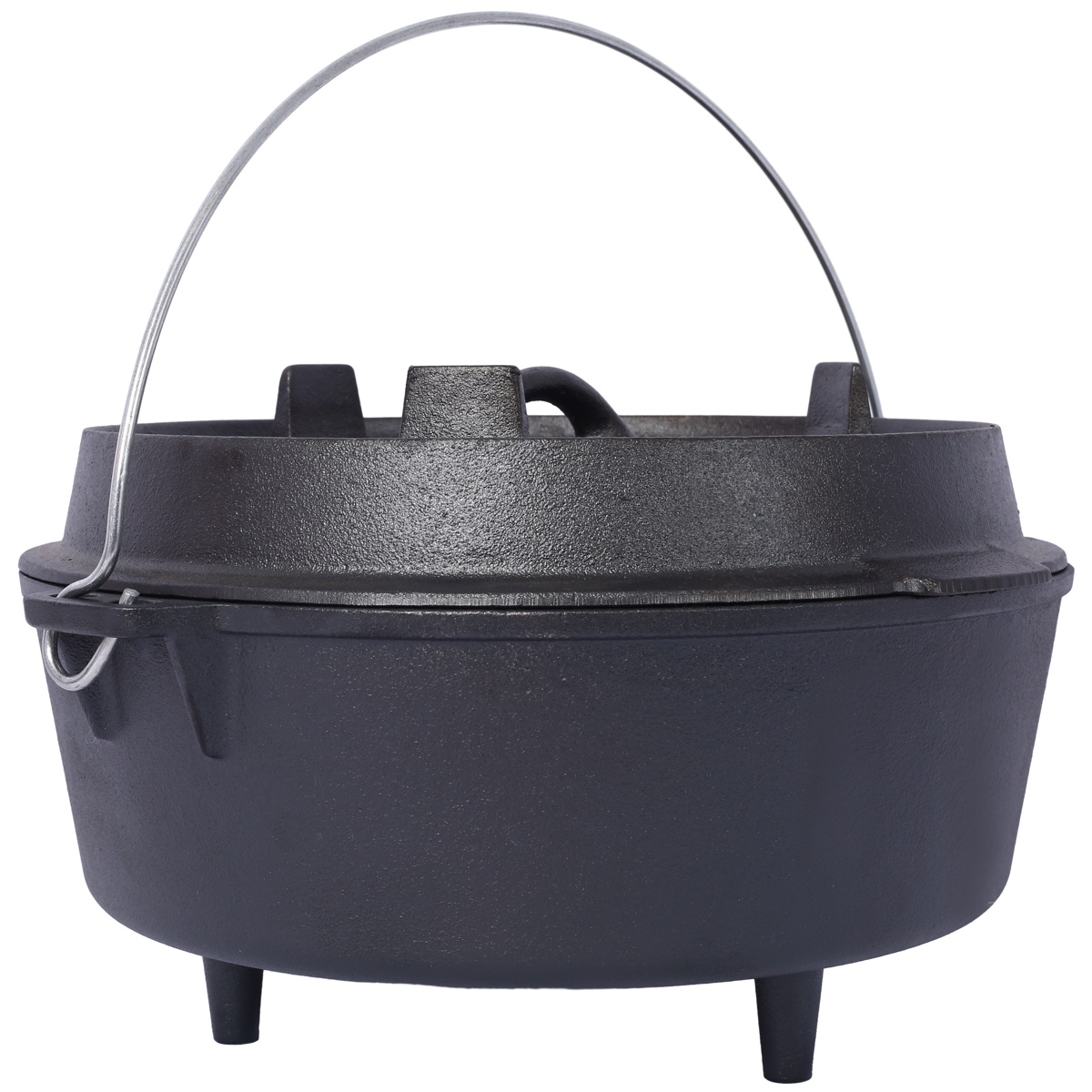

Photos from current listings. Actual item, color, and included accessories may vary.
Seasoned Cast Iron Dutch Oven Buying Guide
Seasoned cast iron Dutch ovens are thick-walled, pre-treated iron pots that excel at heat retention and are built for open flame, campfire, and oven use. The primary trade-off is between bare seasoned iron (maximum durability and heat tolerance but requires maintenance) and enameled cast iron (easier cleaning but chips under high heat or impact). The decision rule: choose bare seasoned cast iron if you cook over live fire, coals, or high heat and accept oiling upkeep; choose enameled only for low-to-medium oven/stovetop work where acidic foods and easy cleanup matter more than ruggedness.
Median $83.99
Key takeaways
- Bare seasoned cast iron is a single piece of iron with a polymerized oil layer; it tolerates campfire coals and 500°F+ oven heat without coating failure, unlike enamel which can chip or craze.
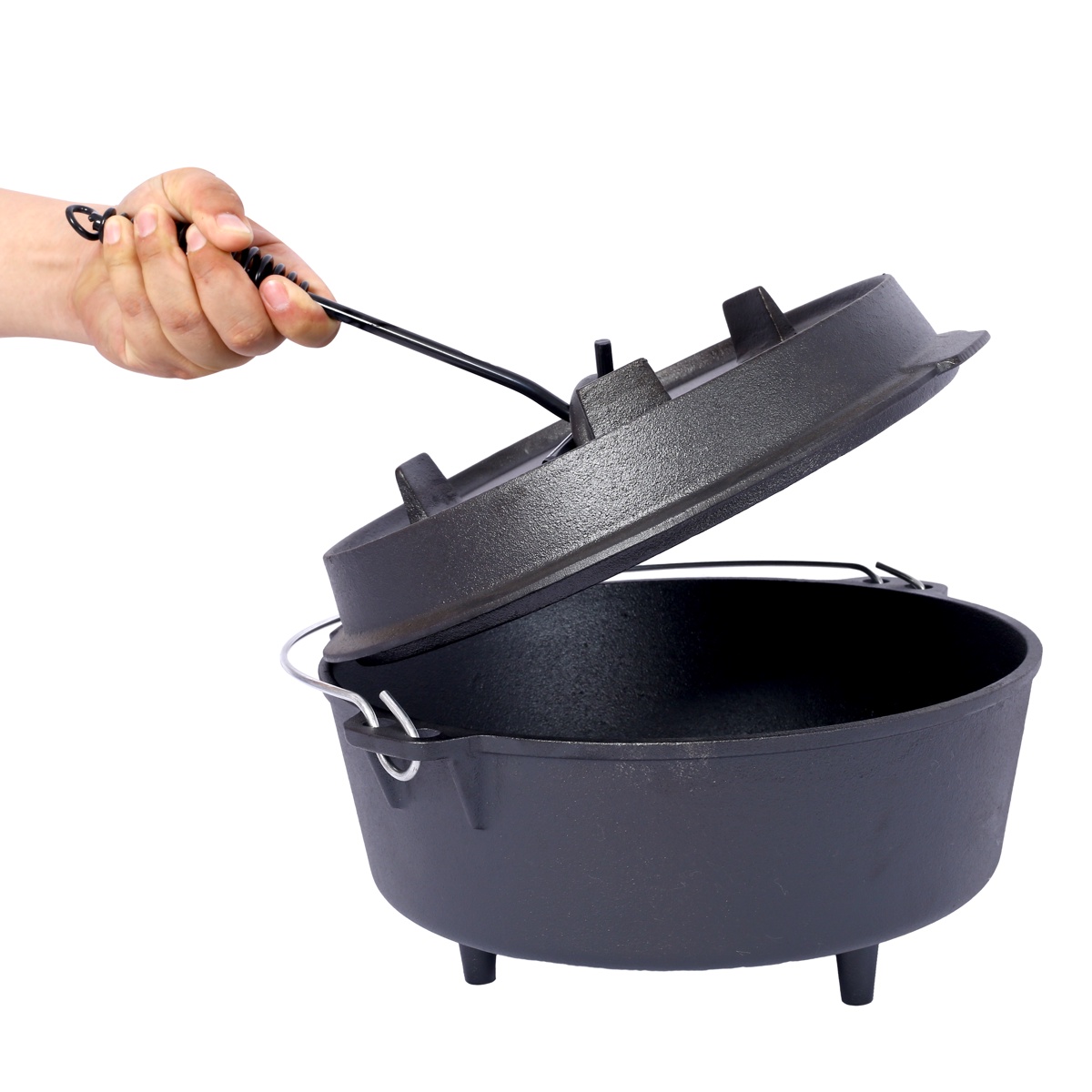
- Legged camp models with a rimmed lid (often called a camp oven) allow coals on top and below for baking; flat-bottom models suit stovetop and home oven use but not buried coals.
- Wall thickness and mass drive heat retention: a 4.5-quart pot typically weighs around 12–15 lb; heavier pots hold temperature better but are harder to lift and clean.
At a glance
- Category
- Bread Ovens & Dutch Ovens
- Last updated
- Nov 28, 2026
Current offers
Highlights
- Bare seasoned cast iron is a single piece of iron with a polymerized oil layer; it tolerates campfire coals and 500°F+ oven heat without coating failure, unlike enamel which can chip or craze.
- Legged camp models with a rimmed lid (often called a camp oven) allow coals on top and below for baking; flat-bottom models suit stovetop and home oven use but not buried coals.
- Wall thickness and mass drive heat retention: a 4.5-quart pot typically weighs around 12–15 lb; heavier pots hold temperature better but are harder to lift and clean.
- Pre-seasoning is factory-applied oil baked on; it is a starting layer, not permanent armor—re-seasoning with thin oil coats at 450–500°F restores the surface after scrubbing or acidic cooking.
Best use cases
- Best fit: campfire and outdoor baking—choose a legged 4.5–6 quart camp oven with a rimmed lid for coal-on-top heat; skip flat-bottom pots for buried-coal cooking.
- Best fit: home oven braising and bread baking—choose a flat-bottom 5–7 quart seasoned pot with a tight-fitting lid; skip legged models if your oven racks are flat and you don't cook over coals.
- Best fit: high-heat searing and frying—bare seasoned cast iron wins; skip enameled pots for dry high-heat searing where coating can chip.
- Wrong fit: frequent tomato, wine, or long acidic simmers in bare iron—use enameled cast iron or stainless instead, since acid strips seasoning and can impart iron taste.
Buying tips
- Match capacity to batch: 4.5 qt handles 3–4 lb chicken or a 1.5–2 lb loaf; 6–7 qt suits 5–6 lb roasts and 2-loaf bakes. Buy 5–7 qt for family oven use, 4.5 qt for camp.
- Check lid fit and rim: a camp oven lid should have a raised rim to hold coals; a loose lid loses steam and ruins bread rise and braises.
- Prefer sand-cast or machined-smooth interiors if you want quicker seasoning release; rough as-cast surfaces need more oil and break-in time.
- Confirm handle and leg construction: integral cast handles and legs are stronger than welded or riveted attachments; avoid pots with thin walls for coal cooking.
Specs
| Material | Bare seasoned cast iron vs enameled |
|---|---|
| Capacity | 4.5–7 qt typical (camp vs family) |
| Base Type | Legged camp vs flat-bottom |
| Lid Style | Rimmed coal-holding vs flat self-basting |
Related searches
What to check before buying
- Measure your oven rack and campfire setup: legged pots need clearance and a stable coal bed; flat-bottom pots need a rack that fits the pot diameter and lid handle height.
- Check heat source compatibility: bare seasoned iron works on gas, electric coils, induction, oven, and open fire; enameled iron is not for campfire or broiler extremes.
- Plan for weight: a 6–7 qt cast iron pot can exceed 15 lb; confirm you can lift it safely with oven mitts and that your stovetop grate supports it.
- Have maintenance supplies: neutral high-smoke-point oil (flaxseed, canola, or grapeseed), a stiff brush or chainmail scrubber, and a dry storage spot to prevent rust.
FAQ
Data sources: eBay / Amazon listings and product attribute feeds. Updated Nov 28, 2026.
Some links on this page are affiliate links. If you buy after clicking one, we may earn a commission at no extra cost to you. This does not change which products appear here or their order. Affiliate disclosure.