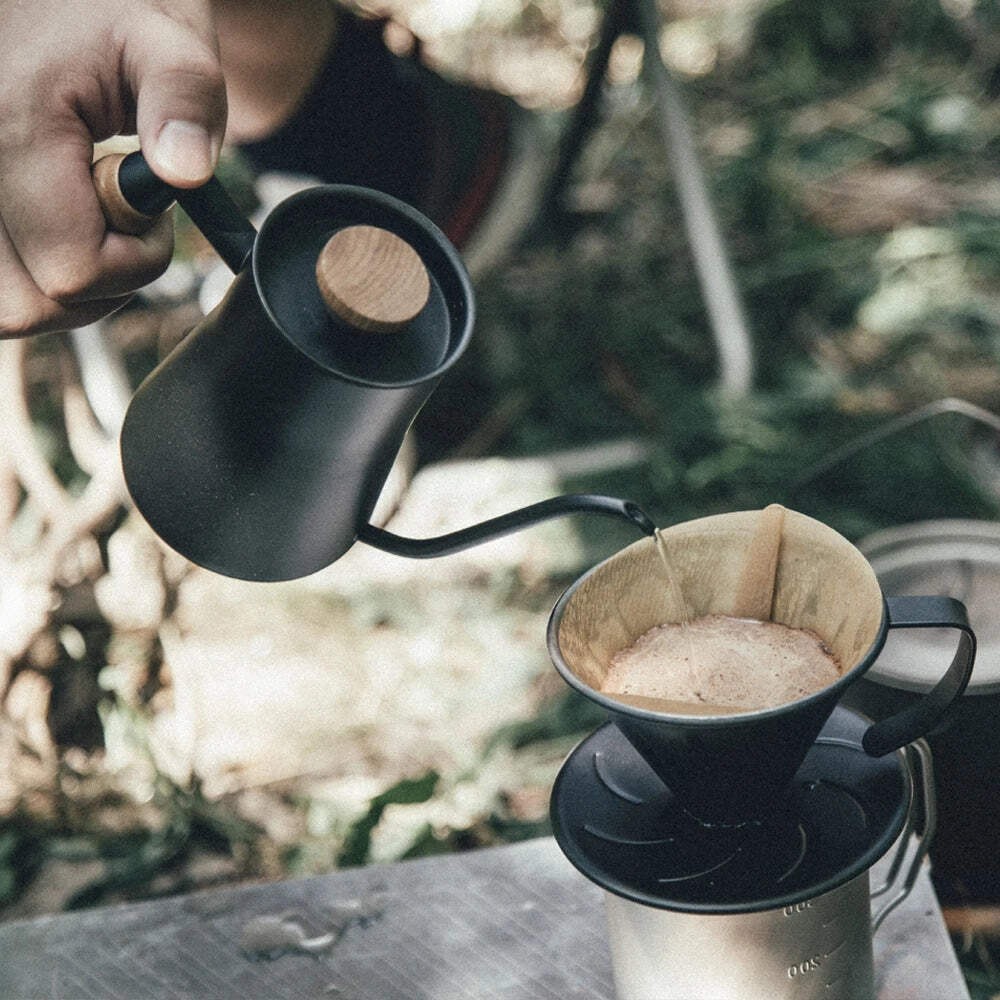

Photos from current listings. Actual item, color, and included accessories may vary.
Coffee Filter Buying Guide
Coffee filters are the porous paper, cloth, or metal media that separate grounds from brewed coffee, and their material and pore structure determine cup clarity, body, and flow rate more than most brewers do. The core trade-off is paper filtration (highest clarity, absorbs oils, requires matching cone shape and size) versus metal mesh (full oils and sediment, reusable, needs finer grind control). The decision rule: match filter geometry and material grade to your dripper's exact dimensions and desired cup profile, and never substitute a generic basket filter for a purpose-built cone or disc.
Key takeaways
- Paper filters come in bleached or unbleached pulp; unbleached retains more paper taste unless pre-rinsed, while bleached oxygen-processed papers are neutral and faster-flowing.
- Cone filters taper at roughly 60 degrees for V60-style drippers, while flat-bottom filters suit Kalita Wave and similar three-hole brewers; mixing shapes causes bypass and uneven extraction.
- Metal mesh filters typically use 200-400 micron stainless steel openings, passing oils and fines that paper blocks, which increases body but demands a medium-coarse grind to avoid clogging.
At a glance
- Category
- Pour-Over & Manual Brewing
- Last updated
- Nov 23, 2026
Current offers
Highlights
- Paper filters come in bleached or unbleached pulp; unbleached retains more paper taste unless pre-rinsed, while bleached oxygen-processed papers are neutral and faster-flowing.
- Cone filters taper at roughly 60 degrees for V60-style drippers, while flat-bottom filters suit Kalita Wave and similar three-hole brewers; mixing shapes causes bypass and uneven extraction.
- Metal mesh filters typically use 200-400 micron stainless steel openings, passing oils and fines that paper blocks, which increases body but demands a medium-coarse grind to avoid clogging.
- Chemex filters are notably thicker and heavier than standard cone papers, slowing flow and producing a cleaner, lighter-bodied cup at the cost of longer brew times.
Best use cases
- Choose unbleached or bleached cone paper in the exact size matching your V60 or cone dripper if you want maximum clarity, light body, and easy cleanup; skip metal if you dislike sediment.
- Choose a stainless mesh disc or basket for a reusable zero-waste setup and fuller body, but only if you can grind medium-coarse and accept some fines in the cup.
- Choose Chemex-specific bonded filters only for Chemex carafes; standard cone papers are too thin and will collapse or bypass in the Chemex's wide funnel.
- Skip generic flat-bottom basket filters for cone brewers and skip cone papers for flat-bed brewers; geometry mismatch is the most common cause of stalled or uneven brews.
Buying tips
- Match filter size to brewer capacity: 1-2 cup drippers take small cone papers, 4-6 cup Chemex takes its bonded squares, and 8-12 cup batch brewers take basket-style papers.
- Prefer oxygen-bleached or unbleached pulp with a stated neutral taste; avoid heavily chlorinated or recycled-content papers that can impart off-flavors unless thoroughly rinsed.
- For metal filters, confirm mesh grade (often 200-400 micron) and whether the rim seals against your dripper wall; a loose rim lets grounds bypass the bed.
- Rinse paper filters with hot water before brewing to remove paper dust and preheat the brewer; this measurably reduces papery taste and stabilizes extraction temperature.
Specs
| Filter Material | Paper pulp vs stainless mesh |
|---|---|
| Cone Geometry | 60° cone / flat-bottom / Chemex square |
| Mesh Grade | 200-400 micron stainless steel |
| Paper Treatment | Oxygen-bleached / unbleached pulp |
Related searches
What to check before buying
- Measure your dripper's internal cone diameter and angle, or its flat-bed width, before ordering; filter dimensions must match within a few millimeters.
- Confirm your brewer's capacity rating in cups so filter size matches batch volume and the filter does not overflow the rim.
- Check whether your brewer requires proprietary filters (Chemex bonded squares) versus standard cone or basket papers.
- For metal filters, verify compatibility with your dripper's rim and base diameter so the mesh seats flush and does not collapse.
FAQ
Data sources: eBay / Amazon listings and product attribute feeds. Updated Nov 23, 2026.
Some links on this page are affiliate links. If you buy after clicking one, we may earn a commission at no extra cost to you. This does not change which products appear here or their order. Affiliate disclosure.