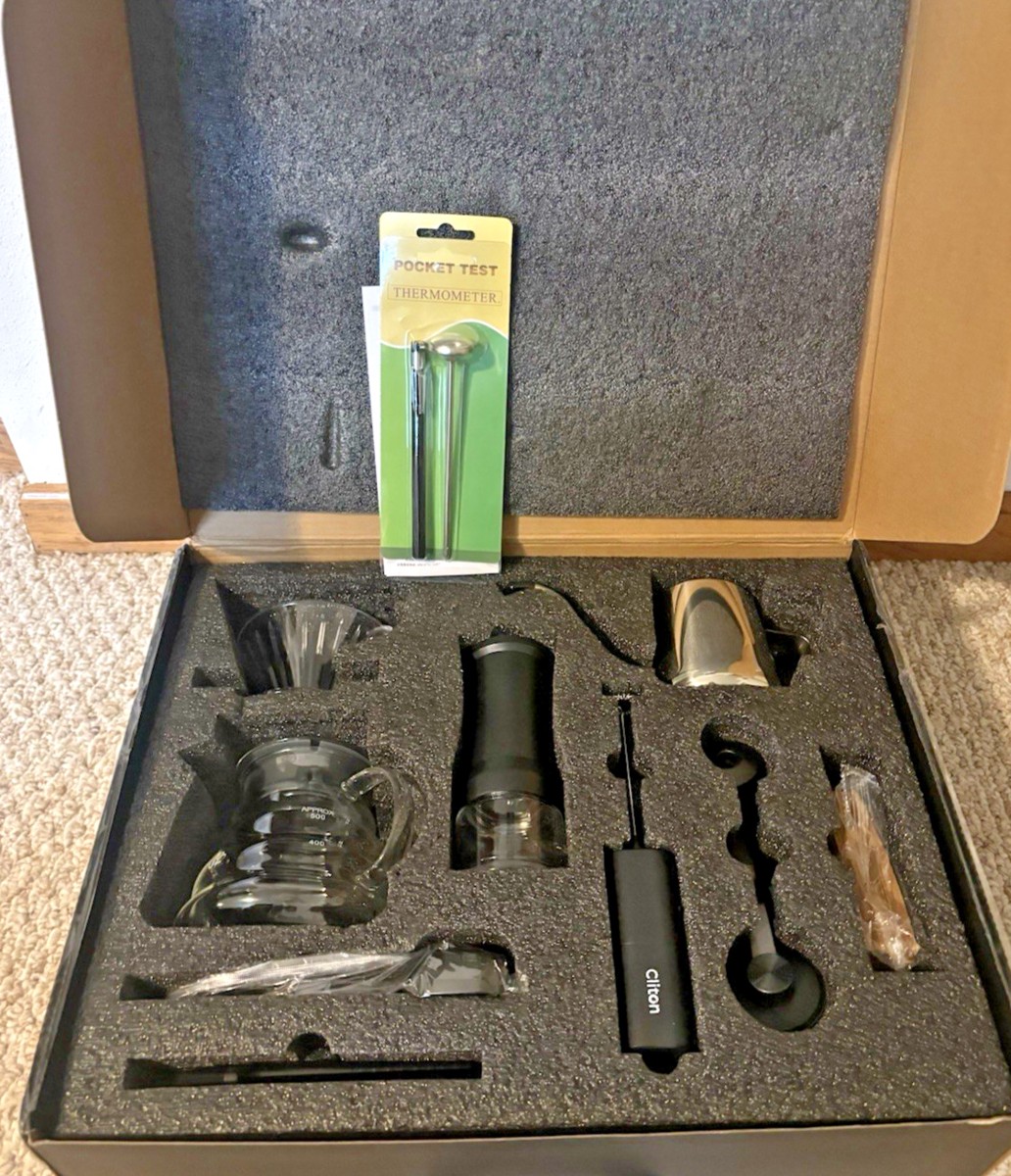

Photos from current listings. Actual item, color, and included accessories may vary.
Coffee Grinder Buying Guide
A coffee grinder for pour-over is the single biggest lever on cup clarity, because burr geometry and adjustment resolution determine particle uniformity far more than brewing technique. The core trade-off is conical vs flat burrs and hand-crank vs motorized drive: conical burrs are forgiving and cheaper, flat burrs give tighter distributions at higher cost. Decide by brew volume and desired clarity, and treat any blade grinder as a non-starter for pour-over.
Median $61.49
Key takeaways
- Burr type dictates particle uniformity: conical burrs are forgiving and budget-friendly, flat burrs produce tighter distributions for high-clarity light roasts.
- Hand grinders use manual crank drives with no motor or power cord, so grind speed depends on burr size and bean density, not wattage.
- Adjustment resolution matters: stepless or 30+ click settings let you dial pour-over ranges without jumping between espresso-fine and French-press-coarse.
At a glance
- Category
- Pour-Over & Manual Brewing
- Last updated
- Nov 23, 2026
Current offers
Highlights
- Burr type dictates particle uniformity: conical burrs are forgiving and budget-friendly, flat burrs produce tighter distributions for high-clarity light roasts.
- Hand grinders use manual crank drives with no motor or power cord, so grind speed depends on burr size and bean density, not wattage.
- Adjustment resolution matters: stepless or 30+ click settings let you dial pour-over ranges without jumping between espresso-fine and French-press-coarse.
- Material grade separates tiers: hardened steel burrs outlast ceramic and stay sharp longer; stainless or aluminum bodies resist flex better than thin plastic.
Best use cases
- Buy a conical hand grinder if you brew 1-2 pour-over cups daily and want maximum grind quality per dollar with zero counter footprint.
- Buy a flat-burr electric grinder if you brew multiple cups or switch between pour-over and espresso and need repeatable dial-in across methods.
- Skip blade grinders and spice mills entirely for pour-over: they produce boulders and fines that stall extraction and muddy the cup.
- Skip oversized commercial flat burrs for a single-cup setup unless you regularly brew 500g+ batches, since retention and cost outweigh the gain.
Buying tips
- Match burr material to lifespan: hardened steel holds an edge through hundreds of kilos of beans; ceramic is cheaper but dulls faster and chips under hard beans.
- Pick adjustment range by method: a grinder covering 0-40+ clicks from espresso-fine to French-press-coarse handles pour-over without running out of range.
- Size the catch cup to your dose: 20-25g single doses fit compact hand grinders, while 40g+ doses need a wider catch cup or an electric hopper.
- Choose stepless adjustment for dialing in light-roast pour-over; stepped clickers are fine for medium roasts but limit fine-tuning between settings.
Specs
| Burr Type | Conical vs Flat |
|---|---|
| Drive | Hand crank vs Electric motor |
| Adjustment | Stepped clicks vs Stepless |
| Burr Material | Hardened steel vs Ceramic |
Related searches
What to check before buying
- Measure your brew dose per cup (typically 15-30g) and confirm the grinder's catch cup or hopper holds at least that capacity.
- Check counter and storage space: hand grinders pack into a drawer, while electric models need clearance for the hopper and cord.
- Confirm burr access for cleaning: removable burr sets let you brush out fines that otherwise stale and block the adjustment thread.
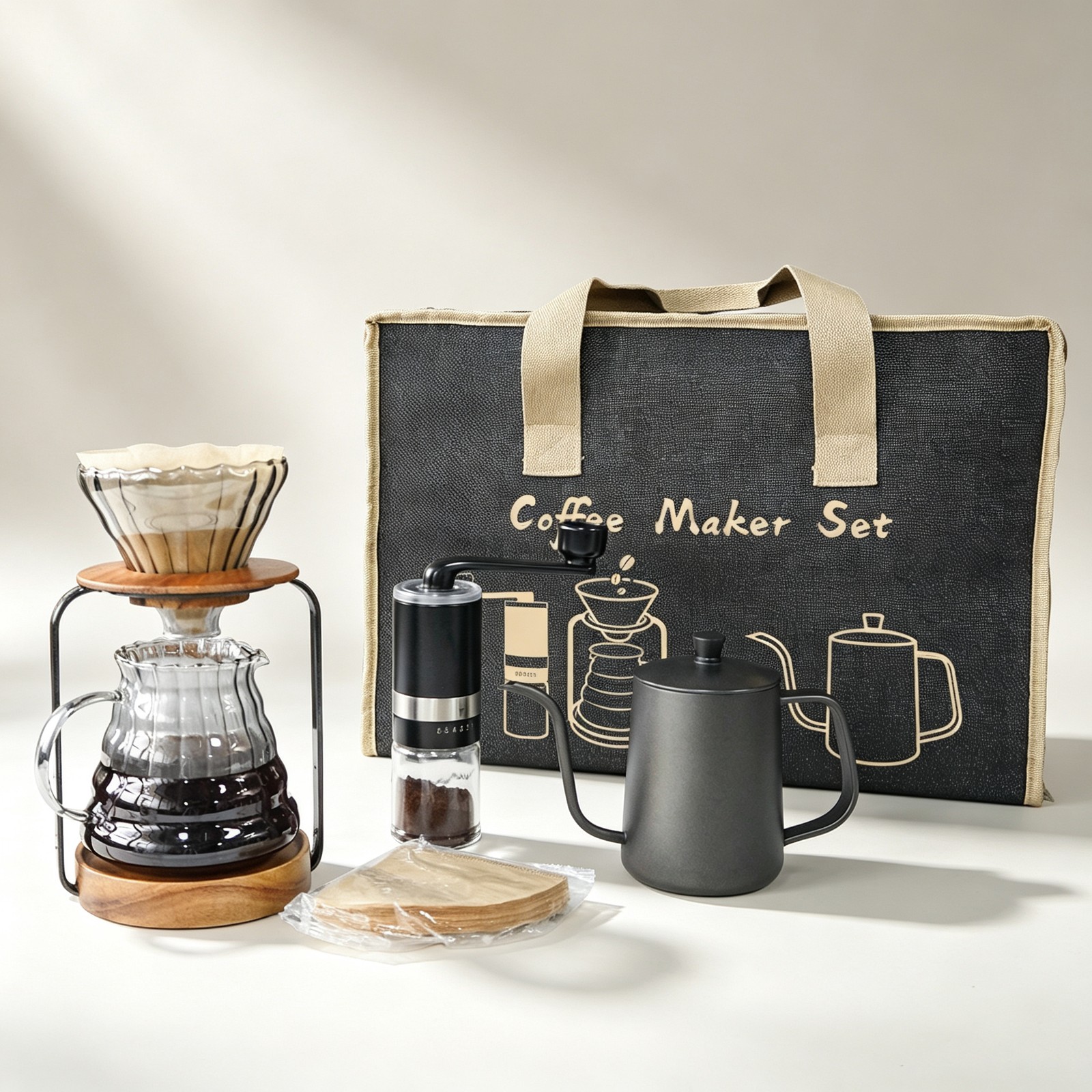
- For travel sets, verify the grinder nests with your dripper and kettle so the whole pour-over kit fits one bag.
FAQ
Data sources: eBay / Amazon listings and product attribute feeds. Updated Nov 23, 2026.
Some links on this page are affiliate links. If you buy after clicking one, we may earn a commission at no extra cost to you. This does not change which products appear here or their order. Affiliate disclosure.