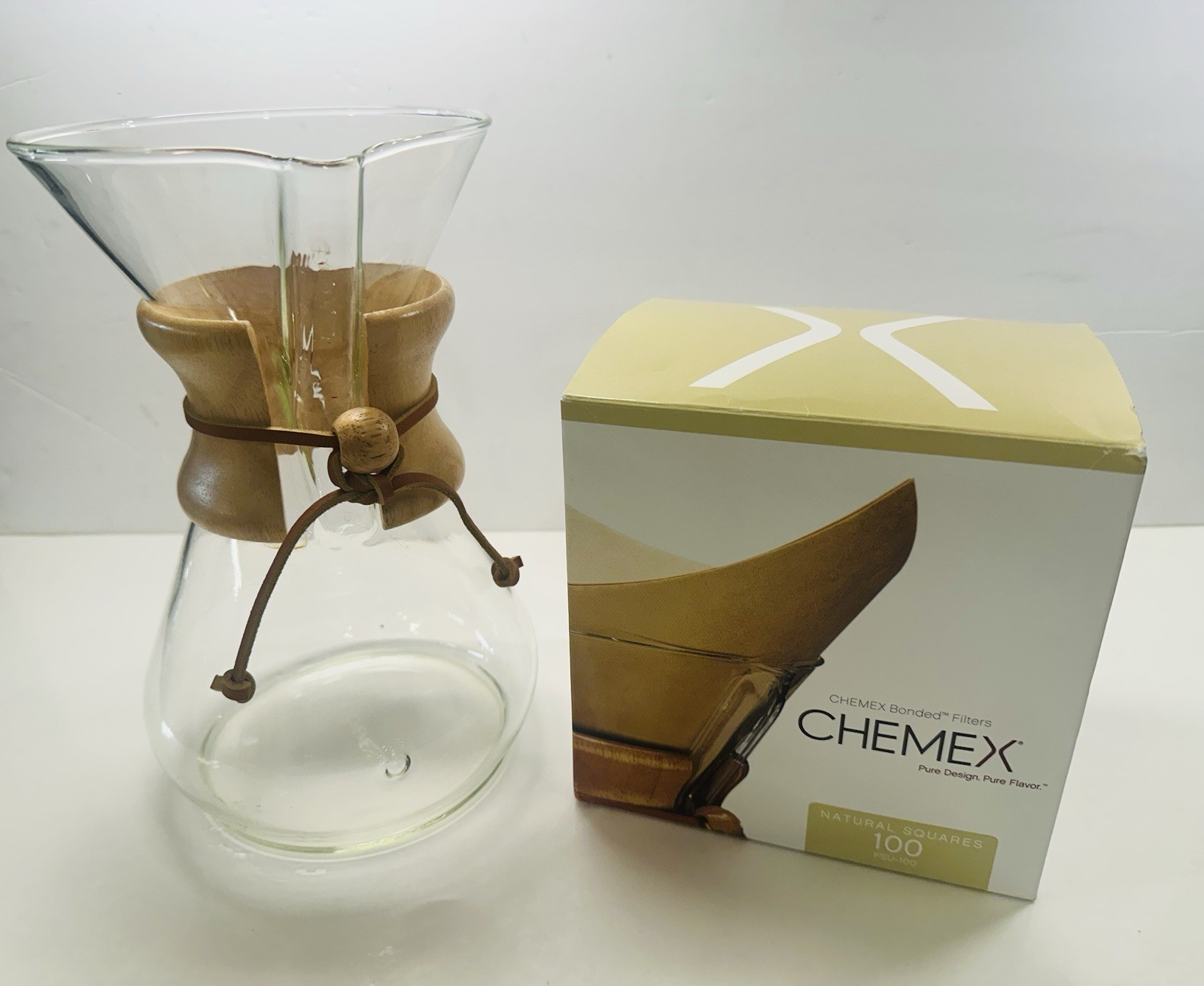

Photos from current listings. Actual item, color, and included accessories may vary.
Glass Pour Over Coffee Maker Buying Guide
Glass pour-over coffee makers are manual brewers where a borosilicate glass vessel, cone, or carafe defines the brewing chamber and clarity of flavor. The primary trade-off is between thick-walled, thermally stable borosilicate glass with a wide-mouth or hourglass shape versus thin decorative glass that cracks under thermal shock and pours poorly. Buy borosilicate glass rated for direct stovetop or microwave use with a matched filter format if durability matters; skip soda-lime decorative glass and odd filter sizes.
Median $68.19
Key takeaways
- Borosilicate glass (often labeled Pyrex or borosilicate 3.3) resists thermal shock up to roughly 150°C differential; soda-lime glass can crack with a 50–60°C swing when hot water hits a cool carafe.
- Chemex-style hourglass brewers use bonded paper filters 20–30% thicker than standard cone filters, trapping more oils and fines for a cleaner cup but slowing drawdown and requiring a coarser grind.
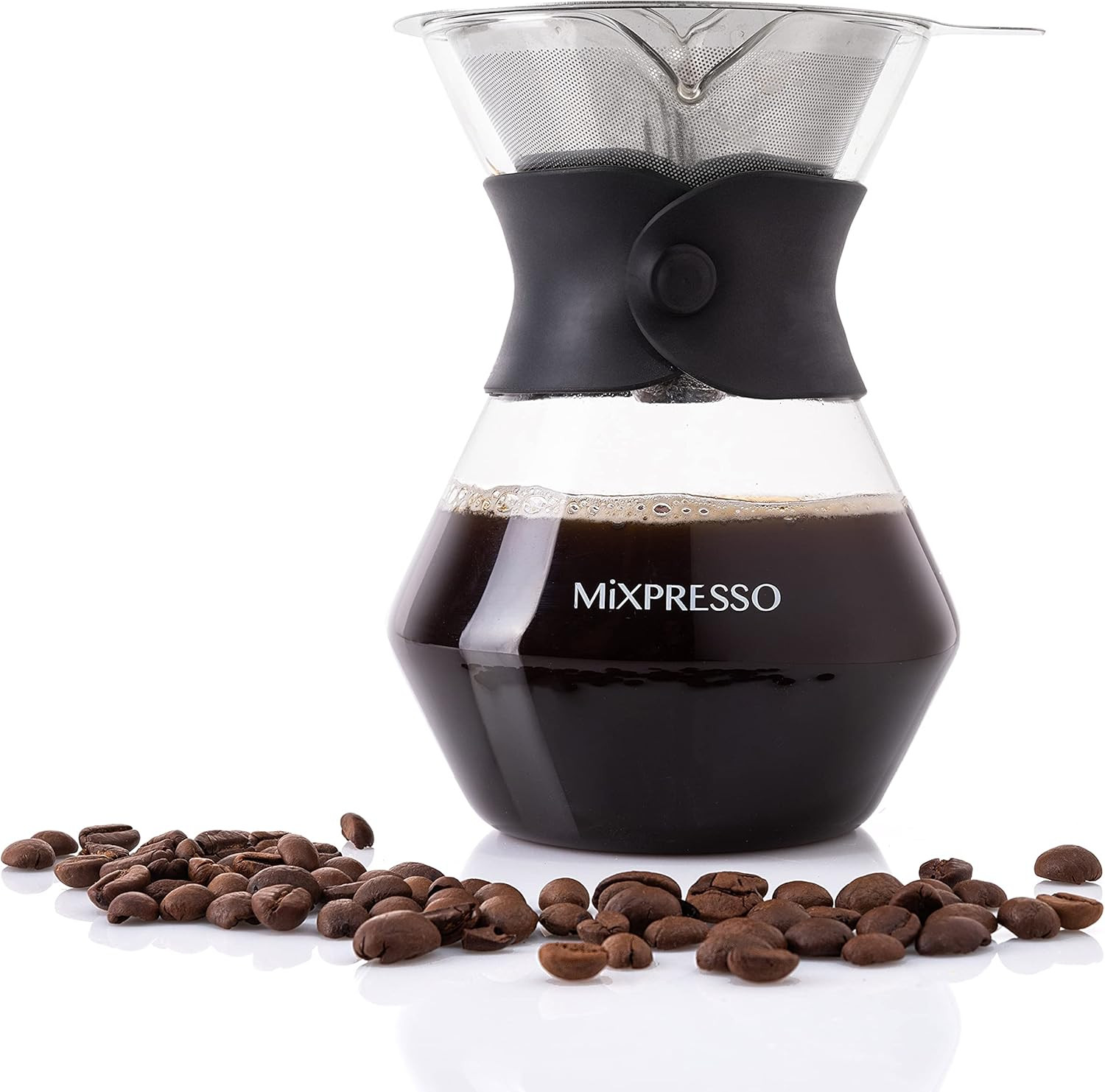
- Cone drippers with double stainless mesh filters (reusable) pass more oils and sediment than paper, so they suit medium-coarse grinds and buyers who want body over clarity.
At a glance
- Category
- Pour-Over & Manual Brewing
- Last updated
- Nov 23, 2026
Current offers
Highlights
- Borosilicate glass (often labeled Pyrex or borosilicate 3.3) resists thermal shock up to roughly 150°C differential; soda-lime glass can crack with a 50–60°C swing when hot water hits a cool carafe.
- Chemex-style hourglass brewers use bonded paper filters 20–30% thicker than standard cone filters, trapping more oils and fines for a cleaner cup but slowing drawdown and requiring a coarser grind.
- Cone drippers with double stainless mesh filters (reusable) pass more oils and sediment than paper, so they suit medium-coarse grinds and buyers who want body over clarity.
- Glass wall thickness of 3–4 mm at the neck and base resists chipping; thin 1.5–2 mm decorative glass and narrow necks are the most common failure points in hand wash and pour cycles.
Best use cases
- Pick an hourglass glass brewer with bonded paper filters if you brew 2–6 cups at a time and want a clean, tea-like cup with minimal sediment; skip it if you dislike buying proprietary filters.
- Pick a glass cone dripper with a reusable double stainless mesh filter if you brew single 8–12 oz cups, want zero filter waste, and accept more oils and fines in the cup.
- Pick a thick-walled borosilicate carafe with a wood or silicone collar if the brewer doubles as a serving vessel and you pour at the table; skip thin decorative glass that cannot handle stovetop or microwave heat.
- Skip large 8-cup glass brewers for single-cup routines—the glass mass and filter cost add up without improving a 10 oz brew.
Buying tips
- Match brewer capacity to your mug math: a 6-cup glass brewer yields about 30 oz finished coffee, roughly two 15 oz mugs; a 3-cup yields about 15 oz, one large mug.
- Choose borosilicate glass explicitly—look for 'borosilicate' or 'Pyrex' labeling; soda-lime glass is cheaper but cracks under thermal shock and is not stovetop safe.
- Confirm the filter format before buying: hourglass brewers need bonded Chemex-style filters, cone drippers need #2 or #4 cone filters, and mesh-only setups need no paper at all.
- Check the collar and handle attachment: wood collars with leather ties are removable and replaceable, while glued collars loosen with repeated washing and can leave residue.
Specs
| Glass Type | Borosilicate 3.3 vs Soda-lime |
|---|---|
| Brewer Shape | Hourglass vs Cone dripper |
| Filter Format | Bonded paper / #2-#4 cone / Mesh |
| Capacity Range | 3-cup (15 oz) to 8-cup (40 oz) |
Related searches
What to check before buying
- Measure your carafe and mug height against the brewer's assembled height; hourglass brewers are 8–9 inches tall and need clearance under a kitchen cabinet or a gooseneck kettle spout.
- Confirm your kettle spout reaches the brewer's top opening—narrow-neck brewers need a gooseneck kettle with a long, low spout for controlled pouring.
- Verify stovetop and microwave compatibility if you plan to heat water or keep coffee warm in the glass; only borosilicate glass is rated for direct heat.
- Check filter availability locally or by subscription—hourglass bonded filters are less common in stores than standard cone filters.
FAQ
Data sources: eBay / Amazon listings and product attribute feeds. Updated Nov 23, 2026.
Some links on this page are affiliate links. If you buy after clicking one, we may earn a commission at no extra cost to you. This does not change which products appear here or their order. Affiliate disclosure.