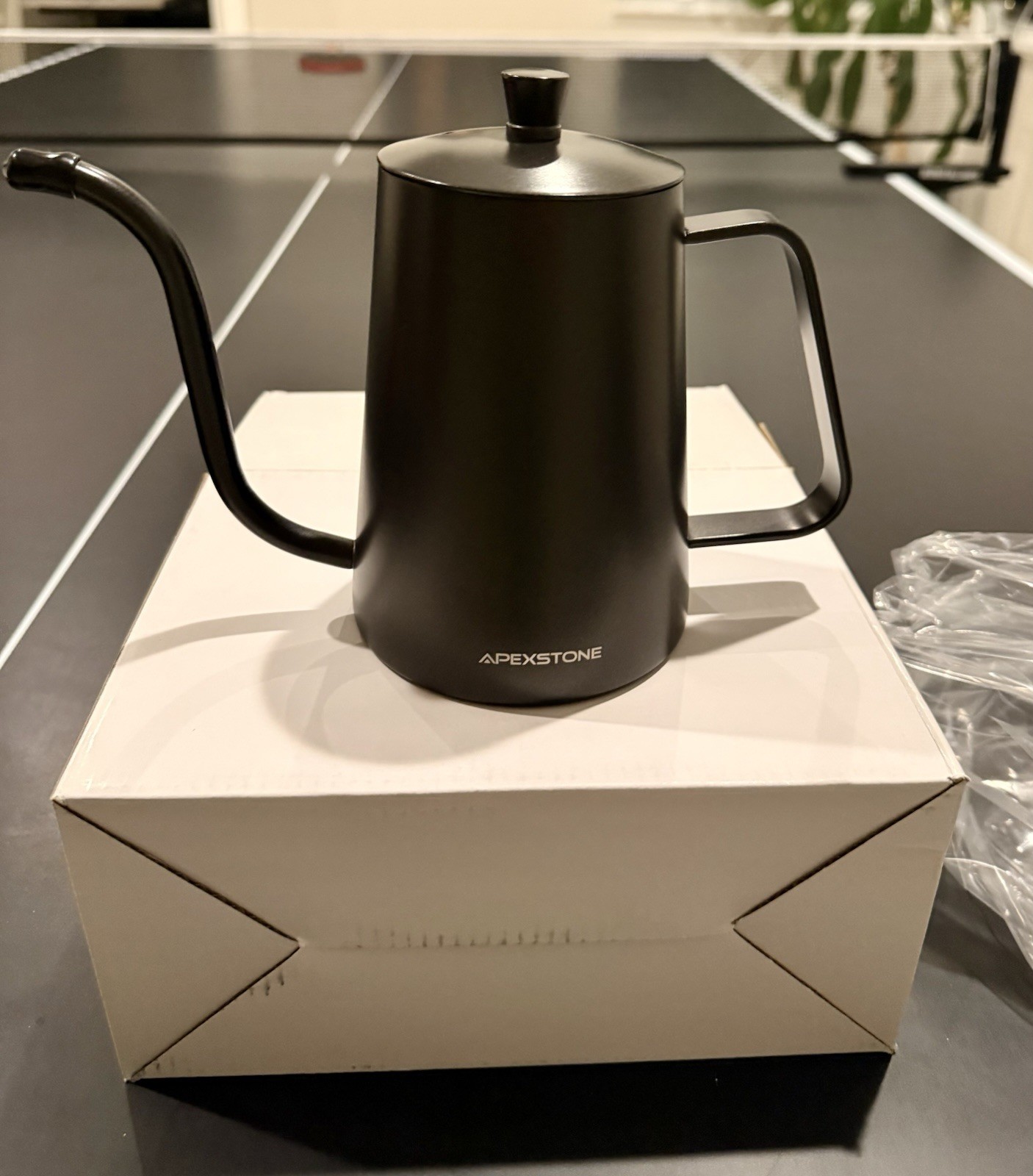

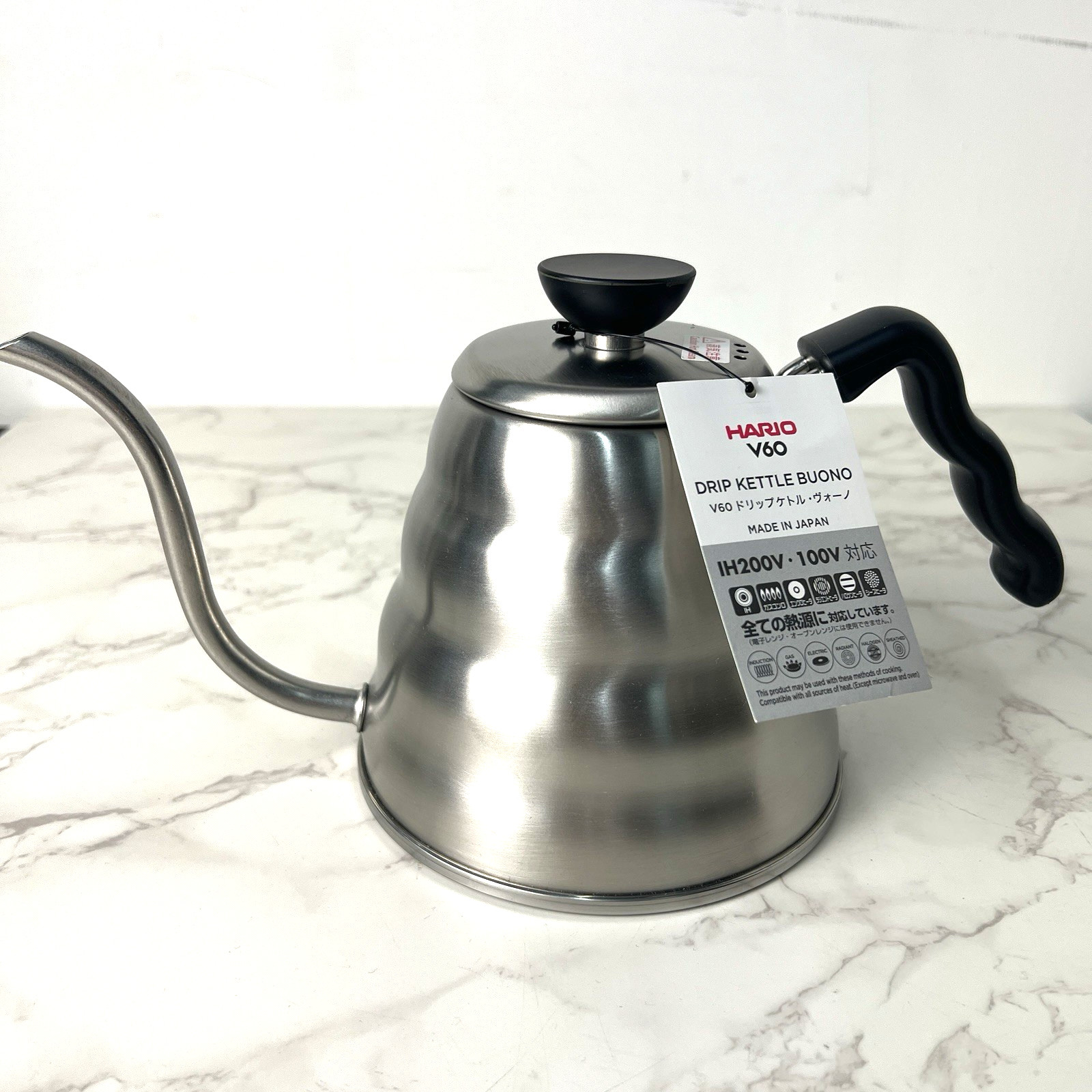
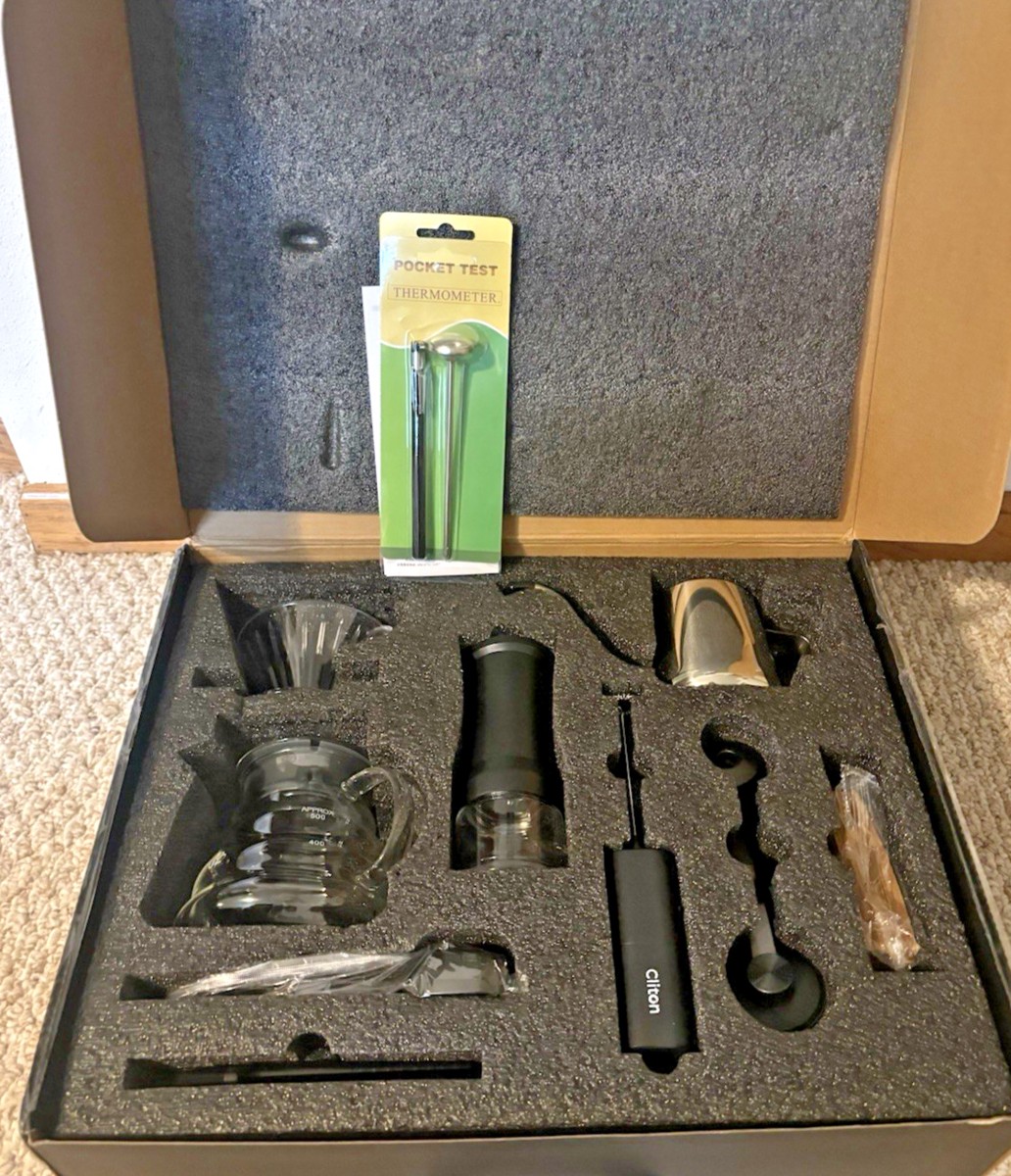
Photos from current listings. Actual item, color, and included accessories may vary.
Gooseneck Kettle With Thermometer Buying Guide
A gooseneck kettle with thermometer is a precision pouring tool that gives you visual control over water temperature for manual brewing. The core trade-off is between stovetop models with analog dials and electric models with PID control—analog dials drift and are slower to read, while PID holds ±1°F and heats on its own. Buy a stovetop kettle only if you already have a variable-temperature kettle or a thermometer you trust; otherwise choose an electric PID model for repeatable results.
Median $38.00
Key takeaways
- Stovetop gooseneck kettles work on gas, electric coil, and induction only if the base is magnetic stainless or has an induction plate; plain 18/8 stainless often fails induction.
- Electric PID gooseneck kettles hold set temperature within ±1°F and typically offer 1°F increments, while analog dial thermometers on stovetop kettles are accurate to roughly ±5°F and require re-calibration.
- Gooseneck spout bore matters: a narrow 6–8 mm opening gives a slow, steady stream for 20–30 g/s pours; wider spouts rush and disturb the coffee bed.
At a glance
- Category
- Pour-Over & Manual Brewing
- Last updated
- Nov 23, 2026
Current offers
Highlights
- Stovetop gooseneck kettles work on gas, electric coil, and induction only if the base is magnetic stainless or has an induction plate; plain 18/8 stainless often fails induction.
- Electric PID gooseneck kettles hold set temperature within ±1°F and typically offer 1°F increments, while analog dial thermometers on stovetop kettles are accurate to roughly ±5°F and require re-calibration.
- Gooseneck spout bore matters: a narrow 6–8 mm opening gives a slow, steady stream for 20–30 g/s pours; wider spouts rush and disturb the coffee bed.
- Capacity follows brew volume: 0.9–1.0 L handles a single 300–500 ml pour-over; 1.2 L Hario V60-style kettles suit 2–4 cups or batch brewing; 30 oz (≈0.9 L) travel kettles are single-serve.
Best use cases
- Best fit: buy an electric PID gooseneck (0.9–1.0 L) if you brew V60, Chemex, or Kalita daily and want repeatable 195–205°F water without a separate thermometer.
- Best fit: choose a stovetop gooseneck with a built-in analog dial if you already own a variable-temp electric kettle and only need a second pouring vessel for gas or induction.
- Wrong fit: skip 30 oz travel kettles for household pour-over—they top out near one 400 ml brew and their short spouts give less stream control.
- Wrong fit: skip uncoated thin-gauge stovetop kettles for induction cooktops; confirm a magnetic base or an explicit induction-compatible plate before buying.
Buying tips
- Match capacity to brew size: 0.9–1.0 L for 1–2 cups, 1.2 L for 2–4 cups; add 20% headroom so you never fill past the spout base.
- For stovetop, confirm the base is magnetic (induction-ready) or labeled for induction; 18/10 stainless with a clad aluminum core heats evenly and resists scorching.
- Prefer a thermometer mounted in the lid or a built-in dial over a clip-on probe; lid-mounted dials stay in the steam path and read truer during the pour.
- Electric PID models need a grounded outlet and draw 1000–1500 W; check that your kitchen circuit supports the wattage if you run a kettle and grinder together.
Specs
| Heat Source | Stovetop (gas/induction) vs Electric PID |
|---|---|
| Thermometer Type | Analog dial ±5°F vs PID ±1°F |
| Capacity | 0.9–1.0 L single / 1.2 L batch |
| Spout Bore | 6–8 mm gooseneck |
Related searches
What to check before buying
- Measure your brew volume: one 300–500 ml pour-over needs a 0.9–1.0 L kettle; two to four cups need 1.2 L.
- Confirm your cooktop type: gas and coil accept any stovetop kettle; induction requires a magnetic base or an induction plate.
- Check the thermometer type and resolution: analog dial ±5°F is fine for dark roasts; PID ±1°F is needed for light-roast precision.
- Verify the spout bore and handle balance: a 6–8 mm gooseneck with a counterweighted handle pours 20–30 g/s without wrist strain.
FAQ
Data sources: eBay / Amazon listings and product attribute feeds. Updated Nov 23, 2026.
Some links on this page are affiliate links. If you buy after clicking one, we may earn a commission at no extra cost to you. This does not change which products appear here or their order. Affiliate disclosure.