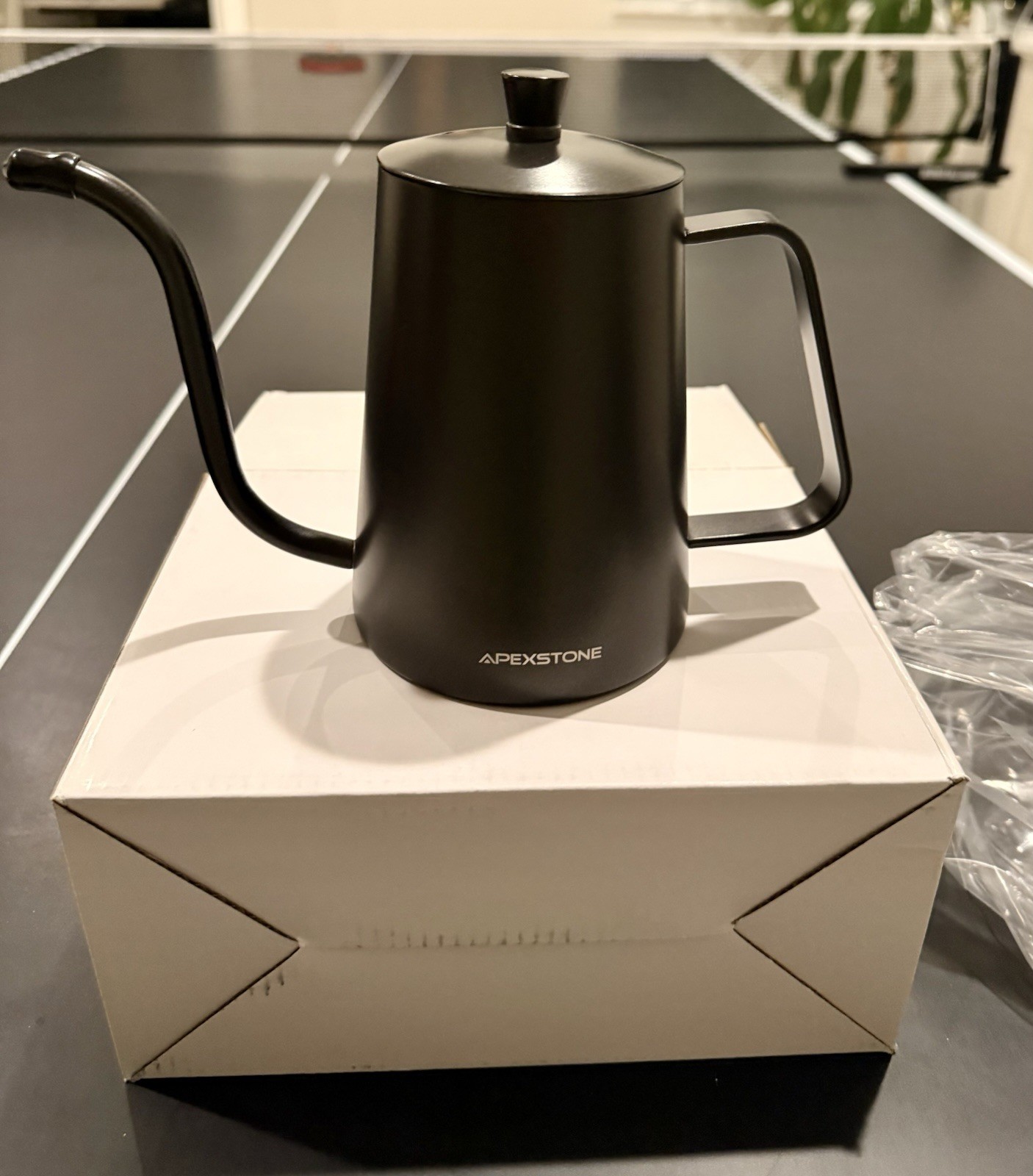

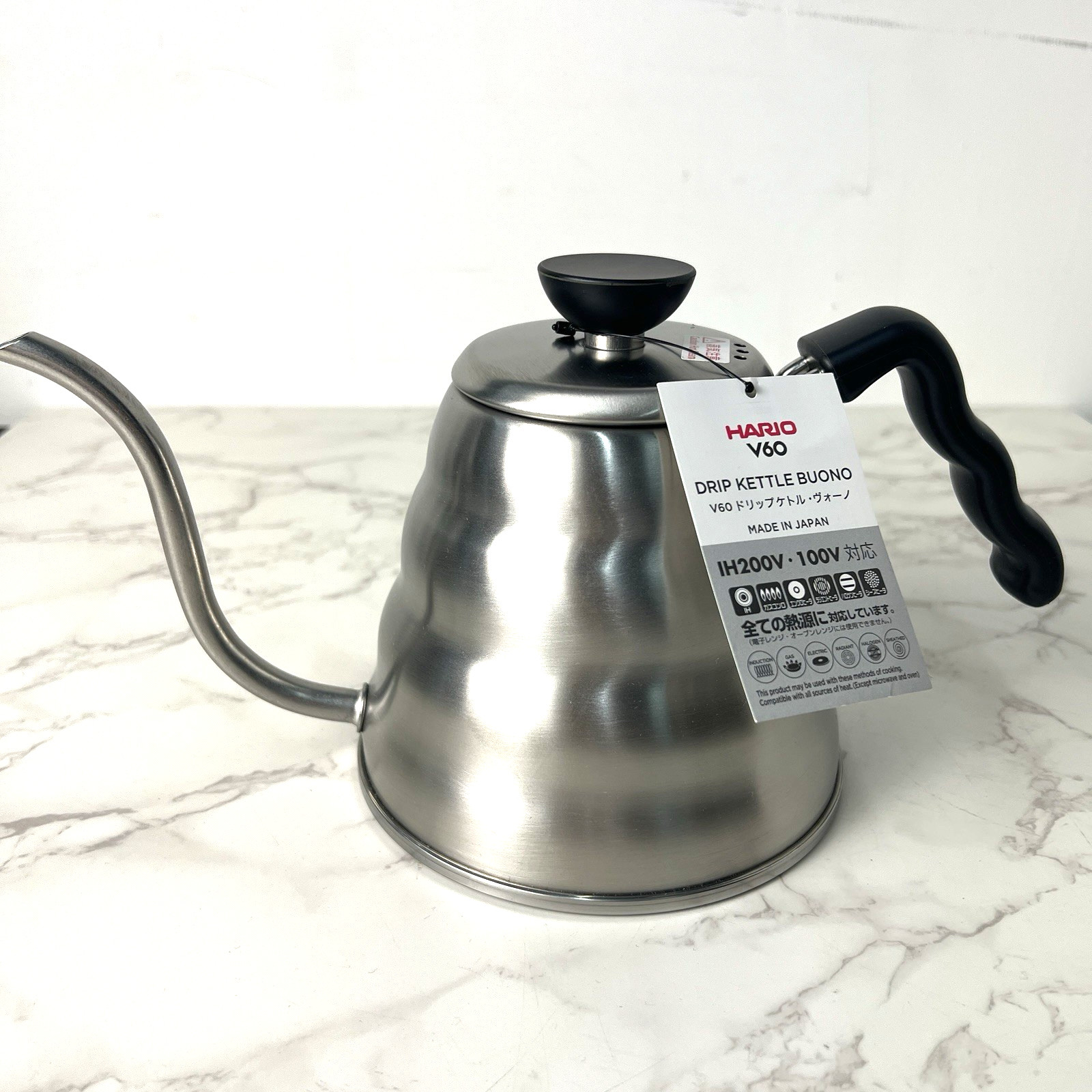
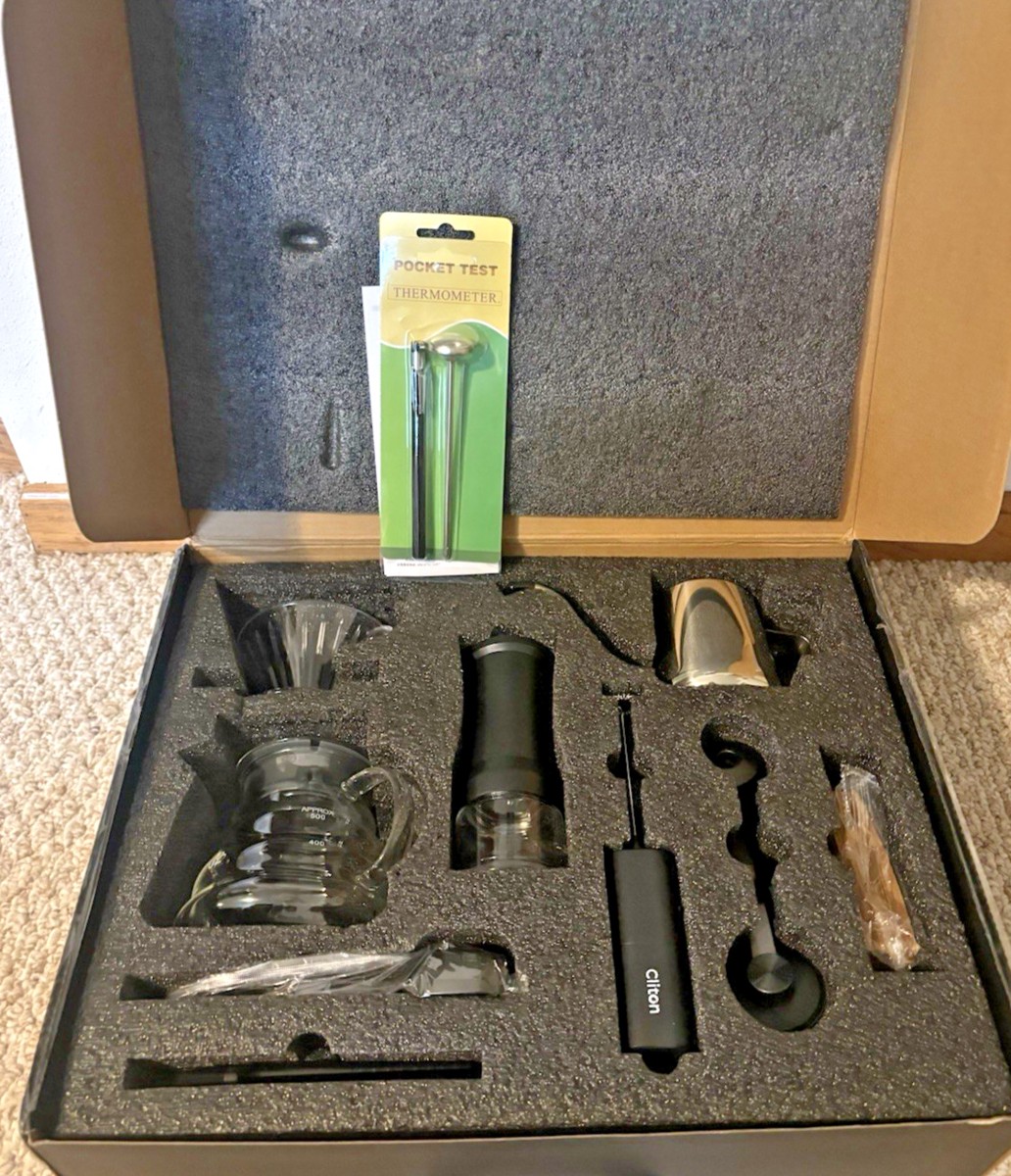
Photos from current listings. Actual item, color, and included accessories may vary.
Gooseneck Tea Kettle Buying Guide
A gooseneck tea kettle is a narrow-spout pouring vessel engineered for controlled, laminar flow over delicate tea leaves and coffee grounds. The decisive trade-off is between stovetop units (thicker steel, higher heat retention, no cord) and electric models (precise temperature setpoints, faster workflow, counter footprint). Buy stovetop for induction/gas kitchens and thermal mass; buy electric when you need repeatable 160–200°F water without a thermometer.
Median $38.00
Key takeaways
- Spout geometry matters more than capacity: a true gooseneck tapers to 6–8mm at the tip and arcs 90–120 degrees, producing a thin, steady stream; a wide or short bent spout pours in gushes and defeats the purpose.
- Stainless steel grade separates durable from disposable: 18/8 (304) food-grade interiors resist tea tannin staining and hard-water scale; unmarked 201 or thin 0.4mm bodies dent at the base seam and rust at weld points.
- Electric goosenecks split into variable-temperature PID bases (selectable 1°F/1°C steps, hold mode) and fixed-boil bases (on/off only) — the latter forces you to guess or use a separate thermometer for green and white teas.
At a glance
- Category
- Pour-Over & Manual Brewing
- Last updated
- Nov 23, 2026
Current offers
Highlights
- Spout geometry matters more than capacity: a true gooseneck tapers to 6–8mm at the tip and arcs 90–120 degrees, producing a thin, steady stream; a wide or short bent spout pours in gushes and defeats the purpose.
- Stainless steel grade separates durable from disposable: 18/8 (304) food-grade interiors resist tea tannin staining and hard-water scale; unmarked 201 or thin 0.4mm bodies dent at the base seam and rust at weld points.
- Electric goosenecks split into variable-temperature PID bases (selectable 1°F/1°C steps, hold mode) and fixed-boil bases (on/off only) — the latter forces you to guess or use a separate thermometer for green and white teas.
- Handle and lid retention are the durability failure points: riveted or bolted handles outlast glued/epoxy mounts, and a friction-fit lid with a silicone gasket stays put during a full 90-degree pour; loose lids drop mid-pour and scald.
Best use cases
- Best fit — gas or induction range with a dedicated kettle: choose a stovetop 1.0–1.2L 18/8 stainless gooseneck with a flat, full-width base disc; skip thin-bottom 'camping' kettles that warp on high heat.
- Best fit — office or desk-side tea brewing: choose an electric variable-temp gooseneck (corded base, 0.8–1.0L) with a keep-warm hold; skip fixed-boil electrics if you drink green, white, or oolong tea.
- Wrong fit — brewing for 4+ people at once: a 30oz (0.9L) gooseneck is a one-to-two-cup vessel; step up to 1.2L minimum or brew in batches, and skip travel kettles entirely for table service.
- Wrong fit — backpacking or camp-stove use: gooseneck spouts are fragile and handles get hot without a wrap; skip stainless goosenecks for hard-anodized aluminum or titanium backpacking kettles.
Buying tips
- Match capacity to cups: 30oz (≈0.9L) fills two 10oz teacups plus rinse water; 1.2L serves three to four. Buy 1.2L if you regularly brew for two or more.
- For electric models, confirm the base offers at least 140–212°F variable control in 1–5°F steps with a 30–60 minute hold — fixed-boil bases top out at 212°F and are unsuitable for delicate tea.
- Check base compatibility before buying stovetop: a flat magnetic stainless base is required for induction; glass-top electric ranges need a perfectly flat, non-warping bottom to avoid scratch and hot-spot damage.
- Prefer welded or riveted spout-to-body joints over press-fit; a press-fit gooseneck loosens with heat cycles and drips at the seam. Also confirm the handle stays cool — uninsulated metal handles require a towel or glove.
Specs
| Kettle Type | Stovetop vs Electric (corded base) |
|---|---|
| Body Material | 18/8 (304) stainless / 201 / glass |
| Capacity | 0.9L (30oz) to 1.2L typical |
| Spout Profile | 6–8mm tapered gooseneck, 90–120° arc |
Related searches
What to check before buying
- Measure your burner or induction zone: the kettle base diameter must sit fully within the ring — an oversized base on a small burner wastes heat and can discolor the steel.
- Confirm your stove type: induction requires a magnetic base; ceramic glass needs a flat bottom; gas works with any base but will soot a polished exterior.
- Check your outlet and cord reach for electric models: a standard 120V grounded outlet within cord length of the counter, and clearance under upper cabinets for the kettle plus base height.
- Verify lid security and spout angle in-hand: the lid should resist a gentle pull, and the spout tip should sit at or above the body's top rim so a full kettle doesn't overflow when tilted to 90 degrees.
FAQ
Data sources: eBay / Amazon listings and product attribute feeds. Updated Nov 23, 2026.
Some links on this page are affiliate links. If you buy after clicking one, we may earn a commission at no extra cost to you. This does not change which products appear here or their order. Affiliate disclosure.