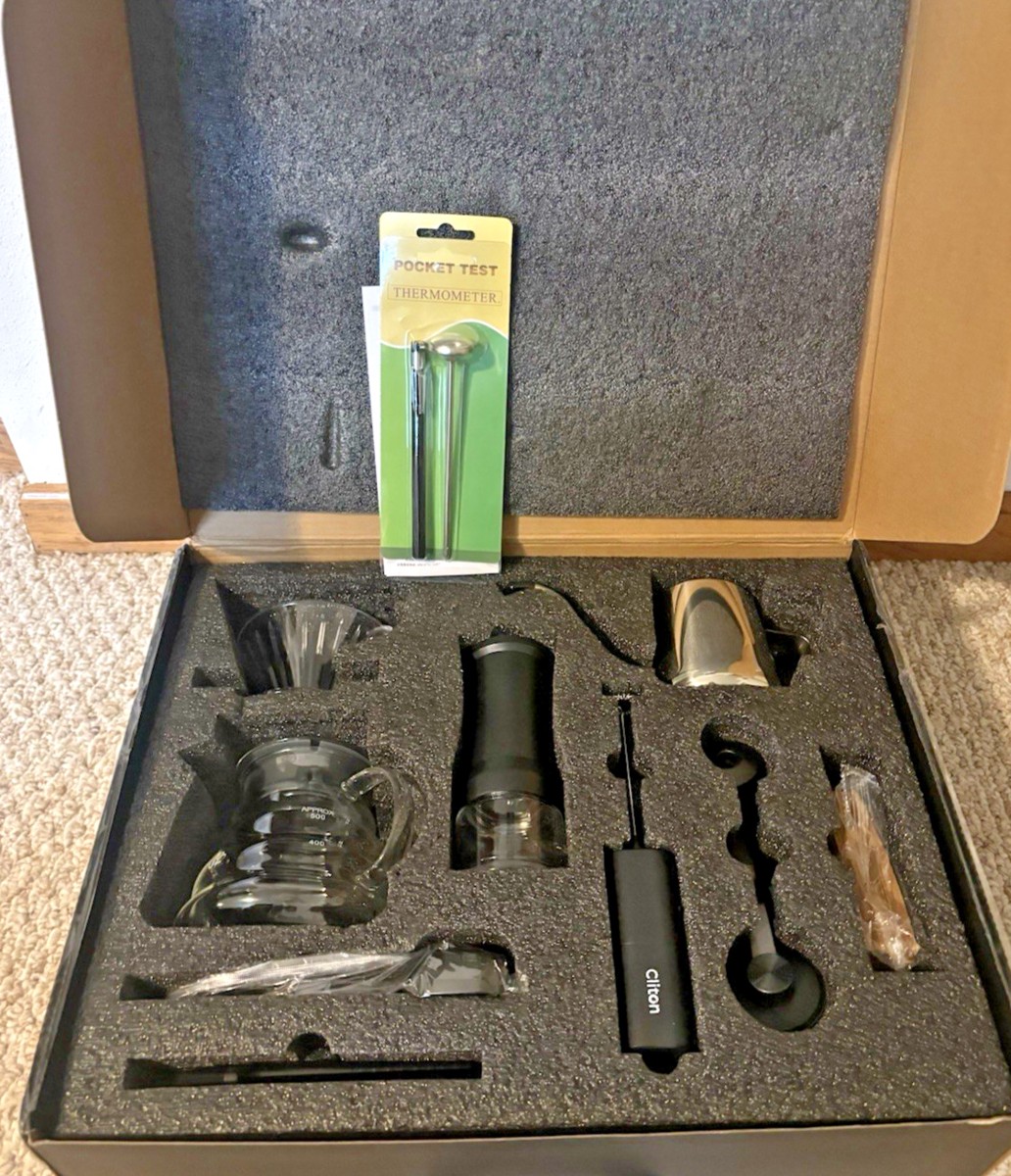

Photos from current listings. Actual item, color, and included accessories may vary.
Manual Pour Buying Guide
Manual pour-over brewing is a gravity-fed method where you control water temperature, pour rate, and agitation to extract coffee through a paper or metal filter. The core trade-off is between thermal stability and flow control: thin single-wall drippers and generic kettles lose heat and pour unevenly, while double-wall or thick ceramic drippers and temperature-controlled gooseneck kettles deliver repeatable cups. The decision rule is simple: buy a dripper with a known flow geometry (V60-style cone, flat-bed, or Kalita wave) and a gooseneck kettle with a thermometer or variable temperature control—skip open-spout kettles and unmarked filters.
Key takeaways
- Dripper geometry dictates extraction: 60° cone (V60) for fast, bright cups; flat-bed with three holes (Kalita Wave) for even, forgiving extraction; steep-and-release (Clever) for full immersion before drawdown.
- Kettle spout matters more than material: a true gooseneck with a narrow 6–8 mm opening gives laminar flow for controlled bloom and pulse pours; standard kettles flood the bed and channel.
- Filter grade changes body and clarity: unbleached paper filters trap oils and fines for clean cups; metal mesh cones pass oils for heavier body but require a medium-coarse grind to avoid clogging.
At a glance
- Category
- Pour-Over & Manual Brewing
- Last updated
- Nov 23, 2026
Current offers
Highlights
- Dripper geometry dictates extraction: 60° cone (V60) for fast, bright cups; flat-bed with three holes (Kalita Wave) for even, forgiving extraction; steep-and-release (Clever) for full immersion before drawdown.
- Kettle spout matters more than material: a true gooseneck with a narrow 6–8 mm opening gives laminar flow for controlled bloom and pulse pours; standard kettles flood the bed and channel.
- Filter grade changes body and clarity: unbleached paper filters trap oils and fines for clean cups; metal mesh cones pass oils for heavier body but require a medium-coarse grind to avoid clogging.
- Thermal mass separates tiers: double-wall stainless or thick ceramic drippers hold brew temperature within 2–3°F over a 3-minute pour; thin plastic or single-wall glass sheds heat fast and suits only small doses.
Best use cases
- Best fit: one-cup daily drinker with a gooseneck kettle and a V60-style cone—fast, cheap, and dials in with a medium-fine grind; skip if you regularly brew for four or more people.
- Best fit: batch brewing for two to four cups with a flat-bed dripper (Kalita Wave or similar) and a 600–1000 ml gooseneck kettle; skip cone drippers if you want even extraction without perfect pour technique.
- Best fit: travel or office setups with a plastic or silicone-collapsible dripper and a compact 350–500 ml gooseneck kettle; skip glass and ceramic if the kit gets knocked around in a bag.
- Wrong fit: buying a manual set with an open-spout kettle or no thermometer—you cannot control bloom or pulse timing, and results will be inconsistent regardless of grinder quality.
Buying tips
- Match dripper size to dose: a 01/02-size cone handles 15–22 g of coffee for one to two cups; step to 03 or a flat-bed 185/300 size for 30 g+ doses and 500 ml+ brews.
- Choose a gooseneck kettle at 600–1000 ml for home use and 350–500 ml for travel; below 350 ml you cannot complete a full 500 ml pour without refilling mid-brew.
- Paper filter thickness runs roughly 100–200 GSM; thicker unbleached filters slow flow and need a slightly coarser grind, while thin filters speed drawdown and suit finer grinds.
- Prefer kettles with a built-in thermometer or variable temperature control (target 195–205°F / 90–96°C); stovetop kettles without a thermometer force you to guess and drift 10°F+.
Specs
| Dripper Style | Cone 60° / Flat-bed / Immersion |
|---|---|
| Kettle Spout | Gooseneck 6–8 mm / Standard |
| Filter Type | Paper 100–200 GSM / Metal mesh |
| Brew Capacity | 1–2 cups (01/02) / 2–4 cups (03/185) |
Related searches
What to check before buying
- Measure your mug and server height: the dripper base plus server must clear your counter and fit under the kettle spout without tilting—most cones need 4–6 inches of clearance.
- Confirm your grinder can produce a medium-fine to medium grind consistently; manual pour-over fails with blade grinders that produce excessive fines.
- Check your kettle heat source: electric variable-temp models need a standard 120V outlet; stovetop goosenecks require a gas, electric, or induction burner that matches the base material.
- Verify filter availability for your dripper size (01/02/03 or 185/300) and buy a matched pack—mismatched filter sizes cause bypass and poor extraction.
FAQ
Data sources: eBay / Amazon listings and product attribute feeds. Updated Nov 23, 2026.
Some links on this page are affiliate links. If you buy after clicking one, we may earn a commission at no extra cost to you. This does not change which products appear here or their order. Affiliate disclosure.