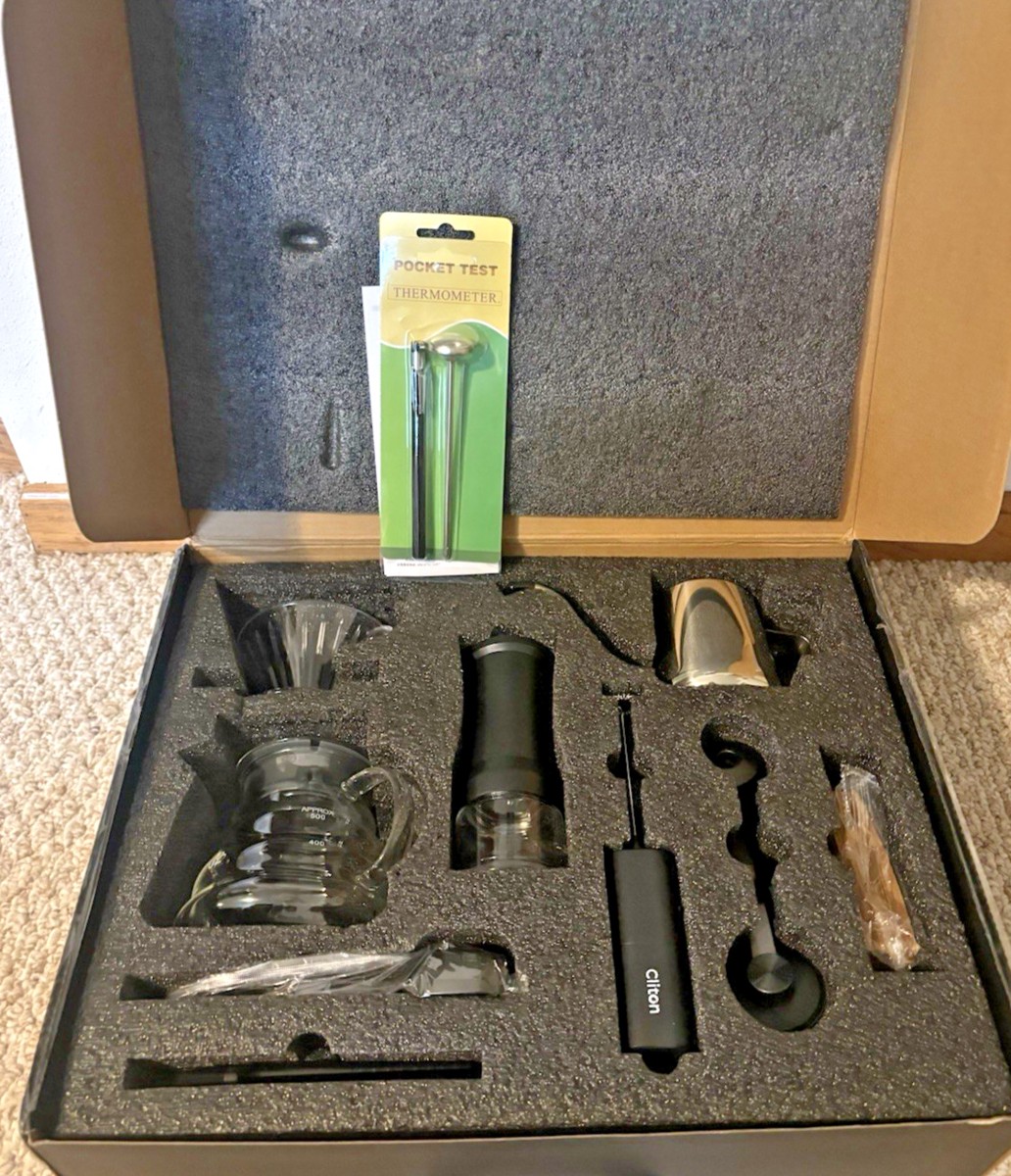

Photos from current listings. Actual item, color, and included accessories may vary.
Manual Pour Over Coffee Maker Buying Guide
A manual pour-over coffee maker is a gravity-fed brewing system where you control water temperature, pour pattern, and flow rate to extract light-to-medium roasts with clarity. The key trade-off is between thermal stability and simplicity: ceramic and stainless steel retain heat but need preheating, while glass and plastic are lighter but lose heat faster. Choose borosilicate glass, food-grade stainless steel (304/18-8) or glazed ceramic for durability, and pair with a gooseneck kettle and burr grinder for repeatable results.
Key takeaways
- Cone-shaped drippers (V60, Kalita Wave) use a single large hole and spiral ribs for fast flow and bright acidity; flat-bed drippers use three small holes for even extraction and body.
- Borosilicate glass resists thermal shock up to ~150°C, but preheat with hot water to avoid cracking and to stabilize brew temperature.
- 304 stainless steel (18/8) is the standard for kettles and filters; avoid uncoated aluminum or thin 201-grade steel that dents and imparts metallic taste.
At a glance
- Category
- Pour-Over & Manual Brewing
- Last updated
- Nov 23, 2026
Current offers
Highlights
- Cone-shaped drippers (V60, Kalita Wave) use a single large hole and spiral ribs for fast flow and bright acidity; flat-bed drippers use three small holes for even extraction and body.
- Borosilicate glass resists thermal shock up to ~150°C, but preheat with hot water to avoid cracking and to stabilize brew temperature.
- 304 stainless steel (18/8) is the standard for kettles and filters; avoid uncoated aluminum or thin 201-grade steel that dents and imparts metallic taste.
- Gooseneck spouts with a 6–8 mm inner diameter give precise 8–12 g/s flow control; standard kettles pour too fast for even saturation.
Best use cases
- Best fit: daily single-cup brewing (250–350 ml) with a size 01 cone dripper and #1 paper filters; skip size 03 unless brewing for two or more.
- Best fit: light-roast clarity seeking with a V60-style cone and gooseneck kettle; choose a flat-bed dripper (Kalita Wave) for darker roasts or forgiving extraction.
- Wrong fit: high-volume entertaining (over 1 L per brew) — use a batch brewer or 8-cup Chemex; manual cones max out at 500–600 ml per pour.
- Wrong fit: fine-espresso grinding — pour-over requires medium-fine (600–800 µm) burr grind; blade grinders create fines that clog filters and stall flow.
Buying tips
- Match filter size to dripper: size 01 fits 1–2 cups (250–400 ml), size 02 fits 2–4 cups (400–600 ml), size 03 fits 4–6 cups (600–800 ml); using the wrong size causes bypass or overflow.
- Choose a double-wall stainless kettle (1 L) for heat retention and a built-in thermometer (target 92–96°C for light roasts, 88–92°C for dark); single-wall kettles lose 5–8°C in 2 minutes.
- Prefer a ceramic or glass server (carafe) over plastic; plastic retains odors and scratches, while borosilicate glass is dishwasher-safe and thermal-shock resistant.
- Check filter availability: V60 size 01/02 and Kalita 155/185 papers are widely stocked; unusual cone shapes may require proprietary filters that are hard to find.
Specs
| Dripper Material | Borosilicate glass / ceramic / stainless |
|---|---|
| Filter Size | 01 (1-2 cups) / 02 (2-4 cups) |
| Kettle Spout | Gooseneck 6-8 mm inner tip |
| Grind Size | Medium-fine (600-800 µm) |
Related searches
What to check before buying
- Measure your mug or server height: dripper base plus server must clear your kettle spout and fit under your cabinet (typical assembled height 25–30 cm).
- Confirm your kettle spout: a gooseneck with a narrow tip (6–8 mm) is required for controlled pouring; a standard wide spout will flood the bed.
- Verify your grinder produces medium-fine grounds: burr grinders (hand or electric) are necessary; blade grinders cause uneven extraction and filter clogging.
- Check voltage and plug standard: electric gooseneck kettles are region-specific (120 V US / 230 V EU); manual pour-over setups need no power.
FAQ
Data sources: eBay / Amazon listings and product attribute feeds. Updated Nov 23, 2026.
Some links on this page are affiliate links. If you buy after clicking one, we may earn a commission at no extra cost to you. This does not change which products appear here or their order. Affiliate disclosure.