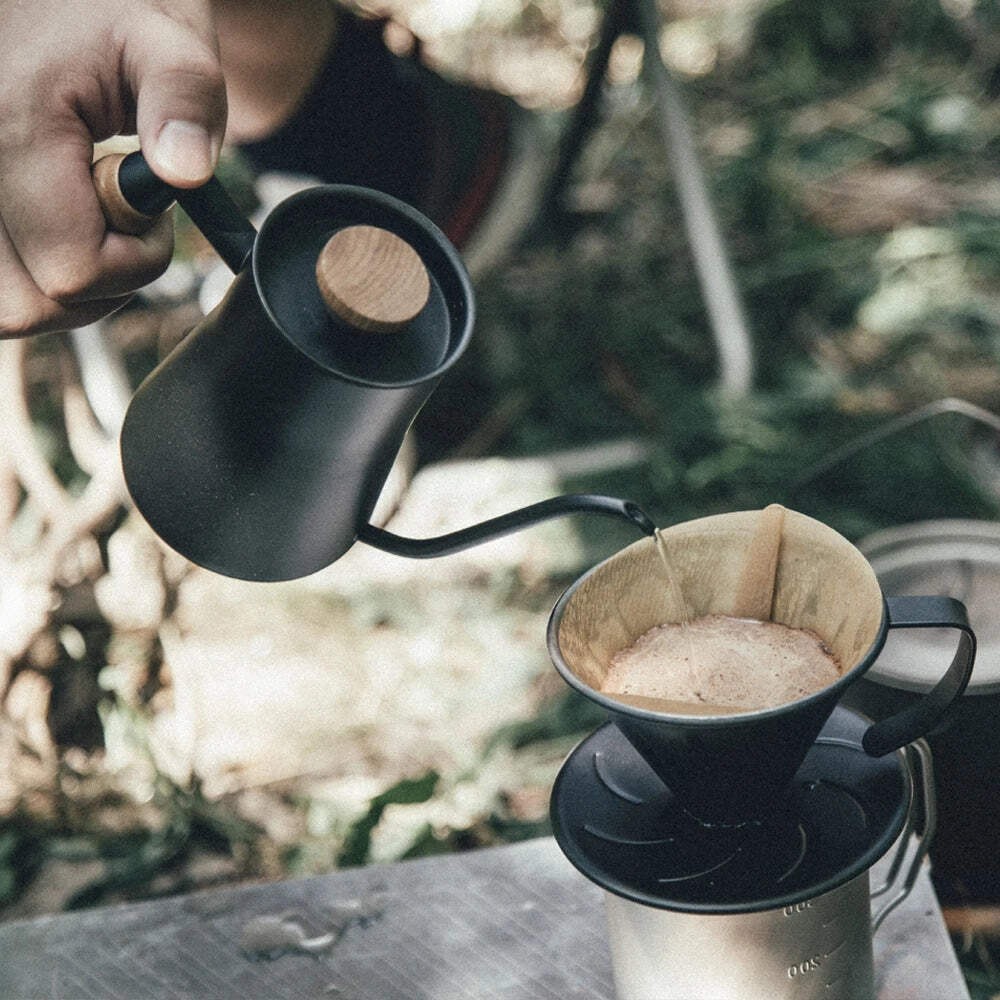

Photos from current listings. Actual item, color, and included accessories may vary.
Pour Over Coffee Filter Buying Guide
A pour-over coffee filter is the paper or reusable mesh that sits in your dripper and controls flow rate, sediment retention, and flavor clarity. The core trade-off is paper (clean cup, fast setup, ongoing cost) versus reusable metal or cloth (fuller body, zero waste, more cleaning). Buy paper if you want repeatable clarity; buy stainless or cloth only if you accept slower flow and fines in the cup.
Key takeaways
- Paper filters are graded by thickness and oxygen bleaching: thinner 1-ply filters drain faster and pass more oils; thicker 2-ply unbleached filters slow flow and trap more fines for a cleaner cup.
- Reusable stainless mesh filters use 50-150 micron apertures; finer mesh (50-80 micron) reduces sludge but clogs faster, while coarser 100-150 micron mesh flows freely and lets more sediment through.
- Cone filters (V60-style, 60-degree) versus flat-bottom (Kalita-style, three-hole) dictate bed depth and contact time; cone filters reward precise pouring, flat-bottom filters tolerate uneven pouring.
At a glance
- Category
- Pour-Over & Manual Brewing
- Last updated
- Nov 23, 2026
Current offers
Highlights
- Paper filters are graded by thickness and oxygen bleaching: thinner 1-ply filters drain faster and pass more oils; thicker 2-ply unbleached filters slow flow and trap more fines for a cleaner cup.
- Reusable stainless mesh filters use 50-150 micron apertures; finer mesh (50-80 micron) reduces sludge but clogs faster, while coarser 100-150 micron mesh flows freely and lets more sediment through.
- Cone filters (V60-style, 60-degree) versus flat-bottom (Kalita-style, three-hole) dictate bed depth and contact time; cone filters reward precise pouring, flat-bottom filters tolerate uneven pouring.
- Chemex-bonded filters are 20-30% heavier than standard cone paper, which extends drawdown to 4-5 minutes and removes more oils for a tea-like body.
Best use cases
- Choose standard cone paper filters for daily 1-2 cup brewing on a V60 or similar 60-degree dripper; they are the cheapest per-cup path to a clean, repeatable cup.
- Choose a reusable stainless mesh filter if you brew outdoors, travel, or refuse to rebuy paper; accept a slightly muddier cup and rinse it within minutes of brewing to prevent clogging.
- Choose Chemex-specific bonded filters only if you own a Chemex carafe; standard cone filters collapse and bypass in the Chemex funnel and will not fit the 6-cup or 8-cup models.
- Skip cloth filters unless you will boil or wash them after every session; cloth retains oils and sours within a day, making it a poor fit for low-frequency brewers.
Buying tips
- Match filter shape to dripper geometry: 60-degree cone filters for V60-style drippers, flat-bottom filters for Kalita-wave or flat-bed drippers, and Chemex bonded squares only for Chemex carafes.
- Size by cup count with headroom: a 1-2 cup cone filter suits 15-18 g doses; a 6-cup Chemex filter suits 30-40 g doses, and overfilling a small filter stalls the bed and channels.
- For reusable mesh, pick 50-80 micron for espresso-adjacent clarity and 100-150 micron for faster flow; finer mesh needs a finer grind and more rinsing.
- Buy unbleached paper if you dislike papery notes; oxygen-bleached paper is neutral but slightly weaker when wet, so use a slower pour to avoid tearing.
Specs
| Filter Material | Paper / Stainless mesh / Cloth |
|---|---|
| Shape Fit | Cone 60° / Flat-bottom / Chemex |
| Mesh Aperture | 50-150 micron (reusable) |
| Paper Grade | 1-ply thin / 2-ply thick / Bonded |
Related searches
What to check before buying
- Measure your dripper's rim diameter and cone angle before buying paper; a 60-degree cone filter will not seat in a flat-bottom dripper.
- Confirm your carafe or server capacity against filter size: a 6-cup Chemex filter overhangs a 3-cup carafe and can tear on the spout.
- For reusable mesh, verify your sink or dishwasher can reach it for rinsing; coffee oils polymerize and blind the mesh if left unwashed overnight.
- Check that your kettle spout is narrow enough for the filter's flow rate; a wide spout overwhelms thin paper and causes overflow and bypass.
FAQ
Data sources: eBay / Amazon listings and product attribute feeds. Updated Nov 23, 2026.
Some links on this page are affiliate links. If you buy after clicking one, we may earn a commission at no extra cost to you. This does not change which products appear here or their order. Affiliate disclosure.