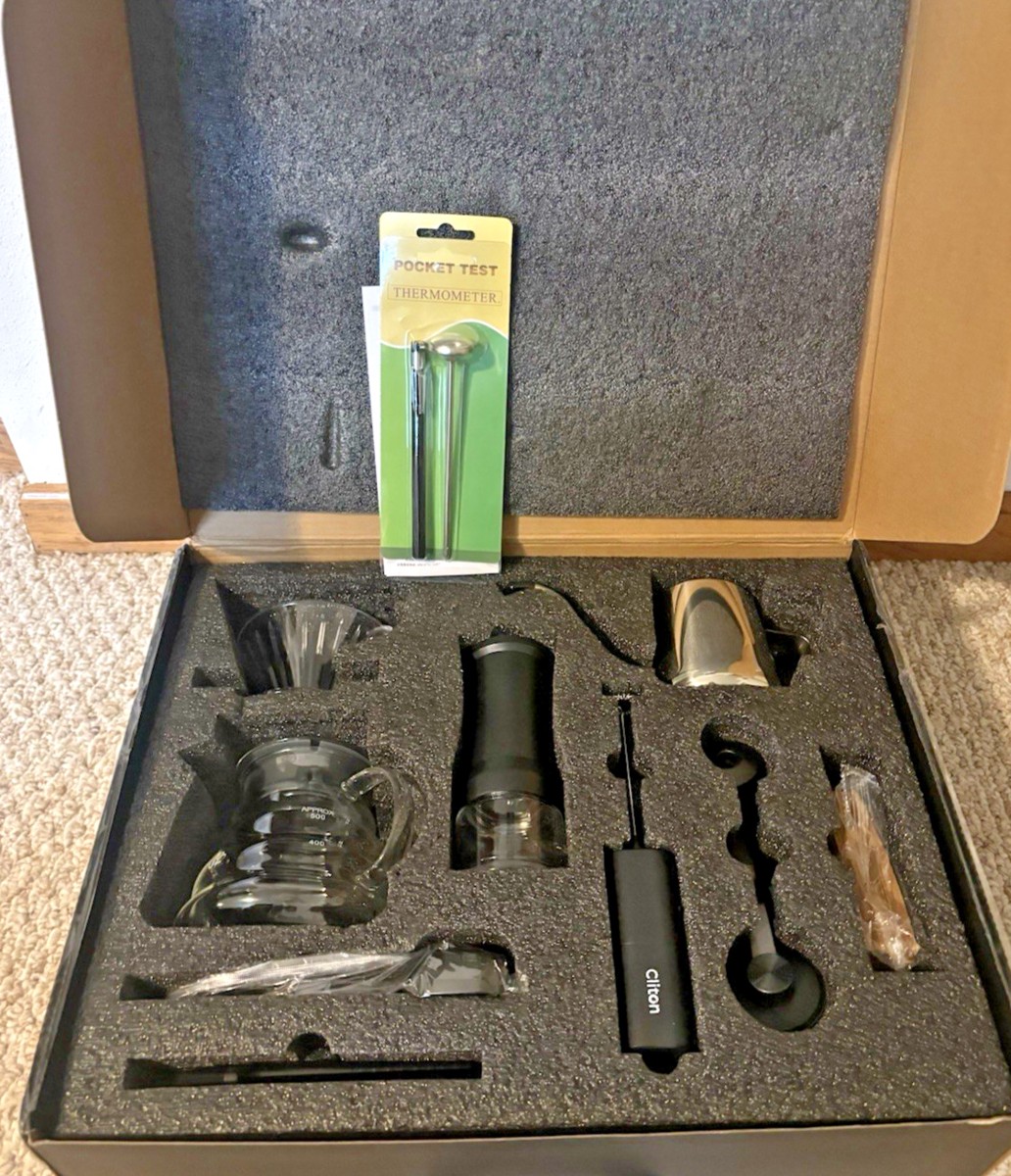

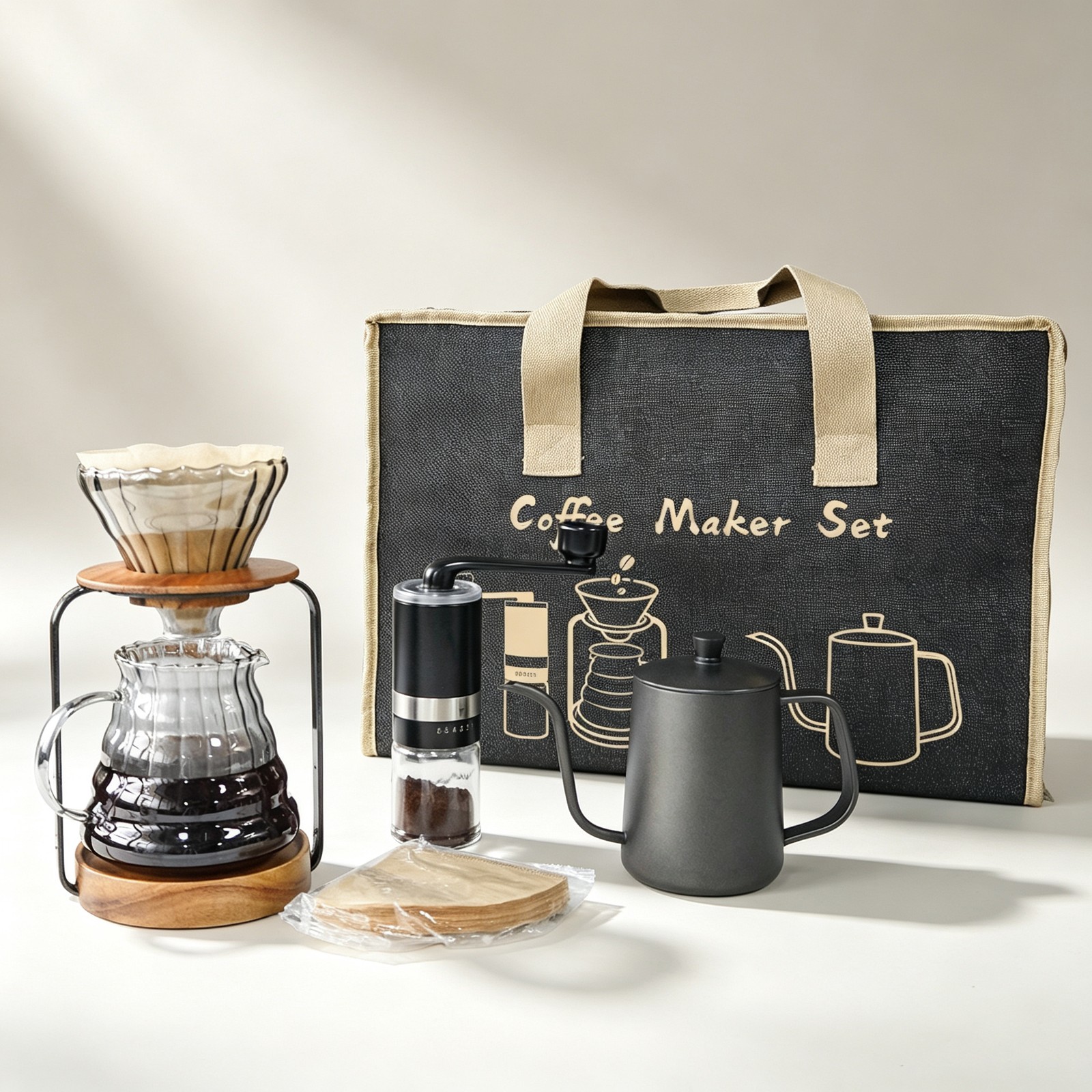
Photos from current listings. Actual item, color, and included accessories may vary.
Pour Over Coffee Grinder Buying Guide
A pour-over grinder is the single most important variable in manual brewing: it controls particle uniformity, which dictates extraction evenness and clarity. The core trade-off is burr architecture and material versus alignment and adjustment precision—conical steel burrs give a durable baseline, while flat burrs and tighter tolerances deliver the consistency that light-roast pour-over demands. The decision rule: buy a grinder with a stabilised burr shaft, stepped or stepless micro-adjustment, and a burr material rated for thousands of pounds of coffee; skip any unit with ceramic burrs, loose axle play, or grind settings coarser than 10 microns per click.
Median $61.49
Key takeaways
- Conical steel burrs (hardness 60–64 HRC) outlast ceramic 3–5x and resist chipping; ceramic is only acceptable for sub-1-cup travel kits.
- Flat 48–64 mm burrs deliver a narrower particle distribution than conical for pour-over, improving clarity in light roasts at the cost of higher hand-cranking effort.
- Burr shaft stabilisation—dual bearings or a fixed outer burr ring—eliminates wobble; a wobbly axle produces 200+ micron fines that stall the drawdown.
At a glance
- Category
- Pour-Over & Manual Brewing
- Last updated
- Nov 23, 2026
Current offers
Highlights
- Conical steel burrs (hardness 60–64 HRC) outlast ceramic 3–5x and resist chipping; ceramic is only acceptable for sub-1-cup travel kits.
- Flat 48–64 mm burrs deliver a narrower particle distribution than conical for pour-over, improving clarity in light roasts at the cost of higher hand-cranking effort.
- Burr shaft stabilisation—dual bearings or a fixed outer burr ring—eliminates wobble; a wobbly axle produces 200+ micron fines that stall the drawdown.
- Adjustment resolution of 10–20 microns per click lets you dial pour-over between 600–800 micron average; stepless adjustment is ideal but stepped is acceptable above 15 clicks per revolution.
Best use cases
- Best fit: daily 1–2 cup pour-over at home—choose a hand grinder with 40–48 mm conical steel burrs and 20+ clicks; skip flat-burr espresso-focused models that cost more and grind slower.
- Best fit: travel and office brewing—pick a compact 25–38 mm conical steel hand grinder with a sealed catch cup; skip glass-bodied or fabric-wrapped grinders that crack or absorb moisture in a bag.
- Best fit: light-roast specialty pour-over with multiple brewers—step up to a 48–64 mm flat-burr hand grinder or a low-retention electric flat-burr unit; skip entry conical grinders if you routinely brew Nordic-light roasts.
- Wrong fit: espresso-only buyers—a pour-over-optimised grinder rarely has the fine-step resolution below 200 microns that espresso requires; choose a dedicated espresso hand grinder instead.
Buying tips
- Match burr size to volume: 25–38 mm burrs suit 1–2 cups (15–30 g), 40–48 mm suit 2–4 cups, and 48 mm+ flat burrs suit 4+ cups or batch brewing.
- Demand steel burrs with a stated hardness or alloy (e.g., 420 stainless, 60+ HRC); unrated 'stainless steel' often means soft 304 that dulls within a year of daily use.
- Check the adjustment mechanism: a click detent every 10–20 microns is pour-over-grade; a single lock ring with no detents drifts during grinding and ruins repeatability.
- For electric units, confirm low retention (under 0.5 g) and a brushless or geared motor; high-RPM direct-drive motors heat the grounds and strip light-roast aromatics.
Specs
| Burr Type | Conical steel vs flat steel |
|---|---|
| Burr Size | 25–64 mm (hand vs electric) |
| Adjustment | 10–20 micron/click, stepped/stepless |
| Drive | Manual crank vs brushless electric |
Related searches
What to check before buying
- Measure your brewer and carafe height—hand grinders 15–20 cm tall fit under most cabinets, but electric units need 30–40 cm of clearance.
- Confirm burr material and replacement availability: steel burrs should be user-replaceable with a published part number, not sealed in a non-serviceable housing.
- Check the catch cup interface: threaded aluminium or stainless cups seal better than press-fit plastic, which loosens and spills grounds over months of use.
- For travel kits, verify the grinder nests inside your gooseneck kettle or brewing set; mismatched diameters waste pack space and risk glass breakage.
FAQ
Data sources: eBay / Amazon listings and product attribute feeds. Updated Nov 23, 2026.
Some links on this page are affiliate links. If you buy after clicking one, we may earn a commission at no extra cost to you. This does not change which products appear here or their order. Affiliate disclosure.