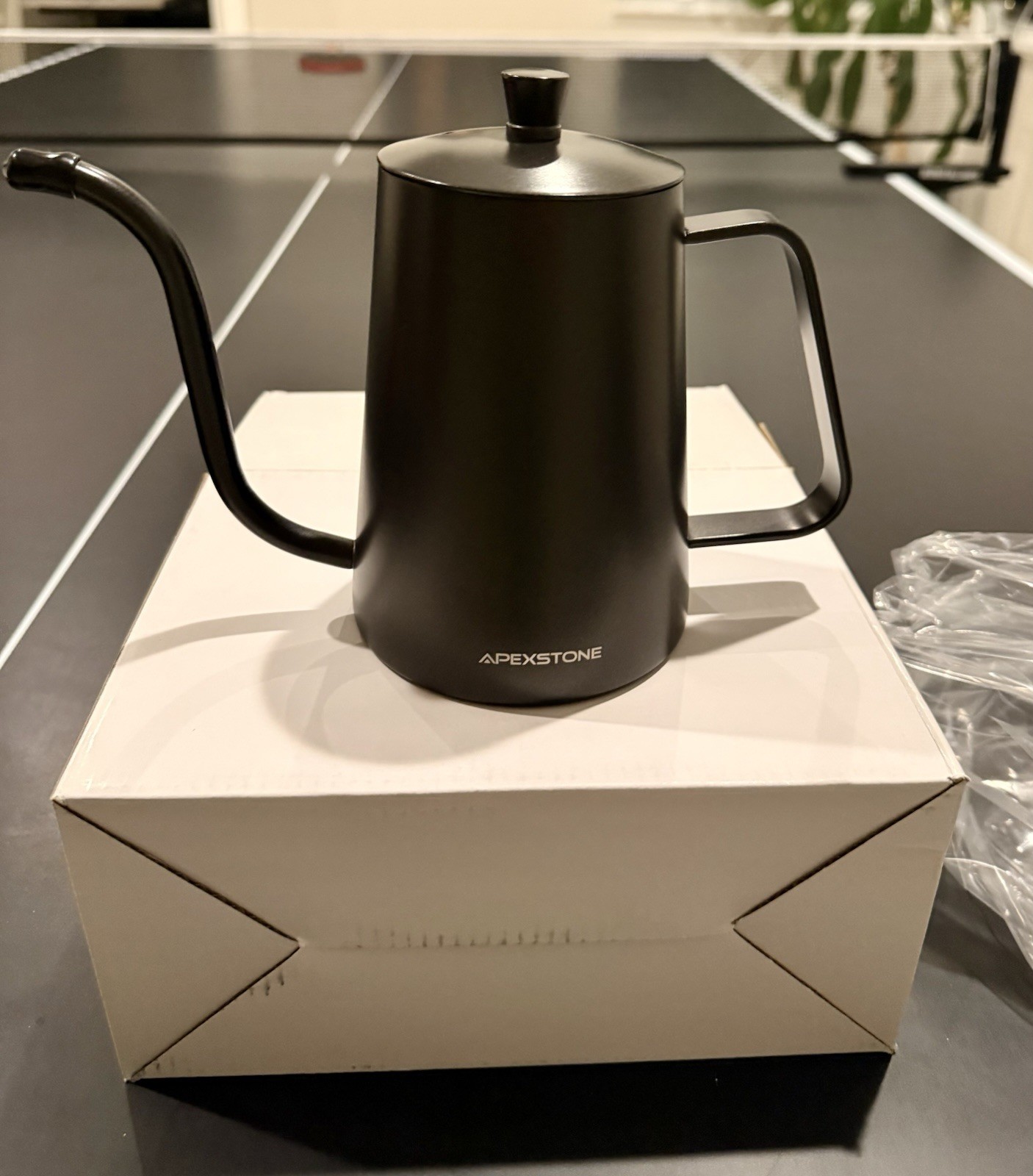

Photos from current listings. Actual item, color, and included accessories may vary.
Pour Over Kettle Buying Guide
A pour-over kettle is a precision water-delivery tool: its spout geometry, heating control, and material grade determine whether you get a slow, steady, saturable pour or an uncontrollable gush. The core trade-off is between stovetop simplicity (no electronics, any heat source) and electric temperature control (set-and-hold precision, no stove needed). Buy a gooseneck with a narrow, tapered spout and a counterbalanced handle; skip wide-spout kettles marketed as 'pour-over' — they cannot deliver the 5–8 g/s flow rate that even extraction requires.
Median $40.49
Key takeaways
- Gooseneck spout inner diameter of 6–8 mm is the functional standard; wider spouts exceed 12 g/s and flood the coffee bed, causing channeling and sour underextraction.
- Electric pour-over kettles use either a PID controller with ±1°C held temperature or a simple bimetal thermostat with 10–15°C swings; PID is required for reproducible light-roast brewing at 92–96°C.
- Stovetop models must match your cooktop: flat-bottom kettles work on induction, ceramic, and gas, while round-bottom or thin-gauge bodies warp and whistle on high-output gas burners.
At a glance
- Category
- Pour-Over & Manual Brewing
- Last updated
- Nov 23, 2026
Current offers
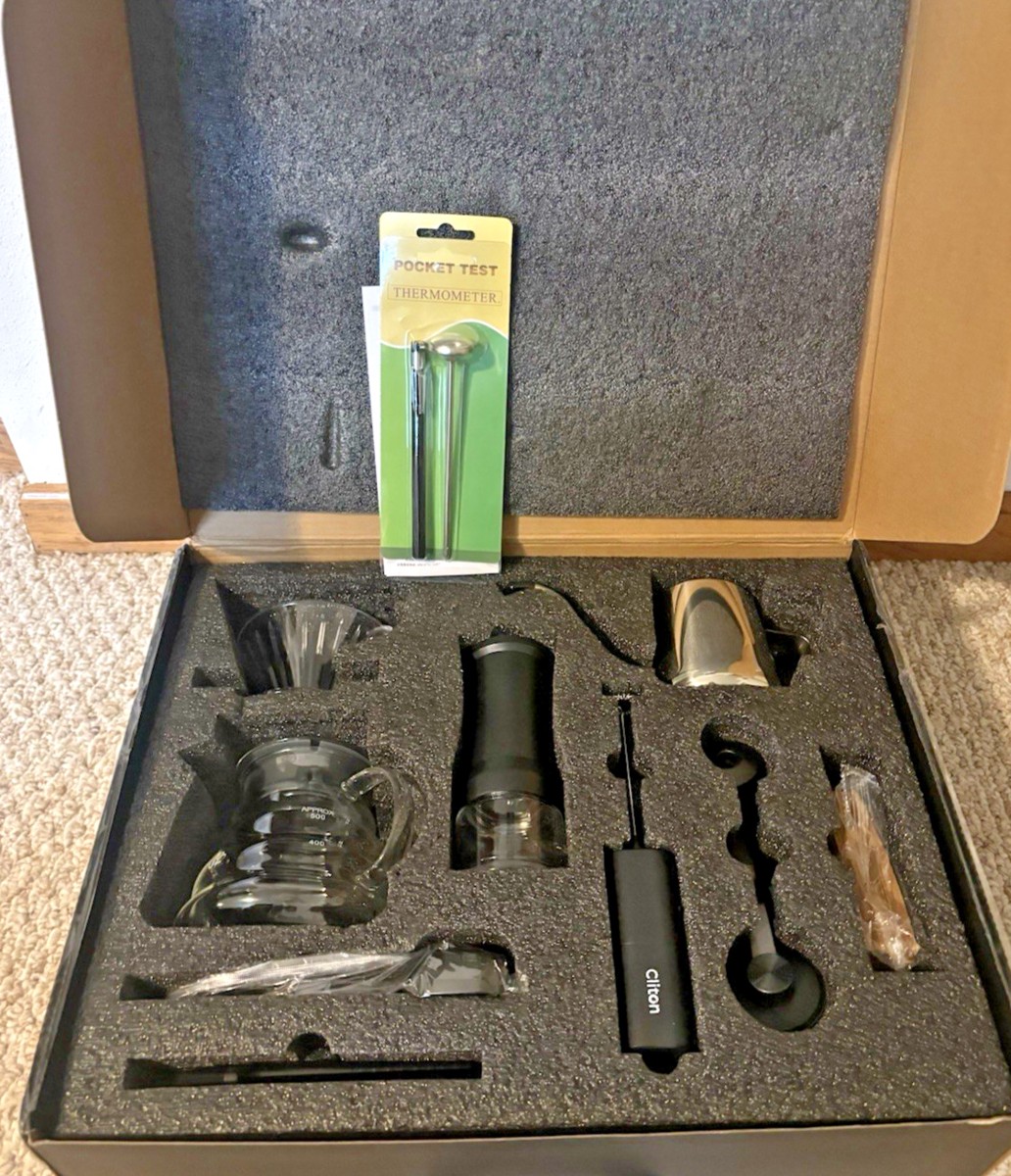
Highlights
- Gooseneck spout inner diameter of 6–8 mm is the functional standard; wider spouts exceed 12 g/s and flood the coffee bed, causing channeling and sour underextraction.
- Electric pour-over kettles use either a PID controller with ±1°C held temperature or a simple bimetal thermostat with 10–15°C swings; PID is required for reproducible light-roast brewing at 92–96°C.
- Stovetop models must match your cooktop: flat-bottom kettles work on induction, ceramic, and gas, while round-bottom or thin-gauge bodies warp and whistle on high-output gas burners.
- 304 (18/8) stainless steel is the minimum corrosion-resistant grade for daily brewing; 316L is more chloride-resistant but unnecessary unless you brew with high-mineral water or leave the kettle wet.
Best use cases
- Best fit: buy an electric PID gooseneck (0.9–1.0 L) if you brew light-roast single origins daily and need repeatable 93°C pours — it eliminates stove-to-cup temperature drop and lets you hold temp between pours.
- Best fit: buy a stovetop gooseneck (1.0–1.2 L, flat induction base) if you already own a variable-temperature kettle or brew with a gas/induction range and want zero electronics to fail.
- Wrong fit: skip 1.7 L 'coffee server' kettles with wide spouts and plastic lids — the spout cannot control flow below 15 g/s, and the large thermal mass makes temperature stepping impractical for small 250–350 ml brews.
- Wrong fit: skip travel/mini kettles under 0.5 L for home use — they require refilling mid-brew for a 500 ml pour-over and often lack PID, so temperature falls 8–10°C across a 3-minute brew.
Buying tips
- Match capacity to brew volume: 0.9–1.0 L covers two 300 ml pours plus rinse; 1.2 L+ only helps if you batch-brew 1 L or more — oversized kettles heat slower and lose precision at low fill.
- Prioritize a counterbalanced handle and a spout that angles 45–60° from horizontal; this geometry lets you pour at 5–8 g/s with a relaxed wrist rather than a death grip.
- For electric models, confirm PID with a visible set-temperature display and a hold function rated for at least 60 minutes; bimetal 'temperature select' dials without a digital readout drift ±10°C.
- Check the base: induction-compatible stovetop kettles need a magnetic 18/0 or 304 base disc at least 10 cm wide; electric models need a 360° cordless base with boil-dry protection.
Specs
| Spout Type | Gooseneck 6–8 mm ID vs wide spout |
|---|---|
| Heat Source | Electric PID vs stovetop induction/gas |
| Capacity | 0.9–1.0 L standard; 0.5 L travel |
| Body Material | 304/18-8 stainless; 316L optional |
Related searches
What to check before buying
- Measure your largest brew: a 500 ml pour-over needs a kettle of at least 0.9 L so you are not tilting past 45° (which breaks the spout's flow control).
- Confirm cooktop type: gas and induction both work with flat-base stovetop kettles, but glass-top radiant ranges require a perfectly flat, scratch-free base.
- Check counter and cabinet clearance: electric gooseneck kettles are 25–30 cm tall on the base; verify it fits under upper cabinets and that the cord reaches an outlet without an extension.
- Verify voltage and plug standard for your region — electric kettles are 120 V/60 Hz (North America) or 220–240 V/50 Hz (EU/UK/Asia) and are not interchangeable without a transformer.
FAQ
Data sources: eBay / Amazon listings and product attribute feeds. Updated Nov 23, 2026.
Some links on this page are affiliate links. If you buy after clicking one, we may earn a commission at no extra cost to you. This does not change which products appear here or their order. Affiliate disclosure.