
Photos from current listings. Actual item, color, and included accessories may vary.
Electric Pressure Canner Buying Guide
Electric pressure canners are countertop appliances designed to safely process low-acid foods in sealed jars using controlled pressure and temperature, unlike standard electric pressure cookers that lack certified canning modes. The primary trade-off is between true USDA-compliant pressure canning capability (dual pressure/temperature regulation, valid jar-headspace guidance) and multi-function cooking convenience. The clear decision rule: buy only a unit explicitly rated for pressure canning low-acid foods with a tested 10–15 PSI range and a physical or digital pressure gauge; skip any multi-cooker that lists 'canning' only as a steaming or water-bath function.
Median $235.51 · New listings
Key takeaways
- True electric pressure canners must sustain 10–15 PSI (psi) and reach 240–250°F internal temperature to destroy botulism spores in low-acid foods; standard electric multi-cookers typically cap at 11.6 PSI and lack certified canning cycles.
- USDA and National Center for Home Food Preservation guidance requires a tested dial or weighted gauge and a verified venting/exhaust protocol; only canners with a dedicated canning mode and jar-rack system meet this.
- Stainless steel inner pots resist pitting and staining from acidic brines and tomato sauces; nonstick or aluminum inserts degrade faster under repeated pressure canning cycles.
At a glance
- Category
- Slow & Pressure Cookers
- Last updated
- Nov 27, 2026
Current offers
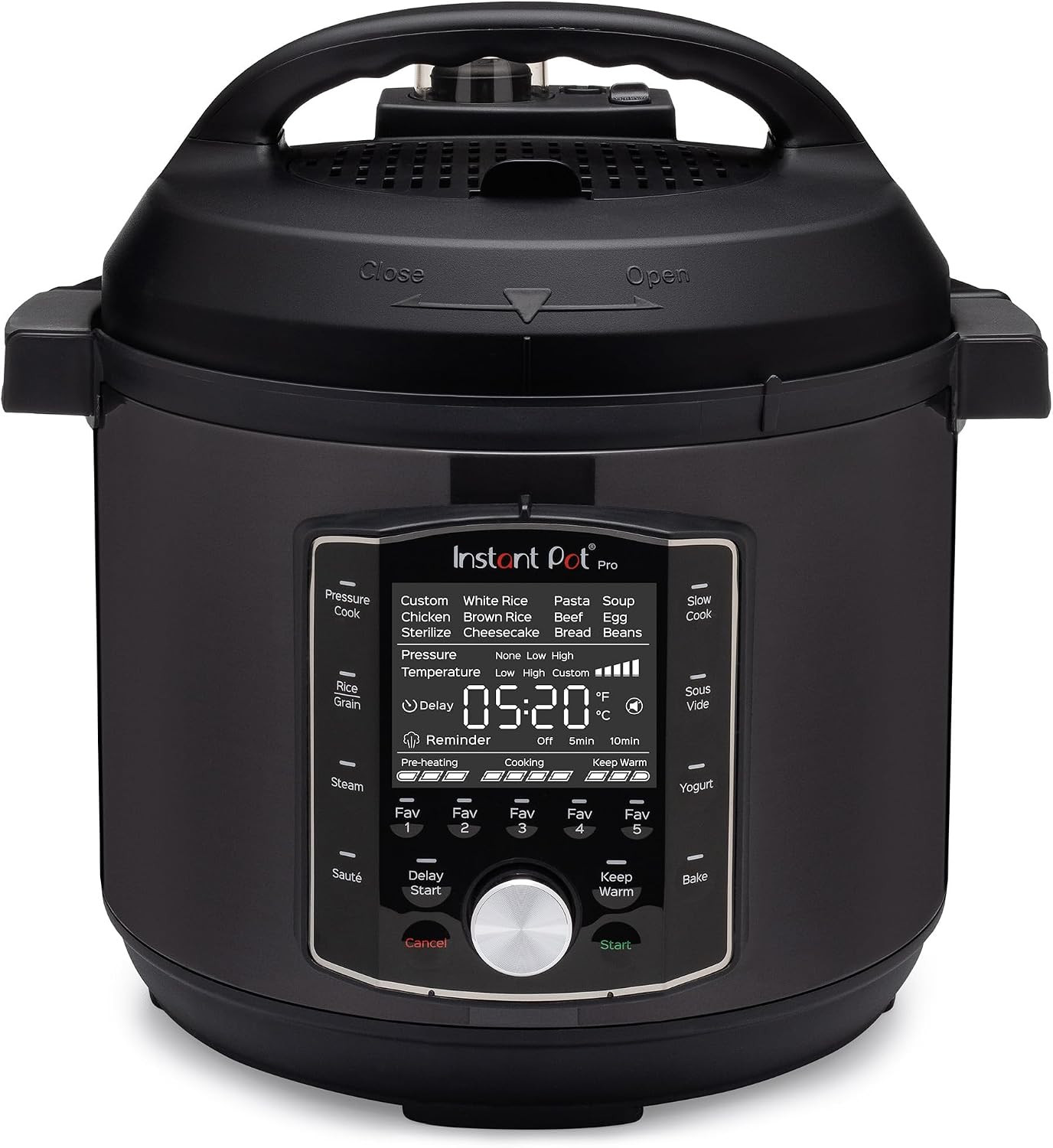 Instant Pot Pro 6 Qt 10-In-1 Electric Pressure Cooker, Black$235.51New · Last checked Nov 16, 2026View on eBay
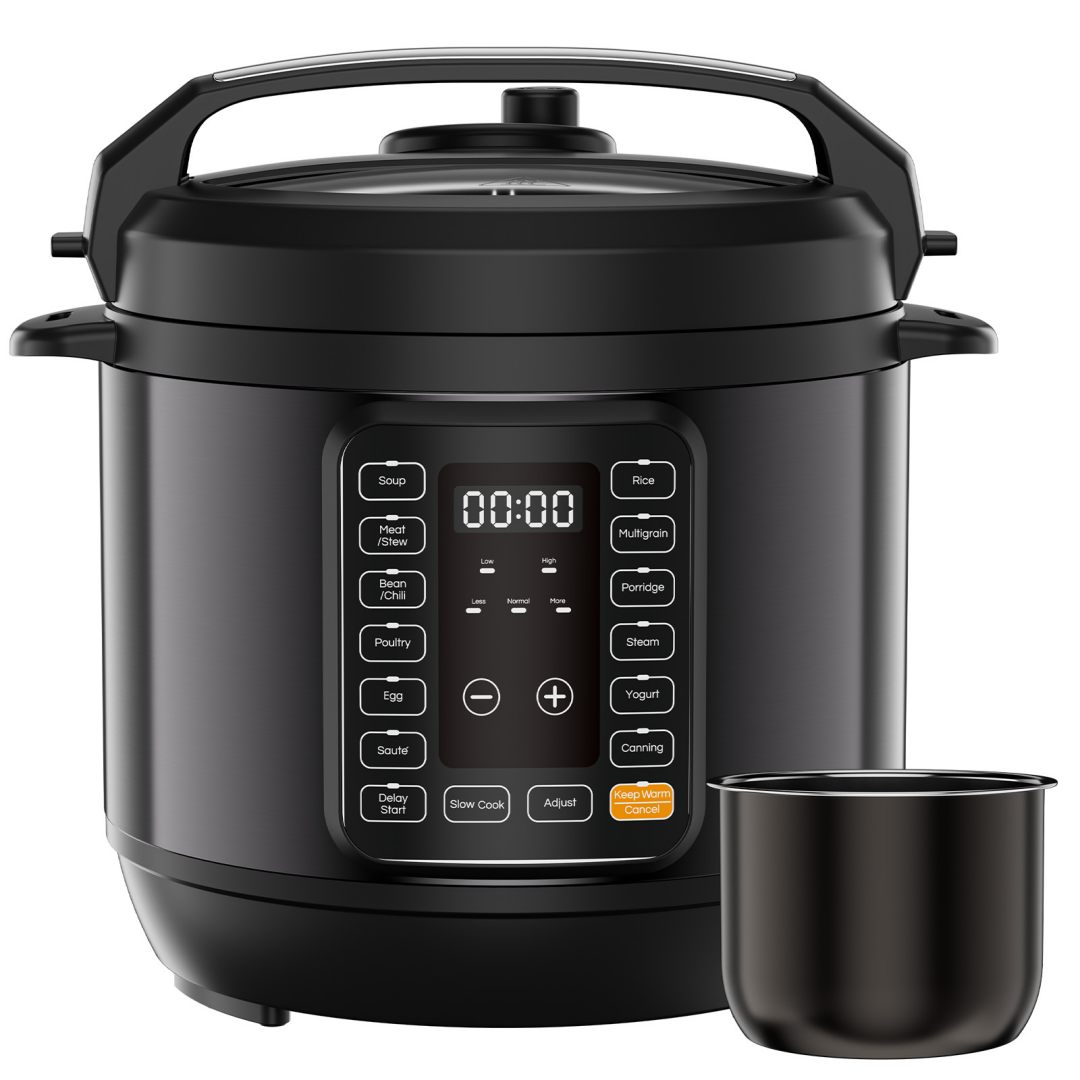 Electric Pressure Cooker, Multi-functional Kitchen Appliance, Instant Heating Cookingware, Stainless Steel$92.99View on Mallflare
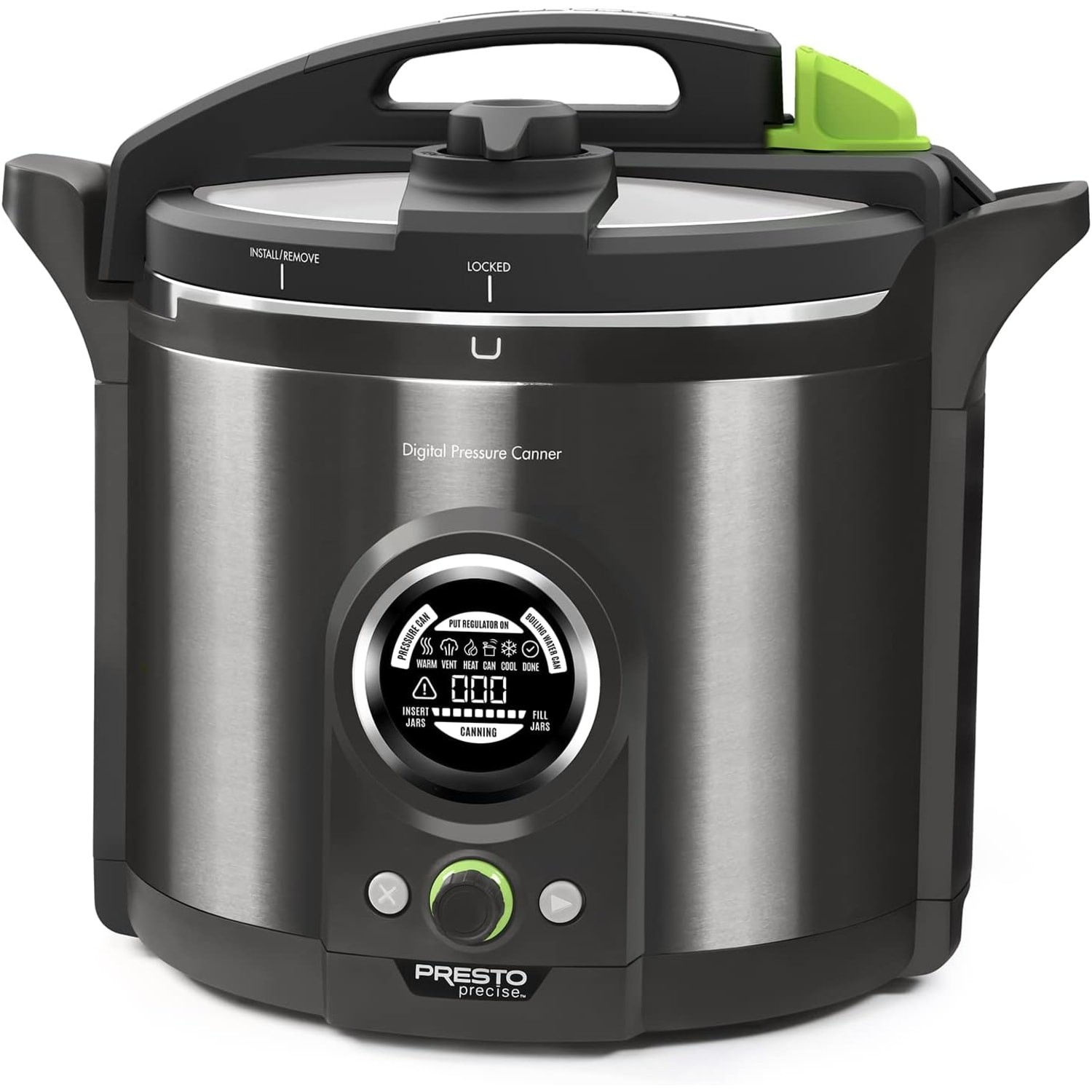 Presto Electric Pressure Canner Digital Display for Precise Canning, 12 Quart$389.39New · Last checked Nov 16, 2026View on eBay
Highlights
- True electric pressure canners must sustain 10–15 PSI (psi) and reach 240–250°F internal temperature to destroy botulism spores in low-acid foods; standard electric multi-cookers typically cap at 11.6 PSI and lack certified canning cycles.
- USDA and National Center for Home Food Preservation guidance requires a tested dial or weighted gauge and a verified venting/exhaust protocol; only canners with a dedicated canning mode and jar-rack system meet this.
- Stainless steel inner pots resist pitting and staining from acidic brines and tomato sauces; nonstick or aluminum inserts degrade faster under repeated pressure canning cycles.
- Lid-locking mechanisms must engage before pressure builds and remain locked until pressure drops below 1 PSI; units with a simple twist-lock or bayonet lid are not equivalent to a true canner's interlock safety system.
Best use cases
- Best fit: buy an electric pressure canner if you regularly put up low-acid vegetables, meats, or stocks in mason jars and want indoor, stovetop-free processing with a tested 10–15 PSI range.
- Wrong fit: skip an electric pressure canner if you only water-bath can high-acid jams, pickles, and fruit—a standard electric pressure cooker or stockpot on a stove is sufficient and cheaper.
- Best fit: choose a canner rated for quart jars (typically 3–4 quart jars or 7–8 pint jars per batch) if you process whole tomatoes, pickled vegetables, or large batches; skip compact models rated only for pint jars.
- Wrong fit: do not buy a multi-function electric pressure cooker that markets 'canning' as a steam or sous-vide mode; it cannot safely process low-acid foods and is not a substitute for a pressure canner.
Buying tips
- Confirm the unit's pressure range: a true electric pressure canner must hold 10, 11, or 15 PSI settings (or a tested 10–15 PSI range) and reach 240°F or higher; anything under 10 PSI is not a canner.
- Check jar capacity against your batch size: standard electric canners fit 3–4 quart jars or 7–8 pint jars; buy a taller model if you routinely process quart jars, and skip units that list only half-pint or pint capacity.
- Match the inner pot material to your canning volume: 18/8 stainless steel or a thick-gauge stainless insert resists brine corrosion and is the durable grade; avoid aluminum or thin nonstick liners for repeated pressure canning.
- Verify the lid interlock and venting system: a canner must have a locking lid that cannot open under pressure and a dedicated vent/steam release; simple twist-lock lids found on multi-cookers are not equivalent.
Specs
| Pressure Range | 10–15 PSI (240–250°F) |
|---|---|
| Jar Capacity | 3–4 quart or 7–8 pint jars |
| Inner Pot Material | 18/8 stainless steel vs nonstick |
| Lid Safety | Locking interlock + vent/steam release |
Related searches
What to check before buying
- Measure your stovetop or counter space and overhead clearance: electric pressure canners are taller than standard multi-cookers (often 14–17 inches high) and need several inches of clearance for steam venting.
- Confirm your jar sizes and count against the unit's rated capacity: measure the canner's inner rack dimensions and compare to your quart or pint jar diameters before buying.
- Check your electrical circuit: most electric pressure canners draw 1000–1500 watts and require a dedicated 120V grounded outlet; do not share a circuit with other high-draw appliances.
- Ensure you have a tested jar lifter, canning rack, and headspace measuring tool—these companion parts are required for safe operation and are not always included with the canner.
FAQ
Data sources: eBay / Amazon listings and product attribute feeds. Updated Nov 27, 2026.
Some links on this page are affiliate links. If you buy after clicking one, we may earn a commission at no extra cost to you. This does not change which products appear here or their order. Affiliate disclosure.