
Photos from current listings. Actual item, color, and included accessories may vary.
Heavy Duty Kitchen Mixer Buying Guide
A heavy-duty kitchen mixer is a countertop appliance built for sustained dough kneading and high-volume batters, defined by a direct-drive or belt-driven motor rated for continuous use rather than occasional cake mixes. The core trade-off is motor architecture and bowl capacity versus counter footprint: AC induction or high-torque DC motors with metal gearboxes survive stiff dough, while brushed motors and plastic gears fail under repeated gluten development. The decision rule is simple: if you regularly knead bread dough or mix batches above 3 kg, buy a planetary mixer with a metal gearbox and at least 500 W continuous rating; for occasional whipping and creaming, a tilt-head or hand mixer is sufficient.
Median $139.99
Key takeaways
- Planetary mixers rotate the beater around the bowl while the bowl stays fixed, giving full-bowl coverage and consistent gluten development; tilt-head models hinge the head back for access, while bowl-lift models raise the bowl into a fixed head for heavier dough capacity.
- Motor type is the durability pivot: AC induction motors run cooler and quieter for long kneading sessions, while DC motors deliver higher torque at lower speeds; both outlast brushed universal motors in thick dough.
- Metal gearboxes (steel or bronze alloy) survive repeated stiff dough; nylon or plastic gears are the first failure point in budget mixers under bread-duty cycles.
At a glance
- Category
- Specialty Kitchen Appliances
- Last updated
- Nov 28, 2026
Current offers
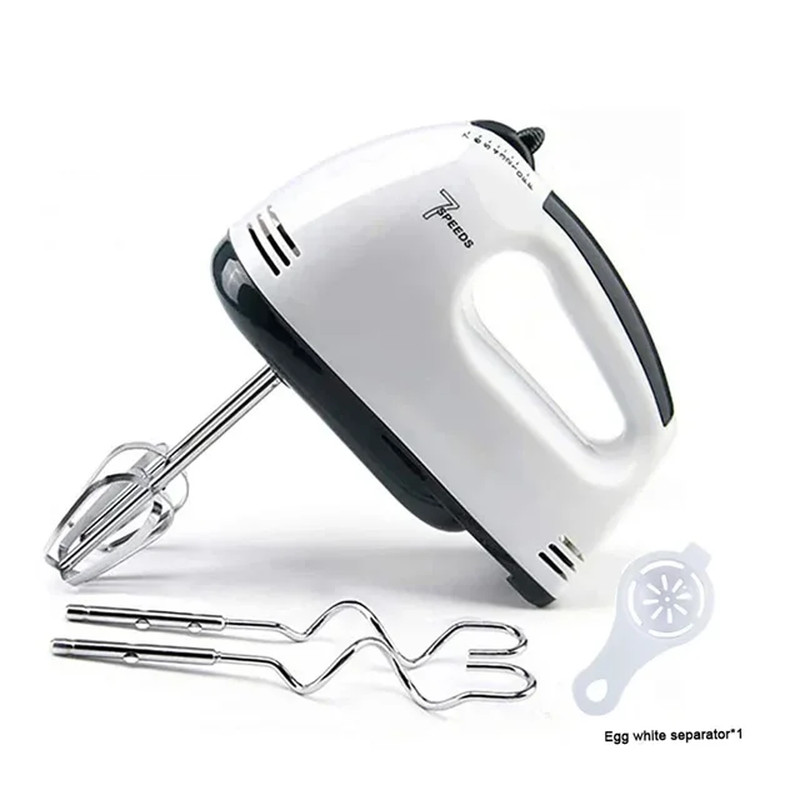 Electric Hand Mixer Kitchen Beater Spiral Whisk Stand Cake Baking Food Blender E$37.53Last checked Nov 22, 2026View on eBay
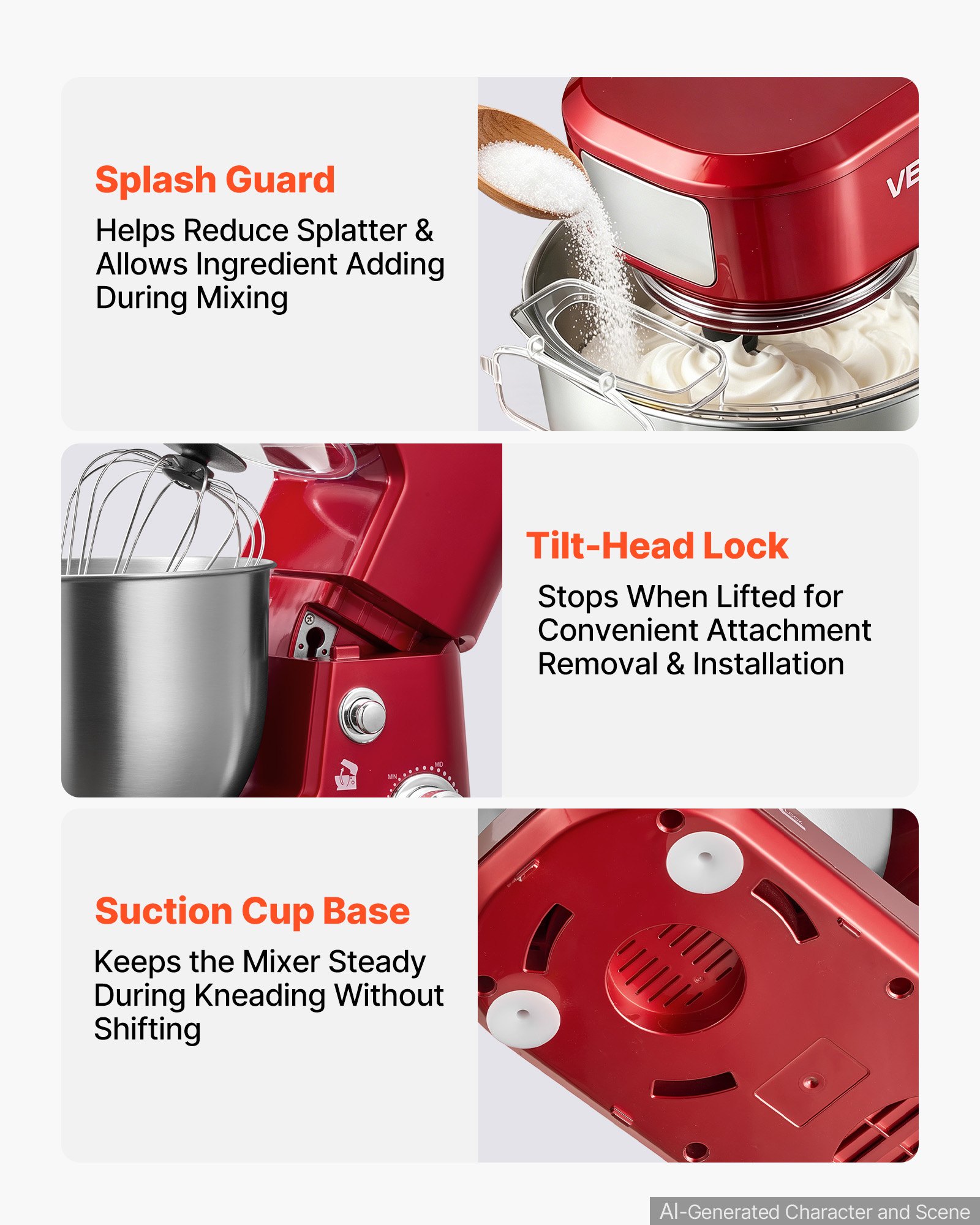 5.3+4.2 Qt Tilt Head Stand Mixer 400W Electric Dough 3 Speeds Food Kitchen With Stainless Steel Bowl, Splash Guard, Hook, Whisk, Beater, For Baking Mixing Whipping$98.99View on Mallflare
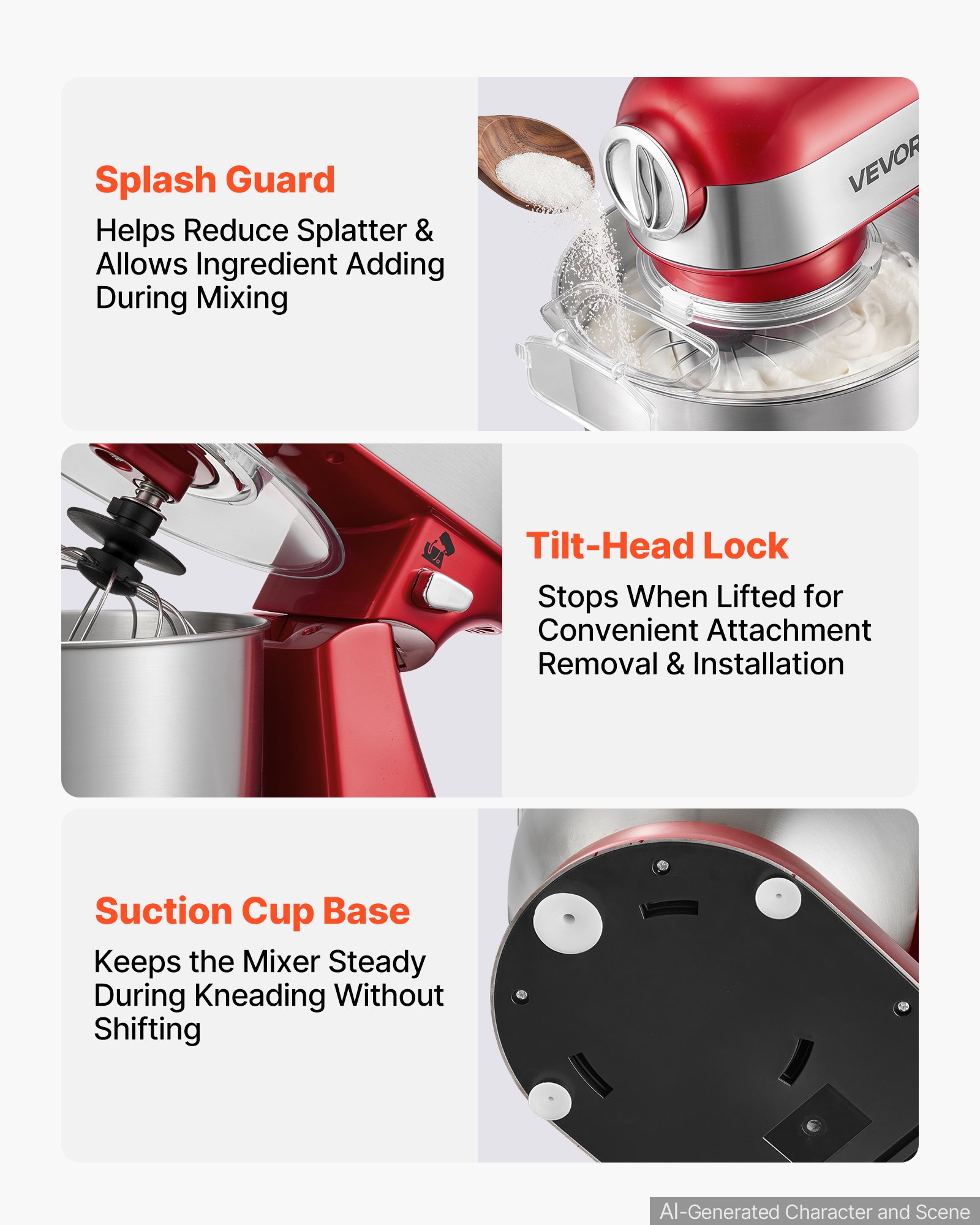 5.3 Qt Tilt Head Stand Mixer 400W Electric Dough 10 Speeds Food Kitchen With Stainless Steel Bowl, Splash Guard, Hook, Whisk, Beater, For Baking Mixing$180.99View on Mallflare
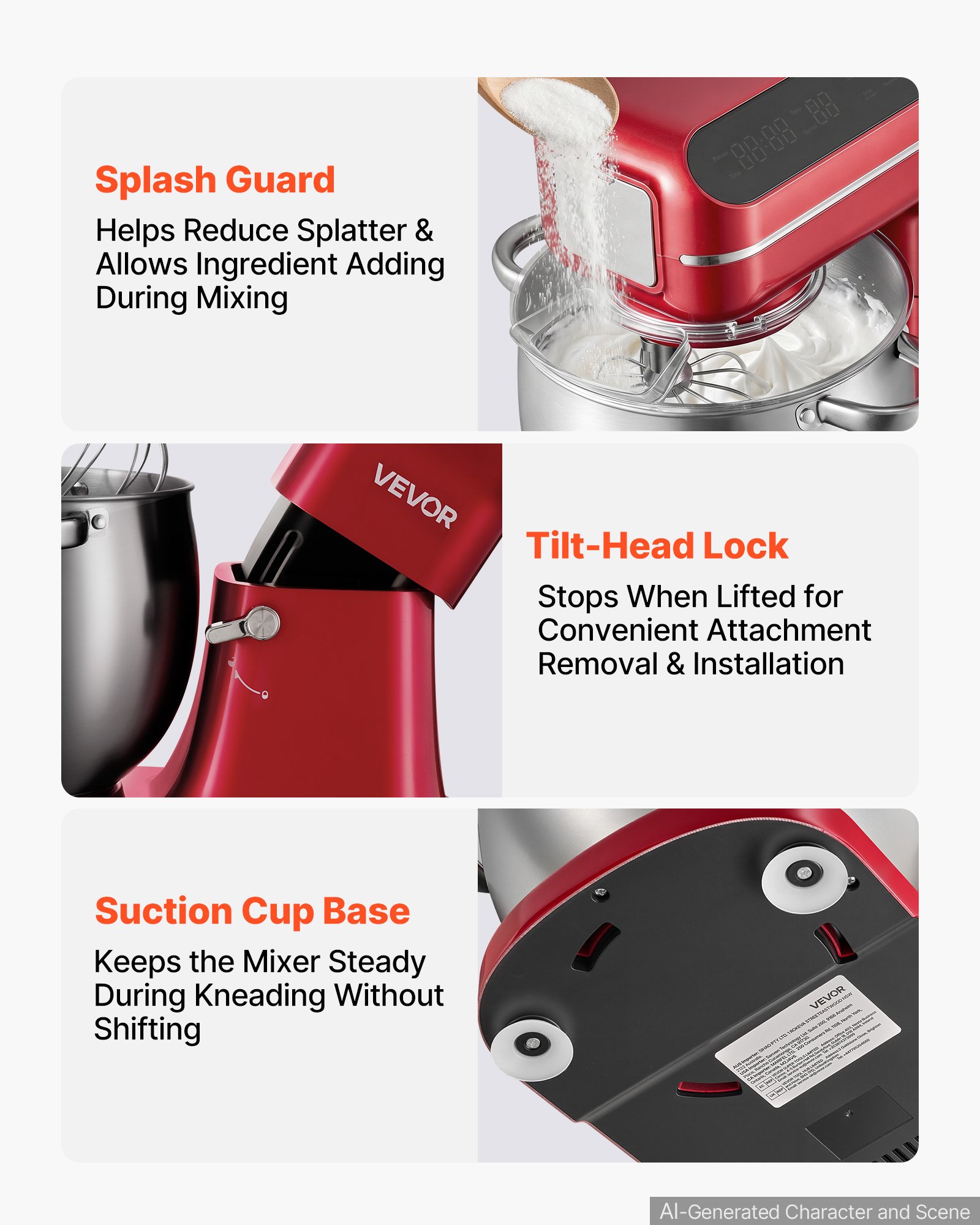 7.4 Qt Tilt Head Stand Mixer 500W Electric Dough 12 Speeds Food Kitchen With Stainless Steel Bowl, Splash Guard, Hook, Whisk, Beater, For Baking Mixing$217.99View on Mallflare
Highlights
- Planetary mixers rotate the beater around the bowl while the bowl stays fixed, giving full-bowl coverage and consistent gluten development; tilt-head models hinge the head back for access, while bowl-lift models raise the bowl into a fixed head for heavier dough capacity.
- Motor type is the durability pivot: AC induction motors run cooler and quieter for long kneading sessions, while DC motors deliver higher torque at lower speeds; both outlast brushed universal motors in thick dough.
- Metal gearboxes (steel or bronze alloy) survive repeated stiff dough; nylon or plastic gears are the first failure point in budget mixers under bread-duty cycles.
- Bowl capacity ratings split into wet batter volume and flour/dough capacity — a 5-quart bowl handles roughly 1.5–2 kg of bread flour, while a 6-quart bowl-lift handles 2.5–3 kg; always size by dough weight, not bowl litres alone.
Best use cases
- Best fit: weekly bread bakers kneading 1–2 kg flour batches should pick a bowl-lift planetary mixer with a 500–800 W AC motor and metal gearbox; skip tilt-head models with plastic internal gears.
- Best fit: high-volume home bakers or small caterers making multiple cakes and large cookie batches need a 6–7 quart bowl-lift model with a 1.0–1.3 HP motor and thermal overload protection; a 4.5–5 quart tilt-head will overheat under back-to-back batches.
- Best fit: occasional bakers and apartment kitchens with limited counter space should choose a 4.5–5 quart tilt-head mixer or a compact 3.5–4 quart model; a heavy bowl-lift unit is unnecessary weight and footprint.
- Wrong fit: buying a heavy-duty mixer solely for meringue or whipped cream — a hand mixer or smaller tilt-head delivers the same result without the counter footprint or cost.
Buying tips
- Size by flour weight: 5-quart bowls handle about 1.5–2 kg bread flour, 6-quart about 2.5–3 kg, and 7-quart about 3.5–4 kg; match the bowl to your largest regular batch, not your smallest.
- Check the motor rating in continuous watts or HP, not peak watts — a 500 W continuous AC motor outperforms a 1000 W peak brushed motor under sustained dough load.
- Confirm the gearbox material and drive type in the spec sheet: direct-drive metal gears or belt-driven with metal pulleys are durable; exposed plastic gear trains are the failure point in budget mixers.
- Verify voltage and plug standard for your region (120 V 60 Hz North America vs 220–240 V 50 Hz Europe/Asia) and confirm the mixer includes the beater, dough hook, and whisk — some tiers sell attachments separately.
Specs
| Motor Type | AC induction / high-torque DC vs brushed |
|---|---|
| Gearbox Material | Metal (steel/bronze) vs plastic/nylon |
| Head Design | Bowl-lift vs tilt-head |
| Bowl Capacity | 4.5–7 qt (1.5–4 kg flour) |
Related searches
What to check before buying
- Measure your counter depth and height clearance under upper cabinets — bowl-lift mixers need headroom to raise the bowl and can be 40–50 cm tall; tilt-head models need clearance to hinge the head back.
- Confirm your electrical circuit: heavy-duty mixers draw 5–10 A at 120 V; avoid sharing a circuit with other high-draw appliances and check plug type matches your outlet.
- Verify the bowl capacity against your largest mixing batch in flour weight (not litres) and confirm the mixer's dough capacity rating in kg for stiff bread dough.
- Check that the mixer ships with the attachments you need (dough hook, flat beater, wire whisk) and that the bowl is dishwasher-safe or hand-wash only per the manufacturer's specification.
FAQ
Data sources: eBay / Amazon listings and product attribute feeds. Updated Nov 28, 2026.
Some links on this page are affiliate links. If you buy after clicking one, we may earn a commission at no extra cost to you. This does not change which products appear here or their order. Affiliate disclosure.