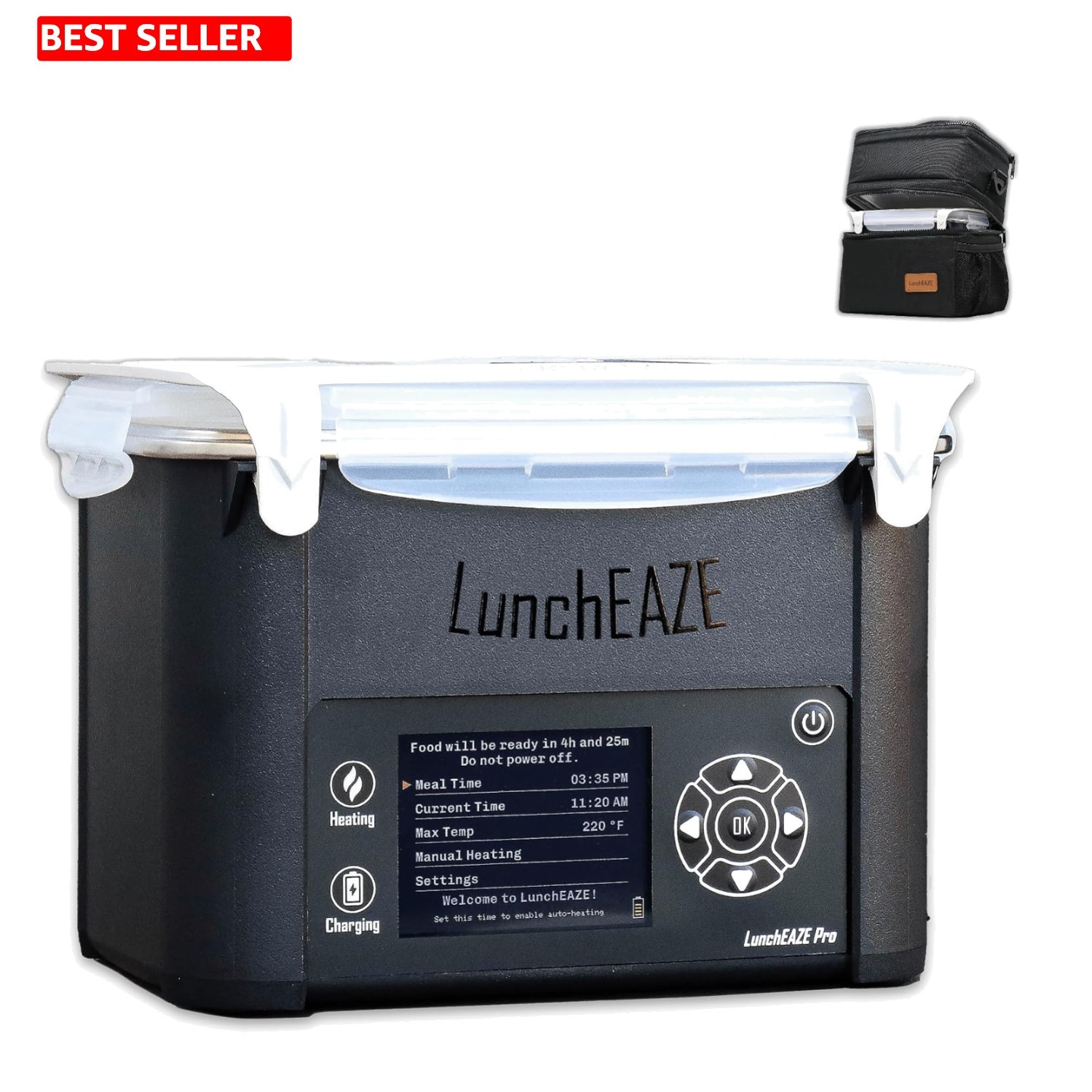

Photos from current listings. Actual item, color, and included accessories may vary.
Self Heating Lunch Box Buying Guide
A self-heating lunch box is a portable food container that actively warms meals via integrated electric heating, either from an internal battery or a 12V/24V vehicle or wall outlet. The core trade-off is cordless battery convenience versus corded thermal power: battery units prioritize portability but deliver lower, slower heat, while corded units reach higher temperatures and larger capacities. The decision rule is simple: buy cordless only if you need true portability and can accept gradual warming; buy corded if you need reliable hot food and have access to a vehicle or wall outlet.
Key takeaways
- Cordless models rely on lithium-ion packs rated in mAh; 10,000–14,000 mAh is the practical minimum for a single meal warm-through, with higher capacities adding weight and bulk.
- Corded 12V/24V units typically draw 40–80W and reach 60–70°C, while 110V/220V AC units can exceed 100W and heat faster; battery units often peak near 60–70°C but take 30–60 minutes.
- Food-safe construction matters: 304 stainless steel inner liners resist staining and corrosion, whereas lower-grade 201 stainless or plastic liners can warp, retain odors, and leach at sustained heat.
At a glance
- Category
- Specialty Kitchen Appliances
- Last updated
- Nov 28, 2026
Current offers
Highlights
- Cordless models rely on lithium-ion packs rated in mAh; 10,000–14,000 mAh is the practical minimum for a single meal warm-through, with higher capacities adding weight and bulk.
- Corded 12V/24V units typically draw 40–80W and reach 60–70°C, while 110V/220V AC units can exceed 100W and heat faster; battery units often peak near 60–70°C but take 30–60 minutes.
- Food-safe construction matters: 304 stainless steel inner liners resist staining and corrosion, whereas lower-grade 201 stainless or plastic liners can warp, retain odors, and leach at sustained heat.
- Lid sealing and insulation determine real-world performance: silicone-gasket lids with latches prevent leaks in transit, and double-wall vacuum insulation keeps food hot longer after unplugging.
Best use cases
- Best fit: construction, delivery, and field workers without microwave access — choose a 12V/24V corded unit with a 1.5–2L stainless liner and a 60–70°C thermostat for reliable hot meals from a vehicle outlet.
- Best fit: office and campus users with a wall outlet — choose a 110V/220V AC unit with a removable 304 stainless inner container for easy cleaning and faster heat-up.
- Best fit: commuters, hikers, and travelers needing true portability — choose a cordless 10,000–14,000 mAh battery unit with a sealed lid, accepting slower warming and pre-heating food before departure.
- Wrong fit: users expecting oven-like searing or raw-food cooking — skip all self-heating boxes and use a insulated thermos or a portable stove instead.
Buying tips
- Match voltage to your power source: 12V/24V for cars, trucks, and vans; 110V/220V AC for office and home; dual-voltage models add flexibility but cost more and are bulkier.
- Calculate capacity from meal size: 1.5L suits one adult main course; 2L+ suits hearty portions or two smaller meals; 6-cup (≈1.4L) designs are compact but tight for large appetites.
- Prioritize 304 stainless steel inner liners and BPA-free, heat-resistant outer shells; avoid unlined plastic interiors that can warp or retain odors at sustained heat.
- Check the heating element type: PTC ceramic heaters are self-regulating and safer for cordless use; exposed coil heaters heat faster but pose burn and uneven-heating risks.
Specs
| Power Source | Cordless battery vs 12V/24V vs AC |
|---|---|
| Battery Capacity | 10,000–14,000 mAh typical |
| Heating Temp | 60–70°C (corded & battery) |
| Inner Liner Material | 304 stainless vs 201 vs plastic |
Related searches
What to check before buying
- Measure your bag or backpack compartment: cordless units with 14,000 mAh batteries often exceed 25 cm in width and 1.5 kg in weight, so confirm fit before buying.
- Confirm your vehicle outlet type and fuse rating: 12V sockets typically support up to 120W, so choose a unit drawing 80W or less to avoid blowing fuses.
- Verify the plug standard for your region: 110V US/Canada, 220–240V EU/UK/AU; dual-voltage units need a compatible adapter or built-in switching.
- Check whether the inner container is removable and dishwasher-safe; fixed liners require hand-washing and are harder to keep sanitary on the go.
FAQ
Data sources: eBay / Amazon listings and product attribute feeds. Updated Nov 28, 2026.
Some links on this page are affiliate links. If you buy after clicking one, we may earn a commission at no extra cost to you. This does not change which products appear here or their order. Affiliate disclosure.