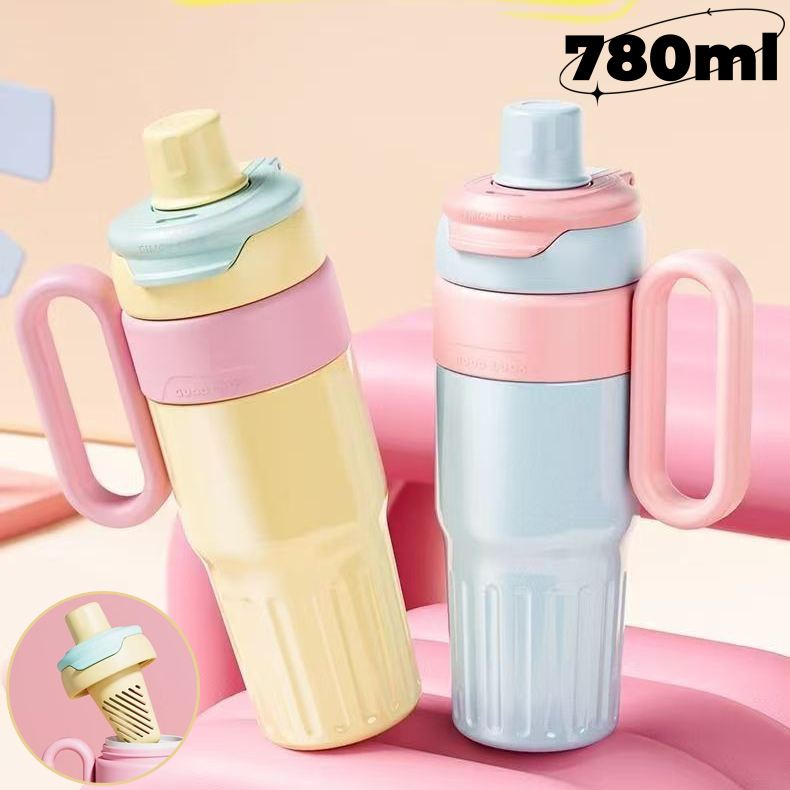

Photos from current listings. Actual item, color, and included accessories may vary.
Stainless Steel Coffee Cup Buying Guide
A stainless steel coffee cup is a reusable drinkware vessel built around a vacuum-insulated double-wall body, where the primary trade-off is between thermal retention (true vacuum vs. foam/air gap) and lid/seal engineering that determines whether it is leakproof for commuting or merely splash-resistant for desk use. The clear decision rule: buy 18/8 (304) stainless with a true vacuum-sealed double wall and a silicone-gasketed lid if you need all-day temperature holding; skip single-wall or 'double-wall' cups with glued bases and friction-fit lids if portability and durability matter.
Key takeaways
- True vacuum insulation (sealed interstitial space, often copper-lined) holds cold ~12-24 hr and hot ~6-12 hr; foam or air-gap 'double wall' barely exceeds 2-3 hr.
- 18/8 (304) food-grade stainless resists corrosion and flavor transfer; 201-grade or plastic-lined interiors can pit and retain odors over time.
- Lid architecture is the leak variable: threaded lids with silicone gaskets and locked flip/slide closures are leakproof; push-in or straw-only lids are splash-resistant at best.
At a glance
- Category
- Tableware, Drinkware & Serving
- Last updated
- Nov 28, 2026
Current offers
Highlights
- True vacuum insulation (sealed interstitial space, often copper-lined) holds cold ~12-24 hr and hot ~6-12 hr; foam or air-gap 'double wall' barely exceeds 2-3 hr.
- 18/8 (304) food-grade stainless resists corrosion and flavor transfer; 201-grade or plastic-lined interiors can pit and retain odors over time.
- Lid architecture is the leak variable: threaded lids with silicone gaskets and locked flip/slide closures are leakproof; push-in or straw-only lids are splash-resistant at best.
- Capacity tiers change use: 12-16 oz fits car holders and pouches; 20-26 oz with handle suits desk/all-day; 30 oz+ needs a wide base or handle and often won't fit standard cup holders.
Best use cases
- Commute and bag carry: pick a 12-16 oz true-vacuum tumbler with a threaded, gasketed leakproof lid — skip straw-only or push-fit lids that will leak when tipped.
- Desk and all-day hydration: choose a 20-26 oz handled tumbler with a straw lid; the handle and wide mouth make refills easy but it is not pocketable.
- Hot coffee on the go: select a 12-16 oz vacuum flask-style cup with a screw lid and narrow drinking spout; wide-mouth tumblers lose heat fast when open and are awkward to sip while walking.
- Car cupholder fit: measure your holder; base diameters above ~3.0 in (7.6 cm) and handled 26 oz+ models often won't seat — skip oversized tumblers if cupholder use is primary.
Buying tips
- Confirm '18/8' or '304' steel on the spec sheet; 201-grade stainless is cheaper but less corrosion-resistant and more prone to denting at thin walls.
- Look for 'vacuum insulated' or 'double-wall vacuum-sealed,' not 'double wall' alone — foam-insulated walls lose cold performance after 2-3 hours.
- Match capacity to carry method: 12-16 oz for bags and cupholders, 20-26 oz for desk/handle use, 30 oz+ only if you have a large cup holder or carry loop.
- Check lid closure type: threaded + silicone gasket + locking flip or slide is leakproof; straw-only or friction-fit lids are not safe in a bag.
Specs
| Steel Grade | 18/8 (304) vs 201 |
|---|---|
| Insulation Type | Vacuum-sealed vs foam double-wall |
| Lid Seal | Threaded gasket vs push-fit |
| Capacity Tier | 12-16 oz / 20-26 oz / 30 oz+ |
Related searches
What to check before buying
- Measure your car cup holder diameter and depth: most standard holders accept bases up to ~3.0 in (7.6 cm); handled 26 oz tumblers often exceed this.
- Check your bag's bottle pocket height and width against the cup's total height with lid — a 26 oz handled tumbler is typically 8-9 in tall and won't fit slim pockets.
- Confirm lid gasket material (food-grade silicone vs. TPR) and that replacement gaskets are available; a worn gasket is the most common leak cause.
- Verify the cup is dishwasher-safe on top rack only if labeled; vacuum-sealed cups with painted finishes can degrade in high heat — hand-wash if the finish matters.
FAQ
Data sources: eBay / Amazon listings and product attribute feeds. Updated Nov 28, 2026.
Some links on this page are affiliate links. If you buy after clicking one, we may earn a commission at no extra cost to you. This does not change which products appear here or their order. Affiliate disclosure.