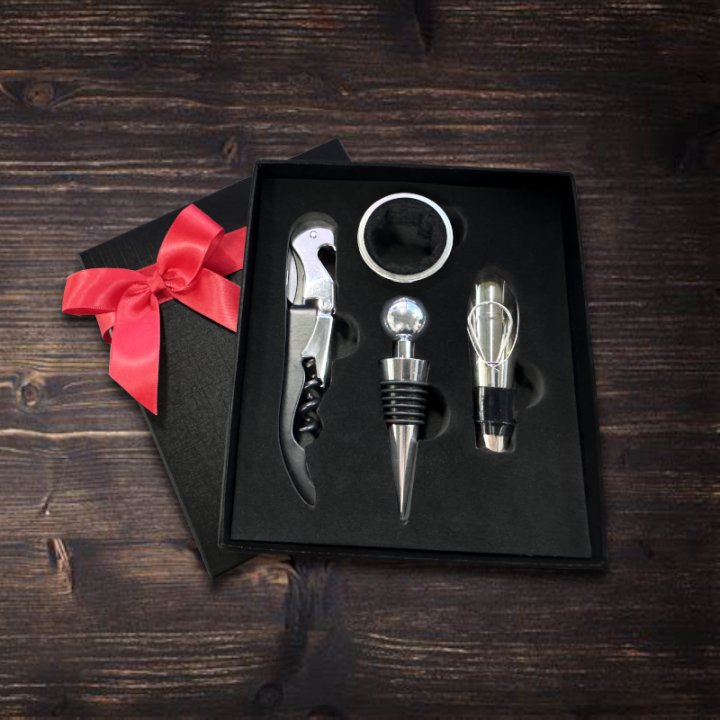

Photos from current listings. Actual item, color, and included accessories may vary.
Wine Opener Buying Guide
A wine opener is a leverage or pressure tool that removes natural and synthetic corks without crumbling them or damaging the bottle lip. The core trade-off is between manual lever designs (waiter's corkscrew, wing, rabbit) that rely on operator technique and powered or pressurized units that trade portability and cost for speed and consistency. The decision rule: choose a two-stage lever waiter's corkscrew with a non-stick coated worm for daily durability, a rabbit-style for high-volume hosting, and an air or electric pump only for low-torque users who accept synthetic-cork limitations.
Key takeaways
- Waiter's corkscrews use a 5-turn worm with a stepped shoulder; two-stage lever lips grip the bottle lip at two heights to multiply extraction force and prevent cork breakage.
- Rabbit-style openers drive a 3-4 inch teflon-coated worm via a geared handle; metal gear housings outlast nylon bushings by a wide margin under repeated synthetic-cork use.
- Air pump openers rely on a hollow needle and pressure seal; they work reliably on natural cork but can push synthetic corks into the bottle instead of extracting them.
At a glance
- Category
- Tableware, Drinkware & Serving
- Last updated
- Nov 28, 2026
Current offers
Highlights
- Waiter's corkscrews use a 5-turn worm with a stepped shoulder; two-stage lever lips grip the bottle lip at two heights to multiply extraction force and prevent cork breakage.
- Rabbit-style openers drive a 3-4 inch teflon-coated worm via a geared handle; metal gear housings outlast nylon bushings by a wide margin under repeated synthetic-cork use.
- Air pump openers rely on a hollow needle and pressure seal; they work reliably on natural cork but can push synthetic corks into the bottle instead of extracting them.
- Stainless steel bodies resist bending and wine-acid corrosion; chrome-plated zinc alloy handles and hinges are the usual failure point on budget sets.
Best use cases
- Daily home drinking with mixed natural and synthetic corks: pick a two-stage waiter's corkscrew with a coated worm and foil cutter — skip air pumps that fail on synthetic closures.
- Hosting dinners or small events with 6+ bottles per session: choose a rabbit-style geared opener with a metal gear housing and a base clamp — skip single-hinge bar corkscrews that fatigue the wrist.
- Arthritis or low grip strength: choose a rechargeable electric opener or a lever-model with a large non-slip handle — skip wing corkscrews that require sustained twisting torque.
- Gift or travel kit: pick a compact waiter's corkscrew with integrated foil cutter and bottle opener in a hard case — skip multi-tool box sets whose chrome plating flakes after a few seasons.
Buying tips
- Match worm length to cork type: a 2-inch worm suits standard 1.5-inch natural corks; a 3-inch worm is needed for synthetic and long aging corks to avoid tearing.
- Two-stage lever lip spacing matters: the first notch rests on the bottle lip for initial extraction, the second raises the pivot to finish the pull — one-stage levers require more wrist force.
- Check handle material grade: 304 stainless steel or hard-anodized aluminum resists bending; chrome-plated zinc alloy hinges deform under repeated 30-50 lb pull loads.
- For electric models, confirm the rechargeable battery type and torque rating: lithium-ion units deliver consistent torque across a full charge, while NiMH units fade after several bottles.
Specs
| Opener Type | Waiter's / Wing / Rabbit / Electric |
|---|---|
| Worm Length | 2 in (natural) vs 3 in (synthetic) |
| Lever Stages | Two-stage vs one-stage lip |
| Body Material | 304 stainless vs plated zinc alloy |
Related searches
What to check before buying
- Measure your bottle lip diameter: standard wine bottles are 29-31 mm; a waiter's corkscrew step lip must seat fully on that rim without wobbling.
- Confirm cork type you encounter: natural cork works with all opener types; synthetic and composite corks demand a coated worm or a rabbit-style geared pull.
- Check hand dominance and grip size: left-handed users need a mirrored waiter's corkscrew or an ambidextrous rabbit model; small hands may struggle with thick zinc handles.
- Verify storage and travel needs: a pocket waiter's corkscrew fits a drawer or glovebox; rabbit and electric models need counter or shelf space and a charging outlet.
FAQ
Data sources: eBay / Amazon listings and product attribute feeds. Updated Nov 28, 2026.
Some links on this page are affiliate links. If you buy after clicking one, we may earn a commission at no extra cost to you. This does not change which products appear here or their order. Affiliate disclosure.