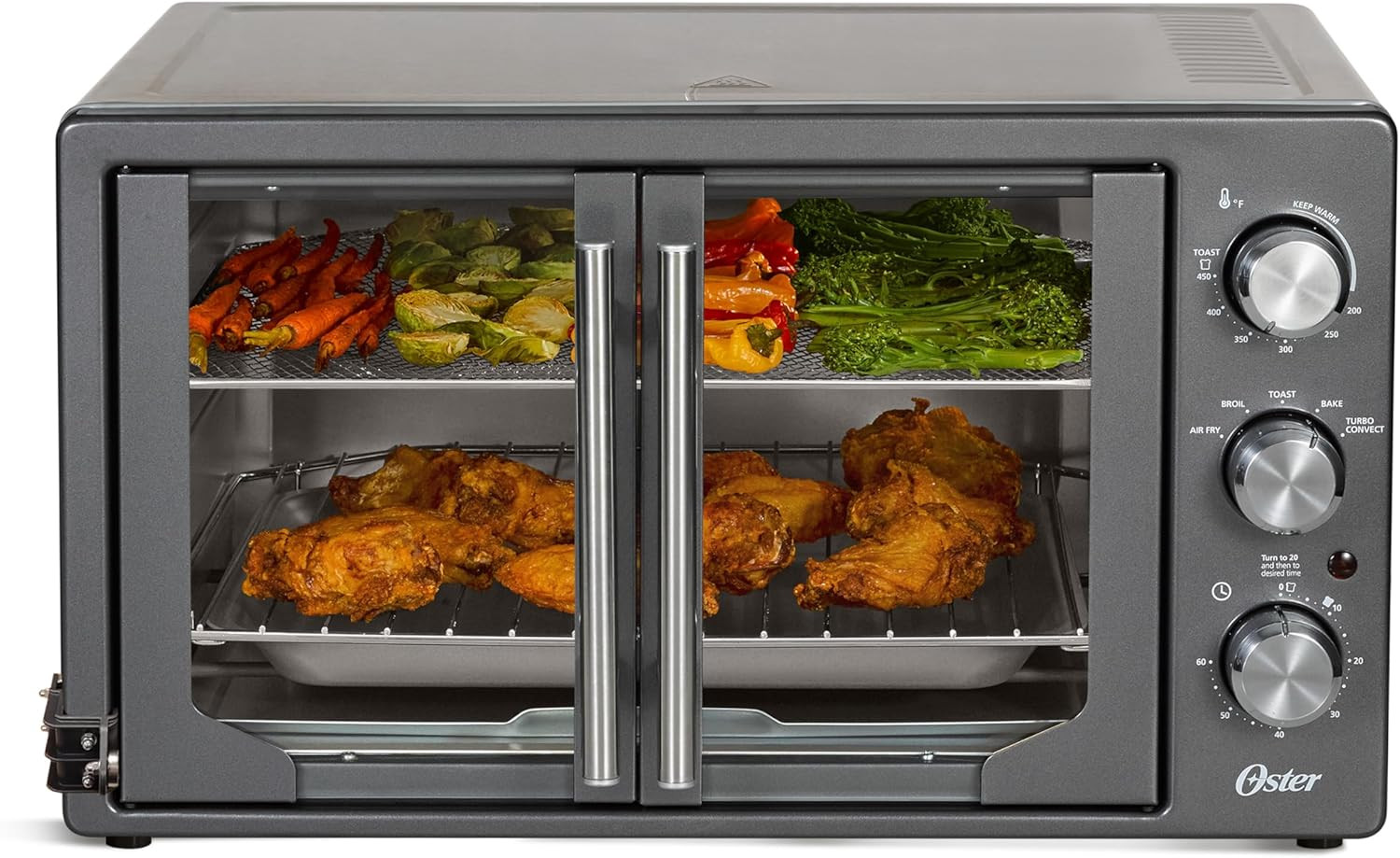

Photos from current listings. Actual item, color, and included accessories may vary.
Large Countertop Oven Buying Guide
Large countertop ovens are freestanding electric appliances that combine toaster, bake, broil, and convection functions in a footprint wider than a standard four-slot toaster. The core trade-off is between interior volume and heat distribution: bigger cavities fit full sheet pans and family meals but demand stronger wattage, better insulation, and true convection to avoid hot spots. The durable decision rule is simple: buy an oven rated for continuous duty at 450°F or higher with a metal interior, a dedicated broil element, and a convection fan—skip any model that lists only toast settings or uses a glass-door latch as its primary heat seal.
Median $228.89 · New listings
Key takeaways
- Cavity width determines tray fit: models with 12–13 in interior depth accept quarter-sheet pans and 9×13 baking dishes; sub-12 in cavities force smaller pans and batch cooking.
- True convection requires a rear-mounted fan and a third heating element; 'convection' labels without a visible fan are just fan-assisted ovens with uneven top heat.
- Wattage tiers separate fast recovery from slow: 1800W+ units reach 450°F in under 5 minutes, while 1200–1500W units struggle to maintain temperature after the door opens.
At a glance
- Category
- Toasters & Ovens
- Last updated
- Nov 28, 2026
Current offers
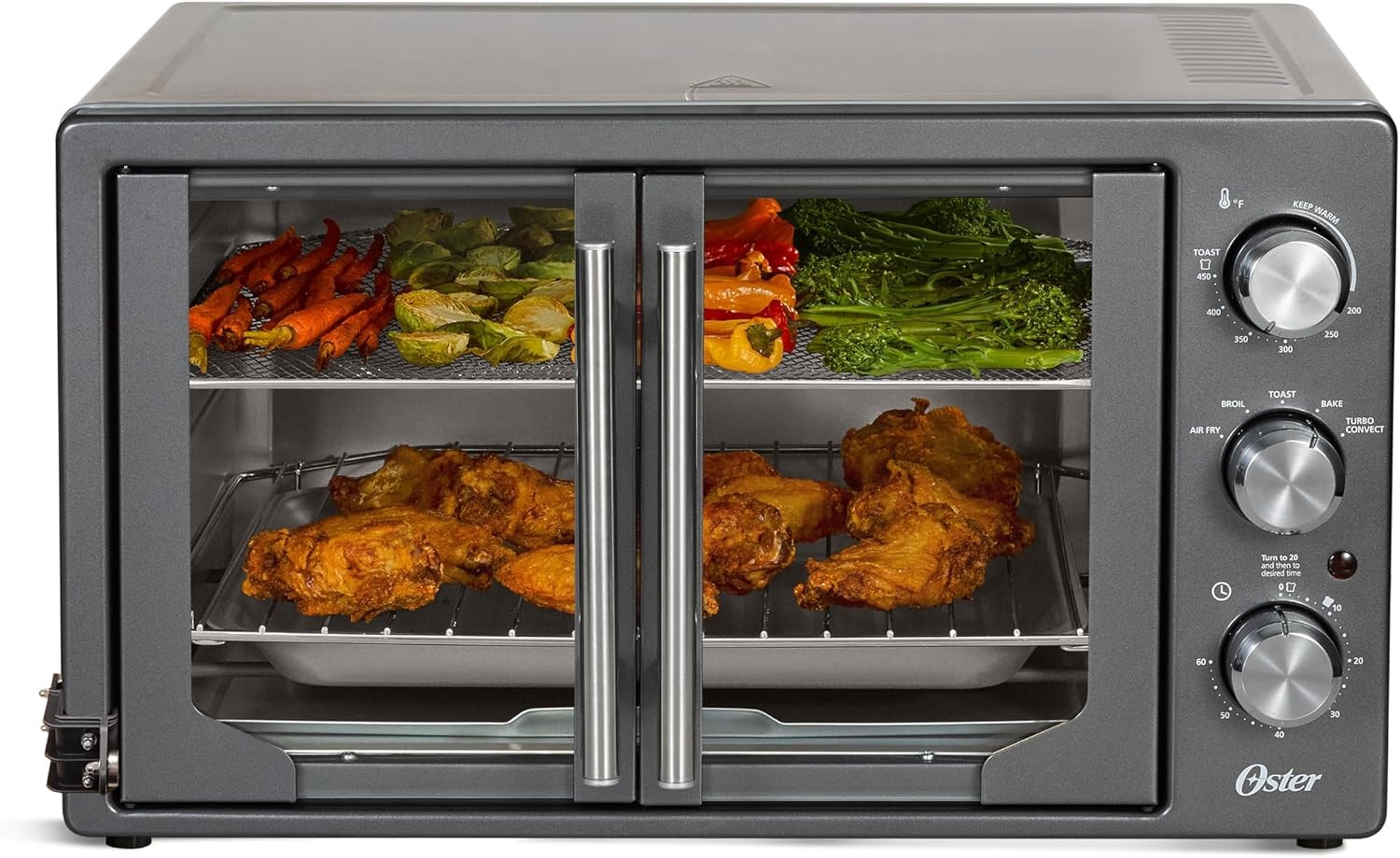
Highlights
- Cavity width determines tray fit: models with 12–13 in interior depth accept quarter-sheet pans and 9×13 baking dishes; sub-12 in cavities force smaller pans and batch cooking.
- True convection requires a rear-mounted fan and a third heating element; 'convection' labels without a visible fan are just fan-assisted ovens with uneven top heat.
- Wattage tiers separate fast recovery from slow: 1800W+ units reach 450°F in under 5 minutes, while 1200–1500W units struggle to maintain temperature after the door opens.
- Interior material grades matter for longevity: aluminized steel and stainless steel resist chips and grease; painted cold-rolled steel interiors degrade and flake within a few years of high-heat use.
Best use cases
- Best fit: a 1800W+ true-convection oven with a 12.5 in deep cavity for families who bake sheet-pan dinners and reheat leftovers in batches—skip compact 6-slice toaster ovens that max out at 8 in depth.
- Best fit: a model with a dedicated broil element and a 450°F+ max temp for open-face melts, nachos, and quick sears—skip any oven whose highest setting is labeled 'toast' or 'bagel' without a temperature dial.
- Best fit: a mechanical-dial oven with a metal interior and crumb tray for shared kitchens and rentals where digital touchpads fail under heavy use—skip glass-touch control panels if the oven will be used by multiple people daily.
Buying tips
- Measure your widest baking sheet and add 1 in clearance on each side: a 13×18 half-sheet pan requires an interior width of at least 15 in, which only full-size countertop ovens provide.
- Prioritize 1800W or higher for ovens with interiors deeper than 12 in; lower wattage in a large cavity means long preheats and uneven browning on the rear rack.
- Choose a convection oven with a visible rear fan and a separate convection element, not a model that simply circulates air with the main bake element—true convection cuts roasting time by 20–25%.
- Check the door seal and hinge: a double-pane glass door with a metal frame and a spring-loaded hinge holds heat better than a single-pane door with a friction latch, which leaks heat and warps over time.
Specs
| Interior Depth | 12–14 in (large) vs 8–10 in (compact) |
|---|---|
| Wattage Tier | 1800W+ for 12 in+ cavities |
| Convection Type | True rear-fan vs fan-assisted |
| Interior Material | Aluminized/stainless vs painted steel |
Related searches
What to check before buying
- Confirm countertop clearance: large ovens need 2–3 in of air space on all sides and above; measure under-cabinet height before buying a model taller than 12 in.
- Verify your electrical circuit: 1800W ovens draw 15A at 120V and should not share a circuit with a microwave or coffee maker; check that the plug type matches your outlet (NEMA 5-15P standard).
- Check included accessories: a wire rack, broil pan, and crumb tray are baseline; models without a broil pan force you to buy a compatible one, and rack positions vary by model.
- Measure your largest cookware and frozen pizza: a 12 in pizza requires an interior depth of at least 13 in, and a 9×13 casserole dish needs 14 in of interior width.
FAQ
Data sources: eBay / Amazon listings and product attribute feeds. Updated Nov 28, 2026.
Some links on this page are affiliate links. If you buy after clicking one, we may earn a commission at no extra cost to you. This does not change which products appear here or their order. Affiliate disclosure.