
Photos from current listings. Actual item, color, and included accessories may vary.
Wide Slot Toaster Buying Guide
A wide slot toaster is defined by slot width and length that accommodate artisan breads, bagels, and thick slices without forcing them, trading compactness for capacity and even browning. The primary trade-off is between slot geometry (width and length) and heating uniformity: wider slots need longer or dual heating elements to avoid pale centers and burnt edges. The decision rule is to pick a toaster whose slot dimensions exceed your thickest bread by at least 0.2 inches and whose wattage scales with slot count (roughly 900W for 2-slice, 1500W+ for 4-slice long-slot) to maintain recovery time between batches.
Median $65.99
Key takeaways
- Slot width thresholds: standard slots are 1.0–1.2 inches; wide slots start at 1.4 inches and reach 1.6 inches for bagels and Texas toast.
- Heating element architecture: 2-slice models use 4–6 elements; 4-slice long-slot models use 8–12 elements or dual thermostats to prevent hot spots along the length.
- Wattage-to-slot ratio: 2-slice wide-slot toasters draw 800–1000W; 4-slice long-slot models draw 1400–1600W to maintain browning consistency across four slices.
At a glance
- Category
- Toasters & Ovens
- Last updated
- Nov 27, 2026
Current offers
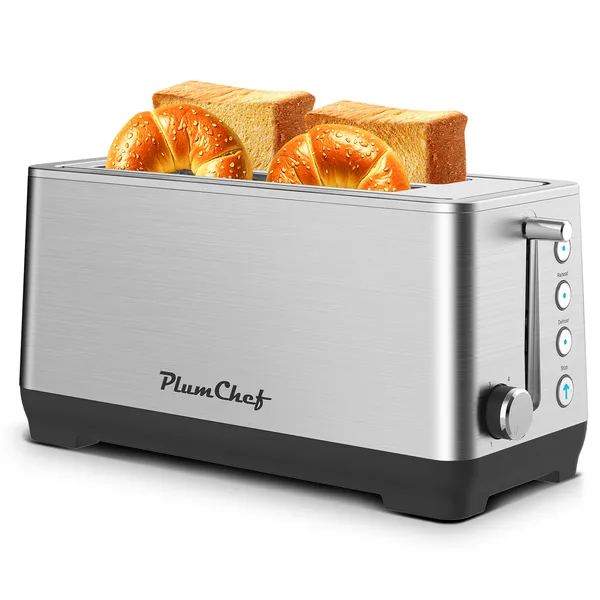 4-Slice Toaster, Extra Wide Long Slot 6 Browning Settings, Bagel/Defrost/Reheat Functions, Removable Crumb Tray, Upgraded Stainless Steel, Silver$56.99View on Mallflare
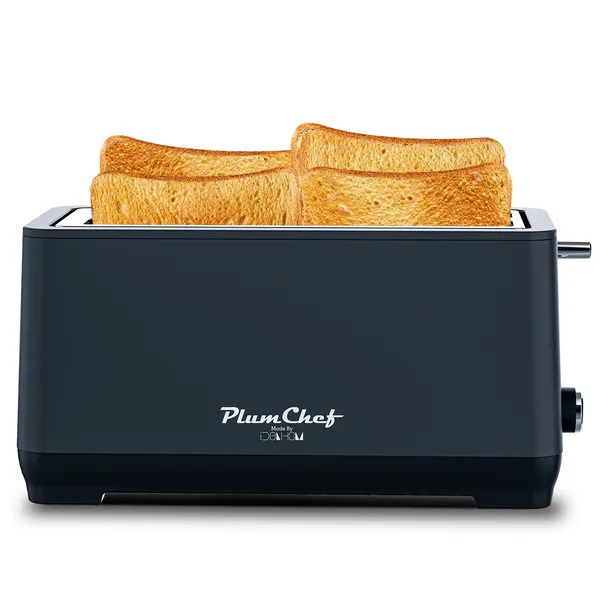 4-Slice Toaster, Extra Wide Long Slot 6 Browning Settings, Bagel/Defrost/Reheat Functions, Removable Crumb Tray, Stainless Steel Housing, Matte Black$58.99View on Mallflare
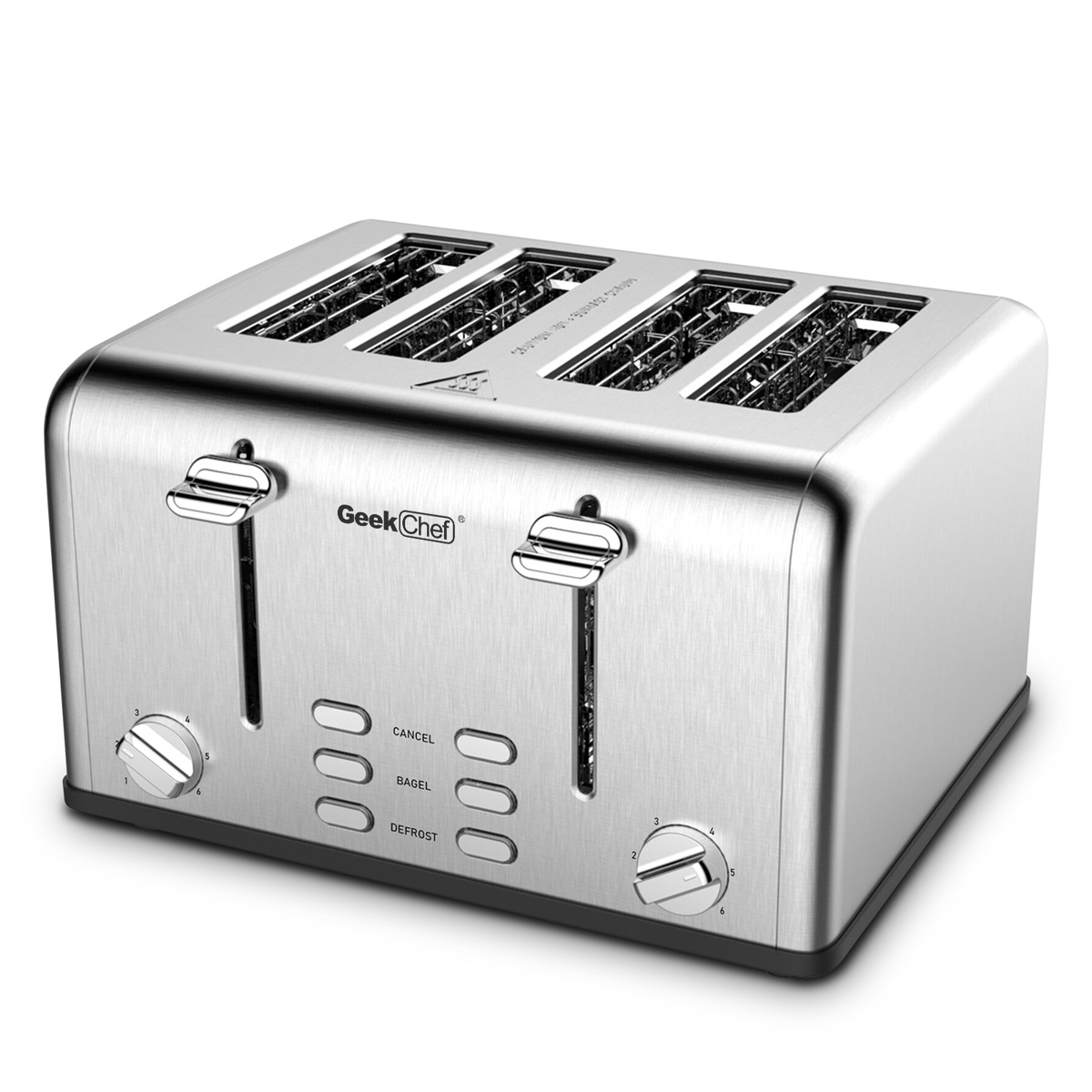 Geek Chef Stainless Steel Extra-Wide Slot Toaster With Dual Control Panels Of Bagel Defrost Cancel Function Sliver$65.99View on Mallflare
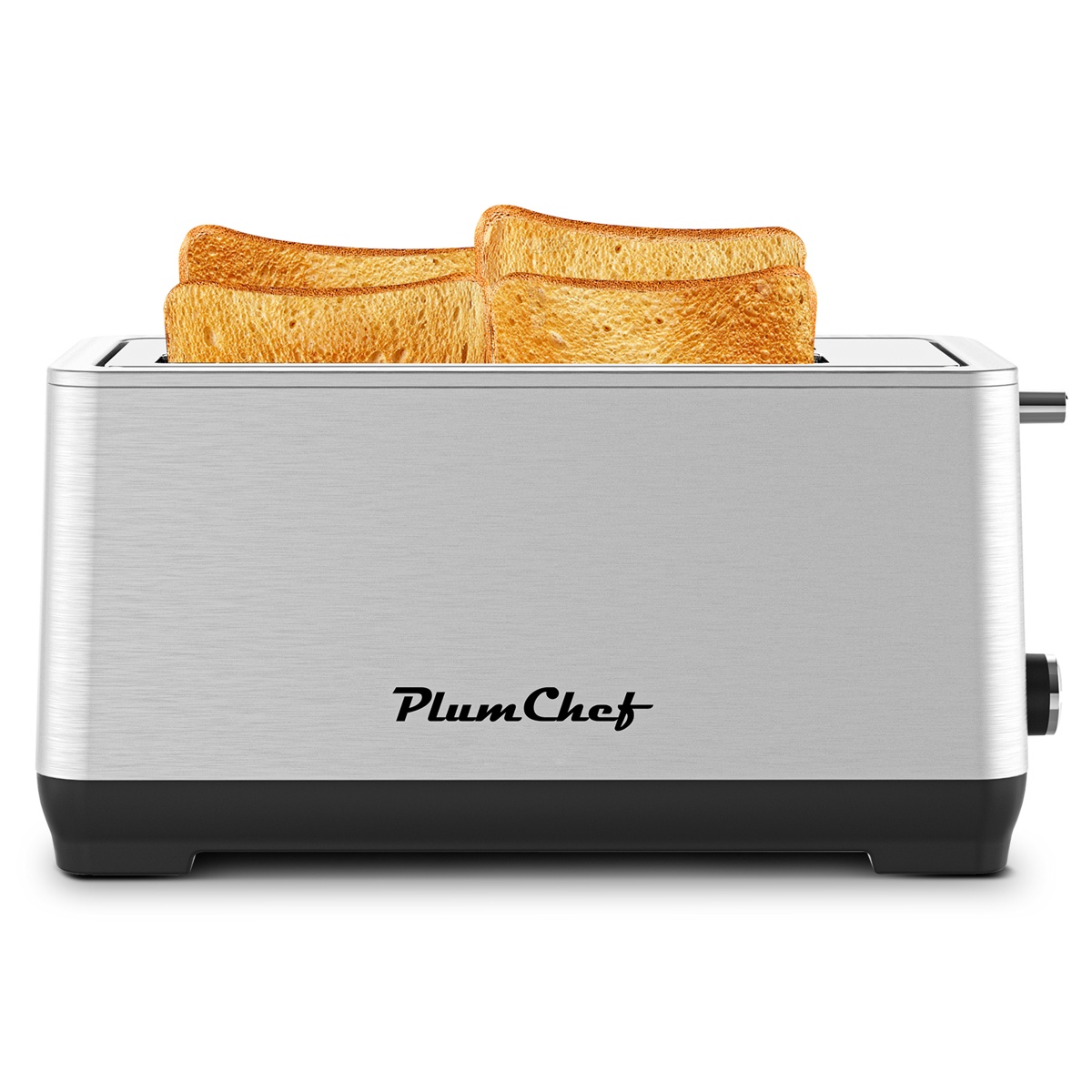 4-Slice Toaster, Extra Wide Long Slot 6 Settings, Bagel, Defrost, Reheat, Removable Crumb Tray, Upgraded Stainless Steel, Silver$65.99View on Mallflare
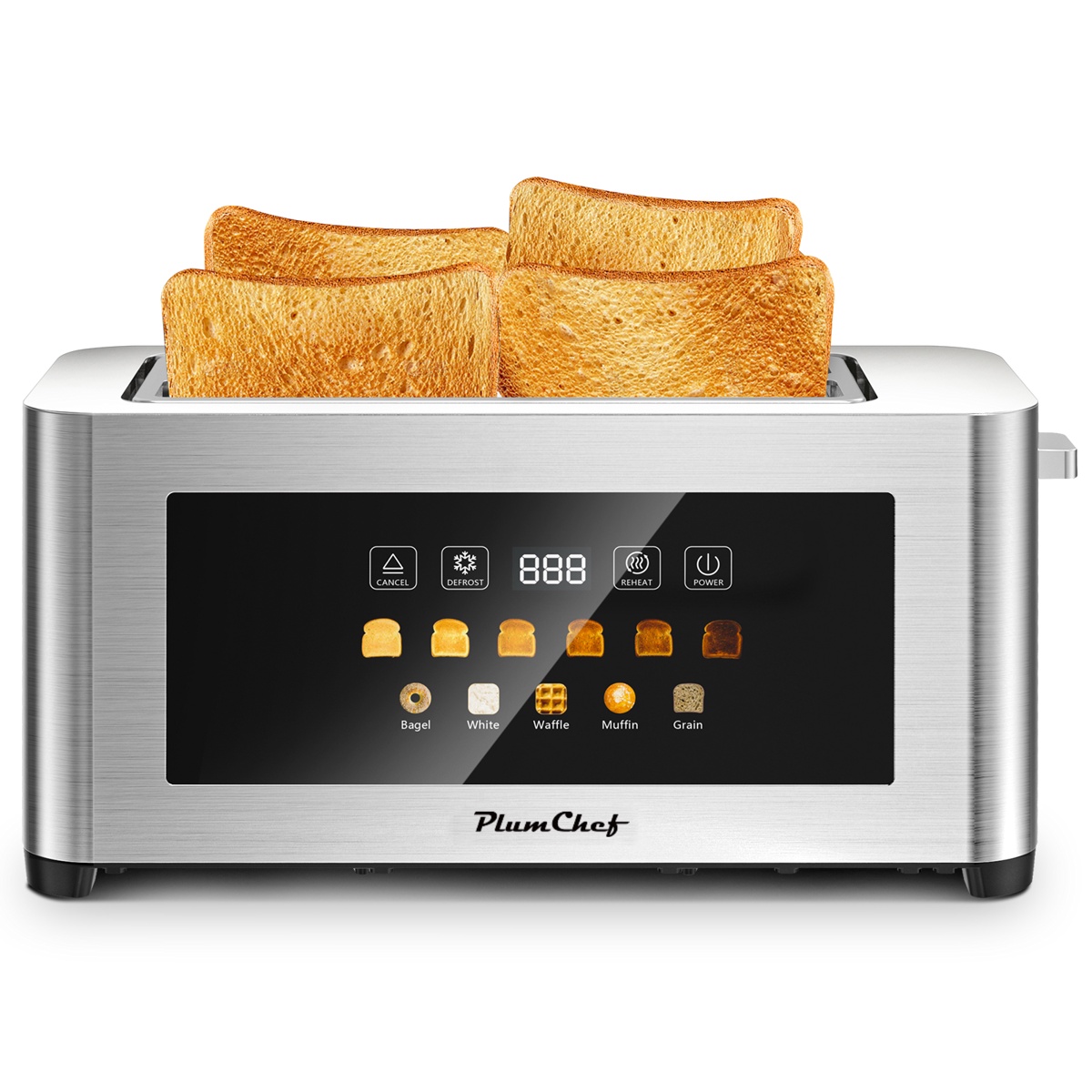 Geek Chef Toaster 4 Slice Stainless Steel Extra-Wide Slot With Dual Control Panels Of Bagel Defrost Cancel Function$72.99View on Mallflare
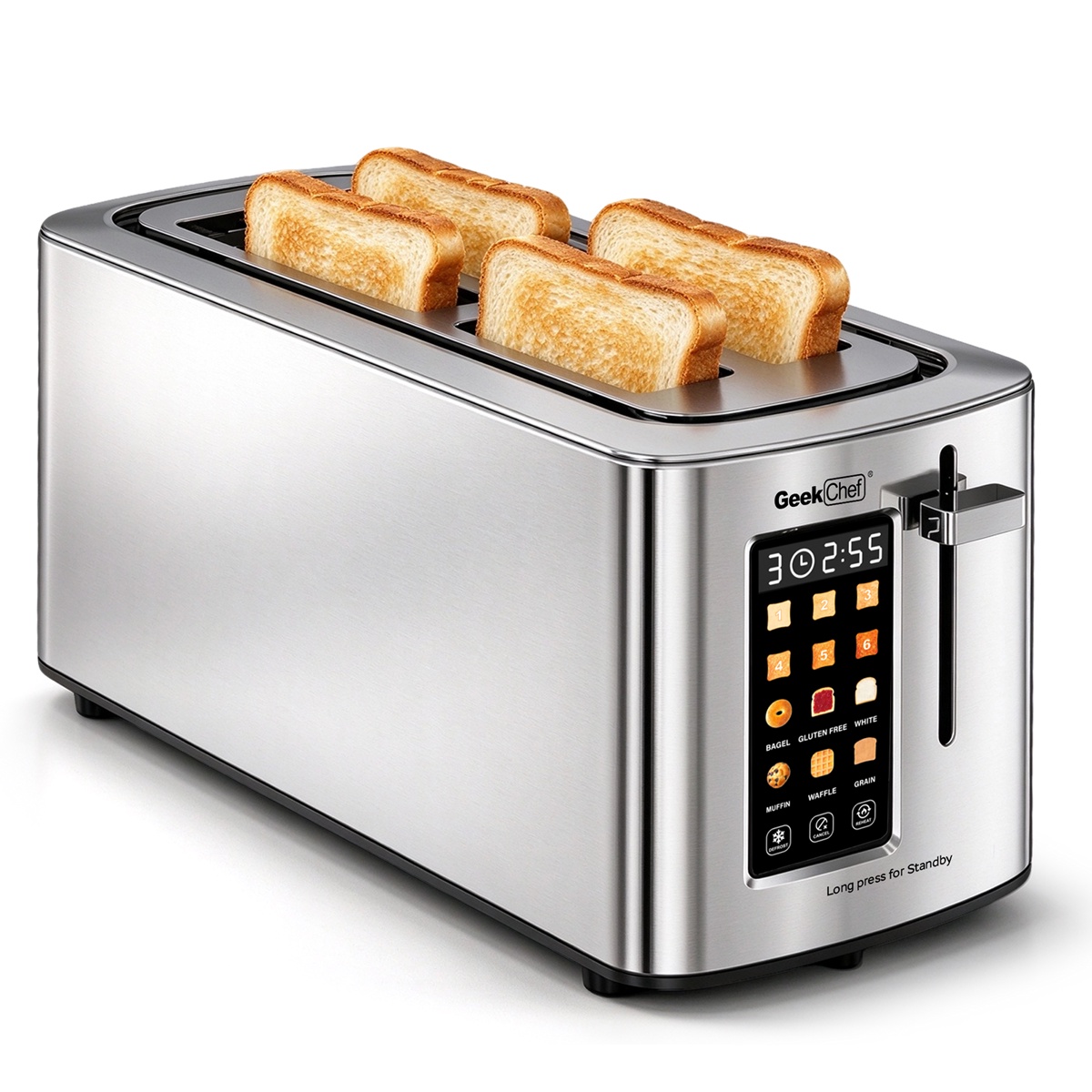 4-Slice Long Slot Toaster, Stainless Steel, 1550W, 1.5-Inch Extra Wide Slots, Digital Touchscreen With 6 Bread Modes & 6 Shade Settings, Defrost Reheat Cancel Functions, Silver$75.99View on Mallflare
Highlights
- Slot width thresholds: standard slots are 1.0–1.2 inches; wide slots start at 1.4 inches and reach 1.6 inches for bagels and Texas toast.
- Heating element architecture: 2-slice models use 4–6 elements; 4-slice long-slot models use 8–12 elements or dual thermostats to prevent hot spots along the length.
- Wattage-to-slot ratio: 2-slice wide-slot toasters draw 800–1000W; 4-slice long-slot models draw 1400–1600W to maintain browning consistency across four slices.
- Browning control: mechanical dials offer 5–7 settings; digital touchscreens add mode presets (bagel, defrost, reheat) but add failure points and require precise voltage matching.
Best use cases
- Best fit: households toasting bagels, thick sourdough, or frozen waffles daily — choose a 2-slice wide-slot (1.4–1.5 in) with 900W+ and a bagel mode that heats one side only.
- Best fit: families or meal-preppers toasting 4+ slices at once — choose a 4-slice long-slot (1.5 in wide, 9–10 in long) with 1500W+ and dual independent controls to run two bread types simultaneously.
- Wrong fit: countertops under 12 inches deep or cabinets under 18 inches high — skip 4-slice long-slot models (typically 11–13 in wide, 7–8 in tall) and choose a compact 2-slice wide-slot instead.
- Wrong fit: buyers wanting precise shade consistency across back-to-back cycles — skip budget mechanical dials with no thermostat and choose a model with a browning sensor or digital timer.
Buying tips
- Measure your thickest bread: if it exceeds 1.2 inches, you need a wide slot rated 1.4–1.6 inches; standard 1-inch slots will compress and tear crusty loaves.
- Match wattage to slot count: 2-slice wide-slot needs at least 850W; 4-slice long-slot needs at least 1400W — lower wattage causes uneven browning and long recovery between batches.
- Check slot length for bagels and long slices: 2-slice models typically offer 5–6 inch slots; 4-slice long-slot models offer 9–10 inches, fitting two standard slices side by side or one long artisan slice.
- Prefer stainless steel housing over painted plastic for heat retention and wipe-clean durability; matte finishes hide fingerprints but show scratches more than brushed steel.
Specs
| Slot Width | Standard 1.0–1.2 in / Wide 1.4–1.6 in |
|---|---|
| Slot Count | 2-slice short slot / 4-slice long slot |
| Wattage | 2-slice 800–1000W / 4-slice 1400–1600W |
| Housing Material | Stainless steel / painted plastic |
Related searches
What to check before buying
- Counter depth and height: 4-slice long-slot toasters need 12+ inches of depth and 8+ inches of clearance above for bread pop-up and cord routing.
- Voltage and plug: confirm 120V/60Hz for North America with a standard NEMA 5-15 plug; 220–240V models require a step-down transformer and void warranties in the US.
- Crumb tray access: ensure the tray slides out from the front or side without moving the toaster — rear-exit trays are unusable under low cabinets.
- Cord length and storage: measure from outlet to counter; most toasters ship with 30–36 inch cords, so a short cord plus a deep counter may require an extension rated for 15A.
FAQ
Data sources: eBay / Amazon listings and product attribute feeds. Updated Nov 27, 2026.
Some links on this page are affiliate links. If you buy after clicking one, we may earn a commission at no extra cost to you. This does not change which products appear here or their order. Affiliate disclosure.