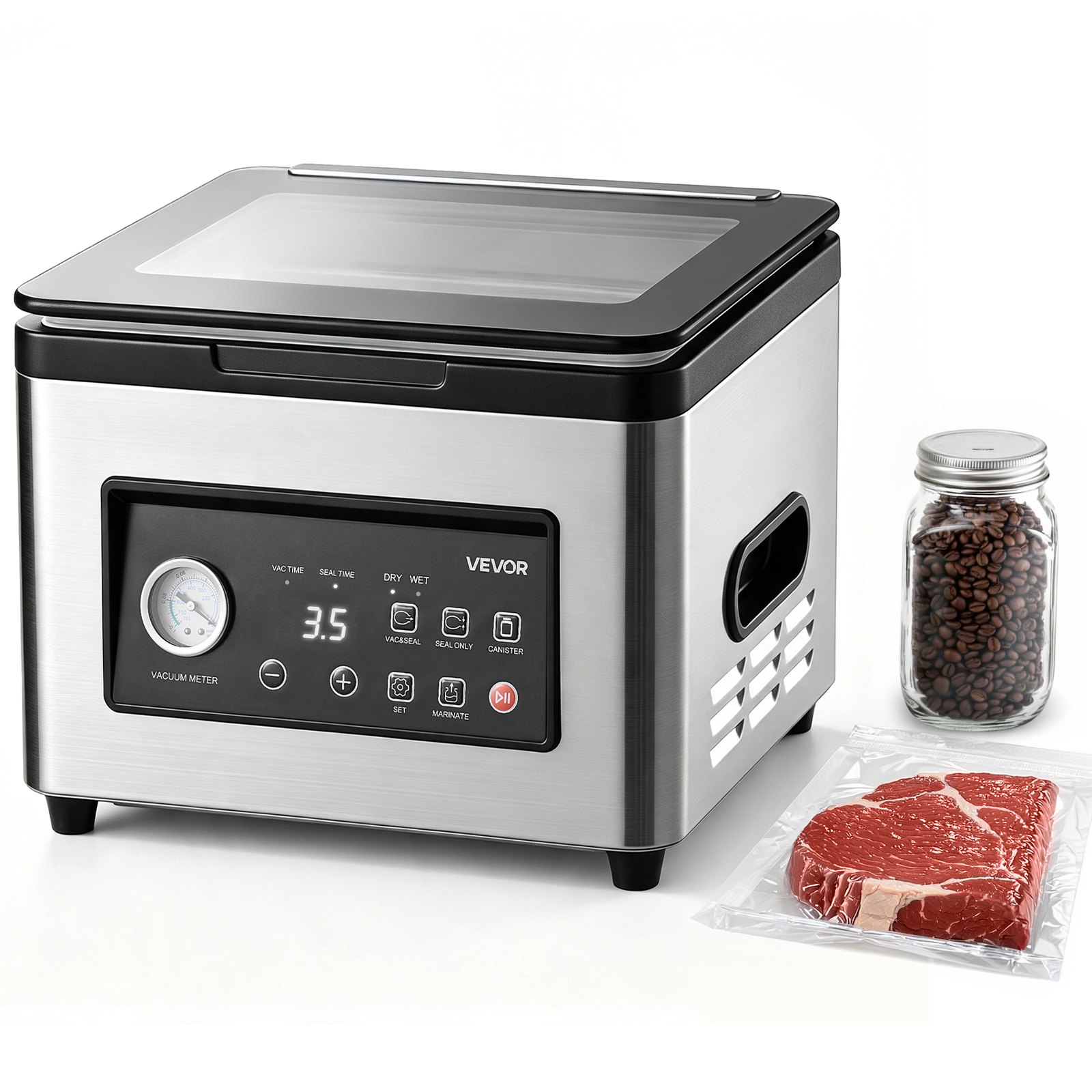

Photos from current listings. Actual item, color, and included accessories may vary.
Commercial Vacuum Sealer Buying Guide
Commercial vacuum sealers are heavy-duty chamber or external-suction machines built for continuous daily cycles in delis, sous-vide kitchens, and high-volume home operations. The core trade-off is chamber-style pump architecture and stainless construction for durability and liquid handling versus lighter external-suction units that trade duty cycle and seal width for portability. Buy commercial if you need a 10+ minute continuous duty cycle, wide 10-16 inch seals, and wet-food capability; skip it for occasional freezer-bag use where a sub-5-minute duty home unit suffices.
Key takeaways
- Chamber sealers use a vacuum pump rated in m³/h (typically 8-20 m³/h) and pull 99.9% vacuum, sealing liquids and marinades without draw-in; external-suction units max around 0.8 bar and fail on wet foods.
- Commercial duty cycle is the key metric: entry units run 1-3 minutes on, 1-3 off; true commercial chamber machines run continuous or 30+ minutes with fan-cooled dry piston pumps.
- Seal bar width separates tiers: home external units use 8-12 inch single bars; commercial chamber units run dual 12-16 inch bars with 2.5-5 mm seal width and separate cut bars.
At a glance
- Category
- Vacuum Sealers
- Last updated
- Nov 28, 2026
Current offers
Highlights
- Chamber sealers use a vacuum pump rated in m³/h (typically 8-20 m³/h) and pull 99.9% vacuum, sealing liquids and marinades without draw-in; external-suction units max around 0.8 bar and fail on wet foods.
- Commercial duty cycle is the key metric: entry units run 1-3 minutes on, 1-3 off; true commercial chamber machines run continuous or 30+ minutes with fan-cooled dry piston pumps.
- Seal bar width separates tiers: home external units use 8-12 inch single bars; commercial chamber units run dual 12-16 inch bars with 2.5-5 mm seal width and separate cut bars.
- Stainless steel (304 food-grade) chamber and housing versus ABS plastic is the durability line—stainless resists warping and sanitizes, while plastic lids crack under repeated 99% vacuum cycles.
Best use cases
- Best fit: butcher/fish shop or sous-vide operation sealing wet proteins daily—pick a chamber sealer with 12-16 inch dual seal bars, 20 m³/h pump, and stainless chamber; skip external-suction drawer-style units.
- Best fit: high-volume meal-prepper running 20-50 bags per session—choose a commercial external-suction unit with 10-12 inch seal bar and 10+ minute duty cycle; skip 8-inch home bars that require cooldown every 3 bags.
- Wrong fit: occasional freezer storage of dry goods—a commercial chamber sealer is overkill; skip it and use a basic external-suction home unit with 5-minute duty.
- Best fit: farm/garage packaging of hardware or dry goods—select a nozzle-type or external-suction commercial unit with wide seal and pulse mode; skip chamber models that require special embossed bags for wet cycles only.
Buying tips
- Match pump rate to throughput: under 10 cycles/day needs 8-10 m³/h; 10-50 cycles/day needs 15-20 m³/h; volume operations need 20+ m³/h dual-pump chamber units.
- Size the seal bar to your bag: a 12-inch bar seals bags up to 10 inches wide after margin; for 11-inch wide rolls you need a 14-inch bar—never buy a bar equal to bag width.
- Choose chamber depth for product height: standard 4-6 inch chamber depth handles steaks and bags; for whole poultry or large cuts you need 8-10 inch depth chamber models.
- Confirm bag type: chamber sealers require embossed/channel bags or smooth chamber bags; external-suction units require embossed channel bags—standard smooth vacuum bags only work in chamber machines.
Specs
| Sealer Type | Chamber vs External-Suction |
|---|---|
| Pump Rate | 8-20 m³/h (chamber) |
| Seal Bar Width | 10-16 in single or dual |
| Duty Cycle | 1-3 min home / 30+ min commercial |
Related searches
What to check before buying
- Measure counter depth and overhead clearance: chamber units need 18-24 inches depth plus lid clearance; external units need 12-18 inches depth and front bag clearance.
- Check electrical: commercial chamber sealers often draw 1200-1800W and require a dedicated 15-20A circuit; verify your outlet voltage and breaker headroom.
- Verify bag supply compatibility: confirm the machine accepts standard 8-12 inch embossed rolls or chamber bags; some commercial units use proprietary channel bags.
- Plan consumables and spares: budget for seal bar tape, Teflon covers, and replacement gaskets—commercial daily use wears these every few months.
FAQ
Data sources: eBay / Amazon listings and product attribute feeds. Updated Nov 28, 2026.
Some links on this page are affiliate links. If you buy after clicking one, we may earn a commission at no extra cost to you. This does not change which products appear here or their order. Affiliate disclosure.