
Photos from current listings. Actual item, color, and included accessories may vary.
Compact Food Vacuum Sealer Buying Guide
Compact food vacuum sealers are countertop appliances built to pull a vacuum and heat-seal plastic bags in a footprint small enough to store in a drawer or small cabinet. The core trade-off is between a true pump-driven vacuum (with adequate vacuum pressure and a wide, cooled seal bar) and lightweight suction-style units that only partially evacuate air. The decision rule: buy a compact model only if it specifies a piston or diaphragm pump with rated vacuum pressure and a seal bar at least 10 inches wide with a double seal wire; skip any unit that lists only 'suction' power with no vacuum pressure figure.
Median $238.04 · New listings
Key takeaways
- Pump architecture is the primary durability divider: piston pumps deliver stronger, repeatable vacuum and handle moist foods better than low-cost diaphragm or suction-fan designs that struggle with liquid.
- Vacuum pressure rating determines preservation performance — look for a stated figure (commonly around -0.8 bar / 80 kPa for capable compact units); unrated 'strong suction' claims indicate entry-level hardware.
- Seal bar width and wire count matter more than overall unit size: a 10–12 inch bar with a double seal wire and a dedicated cooling interval prevents weak or melted seals on compact bodies.
At a glance
- Category
- Vacuum Sealers
- Last updated
- Nov 28, 2026
Current offers
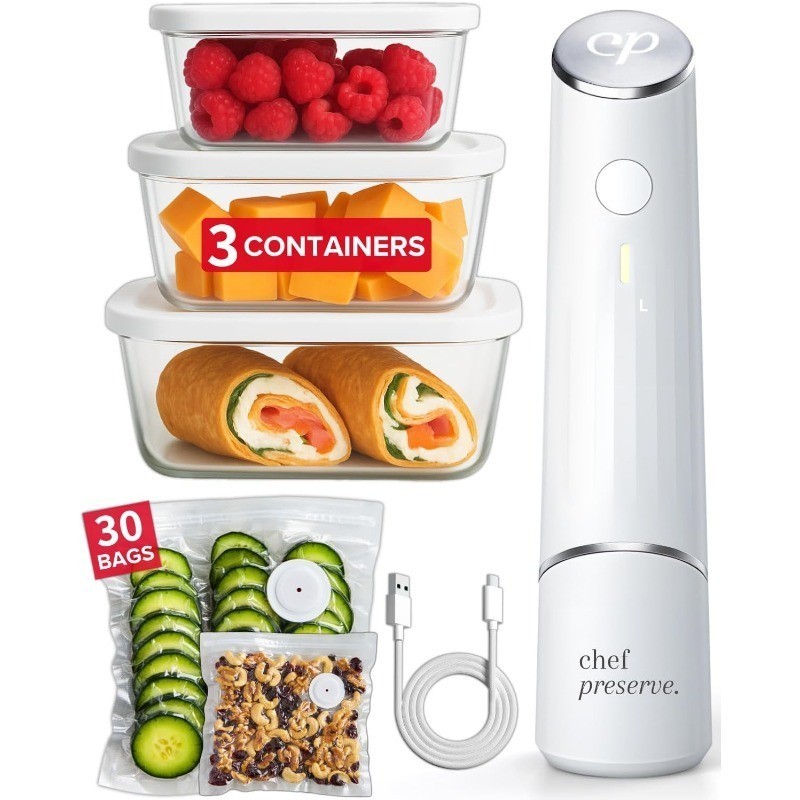 Compact Vacuum Sealer Food Vacuum Sealer Machine 3 Glass Vacuum Containers$204.06New · Last checked Nov 26, 2026View on eBay
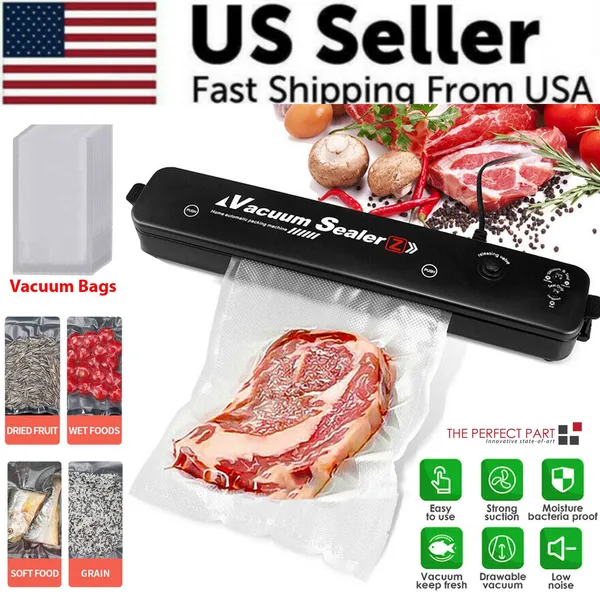 Vacuum Sealer Machine Food Preservation Storage Saver Automatic With Seal Bag$38.99View on Mallflare
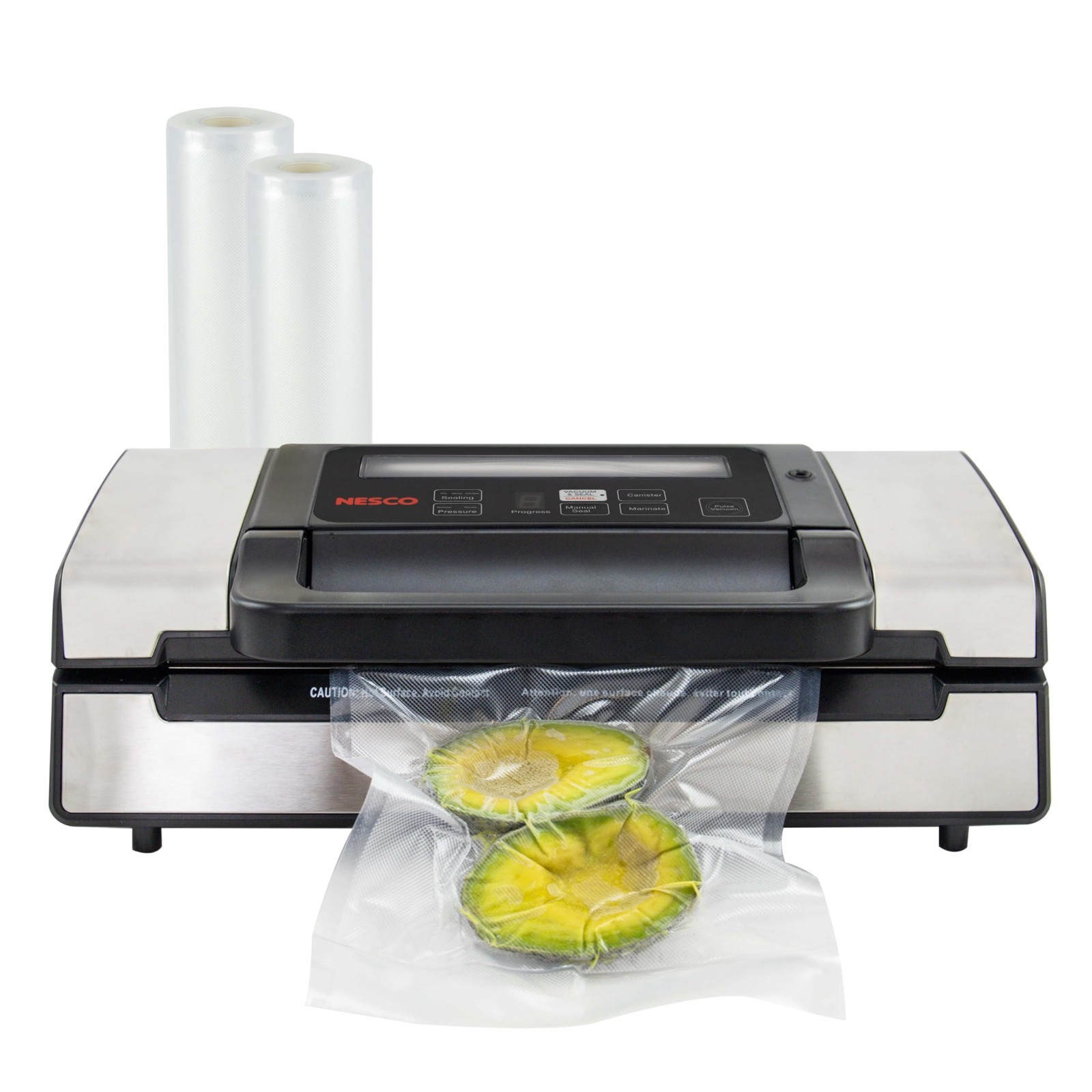 Deluxe Food VS-12 Vacuum Sealer 130 Watts Kit Bags & Viewing Lid Compact Silver$205.54New · Last checked Nov 26, 2026View on eBay
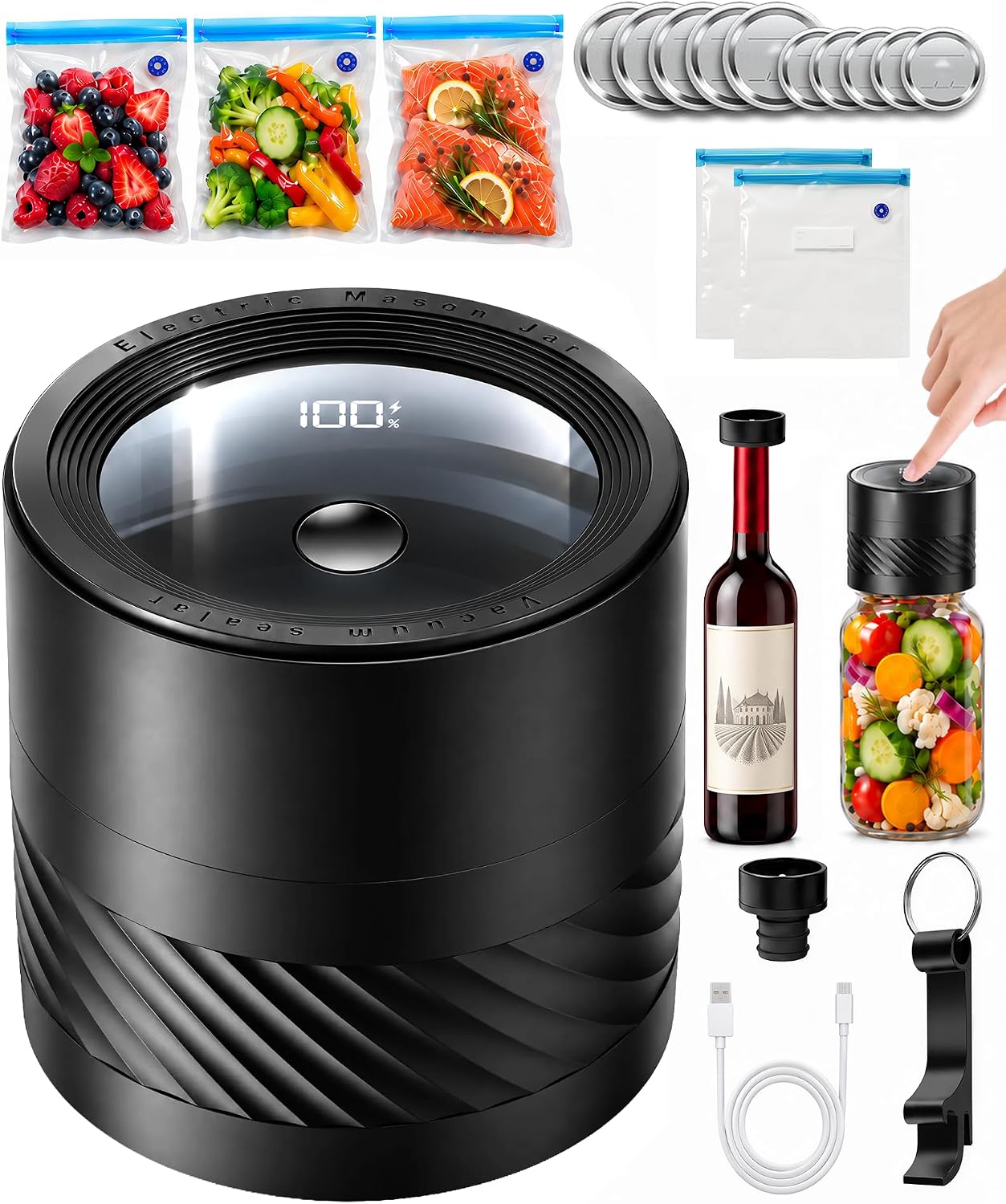 Electric Mason Jar Vacuum Sealer Kit With Auto-Pause Function, Automatic Food Sealing System For Wide And Regular Mouth Jars And Storage Bags, Kitchen Preservation Accessories$106.99View on Mallflare
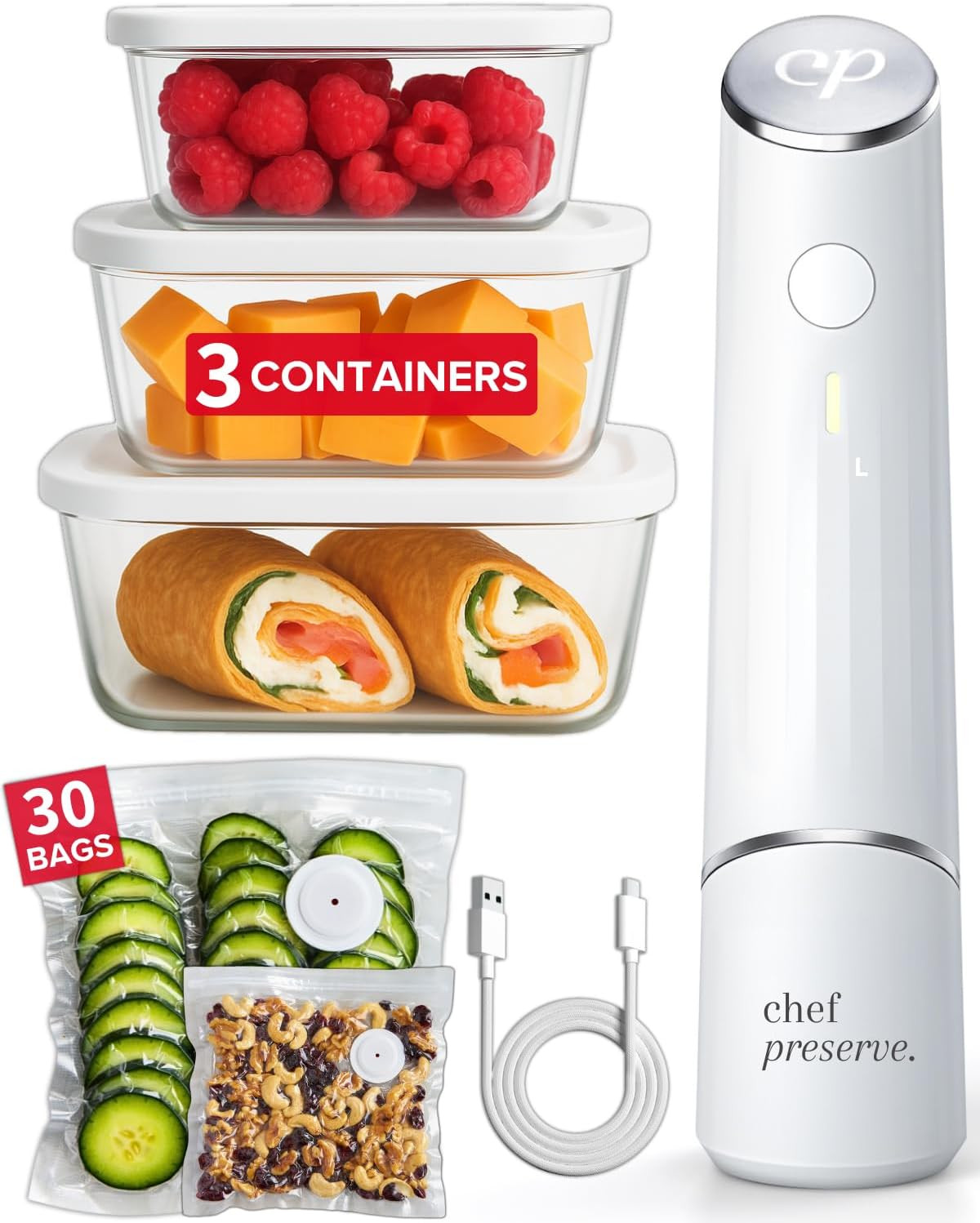 Compact Vacuum Sealer For Food Vacuum Sealer Machine + 3 Glass Reusable Portable$229.33New · Last checked Nov 26, 2026View on eBay
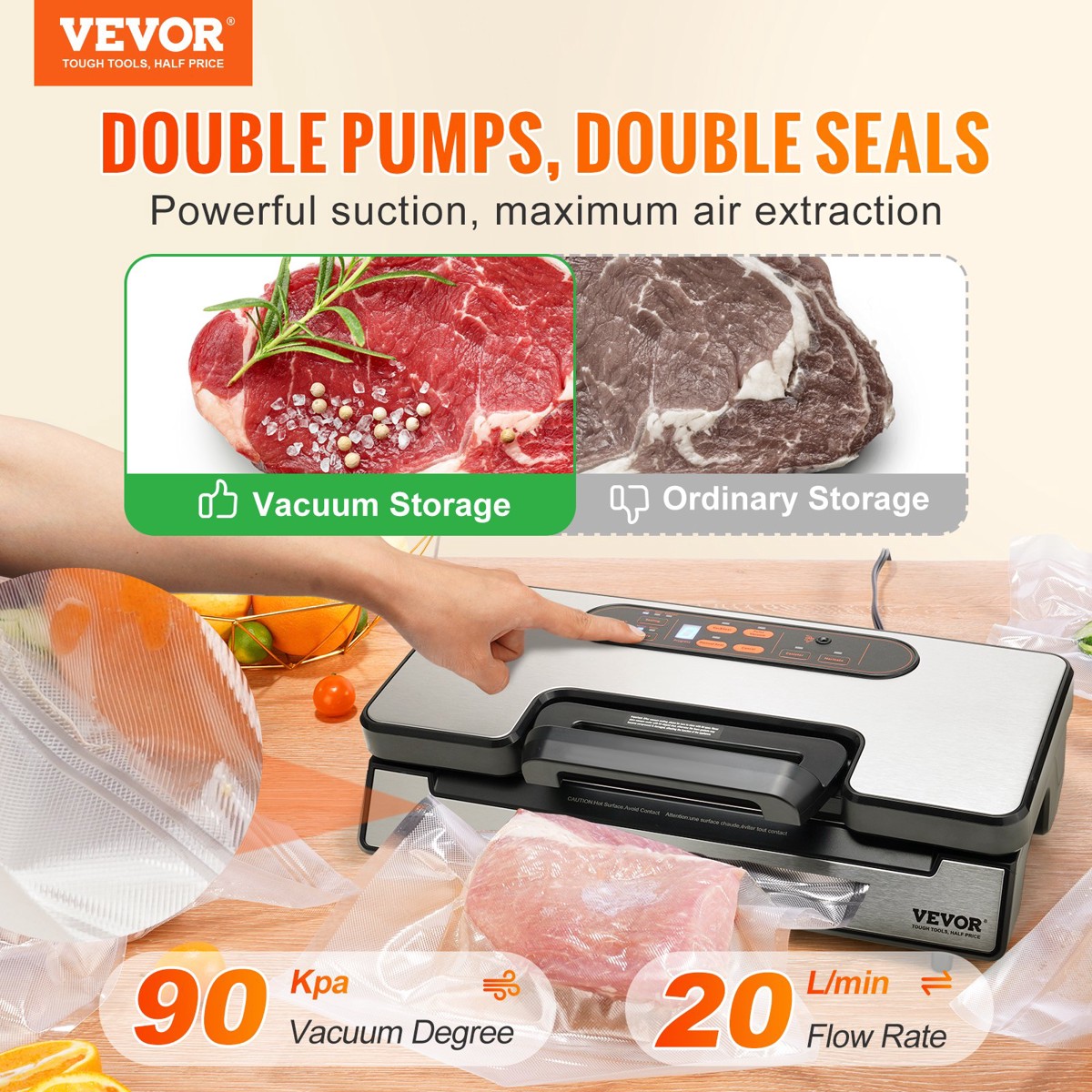 Vacuum Sealer Machine, 90Kpa 130W Powerful Dual Pump And Sealing, Dry And Moist Food Storage, Automatic And Manual Air System With Built-in Cutter, Seal Bag And External Hose$111.99View on Mallflare
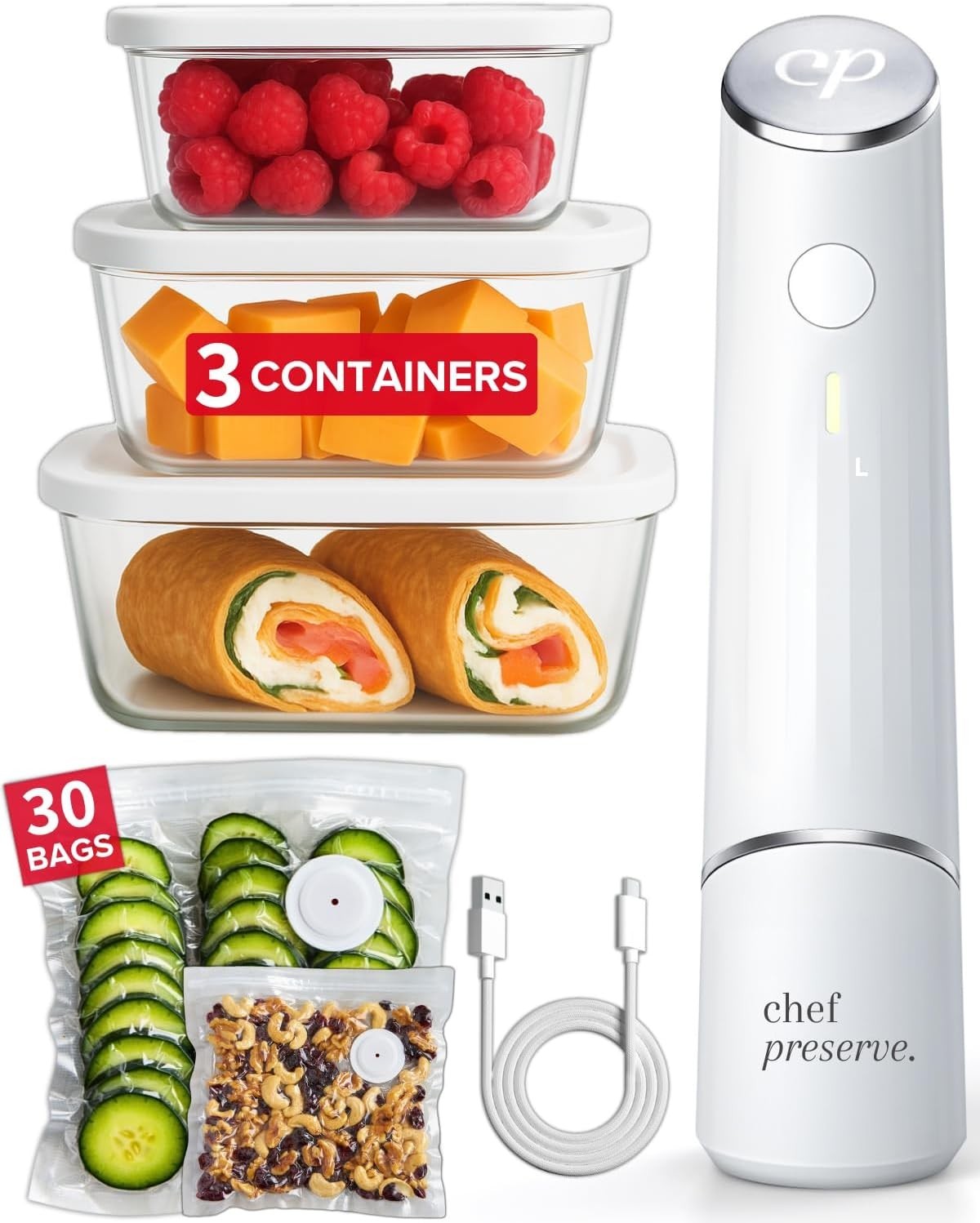 Compact Vacuum Sealer Food Vacuum Sealer Machine 3 Glass Vacuum Containers 30$233.09New · Last checked Nov 26, 2026View on eBay
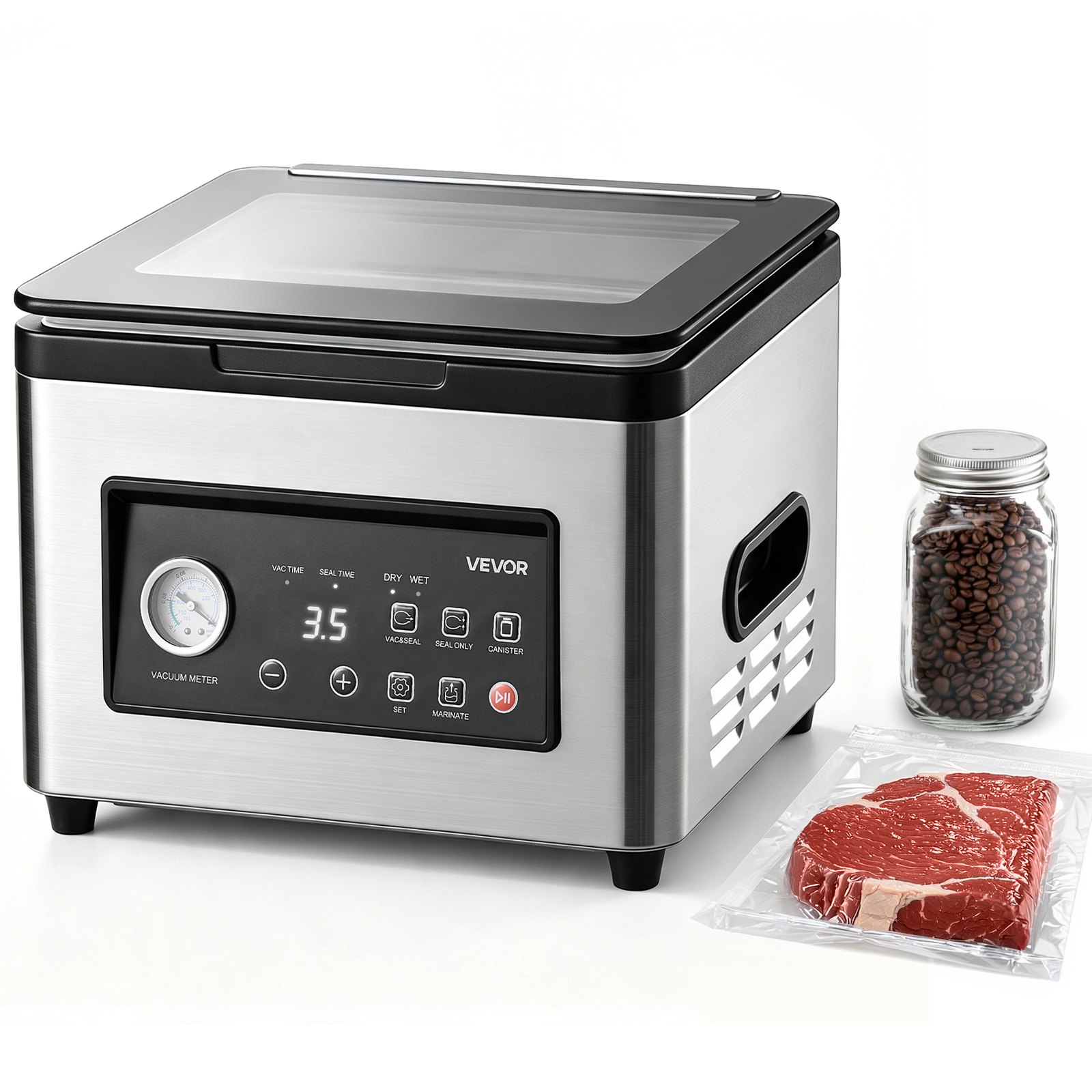 Chamber Vacuum Sealer -100kPa Power 11" Seal Bar Packing Machine, for Home Kitchen & Commercial Use, 4-Piston Dry Pump, Food Packaging for Meats, Liquids, Mason Jar Kit & Sous Vide$338.99View on Mallflare
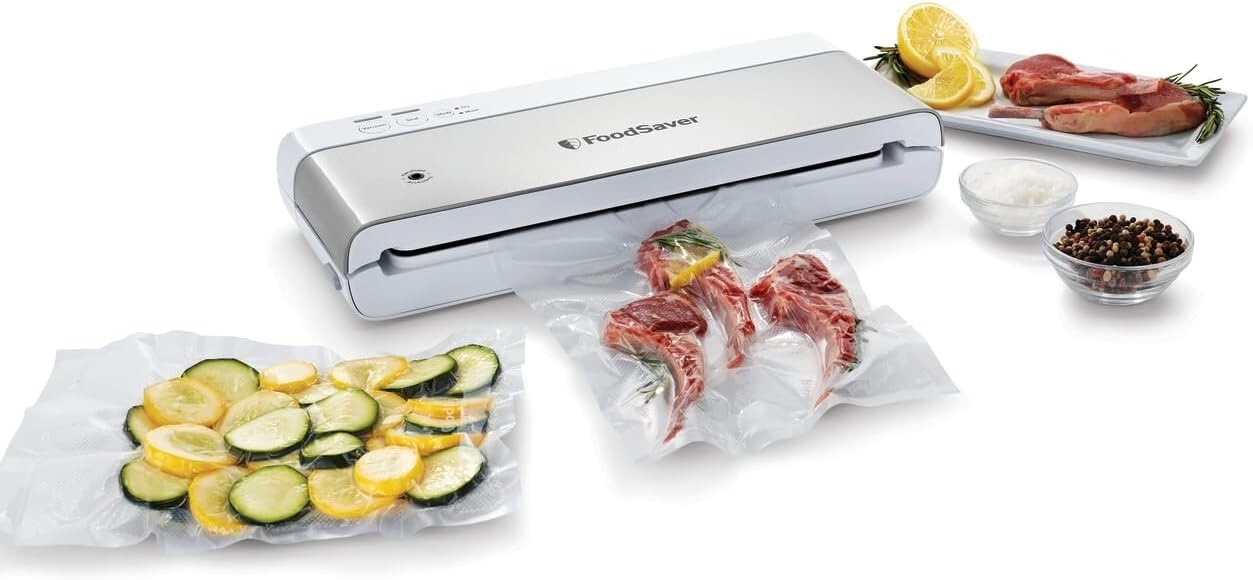 Compact Vacuum Sealer Machine with Bags and Roll for Sous Vide Food Storage$242.99New · Last checked Nov 26, 2026View on eBay
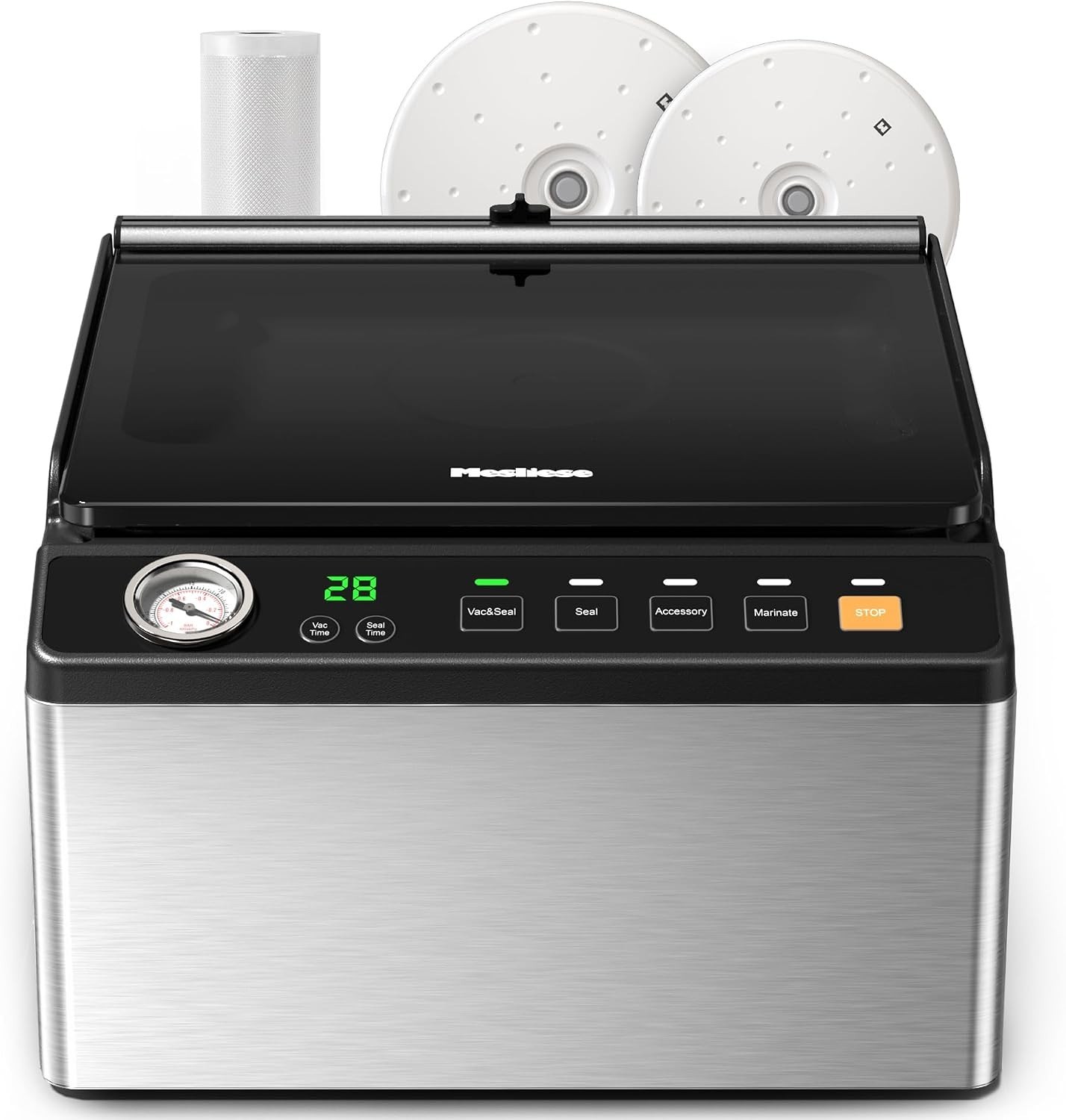 Mesliese Chamber Vacuum Sealer, 6L Food Sealer with 11.3" Dual Sealing Bar,$248.30New · Last checked Nov 26, 2026View on eBay
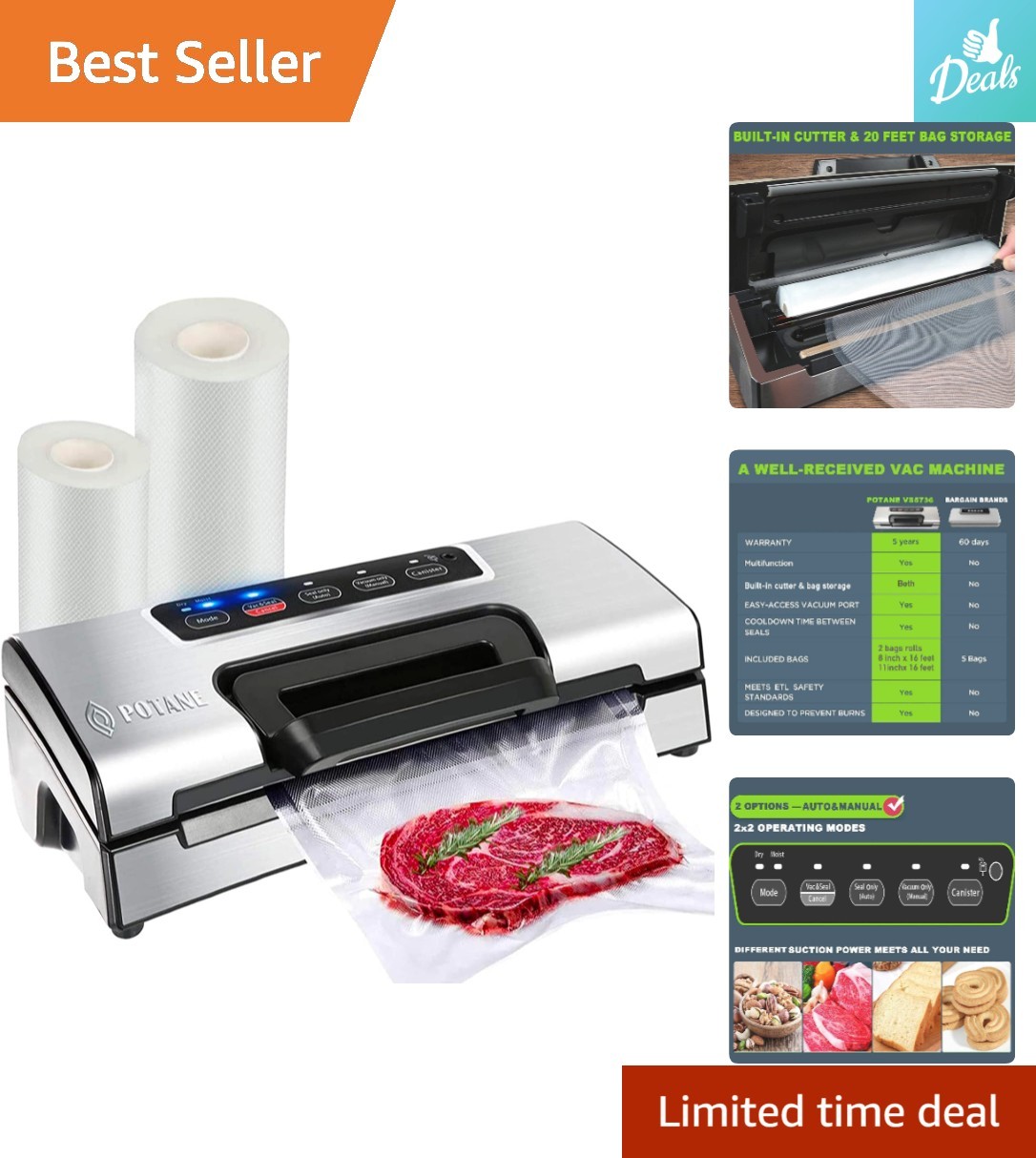 Compact Dual-Mode Vacuum Sealer: Preserve Leftovers & Bulk Foods Effortlessly$253.99New · Last checked Nov 26, 2026View on eBay
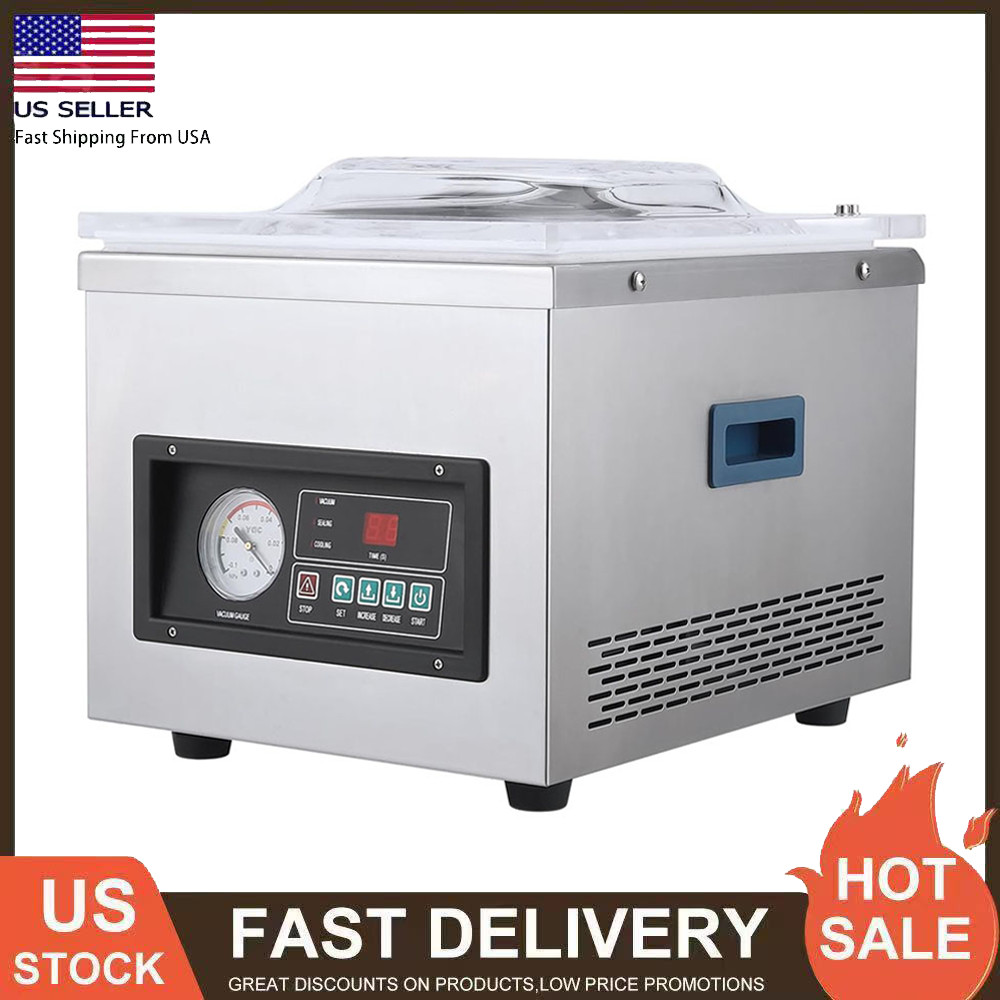 Chamber Vacuum Sealer Kitchen Food Chamber Vacuum Sealer, 6.5 cubic meters/hour$276.44New · Last checked Nov 16, 2026View on eBay
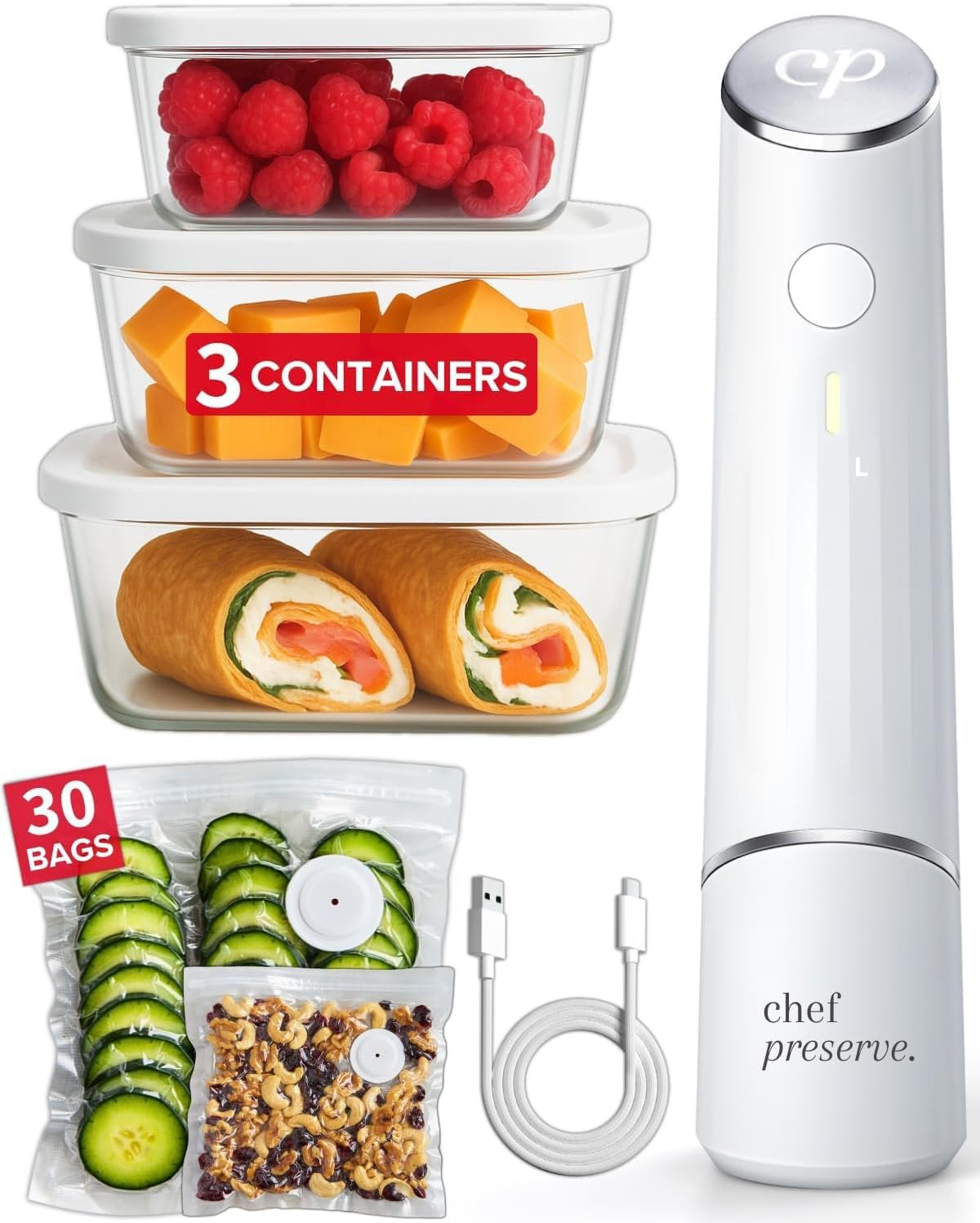 Compact Vacuum Sealer for Food (Vacuum Sealer Machine + 3 Glass Vacuum Container$283.33New · Last checked Nov 26, 2026View on eBay
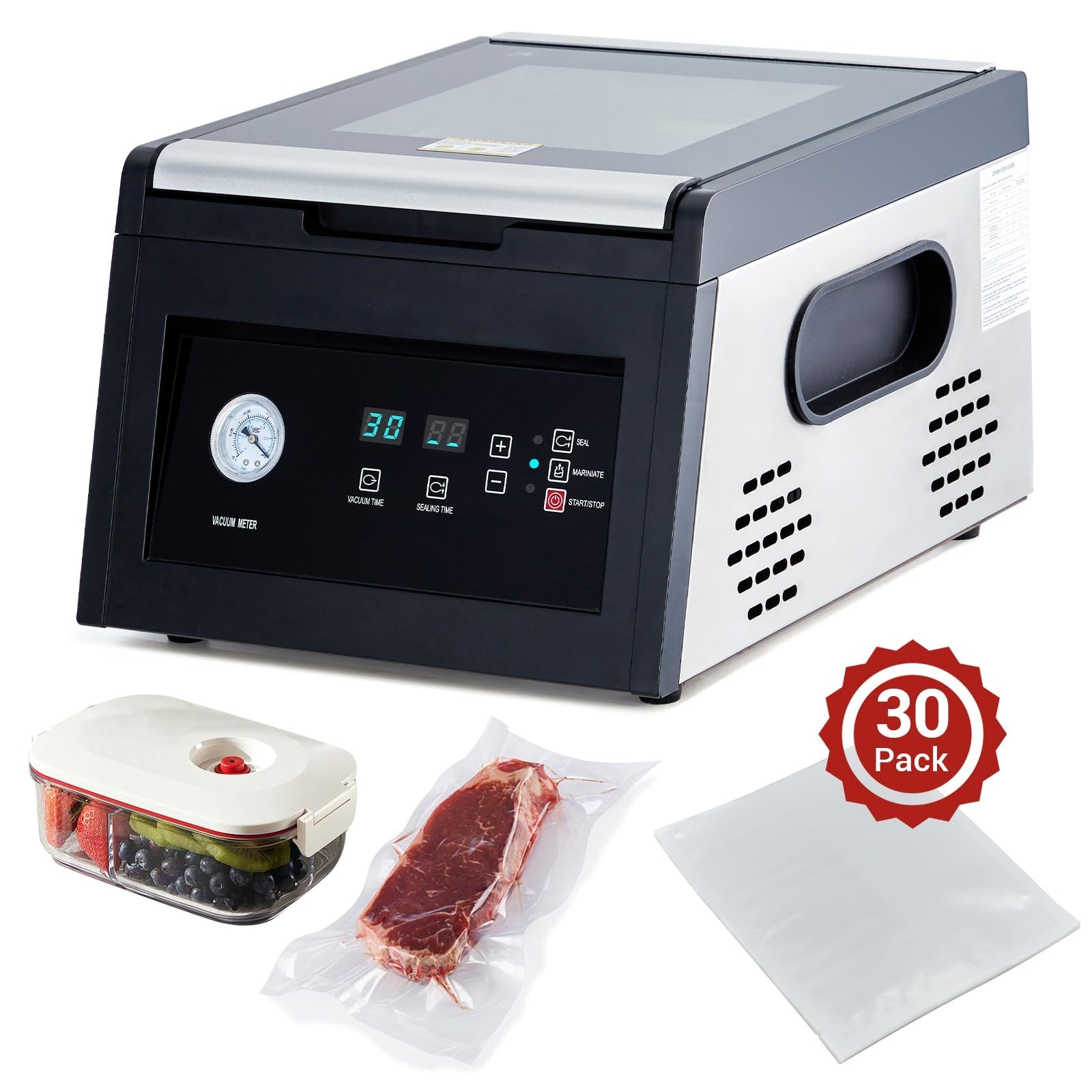 1700W 11.5" Heavy Duty Chamber Vacuum Sealer with Marinades Auto Food Seal Vacuu$298.20New · Last checked Nov 26, 2026View on eBay
Highlights
- Pump architecture is the primary durability divider: piston pumps deliver stronger, repeatable vacuum and handle moist foods better than low-cost diaphragm or suction-fan designs that struggle with liquid.
- Vacuum pressure rating determines preservation performance — look for a stated figure (commonly around -0.8 bar / 80 kPa for capable compact units); unrated 'strong suction' claims indicate entry-level hardware.
- Seal bar width and wire count matter more than overall unit size: a 10–12 inch bar with a double seal wire and a dedicated cooling interval prevents weak or melted seals on compact bodies.
- Bag channel and roll-storage design affect real usability: built-in roll holders with a cutter and a removable drip tray enable roll-bag workflows, while bag-only slots force pre-cut pouch purchases and limit moist-food sealing.
Best use cases
- Best fit: small kitchens and apartment cooks portioning leftovers, cheese, and coffee — choose a compact unit with a piston pump, 10–12 inch seal bar, and a removable drip tray for occasional moist foods.
- Wrong fit: hunters or bulk buyers sealing large cuts and whole fish — skip compact units and choose a full-size chamber or wide-bar external sealer with higher vacuum pressure and a longer seal cycle.
- Best fit: sous-vide users sealing several bags per week — pick a model with a 'moist' or pulse mode and a double seal wire so bags survive prolonged water-bath immersion without seal failure.
- Wrong fit: buyers wanting to seal Mylar foil bags or retort pouches — compact food sealers are tuned for polyethylene vacuum bags; foil and retort materials require a different sealing profile and often a chamber machine.
Buying tips
- Match the seal bar to your bag width: a 10-inch bar seals standard 8-inch roll bags with margin, while an 8-inch bar forces narrower bags and wastes roll material on wider cuts.
- Check the vacuum pressure figure, not the wattage: a stated rating near -0.8 bar (about 80 kPa) indicates a capable pump, whereas wattage alone does not guarantee vacuum depth or seal strength.
- Confirm bag compatibility and channel type: external-channel sealers accept textured embossed vacuum rolls and pouches, while smooth flat bags require a chamber sealer — mixing them causes failed vacuum.
- Prioritize a removable drip tray and a seal-cooling indicator on compact units; without them, moist food pulls liquid into the pump and back-to-back seals overheat and weaken.
Specs
| Pump Type | Piston vs diaphragm vs suction-fan |
|---|---|
| Vacuum Pressure | Around -0.8 bar / 80 kPa rated |
| Seal Bar | 10–12 in, double seal wire |
| Bag System | External channel, textured rolls/pouches |
Related searches
What to check before buying
- Measure your cabinet or drawer opening and counter depth before buying — compact external sealers typically run 14–16 inches long and need clearance for bag overhang during sealing.
- Verify your power outlet and plug standard matches the unit's voltage; compact sealers are single-voltage appliances and imported models may ship with a different plug type.
- Confirm you have a flat, heat-safe surface near an outlet, since the seal bar reaches high temperature and the unit should not operate on soft or cloth surfaces.
- Decide on bag supply upfront: roll bags need a built-in cutter and roll holder, while pre-cut pouches require only a bag slot — buy the matching consumable format with the sealer.
FAQ
Data sources: eBay / Amazon listings and product attribute feeds. Updated Nov 28, 2026.
Some links on this page are affiliate links. If you buy after clicking one, we may earn a commission at no extra cost to you. This does not change which products appear here or their order. Affiliate disclosure.