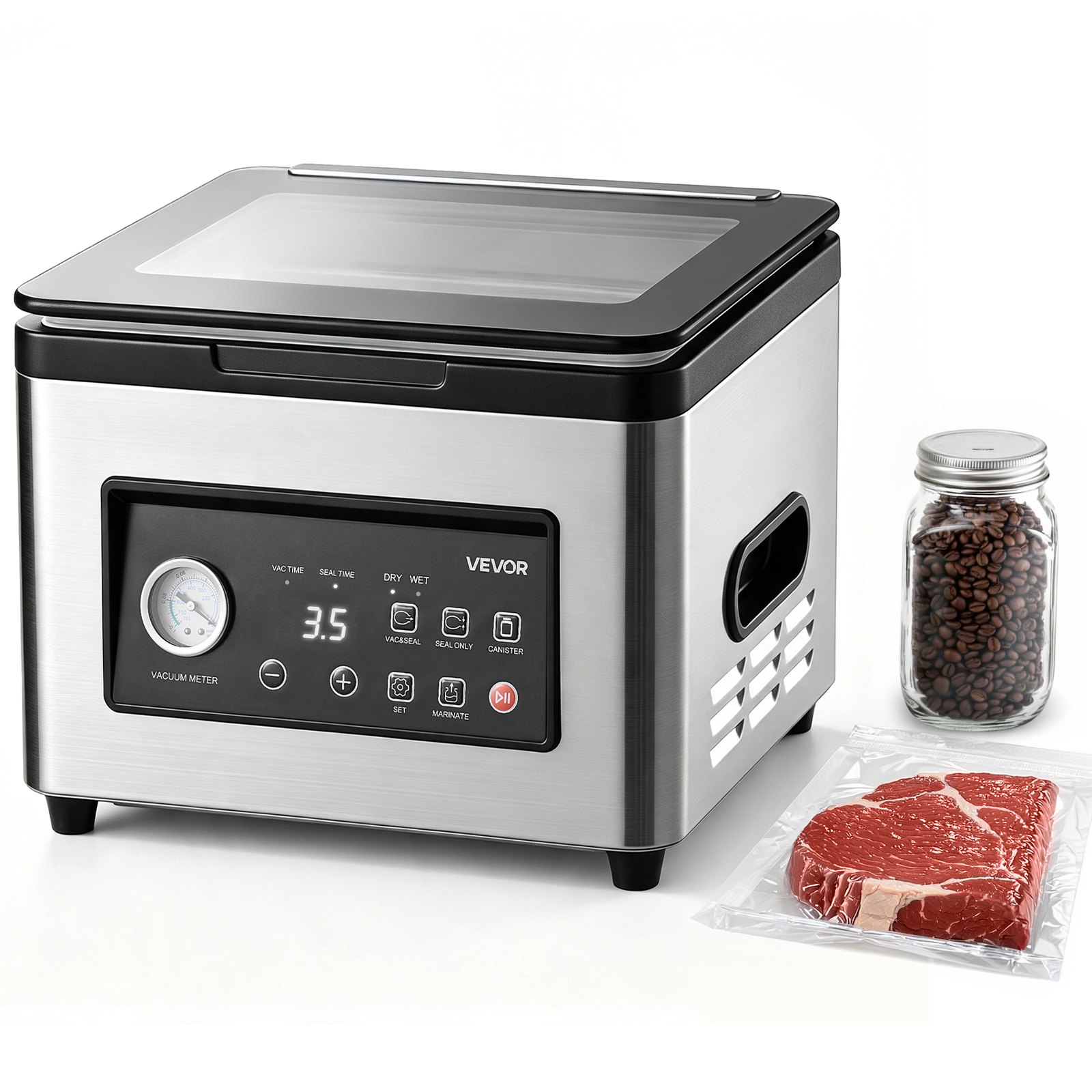

Photos from current listings. Actual item, color, and included accessories may vary.
Home Chamber Vacuum Sealer Buying Guide
A home chamber vacuum sealer pulls a full vacuum inside a rigid chamber, then heat-seals the pouch—so liquids, marinades, and wet foods seal cleanly without being sucked into the pump. The core trade-off is chamber size and pump architecture versus counter footprint, warm-up time, and machine weight. Choose a chamber unit only if you routinely seal liquids or bulky portions; for dry goods and occasional use, an external suction sealer remains lighter and cheaper.
Key takeaways
- Chamber machines seal liquid-rich foods because the vacuum forms around the entire pouch, not through the pouch opening—no liquid reaches the pump.
- Oil-sealed rotary vane pumps deliver deeper vacuum and longer duty cycles than dry piston pumps; dry pumps suit light intermittent use.
- Chamber interior dimensions, not exterior footprint, limit pouch and product size—measure the usable chamber floor before choosing a tier.
At a glance
- Category
- Vacuum Sealers
- Last updated
- Nov 28, 2026
Current offers
Highlights
- Chamber machines seal liquid-rich foods because the vacuum forms around the entire pouch, not through the pouch opening—no liquid reaches the pump.
- Oil-sealed rotary vane pumps deliver deeper vacuum and longer duty cycles than dry piston pumps; dry pumps suit light intermittent use.
- Chamber interior dimensions, not exterior footprint, limit pouch and product size—measure the usable chamber floor before choosing a tier.
- Bar-style sealers need a smooth flat pouch lip; chamber sealers accept textured or smooth pouches and can seal multiple small bags per cycle with an adapter.
Best use cases
- Best fit: sous-vide cooks and hunters sealing marinades, braises, and wet game—pick a chamber with a liquid-safe cycle and a removable drip tray.
- Best fit: small-batch meal preppers sealing multiple portion bags—choose a chamber that accepts chamber-sized pouches and has a wide seal bar.
- Wrong fit: buyers sealing only dry pantry goods or occasional leftovers—a quality external suction sealer is sufficient and far lighter.
- Wrong fit: kitchens with under-cabinet clearance only—chamber lids open upward and need vertical clearance plus a sturdy counter for the machine's weight.
Buying tips
- Measure the usable chamber floor (length × width × depth) and match it to your most common pouch size; a pouch must lie flat with the seal lip inside the bar zone.
- Choose an oil-sealed rotary vane pump for frequent or large-batch sealing; dry piston pumps are acceptable for light, intermittent home use.
- Allow 3–8 minutes warm-up for many chamber units and confirm the duty cycle—continuous sealing requires a pump rated for longer run times.
- Check pouch compatibility: chamber units accept smooth and textured vacuum pouches, while external suction sealers generally require textured-channel bags.
Specs
| Vacuum Architecture | Chamber vs external suction |
|---|---|
| Pump Type | Oil-sealed rotary vane vs dry piston |
| Chamber Interior | Measure usable floor: L × W × D |
| Pouch Compatibility | Smooth + textured (chamber) vs textured-only |
Related searches
What to check before buying
- Counter footprint and weight: chamber sealers are heavy and need a stable, deep counter—confirm the machine fits and the counter bears the load.
- Vertical clearance: the open lid requires free space above the unit; avoid under-cabinet or shelf installations that block the lid.
- Power and plug: verify the unit's voltage and plug type match your kitchen circuit, and avoid sharing a circuit with high-draw appliances.
- Pouch supply and accessories: confirm a source for chamber-sized pouches and any needed adapters, and check seal-bar width against your bag sizes.
FAQ
Data sources: eBay / Amazon listings and product attribute feeds. Updated Nov 28, 2026.
Some links on this page are affiliate links. If you buy after clicking one, we may earn a commission at no extra cost to you. This does not change which products appear here or their order. Affiliate disclosure.