
Photos from current listings. Actual item, color, and included accessories may vary.
Jar Sealer Mason Jar Buying Guide
A jar sealer for mason jars is an accessory or standalone appliance that pulls a vacuum on standard glass canning jars, either via a handheld/edge vacuum sealer with a hose port or a dedicated electric jar-sealing pump. The core trade-off is between universal wide/narrow-mouth compatibility with an external suction sealer versus a self-contained electric unit that trades bag-sealing capability for one-touch jar operation. Buy the hose-port accessory if you already own a suction vacuum sealer; buy the standalone electric sealer only if jars are your sole preservation format.
Median $278.40 · New listings
Key takeaways
- Mason jar sealing depends on a two-part lid system: the flat metal disc must flex inward under vacuum while the screw band only holds the disc in place during the pull.
- Wide-mouth jars use a 86 mm (3⅜ in) lid diameter; regular-mouth jars use a 70 mm (2¾ in) lid, so any sealer attachment must match both or ship two adapter heads.
- Hose-port jar sealers require a suction vacuum sealer with an accessory port and at least 10–12 inHg of vacuum to seat a lid; chamber sealers like the Avid Armor JARMAX use an internal chamber and require no external pump.
At a glance
- Category
- Vacuum Sealers
- Last updated
- Nov 28, 2026
Current offers
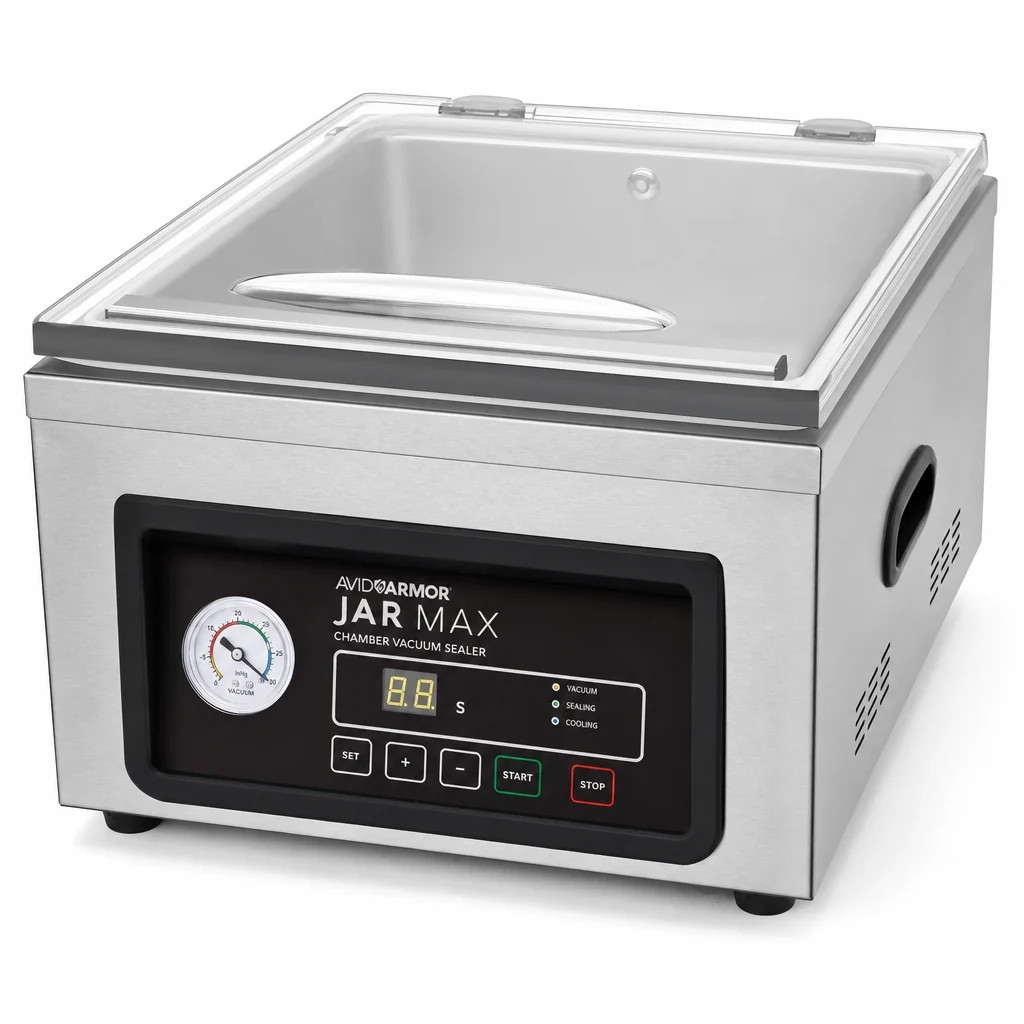 Avid Armor JARMAX Chamber Vacuum Sealer for Mason Jars$278.40New · Last checked Nov 16, 2026View on eBay
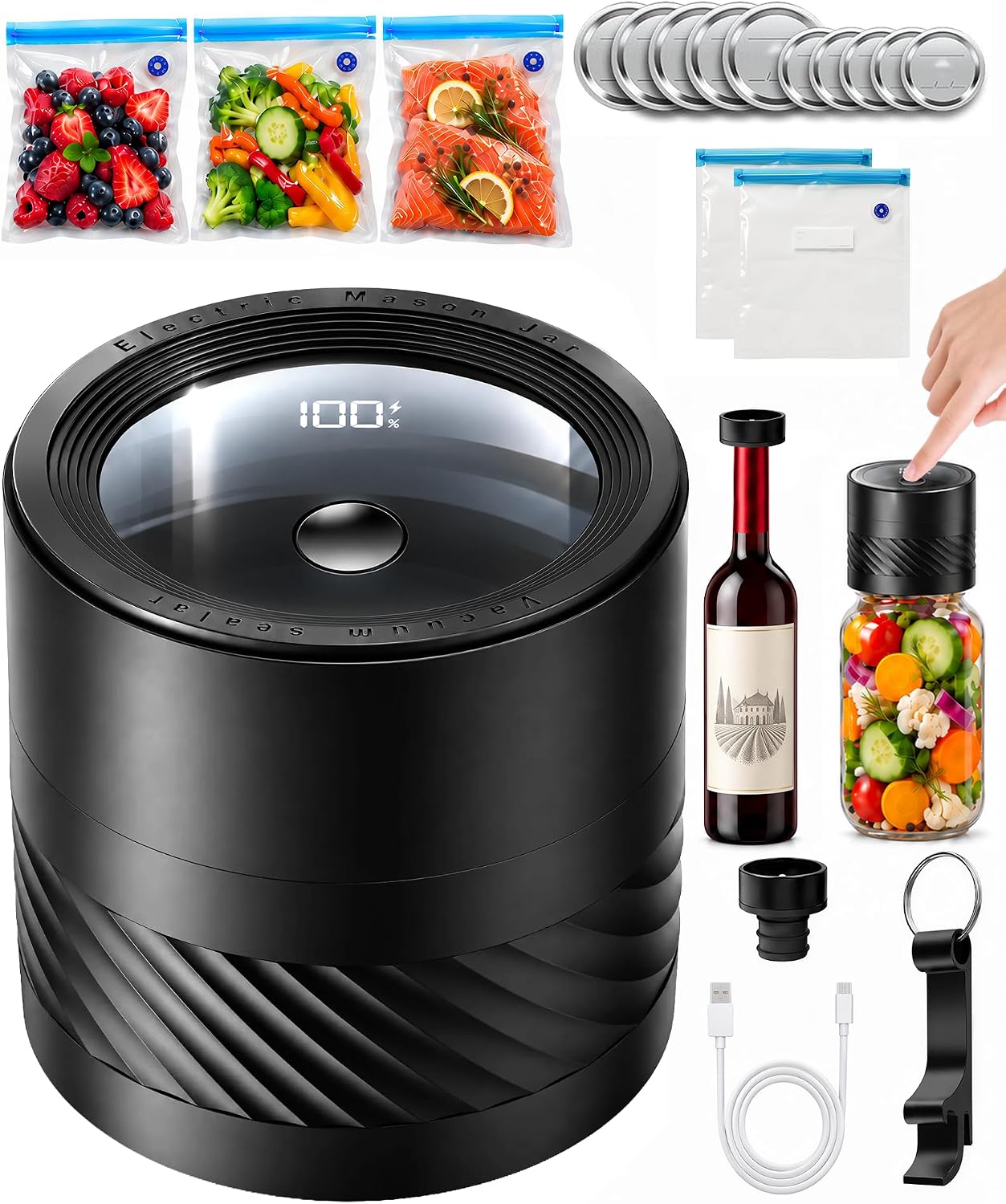 Electric Mason Jar Vacuum Sealer Kit With Auto-Pause Function, Automatic Food Sealing System For Wide And Regular Mouth Jars And Storage Bags, Kitchen Preservation Accessories$106.99View on Mallflare
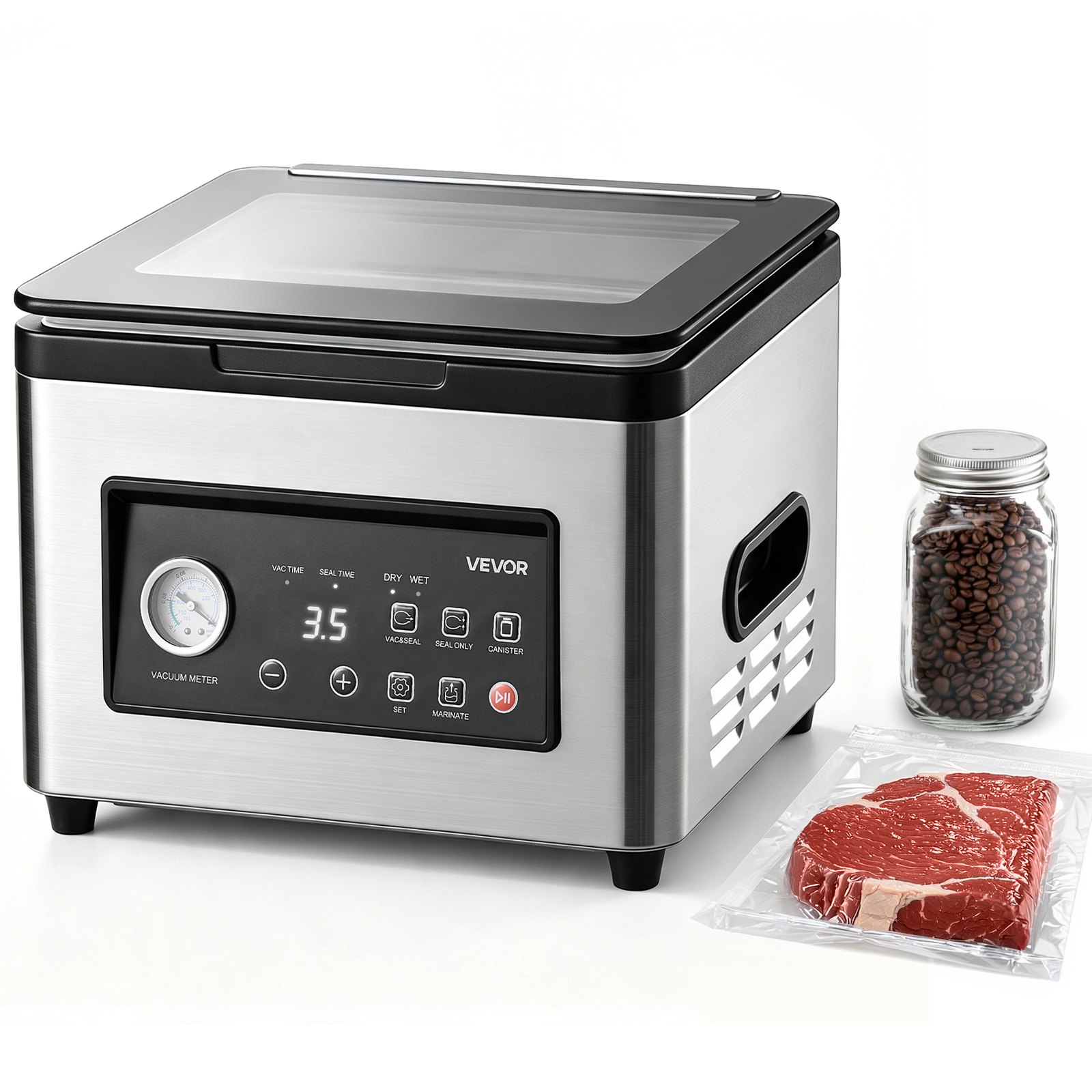 Chamber Vacuum Sealer -100kPa Power 11" Seal Bar Packing Machine, for Home Kitchen & Commercial Use, 4-Piston Dry Pump, Food Packaging for Meats, Liquids, Mason Jar Kit & Sous Vide$338.99View on Mallflare
Highlights
- Mason jar sealing depends on a two-part lid system: the flat metal disc must flex inward under vacuum while the screw band only holds the disc in place during the pull.
- Wide-mouth jars use a 86 mm (3⅜ in) lid diameter; regular-mouth jars use a 70 mm (2¾ in) lid, so any sealer attachment must match both or ship two adapter heads.
- Hose-port jar sealers require a suction vacuum sealer with an accessory port and at least 10–12 inHg of vacuum to seat a lid; chamber sealers like the Avid Armor JARMAX use an internal chamber and require no external pump.
- Auto-pause and auto-stop electronics on electric jar sealers prevent over-pulling, which can crush soft contents or deform thin lids; manual hose units rely on the host sealer's pressure sensor.
Best use cases
- Best fit: dry goods (coffee, rice, nuts, spices) in wide-mouth quart jars — pair a hose-port lid attachment with any suction vacuum sealer that has an accessory port and 12 inHg or better.
- Best fit: mixed-mouth pantries and small-batch leftovers — choose a kit with both 86 mm and 70 mm adapter heads plus a hose, or a standalone electric unit with interchangeable heads.
- Wrong fit: high-liquid or sauce-heavy jars sealed with a suction hose unit — liquid gets pulled into the pump; use a chamber sealer rated for jars or skip jar sealing for wet contents.
- Wrong fit: buying a standalone electric jar sealer if you also need bag sealing — it cannot seal vacuum bags; buy a suction sealer with a jar attachment instead.
Buying tips
- Match the adapter to lid diameter, not jar brand: measure across the flat lid disc — 86 mm is wide-mouth, 70 mm is regular-mouth; most kits include both heads.
- Confirm your host vacuum sealer has an accessory/hose port; portless edge sealers cannot run a jar attachment regardless of adapter fit.
- Prefer silicone-gasket adapter heads over hard plastic rims — the gasket holds vacuum against the glass rim and is the wear part that determines seal reliability.
- Use flat lids rated for canning (not one-piece plastic lids); discs must be fresh and undeformed, and screw bands should be hand-tight, not wrench-tight.
Specs
| Lid Compatibility | Wide 86 mm / Regular 70 mm |
|---|---|
| Drive Type | Hose-port suction vs standalone electric |
| Vacuum Source | External sealer pump vs internal chamber |
| Seal Method | Silicone gasket head on glass rim |
Related searches
What to check before buying
- Count your jar mouths: inventory wide-mouth (86 mm) vs regular-mouth (70 mm) jars before choosing a single-head or dual-head kit.
- Check your existing vacuum sealer for an accessory port and a hose — no port means no jar sealing without a standalone electric unit.
- Verify jar rim condition: chips or warping on the glass rim prevent the gasket from sealing and cause slow vacuum loss.
- Confirm power and plug standard for standalone electric sealers (USB or mains) and that the unit is rated for continuous short pulls, not one long run.
FAQ
Data sources: eBay / Amazon listings and product attribute feeds. Updated Nov 28, 2026.
Some links on this page are affiliate links. If you buy after clicking one, we may earn a commission at no extra cost to you. This does not change which products appear here or their order. Affiliate disclosure.