
Photos from current listings. Actual item, color, and included accessories may vary.
Portable Bag Sealer Buying Guide
Portable bag sealers are handheld or compact countertop devices that close plastic bags with heat, impulse, or ultrasonic sealing — separate from vacuum sealers that also evacuate air. The core trade-off is sealing method and battery vs. corded power: impulse heat with a spring-loaded clamp and rechargeable Li-ion delivers repeatable, airtight closures, while cheap constant-heat or ultrasonic units seal thin film only and drift with battery voltage. Choose an impulse or hybrid unit with a metal heating element and defined seal-width spec if you need freezer- or liquid-safe closures; choose an ultrasonic gadget only for foil and thin snack-film touch-ups.
Median $227.42 · New listings
Key takeaways
- Impulse sealing (heating wire pulses for 1-3 s) beats constant-heat jaw sealers: it seals thick PE/PP and mylar bags without melting through, and the wire cool-down prevents bag burn-through on repeat passes.
- Rechargeable 18650 or built-in Li-ion at 3.7V/1200-2000mAh handles 100+ seals per charge; USB-C input is now the standard, while micro-USB units are older stock and slower to recharge.
- Seal width of 2-3 mm on impulse units vs. 1-1.5 mm on mini ultrasonic units determines airtightness — wider seals resist freezer expansion stress and liquid leaks better.
At a glance
- Category
- Vacuum Sealers
- Last updated
- Nov 27, 2026
Current offers
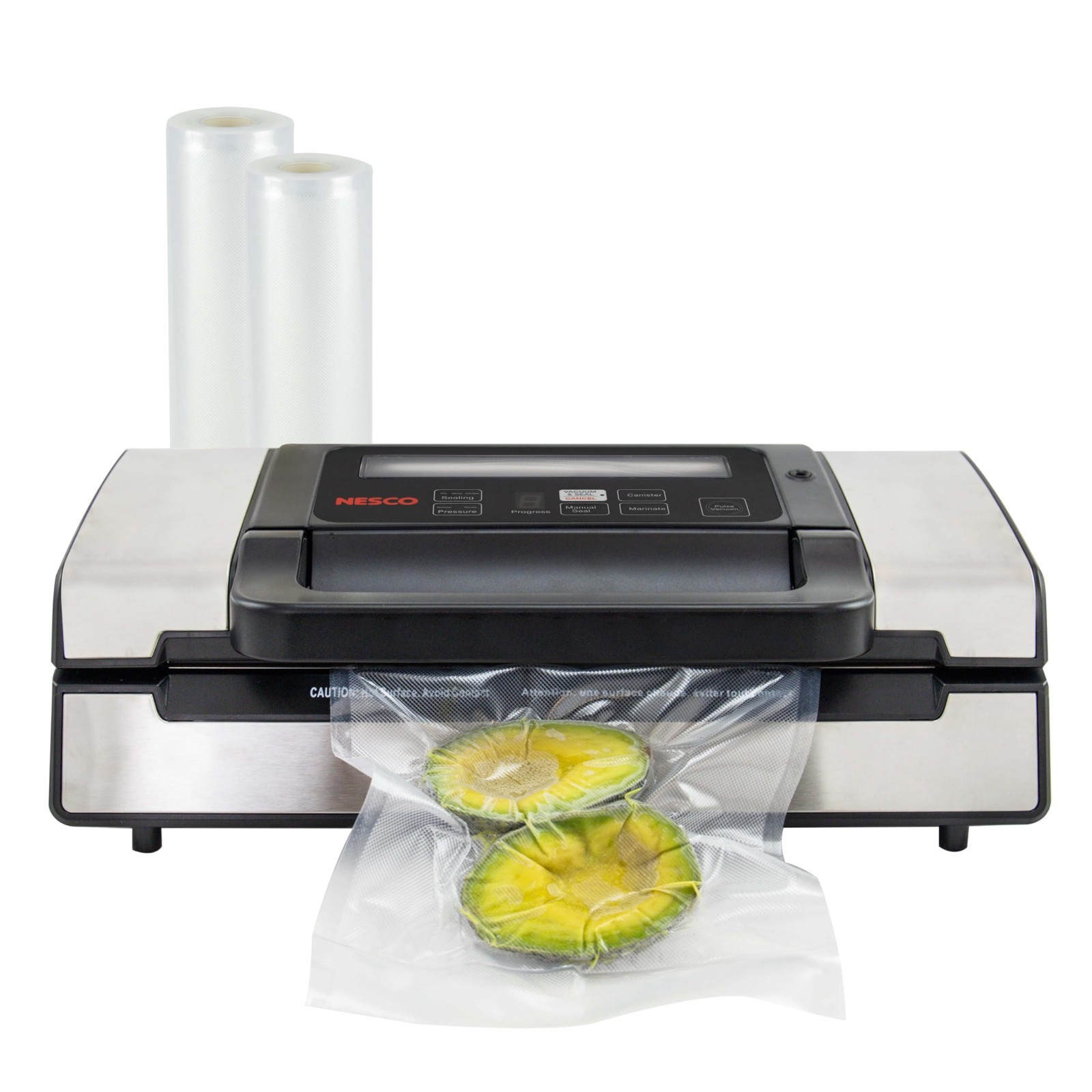 Deluxe Food VS-12 Vacuum Sealer 130 Watts Kit Bags & Viewing Lid Compact Silver$205.54New · Last checked Nov 26, 2026View on eBay
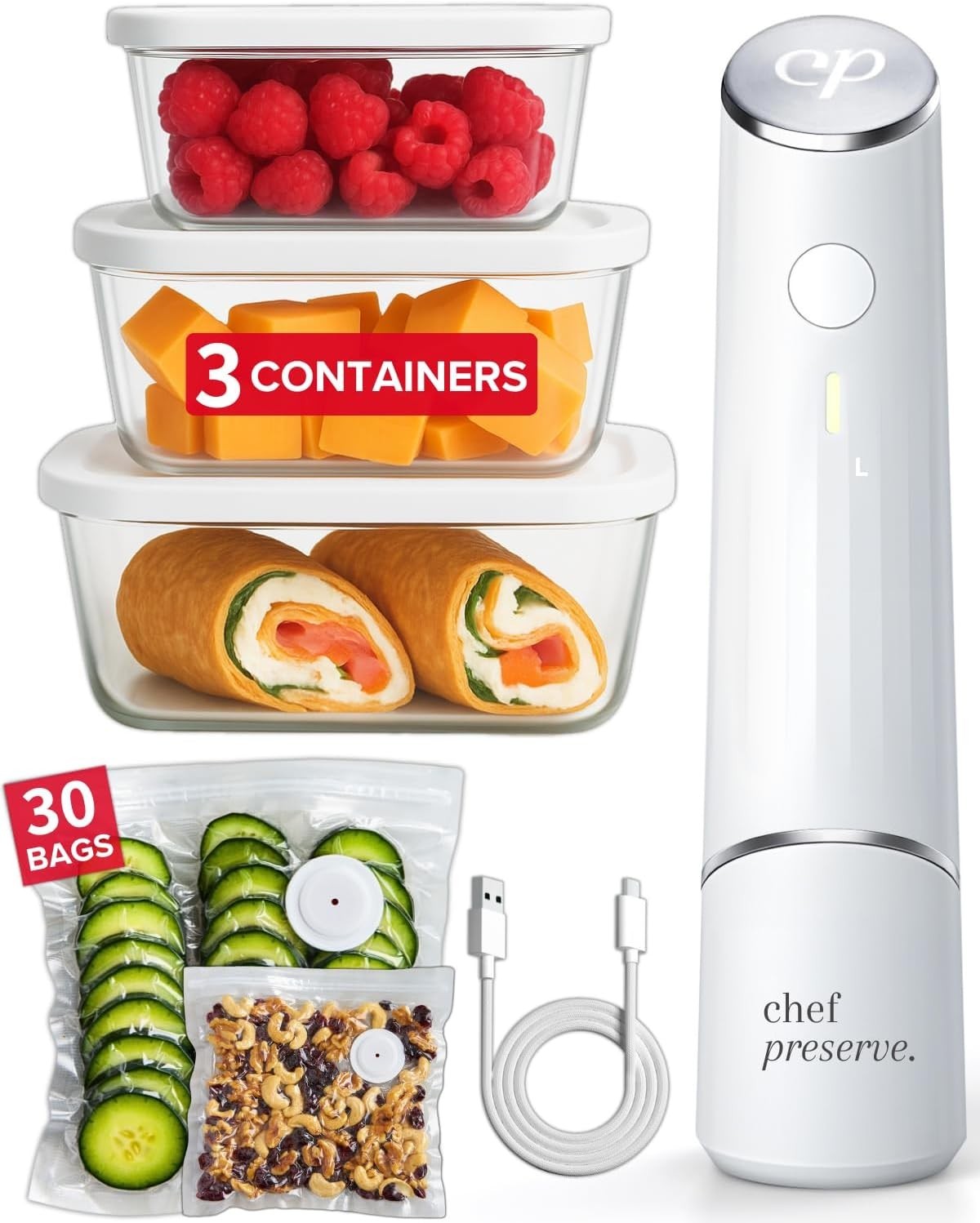 Compact Vacuum Sealer Machine 3 Glass Vacuum Containers 30 Reusable Vacuum Bags$211.85New · Last checked Nov 26, 2026View on eBay
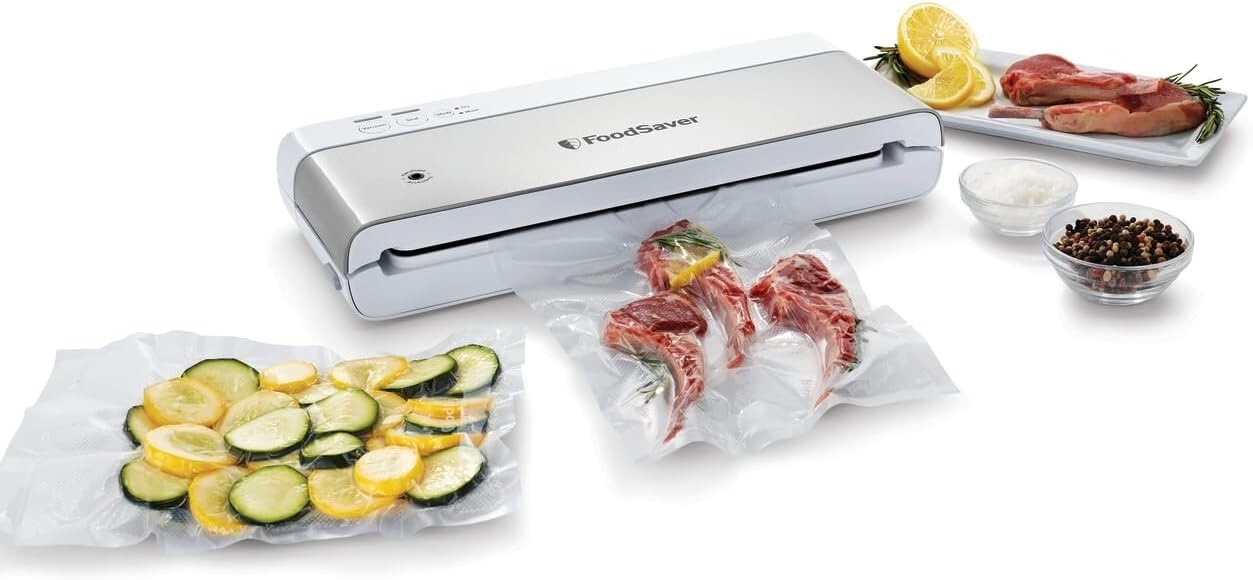 Compact Vacuum Sealer Machine with Bags and Roll for Sous Vide Food Storage$242.99New · Last checked Nov 26, 2026View on eBay
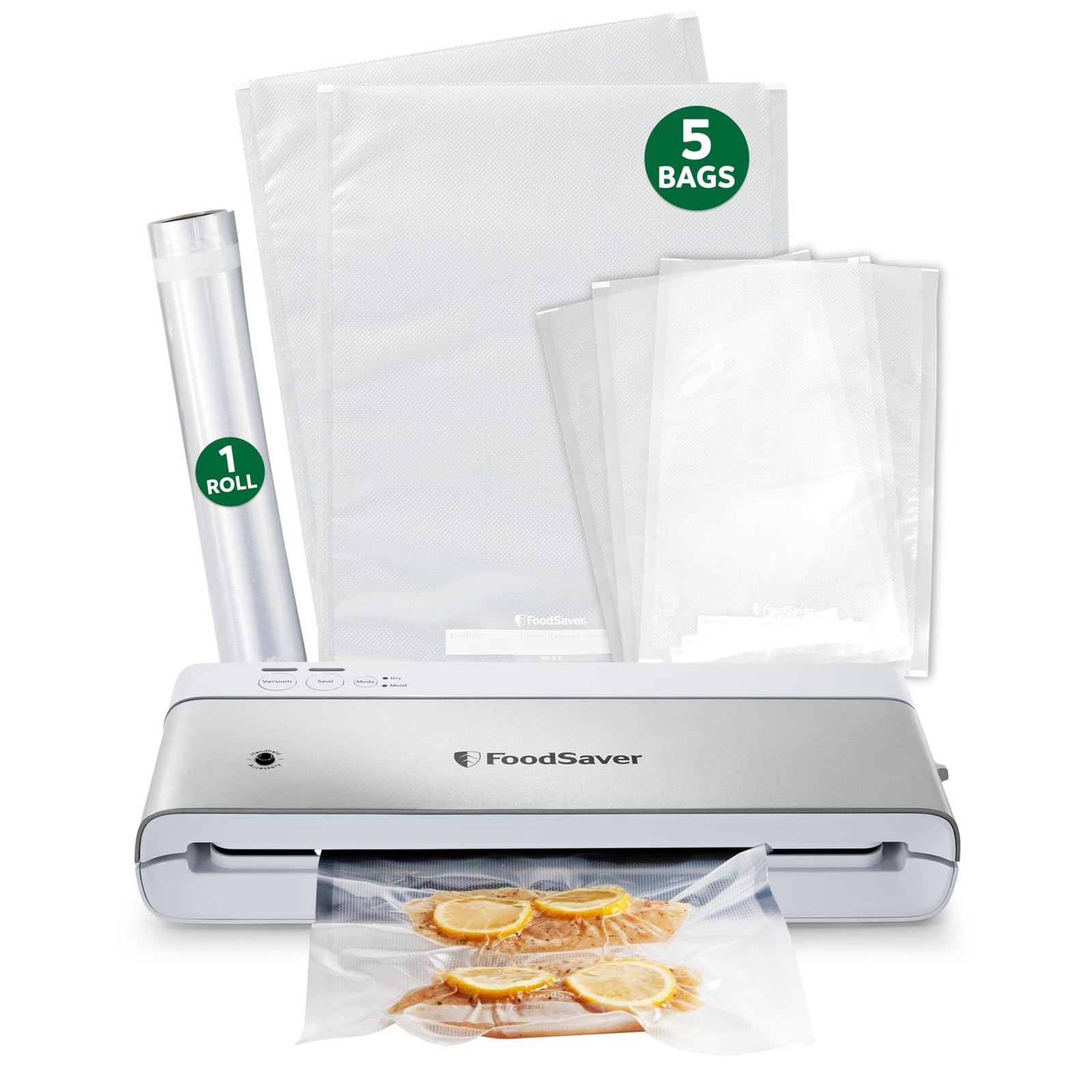 FoodSaver Compact Vacuum Sealer Machine with Airtight Bags and Roll - Ideal for$382.47New · Last checked Nov 26, 2026View on eBay
Highlights
- Impulse sealing (heating wire pulses for 1-3 s) beats constant-heat jaw sealers: it seals thick PE/PP and mylar bags without melting through, and the wire cool-down prevents bag burn-through on repeat passes.
- Rechargeable 18650 or built-in Li-ion at 3.7V/1200-2000mAh handles 100+ seals per charge; USB-C input is now the standard, while micro-USB units are older stock and slower to recharge.
- Seal width of 2-3 mm on impulse units vs. 1-1.5 mm on mini ultrasonic units determines airtightness — wider seals resist freezer expansion stress and liquid leaks better.
- Clamp-and-lock designs with a magnetic strip or hanging loop matter for kitchen use; corded 100-240V countertop impulse models output higher wattage for thick bags than any handheld battery unit.
Best use cases
- Best fit: kitchen/freezer meal prep and sous-vide — pick a rechargeable impulse sealer with 2-3 mm seal width and a lock clamp; skip ultrasonic pen-style units, which cannot handle thick PE freezer bags.
- Best fit: pantry snack, coffee, and foil bag resealing — a compact USB-C impulse sealer or a corded mini impulse unit covers PP/PE and mylar; skip constant-heat jaw sealers that melt thin film.
- Best fit: travel and office touch-ups on chip bags and foil pouches — a pen-style ultrasonic or mini battery sealer is pocketable but seals only thin film; don't expect vacuum-level airtightness.
- Wrong fit: actual vacuum sealing of meat, liquids, or long-term freezer storage — a handheld bag sealer only closes the bag; you need a chamber or suction vacuum sealer with channeled bags.
Buying tips
- Match sealer to bag material: impulse heat for PE/PP/mylar up to ~0.2 mm thick; ultrasonic only for foil and film under ~0.1 mm. Thicker bags need higher wattage or corded power.
- Check seal width and element type: 2-3 mm impulse wire with a spring clamp beats 1 mm bare wire; units listing 'impulse' and a cool-down indicator are more durable than constant-heat bars.
- Budget for battery chemistry: 3.7V Li-ion 1200mAh+ with USB-C is current standard; NiMH or micro-USB units are older generation and slower, with fewer seals per charge.
- For countertop use, 100-240V dual-voltage corded impulse models (typically 100-300W) seal thick bags faster; handheld battery units cap around 50-100 seals per charge and lose heat as voltage drops.
Specs
| Sealing Method | Impulse heat / Ultrasonic / Constant heat |
|---|---|
| Power Source | USB-C Li-ion vs 100-240V corded |
| Seal Width | 1-1.5 mm ultrasonic / 2-3 mm impulse |
| Film Compatibility | PE/PP/mylar vs foil/thin film |
Related searches
What to check before buying
- Measure your bag film thickness and material (PE, PP, mylar, foil) — confirm the sealer's rated film type and max thickness before choosing impulse vs. ultrasonic.
- Confirm power standard: USB-C 5V for handheld units, or 100-240V plug for corded countertop models; match your region's outlet voltage.
- Check the sealing jaw length against your bag width — most handheld units seal 10-20 cm; wider bags need a countertop impulse sealer or multiple passes.
- Verify companion parts: replacement heating wire/Teflon tape for impulse units, and whether bags are plain or channeled (channeled only for vacuum sealers, not bag-only sealers).
FAQ
Data sources: eBay / Amazon listings and product attribute feeds. Updated Nov 27, 2026.
Some links on this page are affiliate links. If you buy after clicking one, we may earn a commission at no extra cost to you. This does not change which products appear here or their order. Affiliate disclosure.