Choosing gear for pizza flour, yeast & fermentation is really a choice about workflow: do you need a broad tray for a larger dough session, a clear container for watching fermentation, or compact pieces that are easy to store and wash? The four proofing formats below cover those priorities, but they are not interchangeable. Start with the shape and handling of your dough routine, then use price to break close calls.
Quick take
The listed-price spread is $31.84, but price should follow fit. A tray format suits a different routine from a multi-container setup, and transparent walls answer a different need from compact storage. For most shoppers, the useful tie-breakers are batch organization, fermentation visibility, material preference, and cleanup. The comparison below keeps those choices separate, so a lower listed price does not decide a format mismatch by itself.
Listed-price comparison
Prices run from $20.81 to $52.65. The bars show relative listed-price position in this comparison, not a quality ranking.
| Product | Listed price | Price bar |
|---|---|---|
| Pizza Dough Proofing Box with Lid - Dough Tray & Proofing Container for Lid | $52.65 | |
| 2 Pack Pizza Dough Proofing Box - Clear Plastic Sealed Fermentation Container, S | $37.99 | |
| 2 Pack Acrylic Proofing Box, Clear Plastic Pizza Dough Tray, Bread Fermentation | $29.99 | |
| Stackable Silicone Artisan Pizza Dough Proofing Proving Containers with Lids-2/3 | $20.81 |
Decision matrix
- Material choice: The first format uses acacia wood, the second lists polypropylene, the third uses acrylic, and the fourth uses silicone.
- Container format: The first is identified as a dough tray, while the other three are presented as 2-pack formats.
- Batch planning: The clear plastic box is explicitly sized for 4-6 dough balls; the other formats use different tray or container arrangements.
- Visibility: The clear plastic and acrylic choices support viewing the dough through the container. The wooden and Spacegrey formats take a different visual approach.
- Shared feature: All four include a lid or lids, so having a cover is not the deciding difference.
Product notes
Pizza Dough Proofing Box with Lid - Dough Tray & Proofing Container for Lid
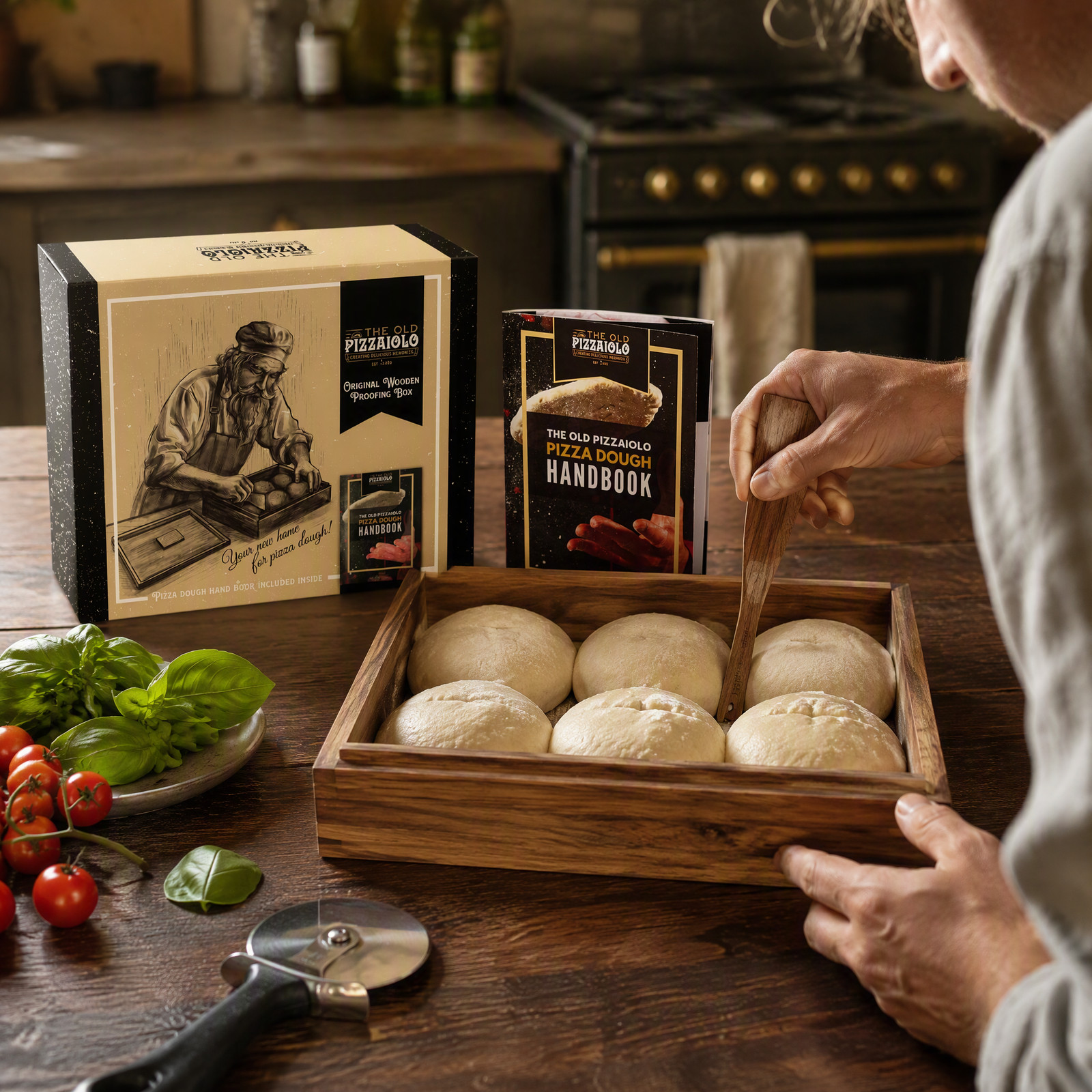
For shoppers who want a defined tray format with a wood-led look, this box has a clear use case. Its acacia wood construction is water resistant, and the 16 x 12 x 4.5-inch size gives the dough tray a broad footprint. A lid is included in the product name, keeping the setup aligned with covered proofing. The limitation is visibility: the wooden construction is not suited to watching bubbles or expansion through the container. That footprint also needs more room than the compact silicone containers. Choose it when the Dough Tray phrase and water-resistant construction matter more than transparent monitoring.
2 Pack Pizza Dough Proofing Box - Clear Plastic Sealed Fermentation Container, S
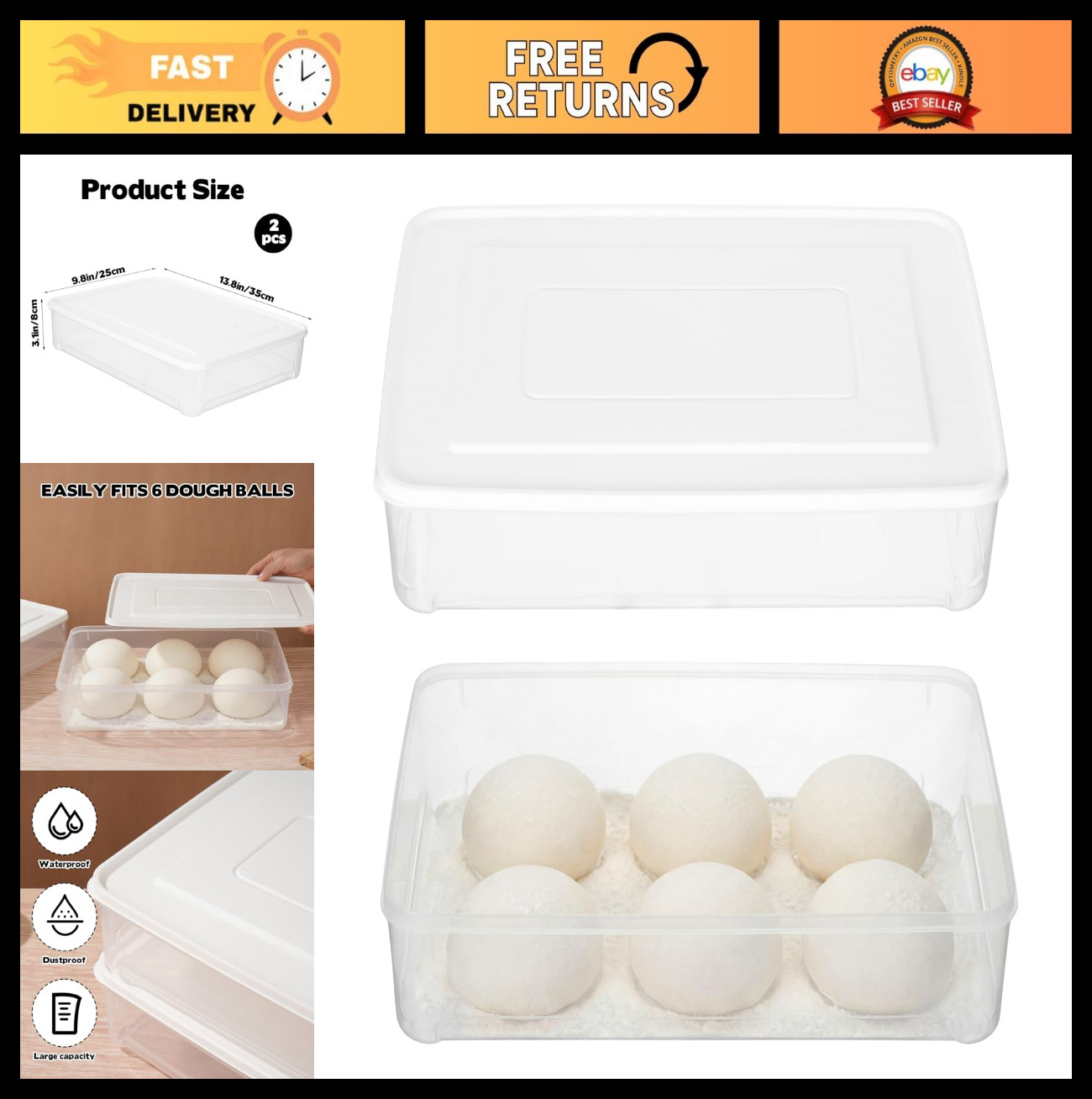
Batch organization is the standout reason to choose this clear plastic box. Its smooth polypropylene surface is intended to minimize sticking, and the format is suitable for most household refrigerators and microwaves. The sealed design keeps the setup focused on covered fermentation, while the generous tray dimensions support a grouped dough routine. The limitation is footprint: its listed 13.8 x 10 x 3.1-inch dimensions make it a tray-sized format rather than the most compact choice here. It also costs more than the silicone containers, so the additional outlay makes sense when the larger organized setup is useful.
2 Pack Acrylic Proofing Box, Clear Plastic Pizza Dough Tray, Bread Fermentation
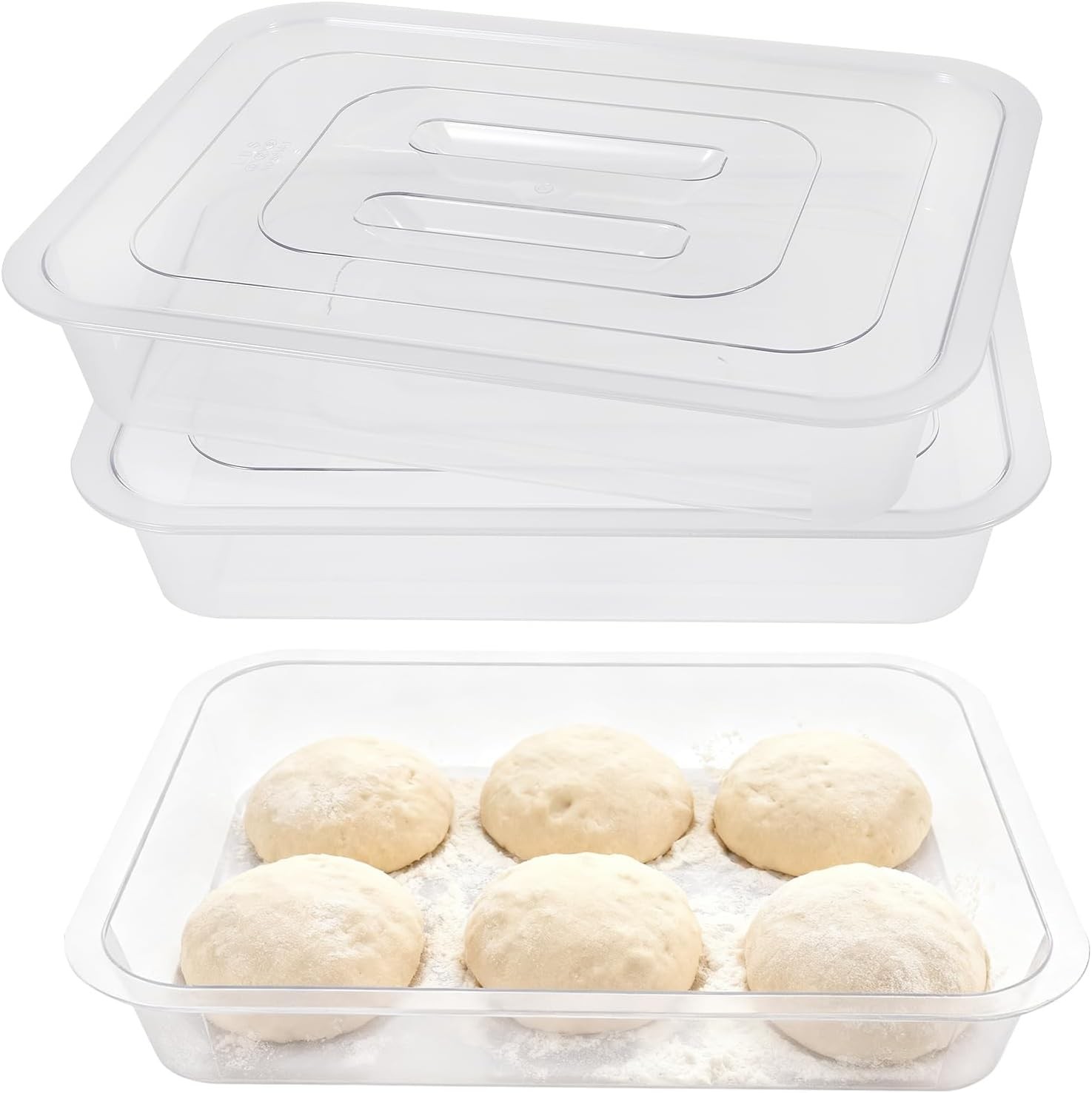
Humidity-focused dough work is the concrete reason to choose this acrylic box. Its locking lid is designed to retain over 85% internal humidity, and the fermentation-focused design addresses observation of gluten development and air bubbles. That combination suits a shopper who wants the cover design to play an active role in the proofing routine. The limitation is price: at $29.99, it is $9.18 above the silicone format. If humidity retention and a locking lid are not central to your process, the price difference makes this a less direct fit than a simpler container choice.
Stackable Silicone Artisan Pizza Dough Proofing Proving Containers with Lids-2/3
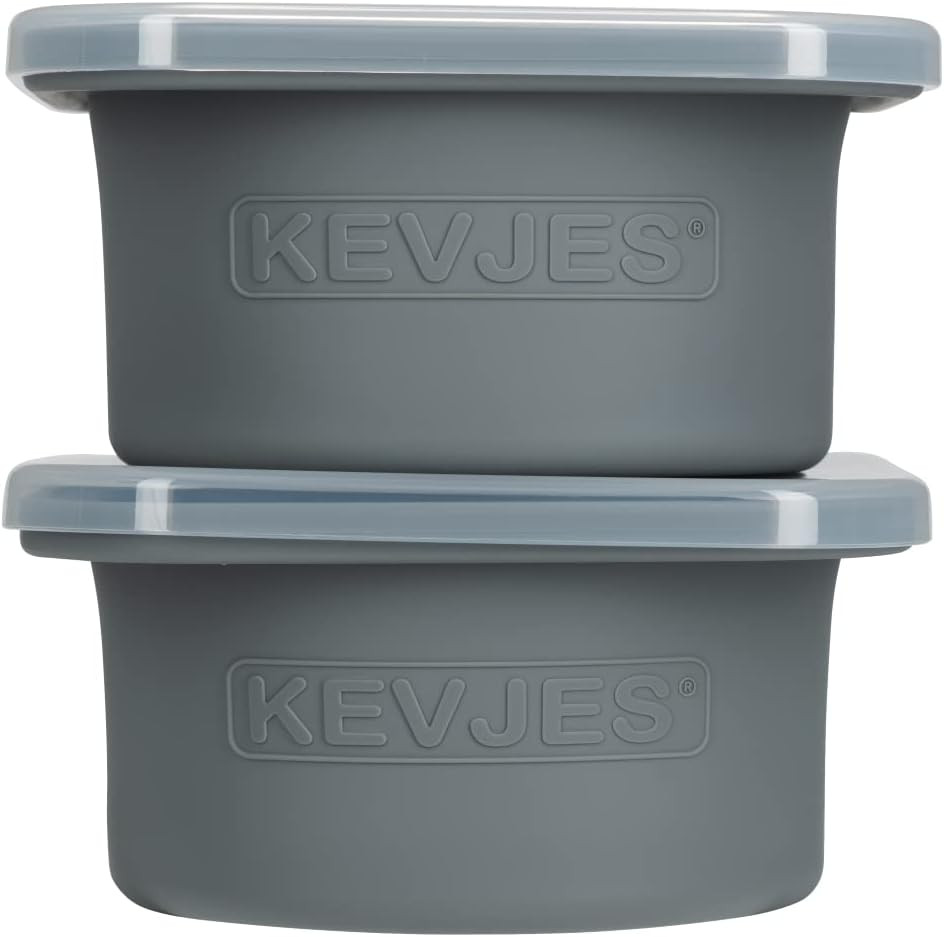
Cleanup-led storage is the strongest reason to choose these silicone containers. The 2-pack is listed as dishwasher safe and stackable, with airtight and leak-resistant features that suit a neatly organized kitchen routine. The limitation is capacity and footprint: the listed 500-milliliter volume and 5.3 x 5.3 x 2.6-inch dimensions describe a compact format rather than the grouped dough-ball capacity specified for the clear plastic box. Shoppers dividing a larger batch may therefore find the tray format more suitable. For smaller-format handling and straightforward washing, the silicone design is the most focused match.
Final recommendation by use case
- For a broad tray workflow: choose Pizza Dough Proofing Box with Lid - Dough Tray & Proofing Container for Lid. The Dough Tray wording is the clearest match for that setup.
- For several dough balls together: choose 2 Pack Pizza Dough Proofing Box - Clear Plastic Sealed Fermentation Container, S, which explicitly states a 4-6 dough-ball capacity.
- For humidity-focused observation: choose 2 Pack Acrylic Proofing Box, Clear Plastic Pizza Dough Tray, Bread Fermentation, whose locking-lid design is the defining reason to select it.
- For cleanup and stacking: choose Stackable Silicone Artisan Pizza Dough Proofing Proving Containers with Lids-2/3, with dishwasher-safe and stackable features.
The practical conclusion is simple: use the $31.84 spread as a tie-breaker after the format fits your batch and handling routine. A proofing box earns its place by matching how you divide, watch, cover, and store pizza dough.