
Photos from current listings. Actual item, color, and included accessories may vary.
Countertop Blender Buying Guide
Countertop blenders are stationary kitchen appliances built around a motor base, a jar, and a blade assembly, with the core trade-off being motor power and blade geometry versus jar durability and noise. Durable options use metal-drive couplings, hardened stainless blades, and at least 1.5 peak HP; compromises rely on plastic gear couplings, thin jars, and vague wattage claims. The decision rule: buy for sustained blade tip speed and a serviceable coupling, not for preset count or cup accessories.
Median $217.54 · New listings
Key takeaways
- Motor class determines ice and frozen performance: 1.5–2.5 peak HP (roughly 450–900W continuous) handles ice and frozen fruit; sub-1 HP units stall and wear plastic couplings.
- Jar material and capacity separate tiers: 48–68 oz BPA-free Tritan or glass jars with wide-mouth lids fit whole frozen chunks; narrow 20–34 oz personal jars suit single servings only.
- Blade and drive construction: hardened stainless 4–6 blade stacks on a metal-to-metal drive coupling outlast stamped blades and plastic gear couplings.
At a glance
- Category
- Blenders & Juicers
- Last updated
- Nov 27, 2026
Current offers
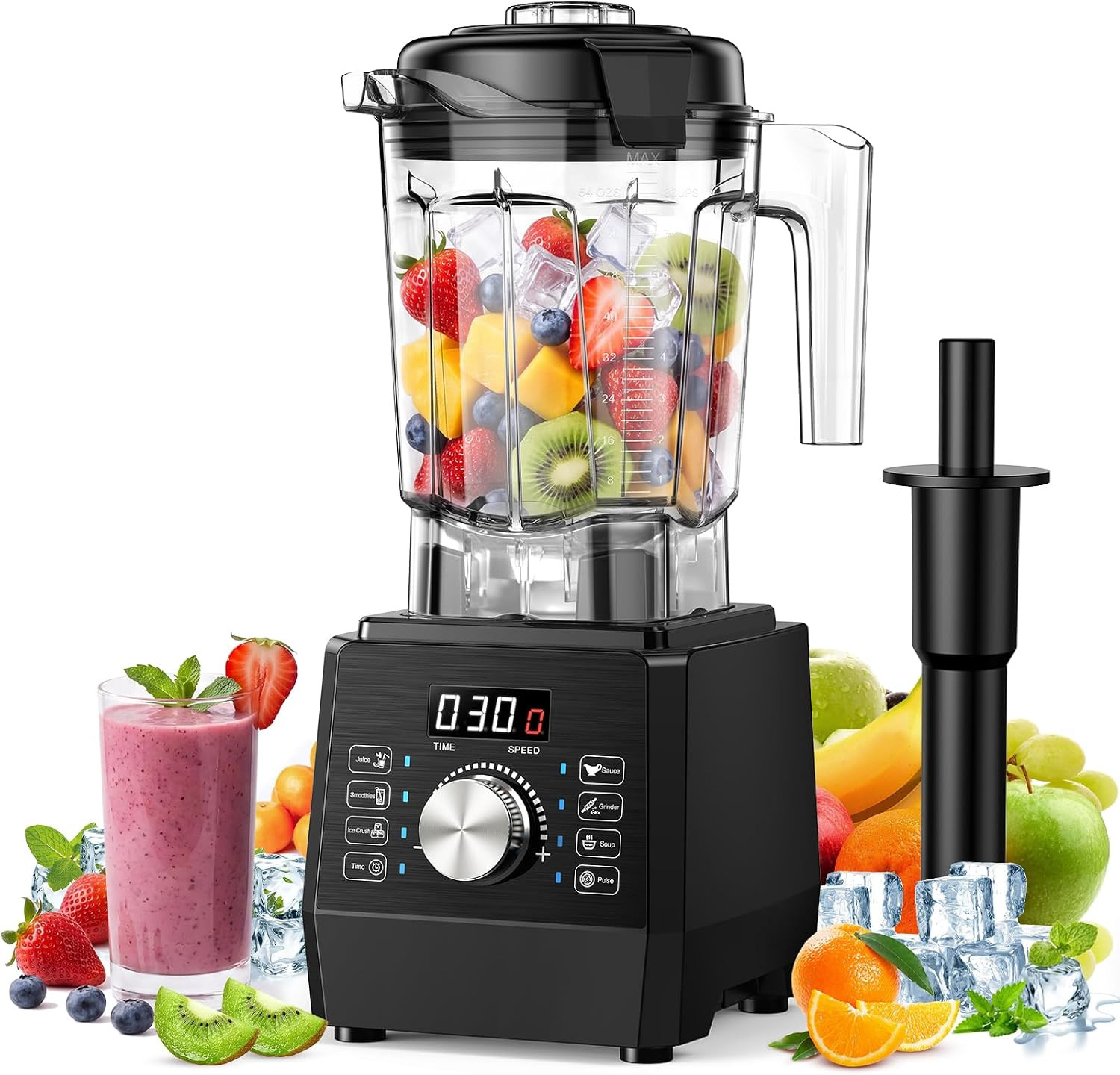 1800W Countertop Blenders for Kitchen, Blender for Smoothie with 70 Oz Bpa-Free$213.49New · Last checked Nov 26, 2026View on eBay
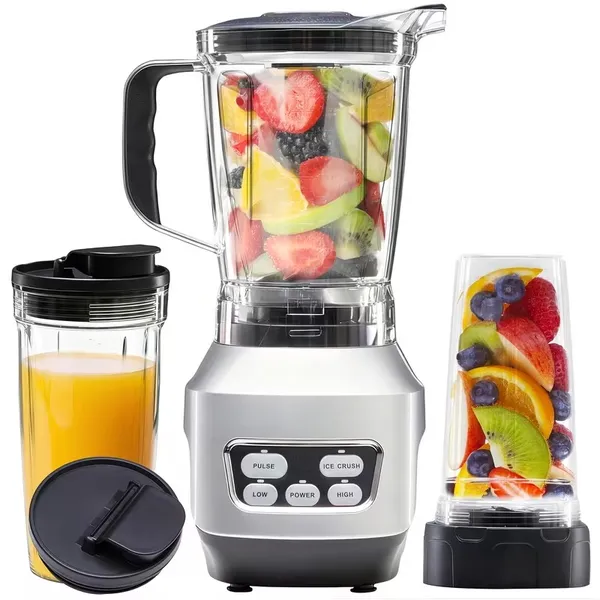 Moothie Blender, Countertop Blenders For Kitchen With 23 34 60oz BPA-Free Portable Cups, Professional Smoothie Maker Four Programs For Shakes, Sauces, Juice And Ice Crushing$104.99View on Mallflare
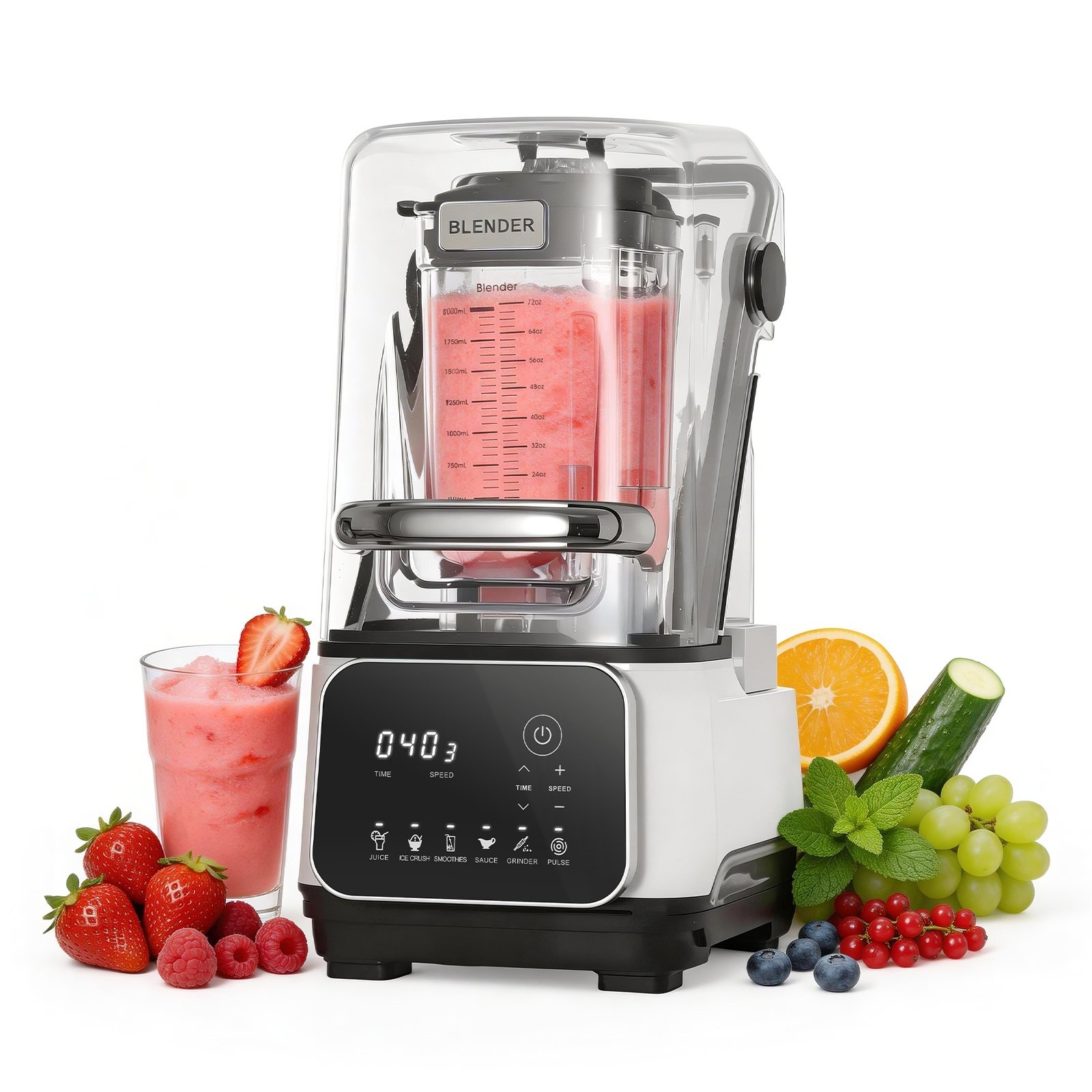 68 oz Professional Countertop Blender 2200W Self-Cleaning White$217.54New · Last checked Nov 26, 2026View on eBay
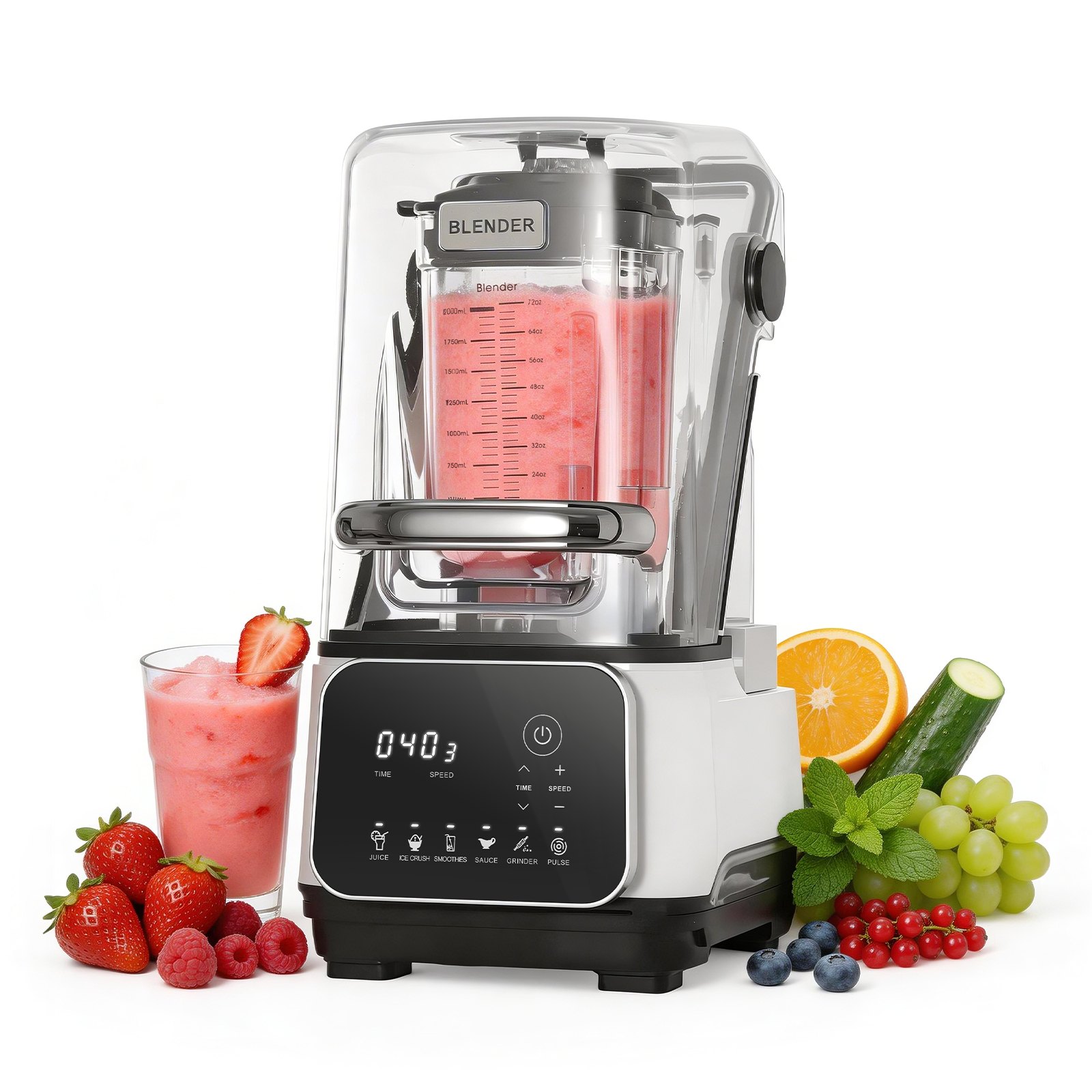 Blender, 68 Oz Professional Countertop Blenders With Shield, 2200W 26000RPM Kitchen Food Processor Combo, Self-Cleaning, Speed Adjustable, 6 Preset Menu For Smoothies, Ice Crushing, Puree, White$180.99View on Mallflare
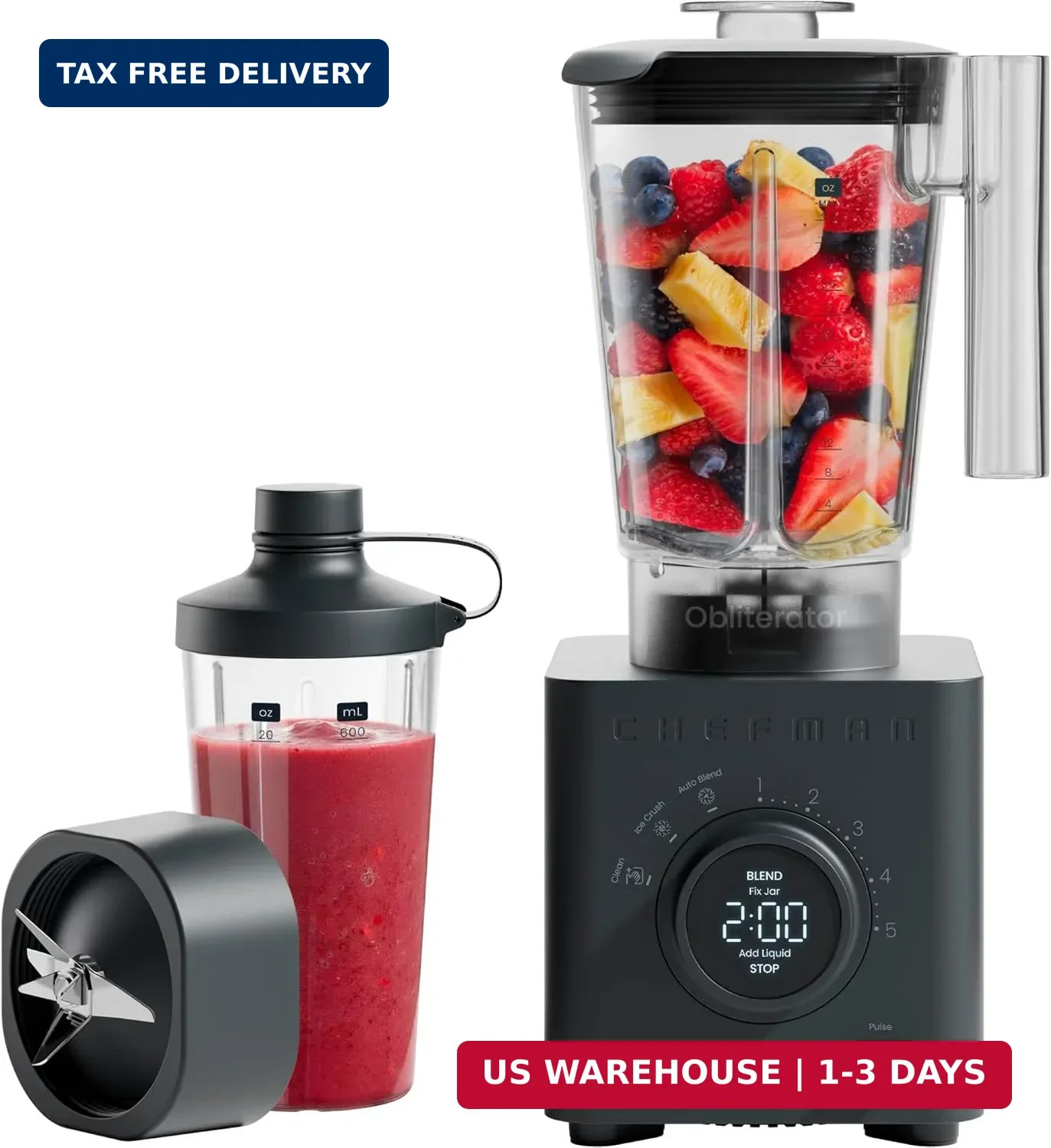 Chefman Obliterator 48 oz Countertop Blender for Smoothies, 1380W Motor to Crush$226.18New · Last checked Nov 26, 2026View on eBay
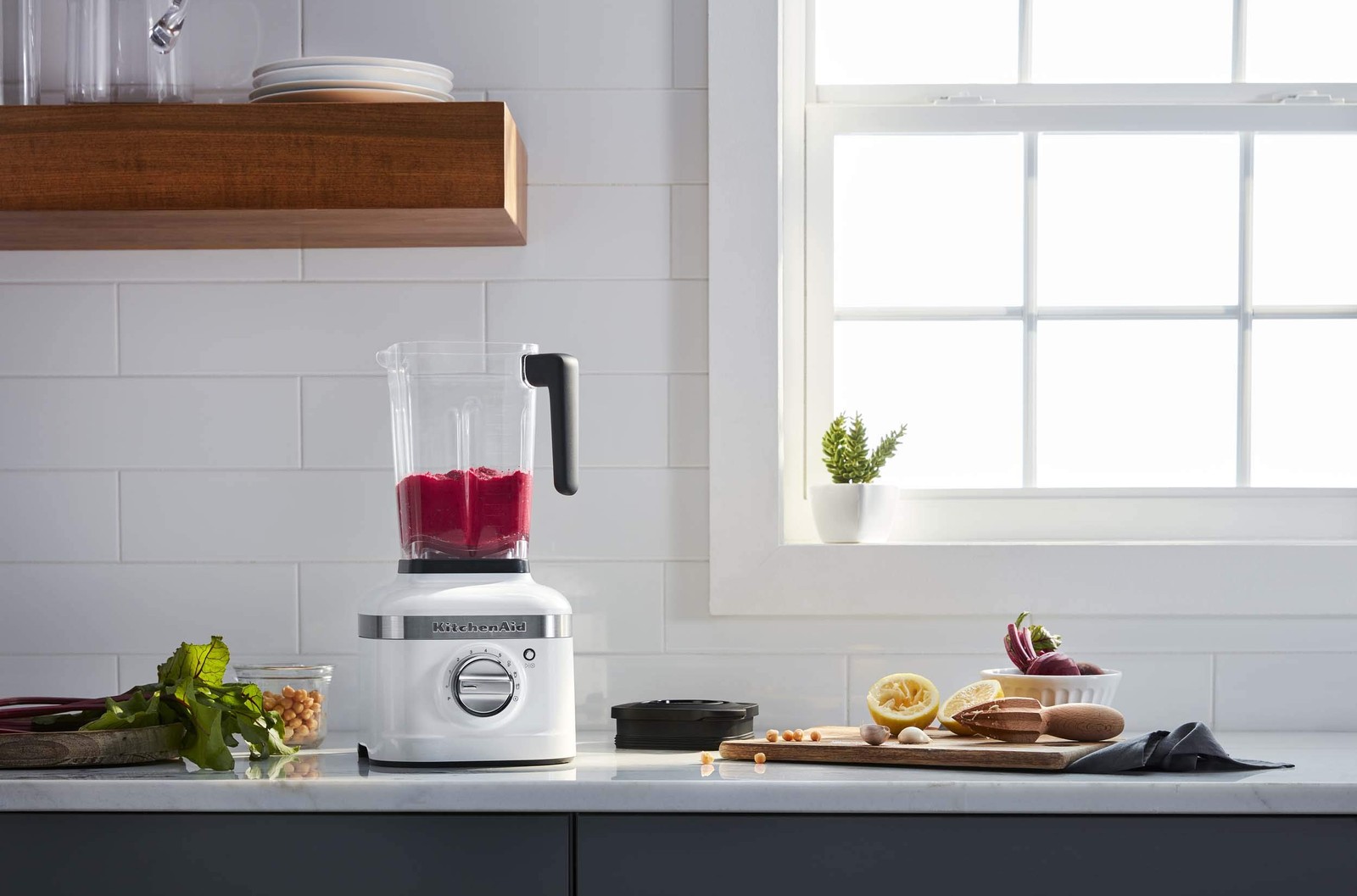 KitchenAid KSB4027WH K400 Countertop Blender, 56 Ounce, White$299.99New · Last checked Nov 16, 2026View on eBay
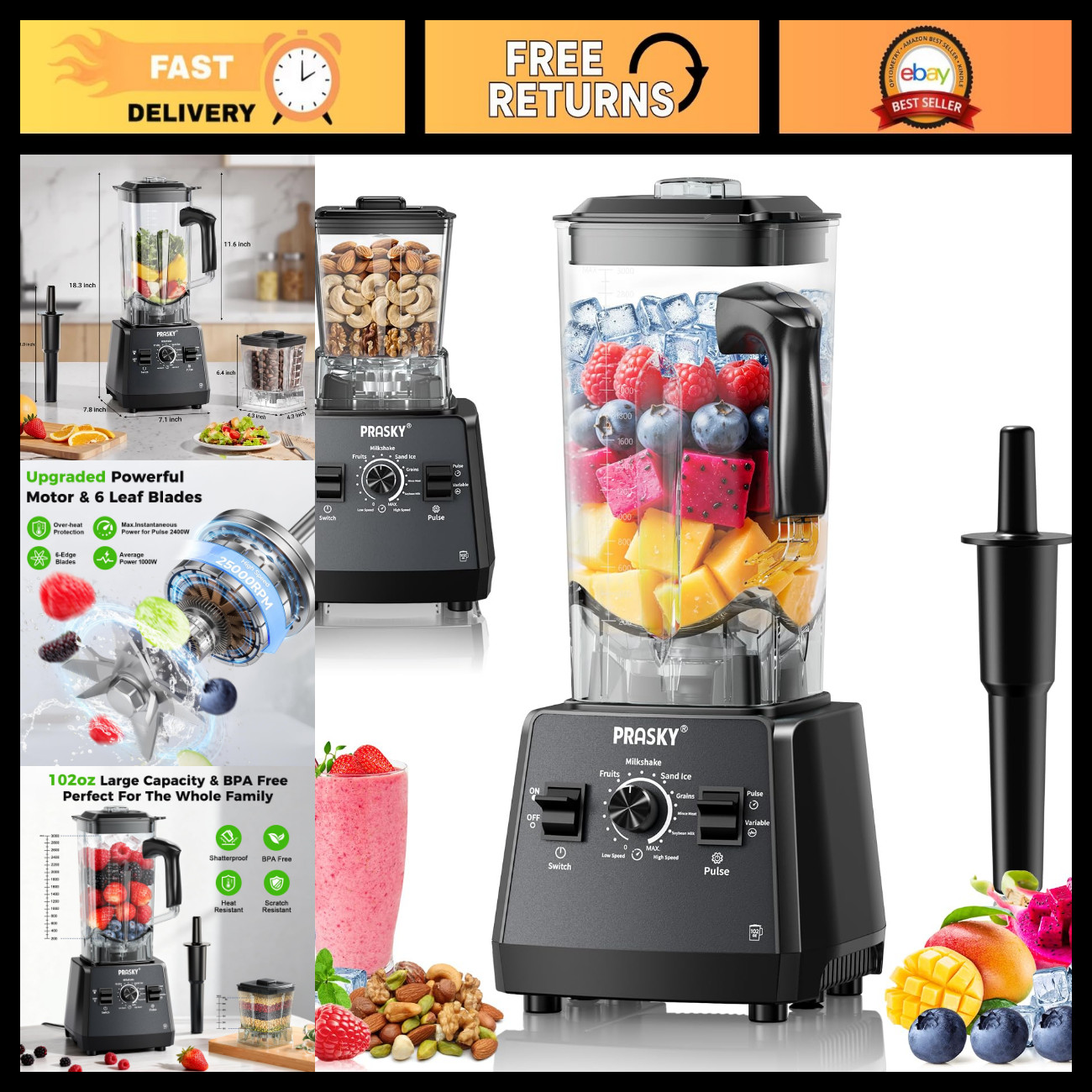 High-Power 2400W Countertop Blender, 101oz Large Capacity for Smoothies - Pack o$319.19New · Last checked Nov 26, 2026View on eBay
Highlights
- Motor class determines ice and frozen performance: 1.5–2.5 peak HP (roughly 450–900W continuous) handles ice and frozen fruit; sub-1 HP units stall and wear plastic couplings.
- Jar material and capacity separate tiers: 48–68 oz BPA-free Tritan or glass jars with wide-mouth lids fit whole frozen chunks; narrow 20–34 oz personal jars suit single servings only.
- Blade and drive construction: hardened stainless 4–6 blade stacks on a metal-to-metal drive coupling outlast stamped blades and plastic gear couplings.
- Control tiers differ functionally: stepless dial plus pulse gives manual control; preset programs (smoothie, ice crush, puree, self-clean) add convenience but not extra motor torque.
Best use cases
- Family smoothies and ice crushing: pick a 60–68 oz jar with 1.5 HP or higher and a metal drive coupling; skip 20 oz personal-cup bundles that cannot handle frozen loads.
- Single-serve protein shakes and sauces: a 23–34 oz personal jar on a compact base is sufficient; skip full-size 68 oz towers if counter depth is limited.
- Frequent hot soups or nut butters: choose a high-torque motor with a tamper and a vented lid; skip low-wattage units marketed only on preset menus.
- Crushing ice for cocktails: require a dedicated ice-crush preset or pulse with a 2 HP-class motor; skip plastic-jar budget models rated under 1 HP.
Buying tips
- Size the jar to the household: 48–56 oz suits two to three servings; 64–68 oz suits four or more; personal 20–34 oz cups are add-ons, not primary jars.
- Check the drive coupling: metal-to-metal or metal-to-plastic reinforced couplings survive daily use; all-plastic gear drives strip under frozen loads.
- Match wattage to use: 300–500W continuous for light blending, 700–900W continuous for daily ice and frozen fruit; ignore peak-wattage-only badges.
- Verify jar and blade replacement availability and dishwashable parts before buying; sealed non-serviceable bases become landfill when a coupling wears.
Specs
| Motor Class | 1.5–2.5 peak HP / 700–900W continuous |
|---|---|
| Jar Capacity | 48–68 oz full-size; 20–34 oz personal |
| Jar Material | BPA-free Tritan or glass |
| Drive Coupling | Metal-to-metal vs plastic gear |
Related searches
What to check before buying
- Measure counter depth and height clearance: full-size towers run roughly 16–18 in tall and need 7–8 in width; compact bases fit under standard upper cabinets.
- Confirm jar fits your cabinet and dishwasher: 68 oz jars are tall and may not fit under low cabinets or in compact dishwashers.
- Check electrical: 120V US plugs for North American models; 220–240V export versions need matching outlets and are not interchangeable.
- Verify the base footprint and cord length suit your outlet placement; heavy die-cast bases need a sturdy, level counter.
FAQ
Data sources: eBay / Amazon listings and product attribute feeds. Updated Nov 27, 2026.
Some links on this page are affiliate links. If you buy after clicking one, we may earn a commission at no extra cost to you. This does not change which products appear here or their order. Affiliate disclosure.