
Photos from current listings. Actual item, color, and included accessories may vary.
Juice Extractor Buying Guide
Juice extractors are countertop machines that separate juice from pulp using either high-speed centrifugal force or slow masticating pressure. The defining trade-off is extraction yield and nutrient retention versus speed and convenience: centrifugal models are fast and cheaper but aerate juice and struggle with leafy greens, while masticating models yield drier pulp and longer shelf life at higher cost and slower feed rates. The clear decision rule: buy centrifugal for high-volume hard produce and fast mornings, buy masticating for leafy greens, wheatgrass, and batch juicing.
Median $69.99
Key takeaways
- Centrifugal extractors spin a basket at 6,000-14,000 RPM; motor wattage (400W entry to 1000W+ high-torque) determines whether the basket maintains speed under dense produce like beets and carrots.
- Feed chute diameter is the single biggest convenience spec: 2.5-3 in chutes require produce pre-cutting, while 3.5 in+ wide chutes accept whole apples and cucumbers and cut prep time substantially.
- Pulp collector capacity (typically 34-54 oz) dictates how many servings you can juice before stopping; smaller 17 oz juice cups suit single servings, while 54 oz collectors support family batches.
At a glance
- Category
- Blenders & Juicers
- Last updated
- Nov 29, 2026
Current offers
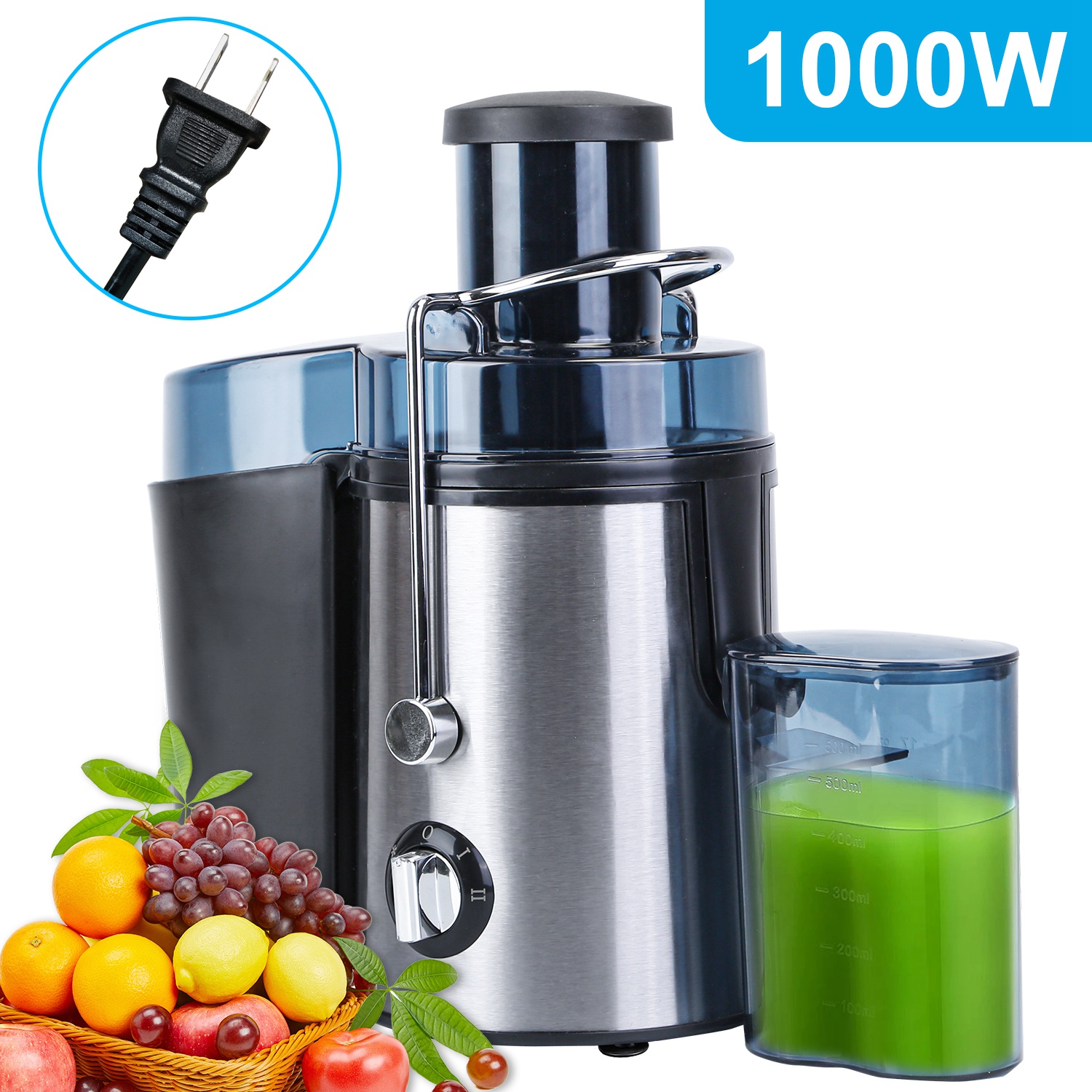 1Pc Centrifugal Juicer Juice Extractor With 2 Speeds 2.6in Wide Feed Chute 17Oz Cup 54Oz Pulp Collector Electric For Fruits Vegetables$67.99View on Mallflare
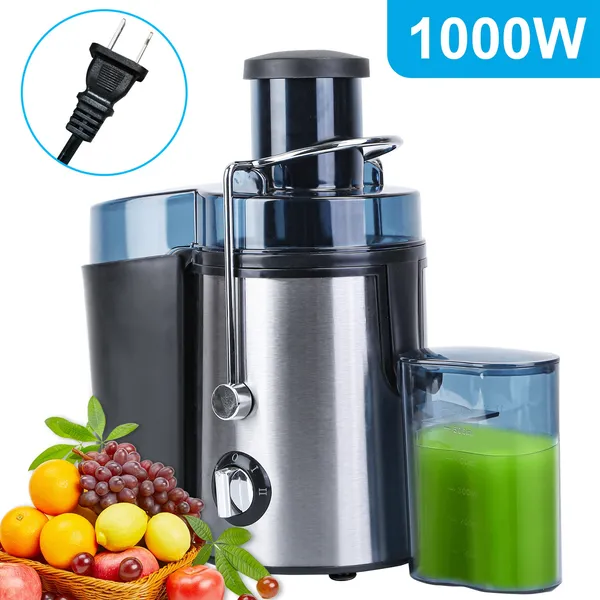 1000W Centrifugal Juicer Juice Extractor With 2 Speeds 3.6in Wide Feed Chute 17Oz Cup 54Oz Pulp Collector Electric For Fruits Vegetables$71.99View on Mallflare
Highlights
- Centrifugal extractors spin a basket at 6,000-14,000 RPM; motor wattage (400W entry to 1000W+ high-torque) determines whether the basket maintains speed under dense produce like beets and carrots.
- Feed chute diameter is the single biggest convenience spec: 2.5-3 in chutes require produce pre-cutting, while 3.5 in+ wide chutes accept whole apples and cucumbers and cut prep time substantially.
- Pulp collector capacity (typically 34-54 oz) dictates how many servings you can juice before stopping; smaller 17 oz juice cups suit single servings, while 54 oz collectors support family batches.
- Masticating (cold-press) augers run at 40-100 RPM, producing drier pulp and less oxidation; centrifugal machines extract faster but leave wetter pulp and introduce more air, shortening fridge life to about 24 hours versus 48-72 hours.
Best use cases
- Best fit for fast daily single-serve juicing of apples, carrots, and citrus: a 600-1000W centrifugal model with a 3 in+ feed chute and 17 oz juice cup; skip slow masticating units if speed is the priority.
- Best fit for leafy greens, wheatgrass, and nutrient-dense cold-press juice: a horizontal or vertical masticating auger at 40-100 RPM; skip low-wattage centrifugal models, which pulverize greens poorly and oxidize quickly.
- Best fit for family batch juicing (4+ servings): a centrifugal model with a 54 oz pulp collector and 1000W motor, or a masticating model with a continuous pulp ejection system; skip compact 17 oz single-serve units.
- Wrong fit: using a centrifugal extractor for soft berries or bananas, which clog the basket and produce foamy, low-yield juice; use a masticating model or a blender instead.
Buying tips
- Match motor wattage to produce density: 400-600W handles soft fruits and citrus, 800-1000W+ is required for whole carrots, beets, and fibrous greens without stalling.
- Choose a feed chute of at least 3 in (ideally 3.5 in+) to accept whole apples and cucumbers; 2.5-2.6 in chutes force pre-cutting and double prep time.
- For cold-press quality, select a masticating auger rated 40-100 RPM; higher RPM generates heat that degrades enzymes and shortens juice shelf life.
- Check pulp collector and juice cup capacities against your household: 17 oz cups suit one person, 34-54 oz collectors suit 2-4 servings per batch without mid-run emptying.
Specs
| Extraction Type | Centrifugal vs Masticating |
|---|---|
| Motor Power | 400W entry to 1000W+ high-torque |
| Feed Chute | 2.5-3.6 in (3.5 in+ whole produce) |
| Pulp Capacity | 17 oz cup / 34-54 oz collector |
Related searches
What to check before buying
- Measure your countertop clearance and cabinet height: centrifugal units are tall (often 15-18 in) and need overhead room to load the feed chute.
- Confirm your electrical standard: most extractors draw 6-10 A at 120V; ensure your kitchen circuit supports the motor wattage without tripping shared outlets.
- Verify dishwasher-safe parts: removable baskets, augers, and pulp collectors vary; hand-wash-only components add daily cleanup time.
- Check the feed chute opening against your typical produce size (whole apples ~3 in, cucumbers ~2 in) to avoid constant pre-cutting.
FAQ
Data sources: eBay / Amazon listings and product attribute feeds. Updated Nov 29, 2026.
Some links on this page are affiliate links. If you buy after clicking one, we may earn a commission at no extra cost to you. This does not change which products appear here or their order. Affiliate disclosure.