
Photos from current listings. Actual item, color, and included accessories may vary.
Portable Juice Extractor Buying Guide
A portable juice extractor is a compact, often cordless or USB-rechargeable appliance that separates juice from pulp using either a slow masticating auger or a high-speed centrifugal basket. The core trade-off is between true extraction efficiency (slow auger, low oxidation, higher yield) and grab-and-go convenience (centrifugal, faster but frothier and less shelf-stable). The clear decision rule: choose a slow-masticating portable extractor if you juice leafy greens, wheatgrass, or batch-prep for later; choose a centrifugal portable model only if you prioritize speed and drink immediately.
Median $69.99
Key takeaways
- Slow masticating portable extractors run at 40–80 RPM, preserving enzymes and yielding 15–25% more juice from leafy greens than centrifugal units spinning at 12,000+ RPM.
- Cordless models use 12–24V DC brushless motors powered by 2000–4000 mAh lithium-ion batteries, delivering 15–30 minutes of continuous runtime per charge.
- BPA-free Tritan or food-grade polycarbonate housings and stainless-steel 304 augers/screens are the durability baseline; ABS plastic baskets crack under repeated citrus acid exposure.
At a glance
- Category
- Blenders & Juicers
- Last updated
- Nov 29, 2026
Current offers
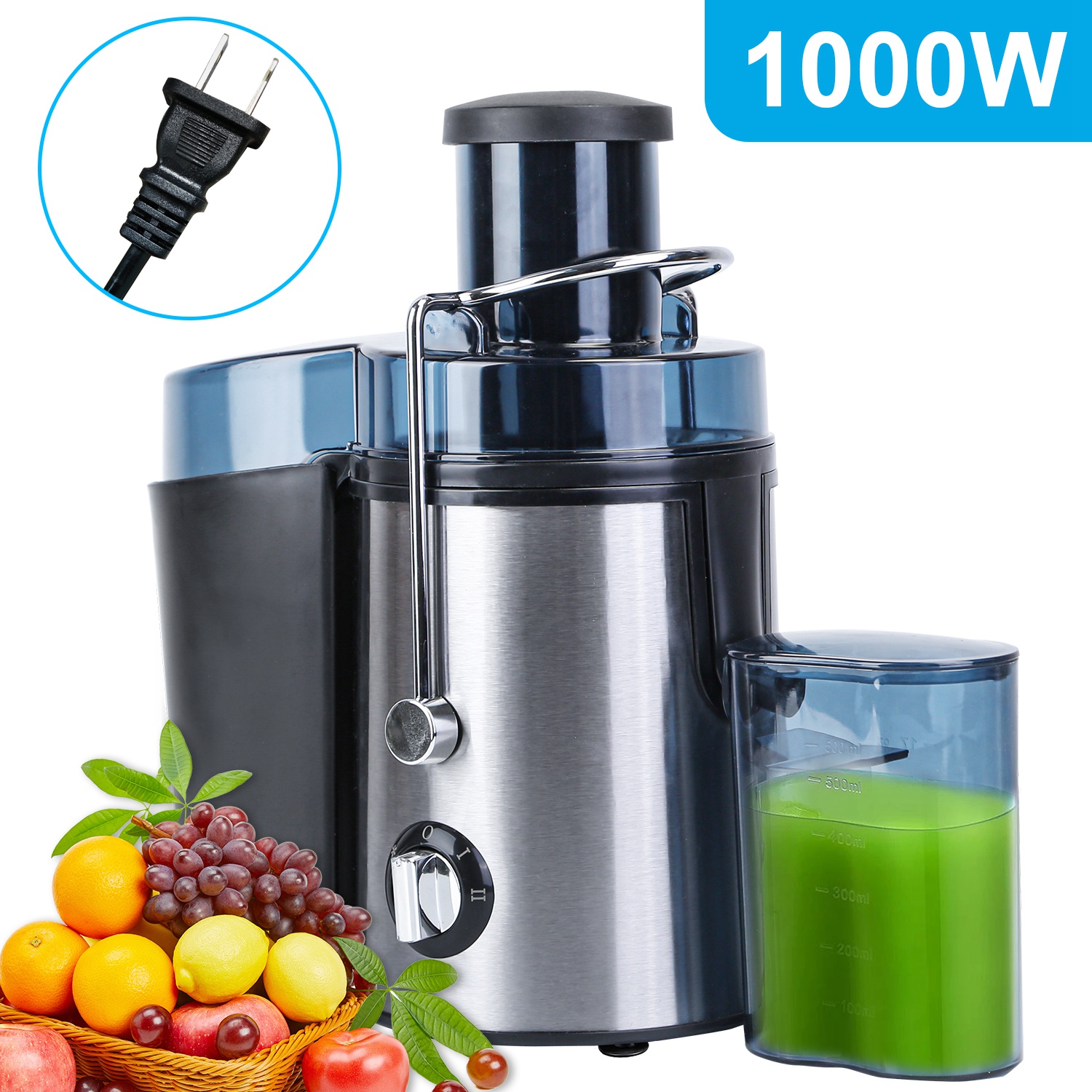 1Pc Centrifugal Juicer Juice Extractor With 2 Speeds 2.6in Wide Feed Chute 17Oz Cup 54Oz Pulp Collector Electric For Fruits Vegetables$67.99View on Mallflare
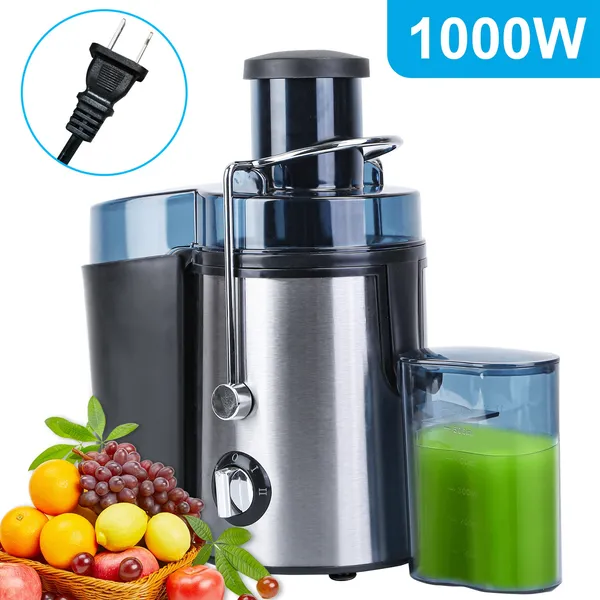 1000W Centrifugal Juicer Juice Extractor With 2 Speeds 3.6in Wide Feed Chute 17Oz Cup 54Oz Pulp Collector Electric For Fruits Vegetables$71.99View on Mallflare
Highlights
- Slow masticating portable extractors run at 40–80 RPM, preserving enzymes and yielding 15–25% more juice from leafy greens than centrifugal units spinning at 12,000+ RPM.
- Cordless models use 12–24V DC brushless motors powered by 2000–4000 mAh lithium-ion batteries, delivering 15–30 minutes of continuous runtime per charge.
- BPA-free Tritan or food-grade polycarbonate housings and stainless-steel 304 augers/screens are the durability baseline; ABS plastic baskets crack under repeated citrus acid exposure.
- Cold-press (masticating) portables produce pulp dry enough to compost or re-press, while centrifugal portables leave wet pulp that still contains 20–30% residual juice.
Best use cases
- Best fit: remote workers or travelers juicing greens and soft fruits daily — pick a slow-masticating cordless model with a 3000+ mAh battery and reverse function.
- Best fit: gym-goers making post-workout citrus or berry juice — pick a centrifugal portable with a wide 3-inch feed chute and 500+ mL pulp container for speed.
- Wrong fit: batch-juicing 2+ liters per session or hard root vegetables (beets, carrots) — portable motors overheat; choose a full-size 1000W+ countertop masticating juicer instead.
- Wrong fit: juicing wheatgrass exclusively — most portable centrifugal units shred rather than press grass; select a dedicated slow auger at ≤80 RPM or a manual lever press.
Buying tips
- Match motor type to produce: auger (masticating) for leafy greens, wheatgrass, and nuts; centrifugal for apples, carrots, and citrus where speed matters more than yield.
- Check battery capacity in mAh and motor wattage: 2000–3000 mAh yields roughly 15–20 cups per charge; below 1500 mAh is a single-serving novelty, not a daily driver.
- Verify feed chute width: under 2 inches requires pre-cutting most produce; 3 inches or more accepts whole small apples and citrus halves without knife work.
- Confirm BPA-free certification on all juice-contact parts and dishwasher-safe ratings on the auger, screen, and pulp cup — hand-wash-only parts erode daily-use compliance.
Specs
| Extraction Type | Slow masticating auger vs centrifugal |
|---|---|
| Motor Speed | 40–80 RPM auger / 12,000+ RPM centrifugal |
| Power Source | Cordless Li-ion 1500–4000 mAh / AC adapter |
| Feed Chute Width | 2 in (50 mm) to 3+ in (76+ mm) |
Related searches
What to check before buying
- Measure your counter or travel bag clearance: most portable extractors are 8–14 inches tall and 4–7 inches wide; confirm the assembled height fits under cabinets or in a backpack sleeve.
- Check your power standard: USB-C PD models charge from any 5V/9V/12V source; AC-adapter models need the correct regional plug (Type A/B for US, Type C/F for EU) and 100–240V input.
- Confirm juice cup and pulp container volumes: 300–500 mL juice cups suit single servings; below 250 mL requires mid-session emptying for a 12-oz glass.
- Verify replacement-part availability for the screen/auger and battery: sealed non-replaceable batteries limit usable life to roughly 300–500 charge cycles.
FAQ
Data sources: eBay / Amazon listings and product attribute feeds. Updated Nov 29, 2026.
Some links on this page are affiliate links. If you buy after clicking one, we may earn a commission at no extra cost to you. This does not change which products appear here or their order. Affiliate disclosure.