
Photos from current listings. Actual item, color, and included accessories may vary.
Portable USB Blender Buying Guide
A portable USB blender is a compact, battery-powered blending cup charged via USB-C or micro-USB, designed for single-serve smoothies and shakes away from mains power. The core trade-off is motor torque and blade geometry versus battery capacity and cup sealing: weak motors stall on frozen fruit or ice, while undersized cells and poor lid gaskets cause leaks and short runtime. Choose a model rated for frozen ingredients with a ≥4000 mAh cell, USB-C charging, and a leak-tested locking lid; skip low-torque 2-blade units marketed only for soft fruit.
Median $39.99 · New listings
Key takeaways
- Motor type drives real capability: brushless DC motors deliver higher torque and longer life than brushed motors, letting 6-blade units crush ice and frozen fruit without stalling.
- Battery capacity sets usable servings: 4000–6000 mAh (≈14–22 Wh) supports 15–25 blending cycles per charge; sub-2000 mAh units manage only 3–5 soft-fruit cycles.
- Blade count and geometry matter more than wattage claims: 6-blade 304 stainless assemblies create a vortex that pulls solids down; 2-blade flat designs leave chunks and require shaking.
At a glance
- Category
- Blenders & Juicers
- Last updated
- Nov 27, 2026
Current offers
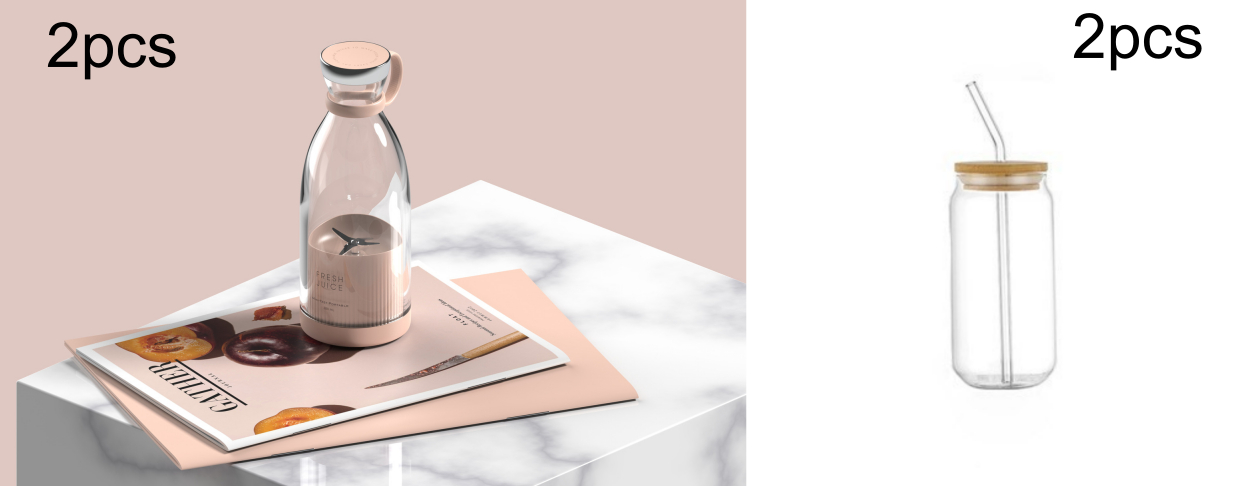 350ML Electric Juicer Blender Mixer USB Rechargeable Machine Household Portable$206.31New · Last checked Nov 26, 2026View on eBay
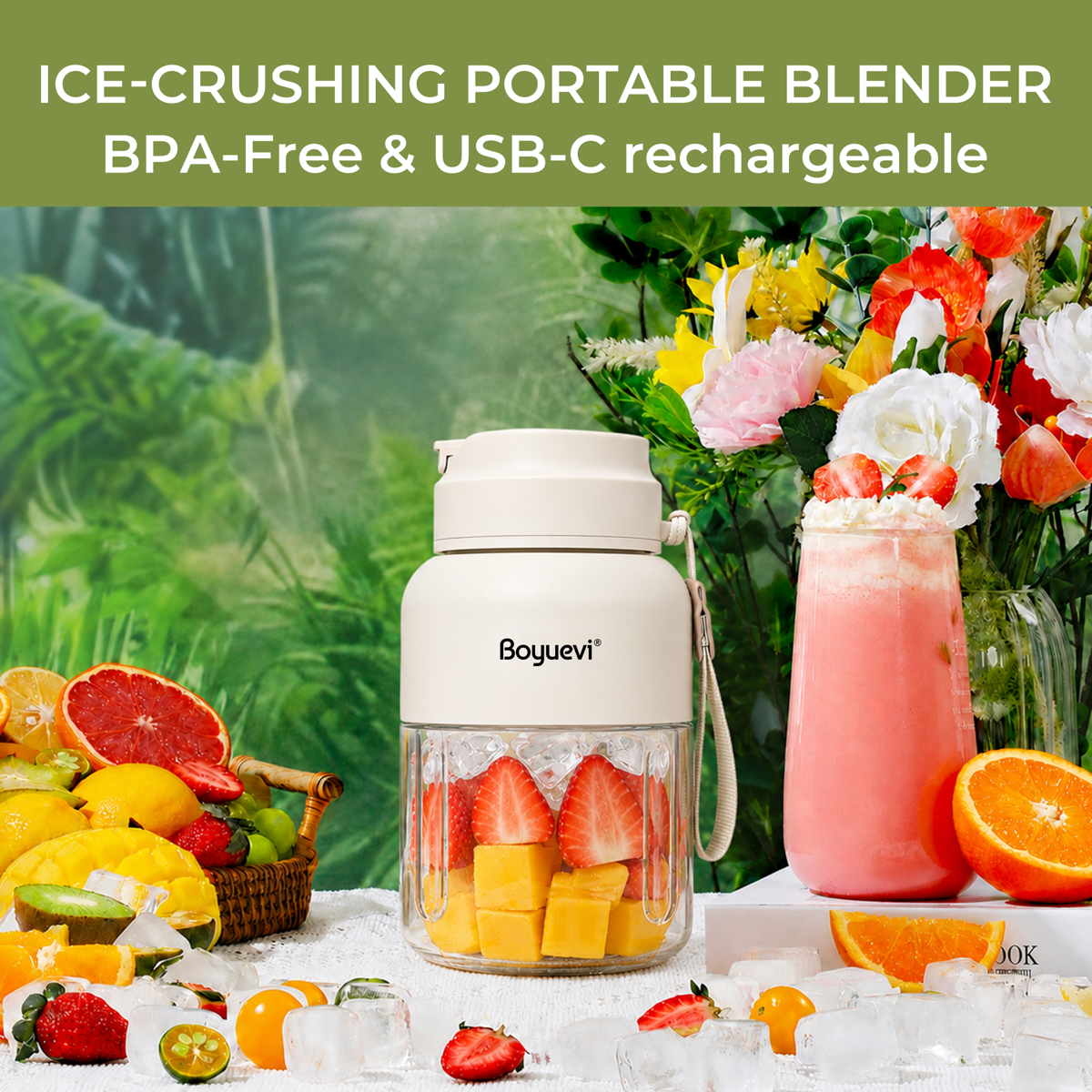 Cordless Portable Juicer - USB RechargeablePortable Blender with USB Port, 1350ml, Reusable, Ice-Crushing, BPA-Free for ProteinShakes, Frozen Drinks, Gym Use$38.99View on Mallflare
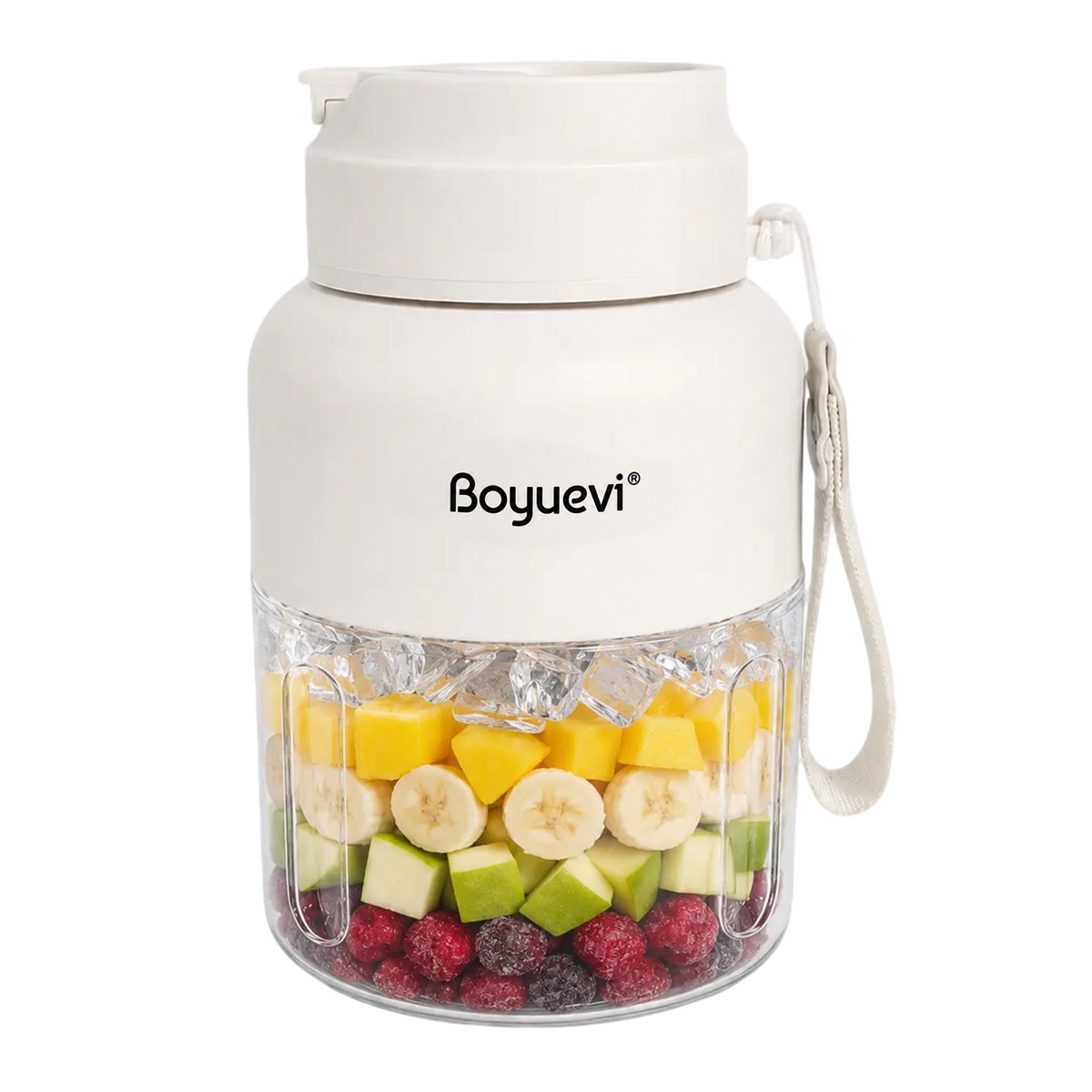 Cordless Portable Juicer - USB RechargeablePortable Blender with USB Port, 950ml+550ml, Reusable, Ice-Crushing, BPA-Free for ProteinShakes, Frozen Drinks, Gym Use$39.99View on Mallflare
Highlights
- Motor type drives real capability: brushless DC motors deliver higher torque and longer life than brushed motors, letting 6-blade units crush ice and frozen fruit without stalling.
- Battery capacity sets usable servings: 4000–6000 mAh (≈14–22 Wh) supports 15–25 blending cycles per charge; sub-2000 mAh units manage only 3–5 soft-fruit cycles.
- Blade count and geometry matter more than wattage claims: 6-blade 304 stainless assemblies create a vortex that pulls solids down; 2-blade flat designs leave chunks and require shaking.
- Charging standard defines convenience: USB-C PD input (5V/2A or higher) recharges in 2–3 hours; micro-USB units take 4–6 hours and use fragile connectors.
Best use cases
- Best for gym-goers and commuters blending protein shakes and soft fruit: pick a 4000–6000 mAh USB-C model with a 6-blade 304 stainless assembly and a locking lid; skip 2-blade 17500-cell units that stall on frozen banana.
- Best for travel and hotel rooms: choose a unit with a sealed cup that doubles as the drinking vessel, USB-C charging from a laptop or power bank, and a rated 20+ cycles per charge; avoid models requiring a dedicated wall adapter.
- Wrong fit for daily ice crushing or large-family batches: portable units top out at 12–16 oz and cannot match countertop 1000W blenders; step up to a corded personal blender or full-size jar for frozen cubes and leafy greens.
- Wrong fit for hot liquids or dishwasher cleaning: battery-powered bases are not sealed for hot expansion and most cups are hand-wash only; choose a corded blender with a tempered glass or Tritan jar rated for hot soups.
Buying tips
- Match capacity to use: 12–16 oz (350–450 ml) suits single servings; below 10 oz limits ice and frozen fruit; above 20 oz becomes heavy and strains the motor.
- Require a minimum 4000 mAh (≈14 Wh) battery and USB-C PD input; this combination delivers 15–25 cycles per charge and 2–3 hour recharge from any 5V/2A source.
- Check blade spec: 6 blades of 304 stainless steel in a 3D arrangement handle frozen fruit and small ice cubes; 2–4 flat blades are for soft fruit only and will stall on ice.
- Verify lid sealing: a silicone gasket plus twist-lock or flip-lock mechanism prevents leaks in bags; press-fit lids without gaskets are the top cause of returns.
Specs
| Motor Type | Brushless DC vs brushed |
|---|---|
| Battery Capacity | 2000–6000 mAh (7–22 Wh) |
| Charging Port | USB-C PD vs micro-USB |
| Blade Assembly | 6-blade 304 SS vs 2-blade flat |
Related searches
What to check before buying
- Measure your cup holder and bag pocket: most portable blenders are 3–4 inches in diameter and 9–11 inches tall; confirm the assembled height fits before buying.
- Confirm your power source: USB-C PD chargers and power banks with 5V/2A output are required; older 5V/1A ports will not recharge the unit or will take twice as long.
- Check cup material and cleaning: Tritan or BPA-free copolyester cups are impact-resistant and hand-wash only; glass cups are heavier and not travel-safe.
- Verify frozen-ingredient rating: only buy units explicitly rated for ice or frozen fruit; soft-fruit-only models will burn out the motor within weeks if used on frozen solids.
FAQ
Data sources: eBay / Amazon listings and product attribute feeds. Updated Nov 27, 2026.
Some links on this page are affiliate links. If you buy after clicking one, we may earn a commission at no extra cost to you. This does not change which products appear here or their order. Affiliate disclosure.