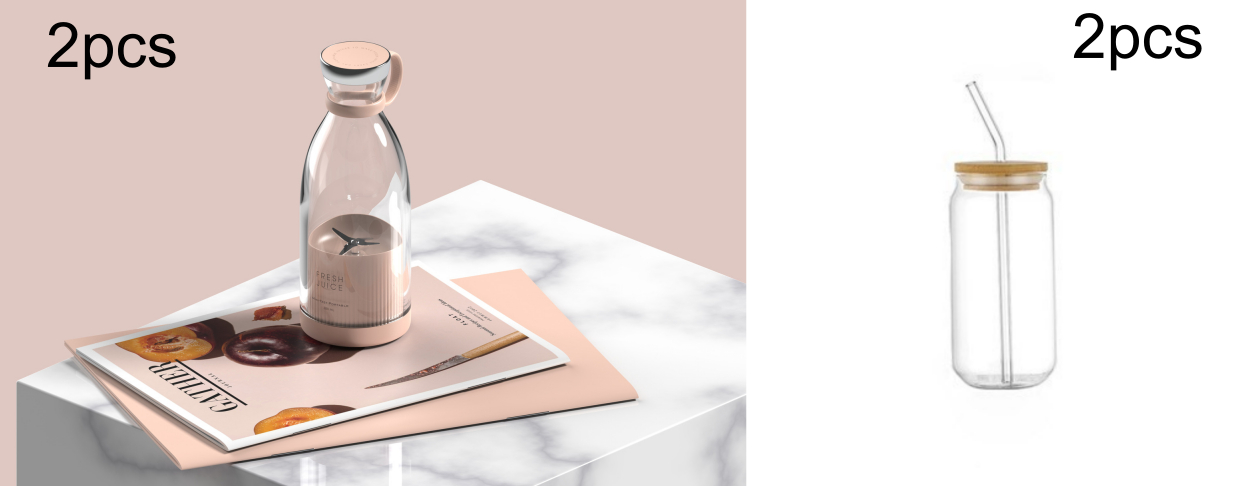

Photos from current listings. Actual item, color, and included accessories may vary.
Rechargeable Juicer Buying Guide
Rechargeable juicers are cordless, battery-powered machines that extract juice from fruits and vegetables for portability, small kitchens, or off-grid use. The core trade-off is between battery capacity/motor torque and portability: higher-capacity cells and brushless motors handle fibrous produce, while smaller units are lighter but stall on carrots or kale. The decision rule is simple: buy a model with a removable, standard-format lithium cell (e.g., 18650 or 21700) and a rated extraction force above 50 N; fixed-cell, low-torque units are disposable compromises.
Key takeaways
- Battery architecture determines lifespan: user-replaceable 18650 or 21700 lithium cells (often 2-4 cells in series) deliver 12-24 V and can be swapped when depleted; sealed proprietary packs brick the juicer when they age.
- Motor type separates performance tiers: brushless DC motors produce higher torque per watt and last 2-3× longer than brushed motors, which wear out carbon brushes and lose power on fibrous produce.
- Extraction mechanism matters more than wattage claims: slow cold-press (masticating) augers preserve nutrients and handle leafy greens, while high-speed centrifugal blades are faster but aerate juice and struggle with wheatgrass.
At a glance
- Category
- Blenders & Juicers
- Last updated
- Nov 29, 2026
Current offers
Highlights
- Battery architecture determines lifespan: user-replaceable 18650 or 21700 lithium cells (often 2-4 cells in series) deliver 12-24 V and can be swapped when depleted; sealed proprietary packs brick the juicer when they age.
- Motor type separates performance tiers: brushless DC motors produce higher torque per watt and last 2-3× longer than brushed motors, which wear out carbon brushes and lose power on fibrous produce.
- Extraction mechanism matters more than wattage claims: slow cold-press (masticating) augers preserve nutrients and handle leafy greens, while high-speed centrifugal blades are faster but aerate juice and struggle with wheatgrass.
- USB-C PD charging (at least 15 V/3 A) is the modern standard for fast recharge; micro-USB ports indicate older or budget designs and charge 3-5× slower.
Best use cases
- Best fit: Buy a 2-4 cell (12-24 V) masticating rechargeable juicer with a removable 18650 pack and USB-C PD for daily citrus, apple, and leafy-green juicing in small kitchens or RVs. Skip 1-cell centrifugal units under 12 V.
- Best fit: For travel and camping, choose a compact single-serve centrifugal model under 1.5 lb with a sealed 18650 cell and 500 mL+ pulp container; skip heavy multi-cell cold-press units that add bulk.
- Best fit: If you juice fibrous produce (carrots, beets, kale) regularly, pick a low-speed (under 100 RPM) masticating auger with at least 50 N torque and a 24 V pack; skip high-RPM centrifugal rechargeables that stall and oxidize juice.
- Wrong fit: Avoid fixed-cell, micro-USB juicers for household daily use—the battery degrades in 12-18 months and cannot be replaced, making the whole unit disposable.
Buying tips
- Check cell format and count: 4× 18650 cells in series (14.4 V nominal) or 2× 21700 (7.2 V) are common; more cells and higher voltage yield more torque and runtime. Prefer user-replaceable packs.
- Require USB-C Power Delivery (PD 3.0) input at 15 V or higher; micro-USB or 5 V-only charging adds hours to recharge and signals an older design.
- Match extraction type to produce: centrifugal (high RPM, fast, cheaper) for soft fruits and citrus; masticating (low RPM, slow, pricier) for greens, nuts, and fibrous roots.
- Verify food-contact plastic is BPA-free Tritan or PP, and that the auger/filter is stainless steel (304 or 316) rather than coated aluminum, which pits and leaches.
Specs
| Motor Type | Brushless DC vs Brushed DC |
|---|---|
| Battery Format | 18650 / 21700 removable vs sealed |
| Extraction Type | Masticating (slow) vs Centrifugal |
| Charging Standard | USB-C PD (15V+) vs Micro-USB |
Related searches
What to check before buying
- Measure your counter or camping space: compact units are typically 4-6 in wide and 12-16 in tall; confirm clearance for the feed chute and pulp cup.
- Confirm your power source: rechargeable juicers charge via USB-C; ensure you have a PD wall adapter (at least 30 W) and, for off-grid use, a compatible power bank.
- Check the feed chute diameter against your produce: a 3 in (76 mm) chute accepts whole apples and large carrots; smaller chutes require pre-cutting, adding prep time.
- Verify the pulp container capacity (typically 500-1000 mL) matches your batch size; small cups require frequent emptying during large juicing sessions.
FAQ
Data sources: eBay / Amazon listings and product attribute feeds. Updated Nov 29, 2026.
Some links on this page are affiliate links. If you buy after clicking one, we may earn a commission at no extra cost to you. This does not change which products appear here or their order. Affiliate disclosure.