
Photos from current listings. Actual item, color, and included accessories may vary.
Coffee Machine Cleaner Buying Guide
Coffee machine cleaners fall into two functional groups: descaling agents that dissolve mineral scale and detergent cleaners that remove coffee oils and residue. The core trade-off is chemistry versus machine compatibility—strong acids clean fast but attack aluminum and seals, while milder formulations protect components but need longer dwell times. The decision rule: match the cleaner chemistry to your boiler material (stainless steel vs aluminum) and use effervescent tablets only for light daily residue, not hard scale.
Median $299.00 · New listings
Key takeaways
- Descaling cleaners rely on citric, lactic, or sulfamic acid to dissolve calcium carbonate; citric acid is mildest for aluminum, sulfamic is fastest but requires thorough rinsing.
- Detergent cleaners use alkaline surfactants and sodium percarbonate to lift coffee oils; effervescent tablets are simply compacted percarbonate plus acid for fizzing action in water.
- Backflush detergents (e.g., Cafiza-type) are formulated for espresso group heads and portafilters; using them in drip machines leaves excessive residue in the water path.
At a glance
- Category
- Coffee Cleaning & Accessories
- Last updated
- Nov 27, 2026
Current offers
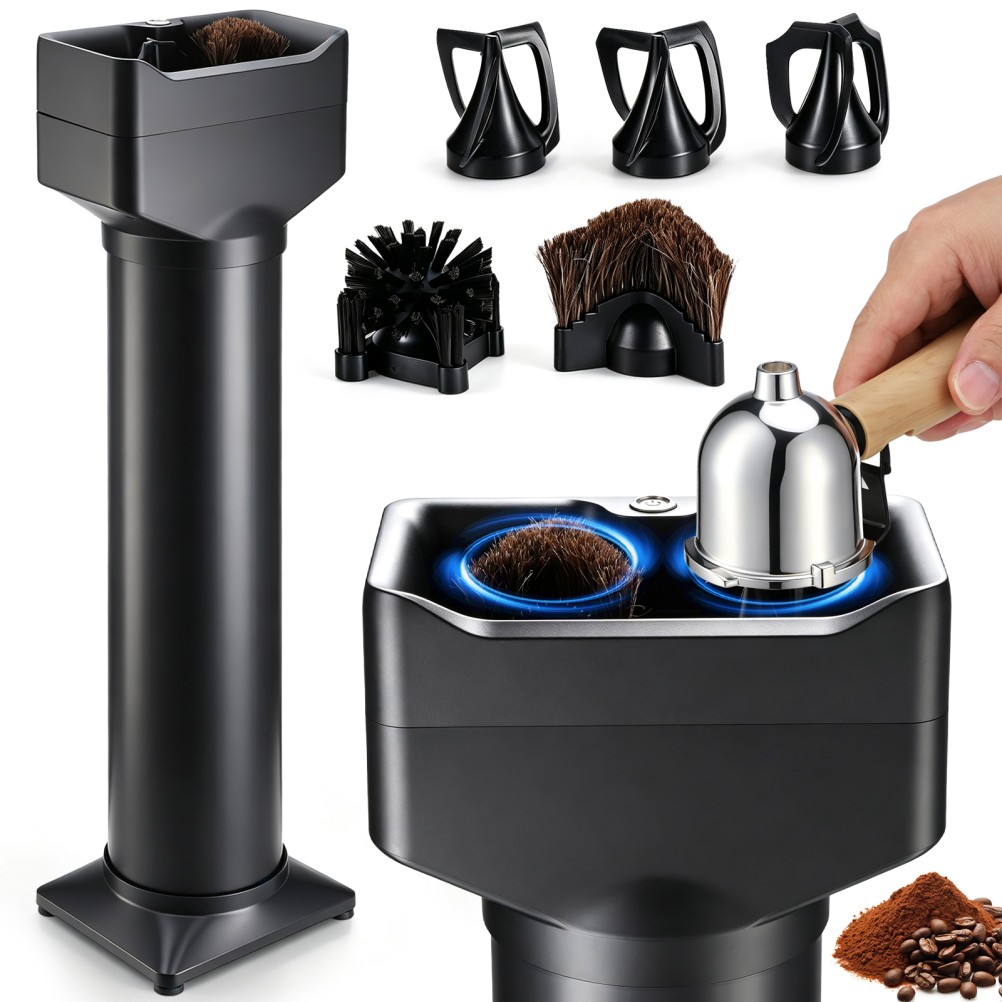 16L Pro Electric Portafilter Cleaner-Automatic Coffee Grounds Cleaning Machine$218.95New · Last checked Nov 20, 2026View on eBay
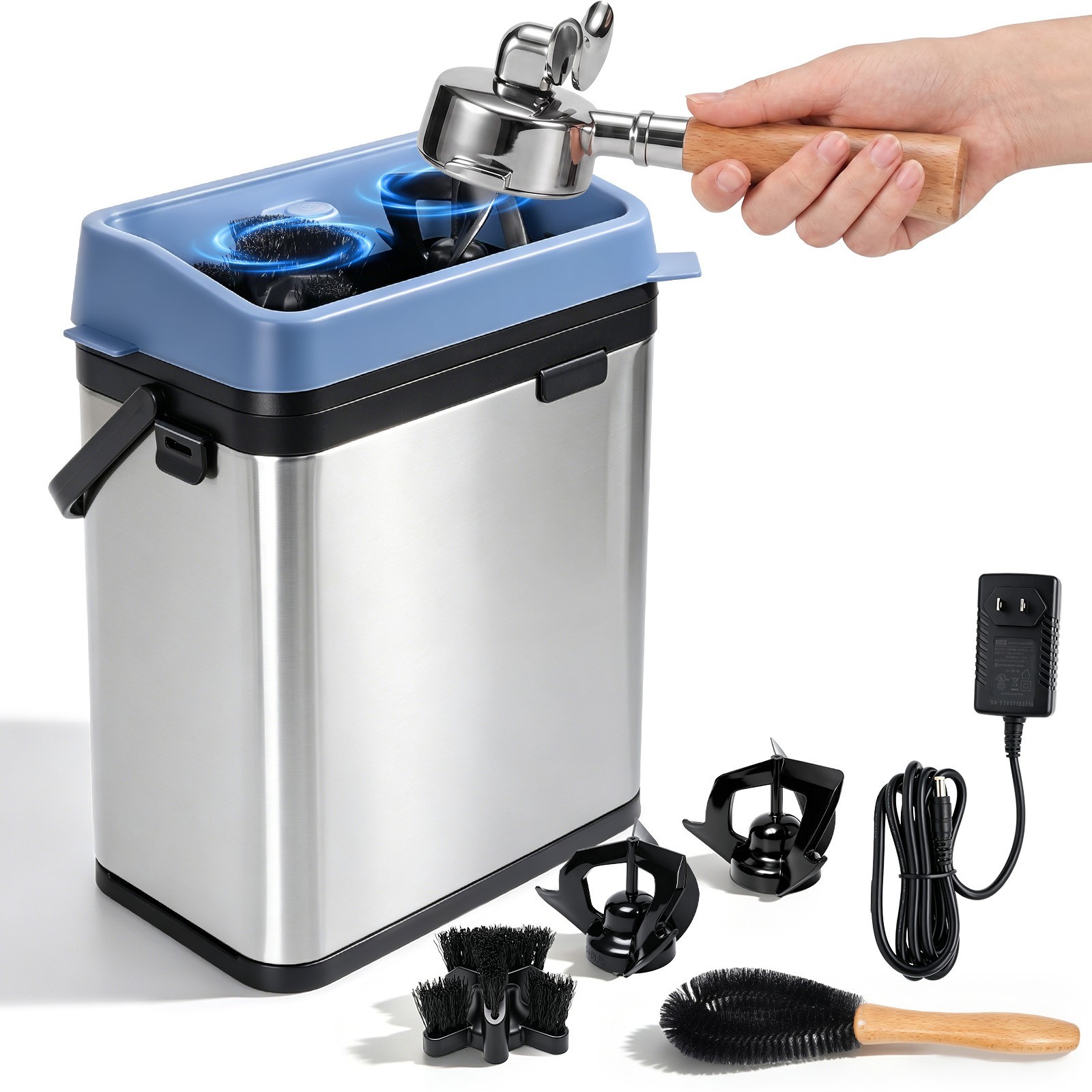 Electric Automatic Coffee Portafilter Basket Cleaner Cleaning Machine Knock Box$269.99New · Last checked Nov 20, 2026View on eBay
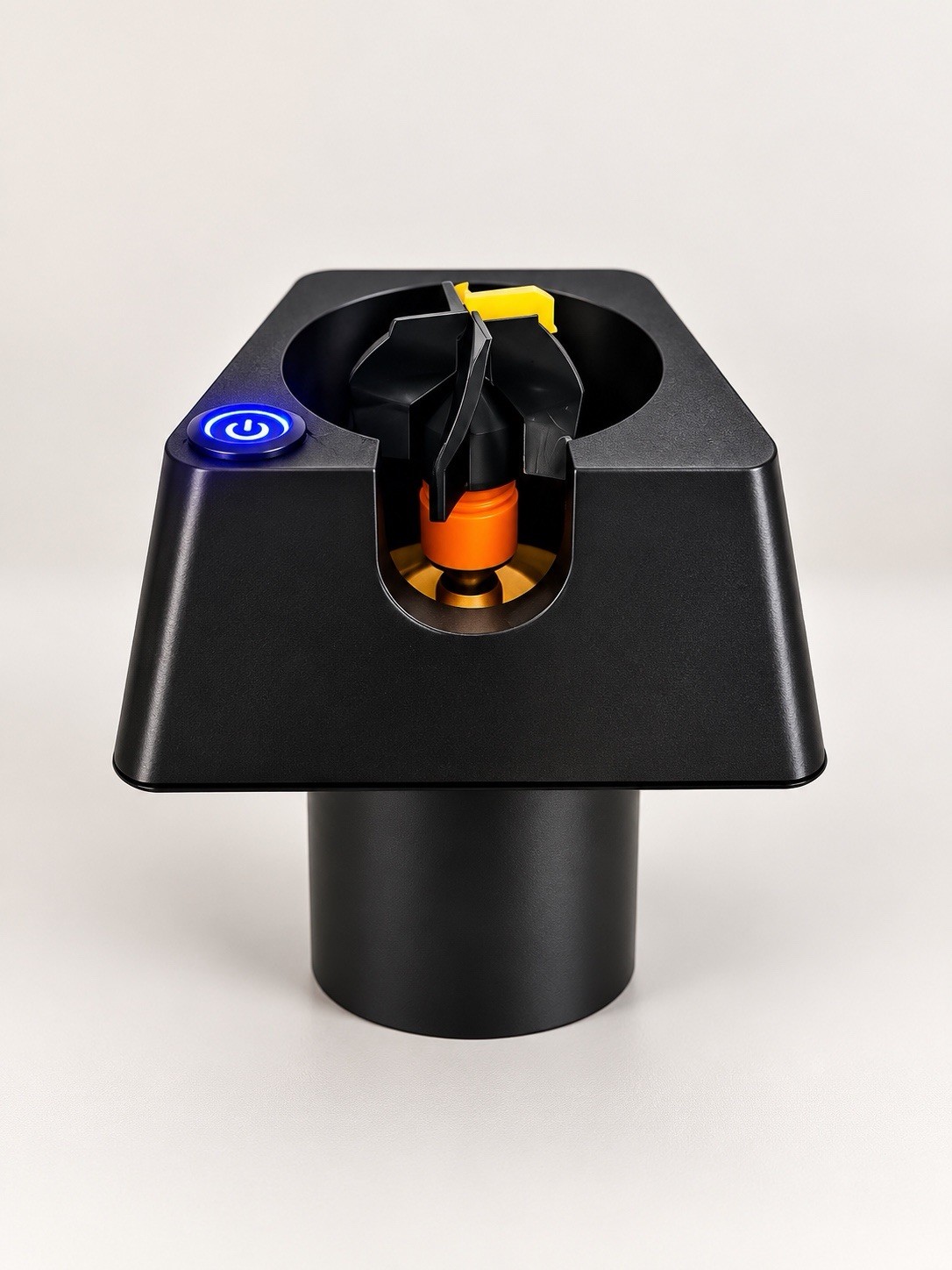 Coffee Cleaner Electronic Espresso Knock Box Coffee Machine Accessories 53/58mm$299.00New · Last checked Nov 20, 2026View on eBay
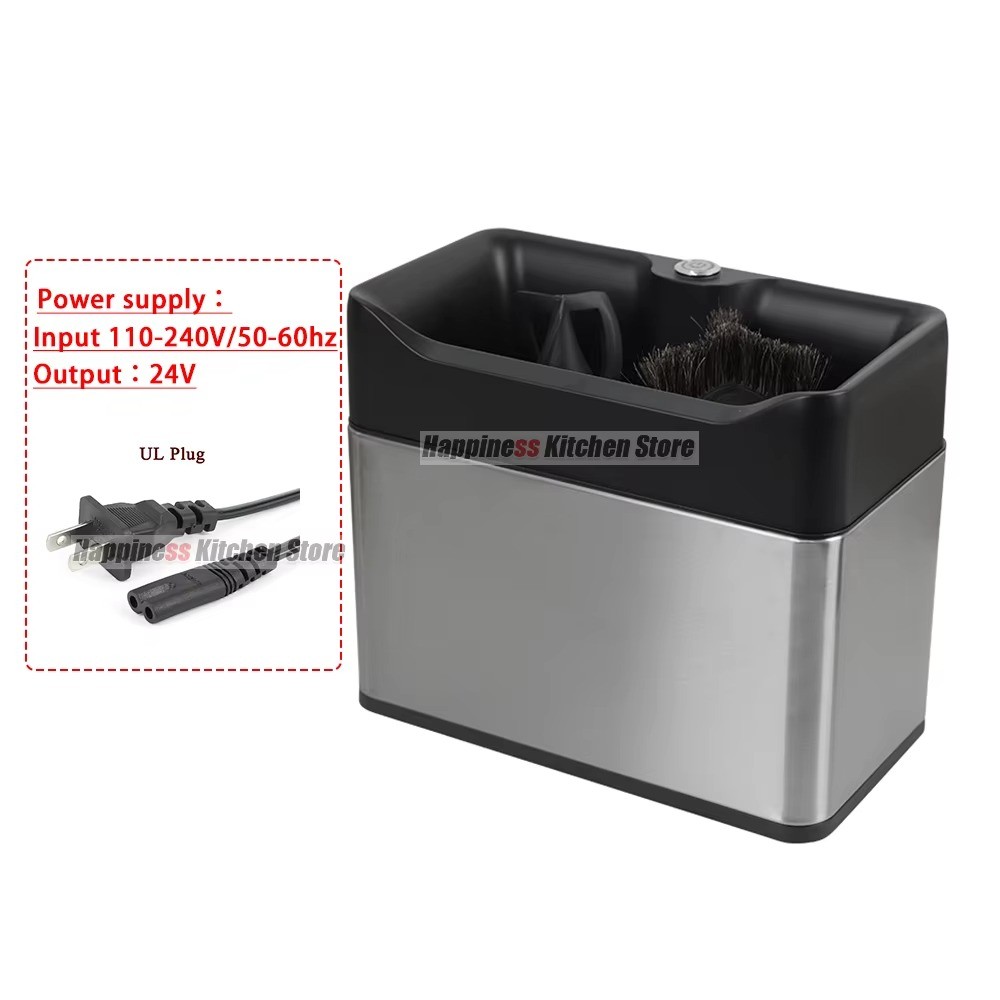 Electric Portafilter Cleaner 54/58/58.3/58.5mm Coffee Cleaning Machine$315.53New · Last checked Nov 20, 2026View on eBay
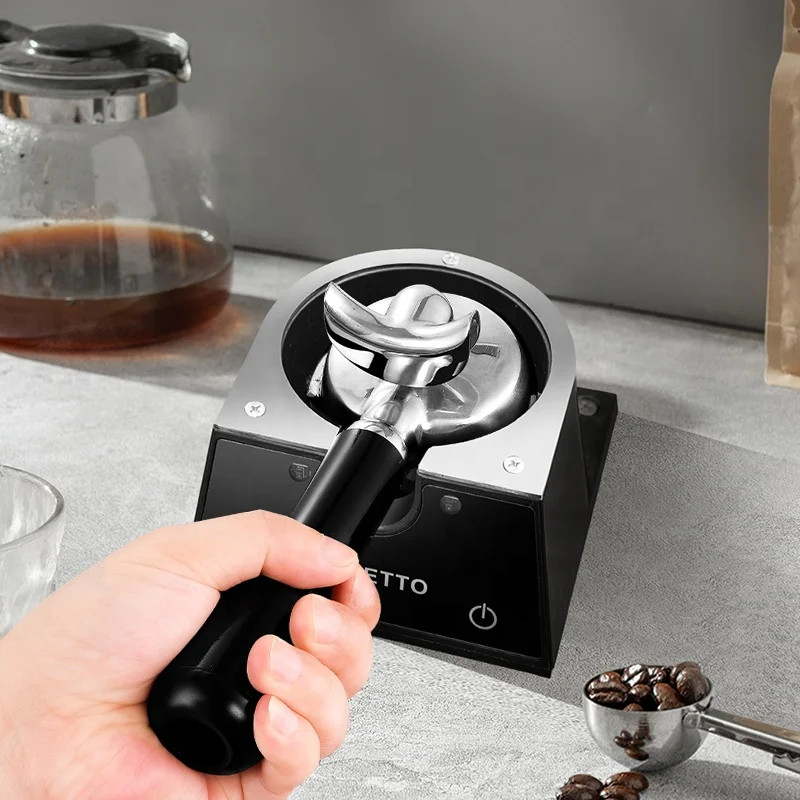 Coffee Cleaner Electronic Espresso Knock Box Coffee Machine Accessories 53/58mm$470.00New · Last checked Nov 20, 2026View on eBay
Highlights
- Descaling cleaners rely on citric, lactic, or sulfamic acid to dissolve calcium carbonate; citric acid is mildest for aluminum, sulfamic is fastest but requires thorough rinsing.
- Detergent cleaners use alkaline surfactants and sodium percarbonate to lift coffee oils; effervescent tablets are simply compacted percarbonate plus acid for fizzing action in water.
- Backflush detergents (e.g., Cafiza-type) are formulated for espresso group heads and portafilters; using them in drip machines leaves excessive residue in the water path.
- Single-use tablets dose precisely for one tank; liquid or powder concentrates let you scale dose to tank size and water hardness, avoiding over- or under-treatment.
Best use cases
- Choose a citric-acid descaler for aluminum-boiler espresso machines and kettles—it removes scale without pitting the metal; skip sulfamic-acid products here.
- Use a dedicated backflush detergent with a blind basket for weekly espresso group-head cleaning; skip effervescent tablets, which don't generate enough backflush pressure.
- Pick effervescent tablets for monthly light maintenance of drip coffee makers and pod machines; skip them for heavy scale, where a liquid descaler with soak time is required.
- Select a combined descaler-cleaner only for stainless-steel boilers; skip combined formulas on aluminum, where the detergent and acid mix can leave residues in the boiler.
Buying tips
- Match acid type to boiler metal: citric acid for aluminum and stainless, sulfamic acid only for stainless and plastic-path machines, never aluminum.
- Dose by water hardness: soft water needs descaling every 2–3 months, hard water monthly; tablet count should match tank volume, typically one tablet per liter.
- Check the rinse requirement: sulfamic and phosphoric acid cleaners need at least two full tank flushes; citric acid needs one; effervescent tablets need one.
- Prefer cleaners with a stated active-ingredient concentration or pH range over vague 'natural' labels, which give no dosing or compatibility guidance.
Specs
| Cleaner Type | Descaler vs Detergent vs Combined |
|---|---|
| Active Chemistry | Citric / Lactic / Sulfamic Acid |
| Form Factor | Liquid / Powder / Tablet |
| Boiler Compatibility | Aluminum-safe vs Stainless-only |
Related searches
What to check before buying
- Confirm your machine's boiler and internal fitting material (aluminum, stainless steel, brass) from the manual before choosing an acid type.
- Measure your water tank volume in liters to calculate tablet or concentrate dose; most tablets treat 1 liter, so a 2-liter tank needs two.
- Check whether your machine has a backflush program and blind basket; detergent backflushing requires both.
- Verify plug and voltage compatibility only for electric cleaning pumps; manual and tablet cleaners have no electrical requirement.
FAQ
Data sources: eBay / Amazon listings and product attribute feeds. Updated Nov 27, 2026.
Some links on this page are affiliate links. If you buy after clicking one, we may earn a commission at no extra cost to you. This does not change which products appear here or their order. Affiliate disclosure.