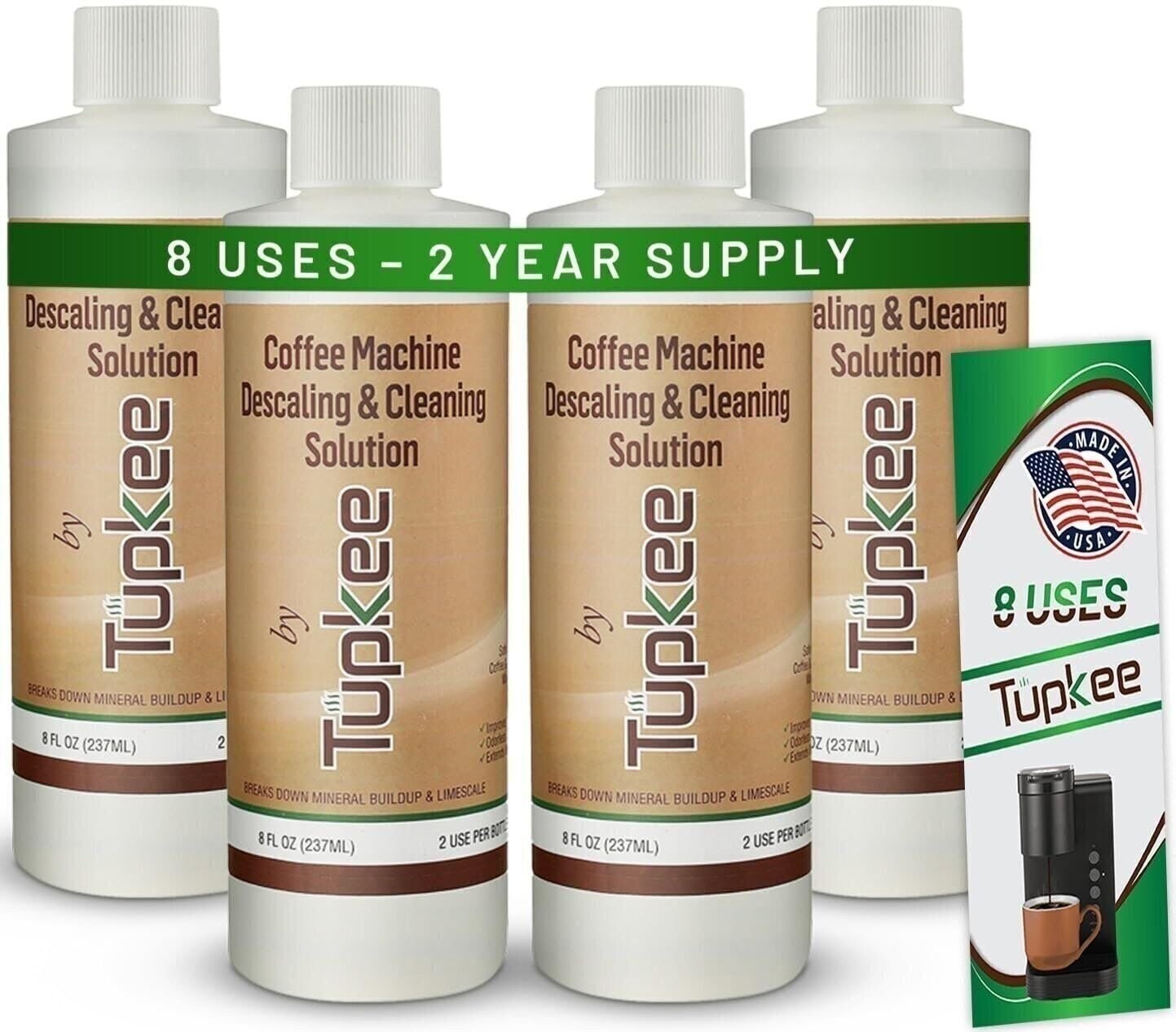

Photos from current listings. Actual item, color, and included accessories may vary.
Coffee Machine Descaling Solution Buying Guide
Coffee machine descaling solution is a food-safe acidic concentrate that dissolves limescale from boilers, thermoblocks, and steam circuits to restore flow and temperature stability. The core trade-off is acid strength versus material compatibility: citric and lactic acid blends clean effectively but require thorough rinsing, while harsh mineral or sulfamic acids can pit aluminum and damage seals. Choose a solution formulated for your machine's metal and a concentration you can dilute to your local water hardness—never a one-size-fits-all bottle.
Key takeaways
- Active acid type is the decisive spec: citric acid is gentle and universal, lactic acid is faster on heavy scale, and sulfamic/phosphoric blends are for stainless-only commercial circuits.
- Concentration and bottle yield matter: single-strength ready-to-use bottles typically provide one to two descale cycles, while 4x concentrates stretch to four or more—dilute per label, never guess.
- Material compatibility is non-negotiable: aluminum thermoblocks and boilers require citric-based, low-corrosion formulas; stainless steel and brass tolerate stronger lactic or sulfamic solutions.
At a glance
- Category
- Coffee Cleaning & Accessories
- Last updated
- Nov 28, 2026
Current offers
Highlights
- Active acid type is the decisive spec: citric acid is gentle and universal, lactic acid is faster on heavy scale, and sulfamic/phosphoric blends are for stainless-only commercial circuits.
- Concentration and bottle yield matter: single-strength ready-to-use bottles typically provide one to two descale cycles, while 4x concentrates stretch to four or more—dilute per label, never guess.
- Material compatibility is non-negotiable: aluminum thermoblocks and boilers require citric-based, low-corrosion formulas; stainless steel and brass tolerate stronger lactic or sulfamic solutions.
- Food-safe certification (NSF or equivalent) and full rinseability separate machine-grade descalers from generic kettle cleaners that leave residue or attack gaskets.
Best use cases
- Best fit for aluminum thermoblock machines (many compact espresso and pod units): pick a citric-acid-based descaler at low concentration and run two rinse cycles—skip sulfamic or phosphoric blends.
- Best fit for stainless-steel boilers and commercial heat-exchange machines: choose a lactic-acid or buffered sulfamic concentrate for fast heavy-scale removal and follow with a full flush.
- Best fit for multi-machine households or hard water (over 180 ppm): buy a 4x concentrate to get four or more cycles per bottle and descale every 4-8 weeks—skip single-use ready-to-use bottles.
- Wrong fit: using generic kettle descaler or white vinegar on espresso machines—vinegar's acetic acid degrades silicone gaskets and leaves odor; use a dedicated coffee-machine formula.
Buying tips
- Match acid to metal: citric acid for aluminum thermoblocks and boilers; lactic or sulfamic acid for stainless steel and brass components only.
- Calculate yield by water hardness: soft water (under 60 ppm) descales every 3-6 months; hard water (180+ ppm) every 4-8 weeks—buy concentrate accordingly.
- Confirm dilution ratio on the label: 1:10 to 1:20 concentrates are common; a 4-pack of single-use bottles equals one concentrate bottle in total cycles.
- Check for food-safe certification and a clear rinse protocol; formulas without rinse instructions risk residual acid in the next brew.
Specs
| Acid Type | Citric vs Lactic vs Sulfamic |
|---|---|
| Bottle Yield | 1-2 uses (RTU) / 4+ (concentrate) |
| Material Compatibility | Aluminum-safe / Stainless-only |
| Certification | Food-safe (NSF or equivalent) |
Related searches
What to check before buying
- Identify your machine's boiler/thermoblock material from the manual—aluminum needs citric-based, stainless tolerates stronger acids.
- Test your water hardness with a strip or local report; above 180 ppm means more frequent descaling and larger concentrate value.
- Confirm the descaler's dilution ratio and bottle yield match your descale frequency—single-use bottles suit occasional users, concentrates suit hard water.
- Verify the formula is food-safe and includes a rinse step; check that it will not void your machine warranty (many brands specify citric-only).
FAQ
Data sources: eBay / Amazon listings and product attribute feeds. Updated Nov 28, 2026.
Some links on this page are affiliate links. If you buy after clicking one, we may earn a commission at no extra cost to you. This does not change which products appear here or their order. Affiliate disclosure.