
Photos from current listings. Actual item, color, and included accessories may vary.
Automatic Espresso Maker With Grinder Buying Guide
An automatic espresso maker with grinder combines grinding, dosing, and extraction into one workflow, eliminating stale pre-ground coffee and manual tamping. The core trade-off is burr quality and brew-pressure stability versus integrated milk-system convenience: flat steel burrs and a 15-20 bar pump with PID temperature control determine shot quality, while automatic milk frothing adds daily convenience. Choose a conical/flat steel burr integrated grinder with a stable 15-20 bar pump and PID control for durability; skip ceramic burr or pressurized-basket-only designs for serious espresso.
Median $119.99
Key takeaways
- Integrated grinders use conical or flat steel burrs (40-64mm) — steel retains edge geometry far longer than ceramic and delivers more consistent particle size for non-pressurized baskets.
- 15-20 bar rated pumps are standard; actual extraction runs at 9 bar, so a stable OPV (over-pressure valve) matters more than peak pump rating.
- PID temperature control holds brew temperature within ±1-2°C; thermoblock or single-boiler designs swing more, while dual-boiler/heat-exchanger units keep brew and steam independent.
At a glance
- Category
- Coffee Makers & Espresso
- Last updated
- Nov 27, 2026
Current offers
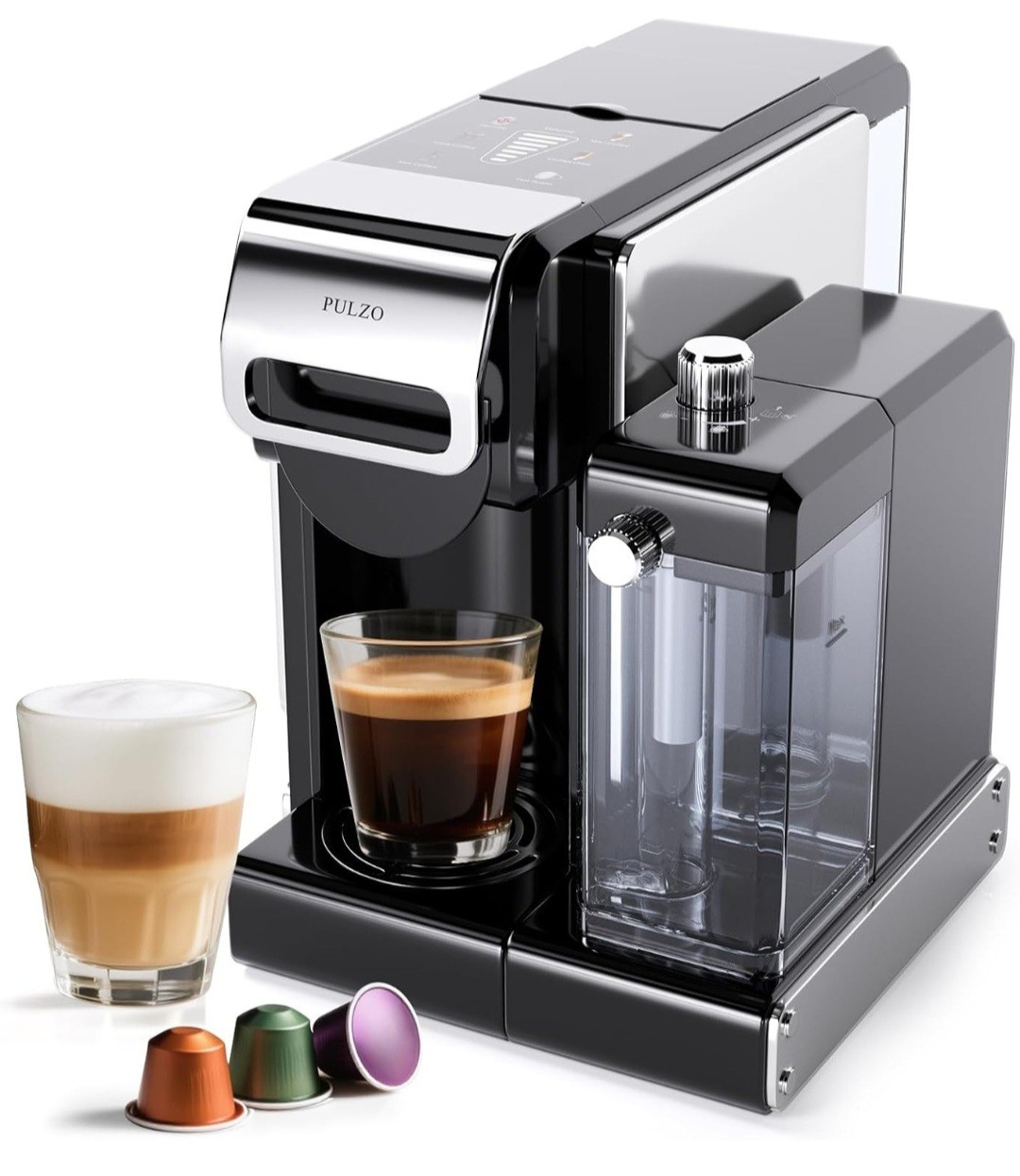 PULZO Espresso Machine Automatic Milk Frother Capsule Coffee Maker Latte Cappucc$113.90View on eBay
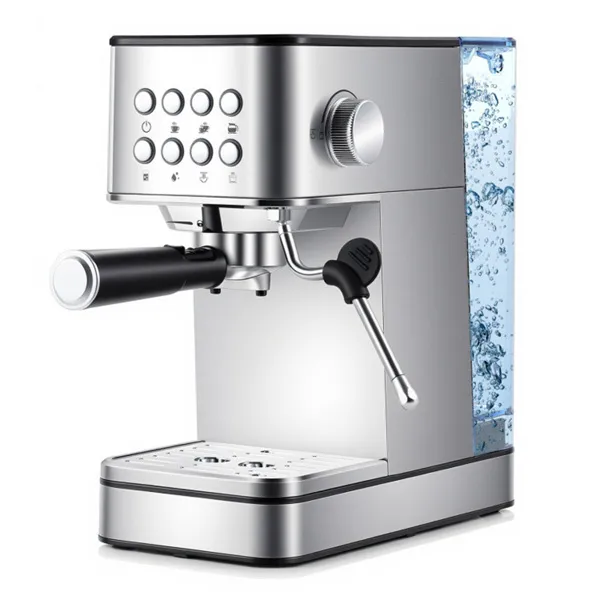 Professional Espresso Maker - 360° Steam Wand, Automatic Cup Warmer, Low-Noise Operation$207.99View on Mallflare
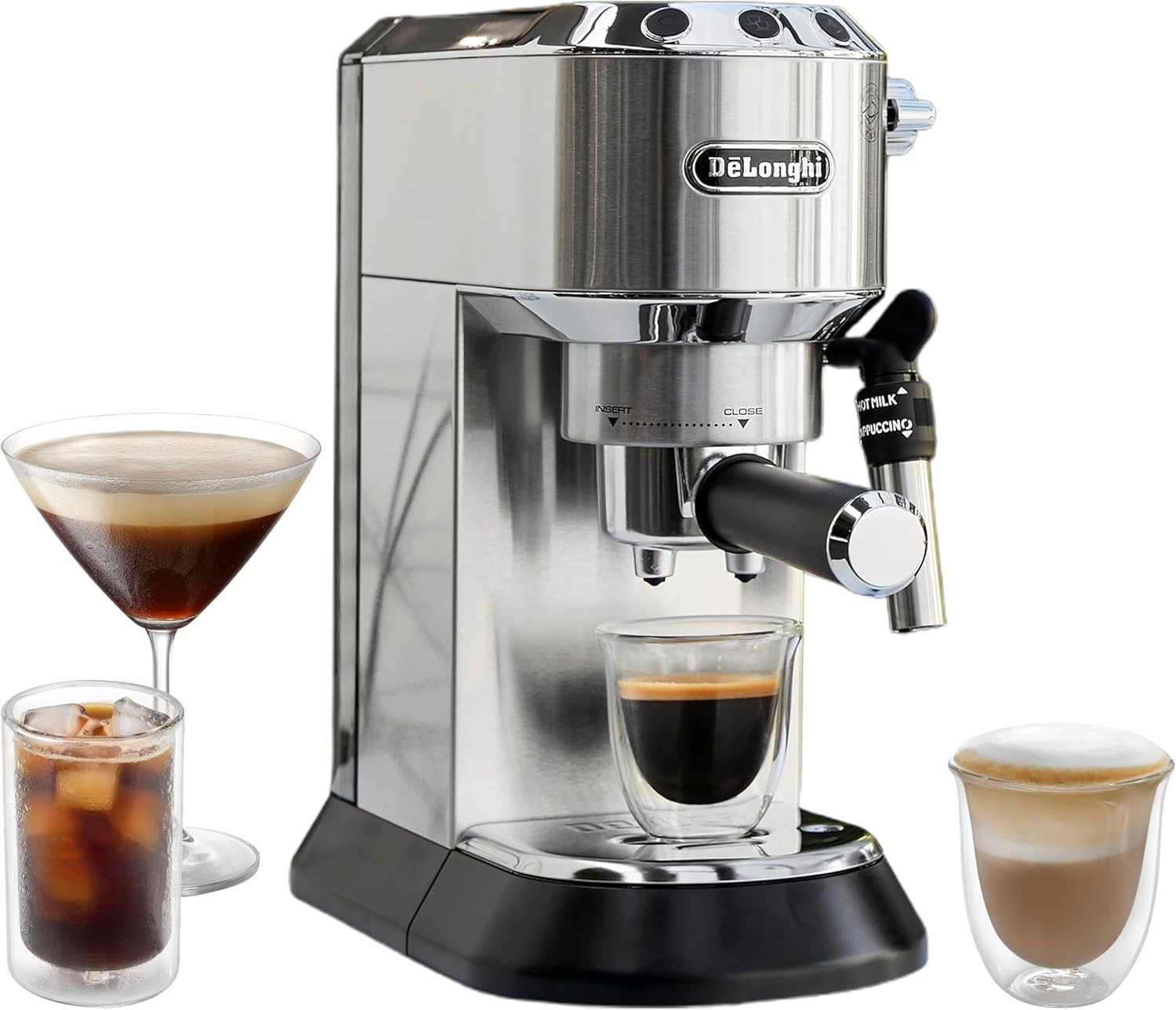 Delonghi EC685M Dedica Automatic Espresso Cappuccino Maker Machine 35oz Metallic$119.99View on eBay
Highlights
- Integrated grinders use conical or flat steel burrs (40-64mm) — steel retains edge geometry far longer than ceramic and delivers more consistent particle size for non-pressurized baskets.
- 15-20 bar rated pumps are standard; actual extraction runs at 9 bar, so a stable OPV (over-pressure valve) matters more than peak pump rating.
- PID temperature control holds brew temperature within ±1-2°C; thermoblock or single-boiler designs swing more, while dual-boiler/heat-exchanger units keep brew and steam independent.
- Automatic milk systems range from manual steam wands to integrated carafes with dedicated steam circuits; carafe lines require daily rinse cycles and periodic milk-tube replacement.
Best use cases
- Best fit: daily straight-espresso drinkers who want fresh-ground shots with minimal steps — pick a steel-burr integrated grinder with PID and a non-pressurized basket.
- Best fit: milk-based drink households — choose an automatic carafe/steam-circuit model if counter space and daily rinse routine are acceptable; skip manual-wand models if convenience is the priority.
- Wrong fit: buyers wanting light-roast clarity and single-origin dialing — a semi-automatic with a separate high-end grinder gives more control than an all-in-one automatic.
- Skip: pressurized-basket-only or ceramic-burr automatics if you intend to use fresh beans and non-pressurized baskets long-term.
Buying tips
- Match burr type first: flat steel burrs (typically 50-64mm) give more uniform grind for espresso; conical steel is easier to dial and quieter; avoid ceramic for daily espresso.
- Confirm the machine ships with both pressurized and non-pressurized baskets — non-pressurized is required for fresh-ground, grinder-integrated workflows.
- Check boiler architecture: dual boiler or heat exchanger for simultaneous brew and steam; single thermoblock is fine for straight shots but recovers slowly for milk drinks.
- Verify portafilter size (51mm vs 54mm vs 58mm) — 58mm has the widest third-party basket, tamper, and accessory support.
Specs
| Grinder Burr Type | Flat/conical steel vs ceramic |
|---|---|
| Pump Pressure | 15-20 bar rated / 9 bar extraction |
| Boiler Architecture | Dual boiler / HX / thermoblock |
| Milk System | Automatic carafe vs manual wand |
Related searches
What to check before buying
- Measure counter depth and height clearance: integrated-grinder automatics typically need 30-40cm depth and 35-45cm height for bean hopper removal.
- Confirm voltage/plug standard (120V North America vs 230V EU/UK) and that the machine is not a grey-import with the wrong plug.
- Check water hardness and plan for a descaling schedule or inline filter — hard water scales thermoblocks and boilers quickly.
- Verify hopper capacity in grams against your weekly bean consumption so you are not refilling daily.
FAQ
Data sources: eBay / Amazon listings and product attribute feeds. Updated Nov 27, 2026.
Some links on this page are affiliate links. If you buy after clicking one, we may earn a commission at no extra cost to you. This does not change which products appear here or their order. Affiliate disclosure.