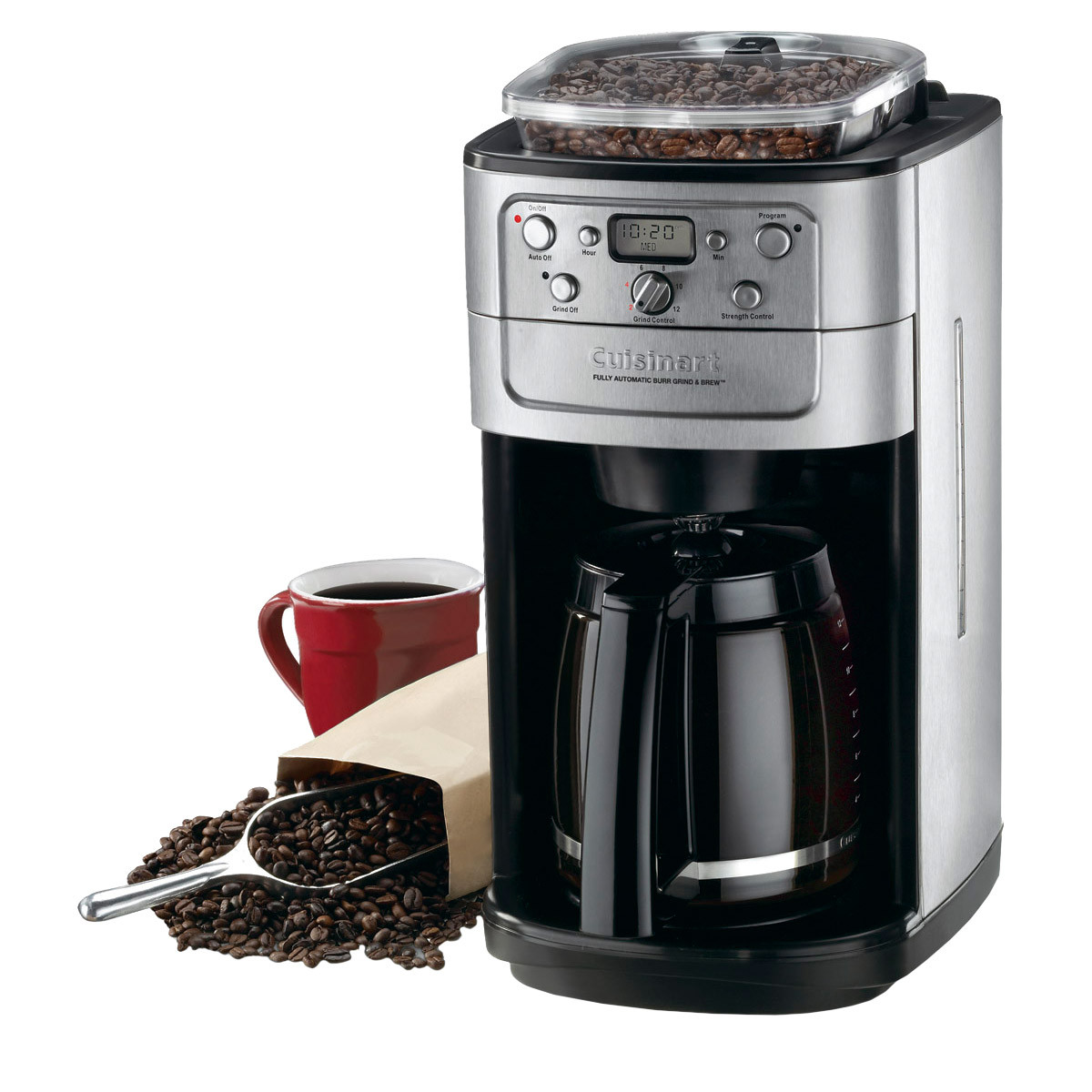

Photos from current listings. Actual item, color, and included accessories may vary.
Automatic Grind And Brew Coffee Maker Buying Guide
Automatic grind-and-brew coffee makers integrate a burr grinder directly above the brew basket, eliminating stale pre-ground coffee and manual dosing. The core trade-off is grinder quality versus brew-path simplicity: flat burrs and conical burrs deliver even extraction, while blade grinders and weak heaters produce inconsistent cups. The decision rule is clear: choose a model with a conical or flat burr grinder, a removable brew basket, and at least 10-cup capacity for households; skip any unit that uses a blade grinder or a non-removable basket, as those are maintenance and flavor compromises.
Key takeaways
- Burr type is the single biggest performance differentiator: conical steel burrs (e.g., 40mm) outlast and out-grind flat ceramic burrs, which are more brittle and prone to chipping.
- Grind settings below 12 steps limit dial-in for drip; 15–30 micro-adjustable settings let you match extraction to bean roast and brew basket geometry.
- Thermal carafes with double-wall vacuum insulation hold coffee above 170°F for 2+ hours; glass carafes with hot plates scorch coffee after 20 minutes.
At a glance
- Category
- Coffee Makers & Espresso
- Last updated
- Nov 29, 2026
Current offers
Highlights
- Burr type is the single biggest performance differentiator: conical steel burrs (e.g., 40mm) outlast and out-grind flat ceramic burrs, which are more brittle and prone to chipping.
- Grind settings below 12 steps limit dial-in for drip; 15–30 micro-adjustable settings let you match extraction to bean roast and brew basket geometry.
- Thermal carafes with double-wall vacuum insulation hold coffee above 170°F for 2+ hours; glass carafes with hot plates scorch coffee after 20 minutes.
- Programmable models with a 24-hour timer and auto-shutoff (0–4 hours) are standard; models with a gold-tone permanent filter eliminate paper waste but require finer grind tuning.
Best use cases
- Best fit: busy households brewing 8–12 cups daily — pick a 12-cup stainless thermal carafe model with conical burr and programmable timer; skip glass-carafe hot-plate units that degrade flavor.
- Best fit: single-serve or 2–4 cup drinkers — choose a 5-cup grind-and-brew with a removable water reservoir and adjustable strength control; avoid 12-cup machines that leave stale coffee in the carafe.
- Wrong fit: espresso or concentrate drinkers — grind-and-brew drip machines cannot produce 9-bar pressure; skip them and buy a separate espresso machine with a dedicated burr grinder.
- Wrong fit: low-maintenance minimalists — grind-and-brew units require weekly burr cleaning and monthly descaling; skip if you will not commit to that routine, and choose a pod or pour-over setup instead.
Buying tips
- Match carafe capacity to your daily consumption: 5-cup (25 oz) for 1–2 people, 10-cup (50 oz) for 3–4, 12-cup (60 oz) for 5+; never buy a 12-cup unit for a single drinker.
- Confirm burr material and size: stainless steel conical burrs (typically 30–40mm) are more durable than ceramic flat burrs; avoid blade grinders entirely, as they produce uneven particle size.
- Check grind-setting count: at least 15 settings is the practical threshold for dialing in drip coffee; fewer than 10 settings limits you to coarse or fine extremes.
- Verify filter compatibility: models using #4 cone paper filters or a gold-tone reusable filter are easy to stock; proprietary baskets lock you into specific filter shapes.
Specs
| Grinder Type | Conical burr vs flat burr or blade |
|---|---|
| Carafe Capacity | 5, 10, or 12 cups (25–60 oz) |
| Grind Settings | 15–30 steps for drip dial-in |
| Carafe Material | Double-wall thermal vs glass hot plate |
Related searches
What to check before buying
- Measure your counter depth and height clearance: most grind-and-brew units are 14–17 inches tall with the lid open, and 10–12 inches deep; confirm the bean hopper fits under upper cabinets.
- Check your electrical outlet: standard US models draw 900–1500 watts on a 120V circuit; do not plug into a shared kitchen circuit with a microwave or toaster.
- Confirm water hardness: if your tap water exceeds 150 ppm, use filtered water and plan to descale every 4–6 weeks to protect the heater and burrs.
- Verify carafe and basket are dishwasher-safe: removable brew baskets and carafes marked top-rack safe simplify daily cleanup; non-removable parts require hand washing.
FAQ
Data sources: eBay / Amazon listings and product attribute feeds. Updated Nov 29, 2026.
Some links on this page are affiliate links. If you buy after clicking one, we may earn a commission at no extra cost to you. This does not change which products appear here or their order. Affiliate disclosure.