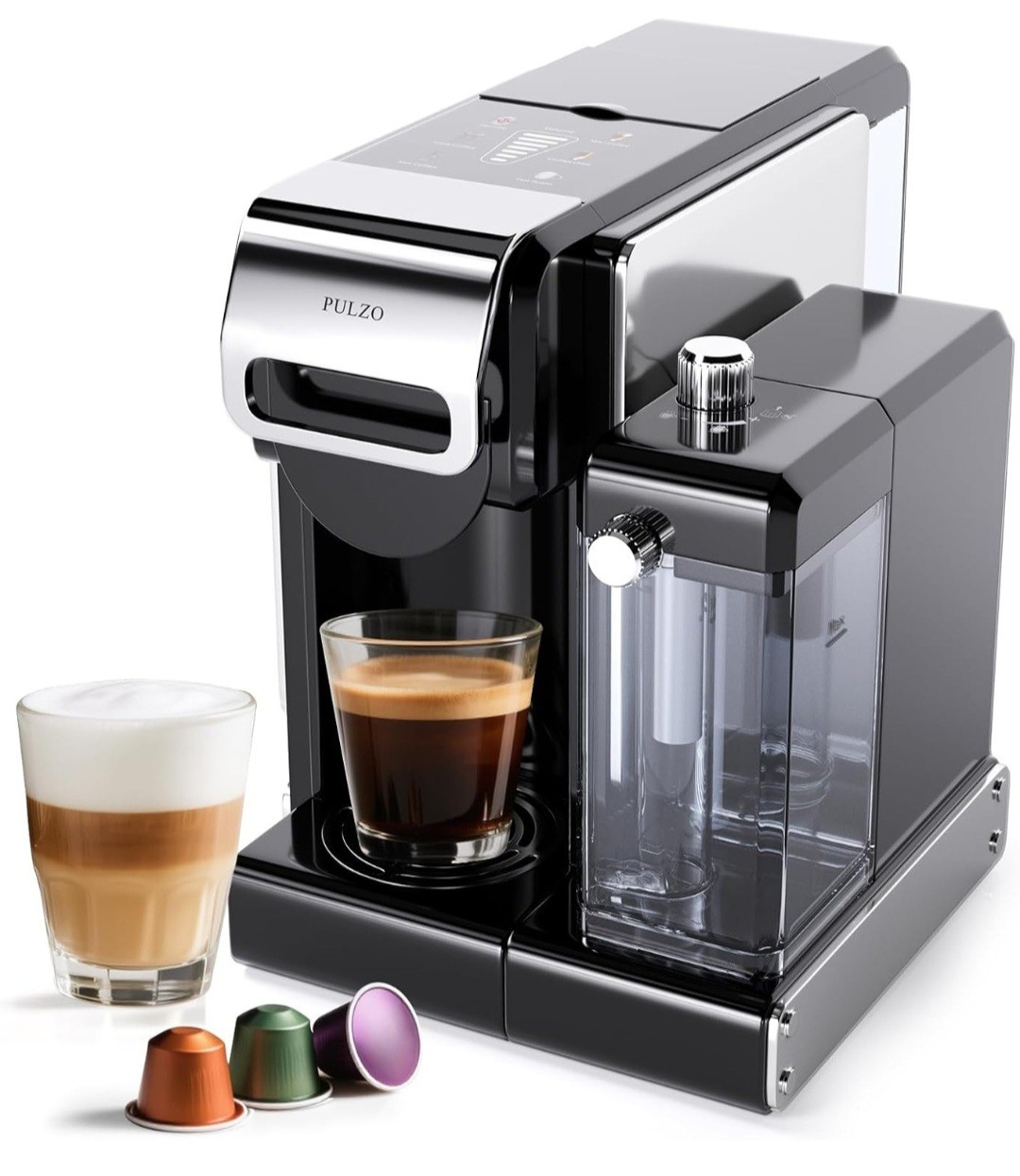

Photos from current listings. Actual item, color, and included accessories may vary.
Automatic Latte Machine Buying Guide
An automatic latte machine combines espresso extraction with automated milk frothing or steaming to produce latte and cappuccino-style drinks with minimal manual technique. The key trade-off is milk-system architecture: integrated steam wands or thermoblocks demand barista skill, while automatic milk carafes or capsule-based frothers trade fresh-milk quality and cleaning effort for push-button consistency. Choose an automatic milk-frothing system if repeatable one-touch milk drinks matter most; choose a semi-automatic with a steam wand if you want control over microfoam and extraction.
Key takeaways
- Milk systems split into three tiers: manual steam wand (skill-dependent microfoam), automatic steam wand with temperature sensor (assisted), and integrated milk carafe with dedicated froth line (true one-touch).
- Pump pressure is a binary spec: 15 bar or 19 bar vibratory pumps are standard for espresso extraction; lower-rated '3 bar' or '5 bar' units are steam-driven or capsule-only and cannot produce true espresso.
- Thermoblock heating reaches brew temperature in 20-45 seconds and is the norm for automatic latte machines; dual boiler or heat-exchanger designs allow simultaneous brew and steam but cost significantly more.
At a glance
- Category
- Coffee Makers & Espresso
- Last updated
- Nov 28, 2026
Current offers
Highlights
- Milk systems split into three tiers: manual steam wand (skill-dependent microfoam), automatic steam wand with temperature sensor (assisted), and integrated milk carafe with dedicated froth line (true one-touch).
- Pump pressure is a binary spec: 15 bar or 19 bar vibratory pumps are standard for espresso extraction; lower-rated '3 bar' or '5 bar' units are steam-driven or capsule-only and cannot produce true espresso.
- Thermoblock heating reaches brew temperature in 20-45 seconds and is the norm for automatic latte machines; dual boiler or heat-exchanger designs allow simultaneous brew and steam but cost significantly more.
- Capsule and pod automatic latte machines lock you into a proprietary pod ecosystem, while bean-to-cup and semi-automatic models use any fresh beans and typically include conical burr grinders.
Best use cases
- Best fit: one-touch latte and cappuccino daily with minimal cleanup — pick a bean-to-cup or capsule machine with an integrated automatic milk carafe and auto-rinse cycle.
- Best fit: milk-drink variety with some manual control — pick a semi-automatic espresso machine with a panarello or automatic steam wand and a 15-bar pump.
- Wrong fit: straight espresso or Americano only — skip automatic milk systems entirely; a manual or semi-automatic machine with a standard steam wand is cheaper and easier to maintain.
- Wrong fit: high-volume entertaining or small café use — domestic automatic latte machines have 1-2 L water tanks and small dreg drawers; step up to a heat-exchanger or dual-boiler prosumer unit.
Buying tips
- Match the milk system to your habit: integrated carafe for one-touch drinks, automatic steam wand for assisted frothing, manual wand only if you will practice microfoam technique.
- Confirm true espresso capability: 15 bar or 19 bar pump and a pressurized or non-pressurized basket; capsule-only frothers cannot use fresh grounds.
- Check water tank and bean hopper capacity against your daily volume — 1.5-2 L tanks suit 2-4 drinks per day; smaller tanks mean frequent refills.
- Verify milk carafe is removable and dishwasher-safe, and that the machine runs an automatic rinse cycle; fixed milk lines are the top cleaning failure point.
Specs
| Milk System | Carafe / Auto wand / Manual wand |
|---|---|
| Pump Pressure | 15-19 bar vibratory |
| Coffee Input | Beans / Grounds / Capsules |
| Water Tank | 1-2 L typical |
Related searches
What to check before buying
- Measure counter depth and height clearance: most automatic latte machines with a carafe need 35-45 cm depth and 35-40 cm height for bean hopper removal.
- Confirm electrical standard: 120 V/60 Hz for North America, 220-240 V for Europe/UK; check plug type and that the circuit handles 1200-1600 W.
- Check milk carafe capacity (typically 0.3-0.6 L) against the number of milk drinks you make per session before refilling.
- Verify availability and cost of consumables — pods for capsule systems, or descaling and cleaning tablets for bean-to-cup models.
FAQ
Data sources: eBay / Amazon listings and product attribute feeds. Updated Nov 28, 2026.
Some links on this page are affiliate links. If you buy after clicking one, we may earn a commission at no extra cost to you. This does not change which products appear here or their order. Affiliate disclosure.