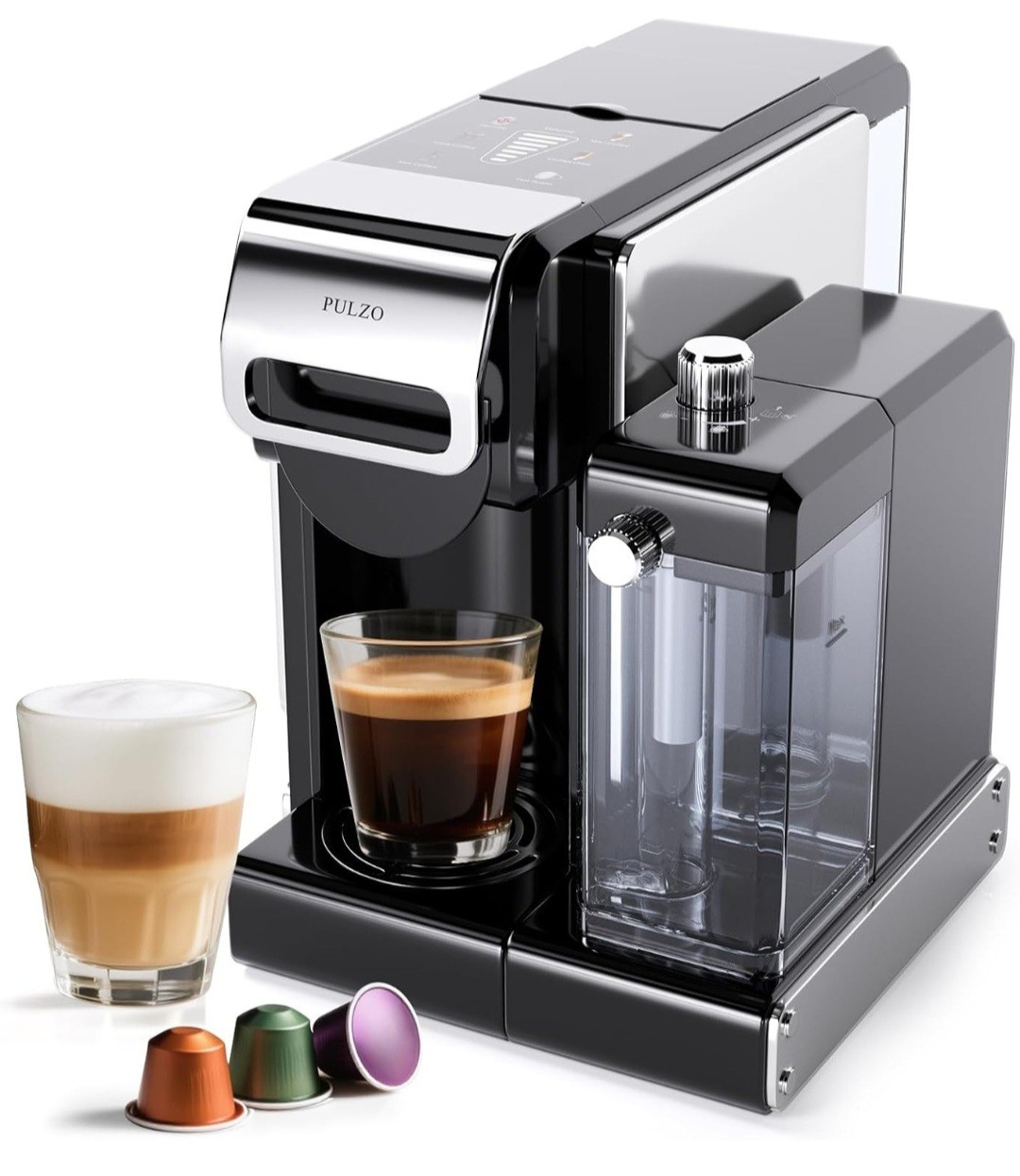

Photos from current listings. Actual item, color, and included accessories may vary.
Coffee Machine With Milk Frother Buying Guide
A coffee machine with milk frother combines espresso or capsule brewing with either a steam wand, automatic frothing module, or standalone frother to produce lattes and cappuccinos at home. The core trade-off is frothing mechanism versus thermal stability: manual steam wands demand technique but offer control, while automatic or capsule systems trade milk texture quality and rebuildability for convenience. The clear decision rule: buy a machine with a real steam wand or a dedicated automatic frother module and a thermoblock or boiler rated for back-to-back shots—skip anything that frothens via a pressurized 'steam' nozzle attached to a low-pressure pump.
Key takeaways
- Frothing architecture splits into three tiers: manual steam wand (technique-dependent, best microfoam), automatic milk carafe or module (one-touch, harder to clean), and capsule-integrated frother (convenience-first, limited texture control).
- Steam wand pressure on entry machines often runs 3–5 bar versus 9 bar for espresso extraction; weak steam produces large bubbles rather than the fine microfoam needed for latte art.
- Thermoblock heaters heat up in 25–45 seconds but recover slower between milk and shot; single boilers require cooling flushes before steaming, dual boilers or heat exchangers allow simultaneous brew and steam.
At a glance
- Category
- Coffee Makers & Espresso
- Last updated
- Nov 28, 2026
Current offers
Highlights
- Frothing architecture splits into three tiers: manual steam wand (technique-dependent, best microfoam), automatic milk carafe or module (one-touch, harder to clean), and capsule-integrated frother (convenience-first, limited texture control).
- Steam wand pressure on entry machines often runs 3–5 bar versus 9 bar for espresso extraction; weak steam produces large bubbles rather than the fine microfoam needed for latte art.
- Thermoblock heaters heat up in 25–45 seconds but recover slower between milk and shot; single boilers require cooling flushes before steaming, dual boilers or heat exchangers allow simultaneous brew and steam.
- Milk circuit materials matter: stainless steel steam wands and removable, dishwasher-safe carafe parts resist milk-fat buildup; fixed plastic frother tubes harbor residue and degrade.
Best use cases
- Best fit: daily latte or cappuccino drinkers who want café-style microfoam—pick an espresso machine with a stainless steam wand and at least 9 bar extraction, plus a thermoblock or dual boiler for fast milk recovery.
- Best fit: convenience-first households making 1–2 milk drinks a day with zero technique interest—choose an automatic milk-carafe or capsule machine with a one-touch frother, and accept a narrower texture ceiling.
- Wrong fit: buyers expecting barista-grade latte art from a capsule machine with a fixed plastic frother nozzle—those units aerate milk but cannot produce the fine, glossy microfoam a steam wand delivers.
- Wrong fit: heavy-entertaining homes buying a single-boiler steam-wand machine without a heat exchanger—sequential milk drinks require cooling flushes and slow the workflow; step up to dual boiler or heat exchanger.
Buying tips
- Match the frother to your technique: choose a manual stainless steam wand for microfoam control; choose an automatic carafe or module if you value one-touch operation over texture ceiling and are willing to clean milk lines daily.
- Check extraction pressure and heater type together: 9 bar extraction plus a thermoblock or dual boiler supports back-to-back milk drinks; a 3–5 bar 'steam' pump paired with a single boiler will stumble on the second cappuccino.
- Prioritize removable, dishwasher-safe milk-contact parts (carafe, wand tip, drip tray) in stainless steel or food-grade BPA-free plastic—fixed frother tubes are the most common failure and hygiene point.
- Decide pod versus ground coffee before buying: capsule-integrated frothers lock you into a pod ecosystem with limited dose and grind control; ESE POD or ground-compatible steam-wand machines preserve grind flexibility.
Specs
| Frother Type | Manual steam wand / auto carafe / capsule module |
|---|---|
| Extraction Pressure | 9 bar espresso vs 3–5 bar entry steam |
| Heater Architecture | Thermoblock / single boiler / dual boiler |
| Milk Circuit Material | Stainless wand / removable dishwasher-safe carafe |
Related searches
What to check before buying
- Measure counter depth and height clearance: compact steam-wand units typically need 12–15 in depth and 14–16 in height clearance for the cup and wand swing; carafe machines need extra side clearance.
- Confirm electrical fit: most 9 bar espresso machines with steam draw 1200–1500 W and require a dedicated 15 A grounded outlet; capsule frother units often run 800–1200 W.
- Check water and descaling needs: hard water above roughly 120–150 mg/L calcium carbonate demands filtered water or regular descaling to protect thermoblocks and steam valves.
- Verify cup and milk vessel compatibility: wand length and drip-tray height must clear your tallest mug and a 12–20 oz stainless milk pitcher for proper texturing.
FAQ
Data sources: eBay / Amazon listings and product attribute feeds. Updated Nov 28, 2026.
Some links on this page are affiliate links. If you buy after clicking one, we may earn a commission at no extra cost to you. This does not change which products appear here or their order. Affiliate disclosure.