
Photos from current listings. Actual item, color, and included accessories may vary.
Coffee Pot Buying Guide
A coffee pot is the brewing vessel itself—stovetop percolator, electric percolator, or replacement carafe—where metal grade and heat source determine durability and brew quality. The core trade-off is aluminum vs 304 stainless steel and stovetop vs electric: aluminum heats fast but pits and reacts, while 304 stainless resists corrosion and holds neutral flavor. The decision rule is simple: buy 304 stainless with a riveted or welded handle for daily use, and accept aluminum only for ultralight camping where weight and packability trump longevity.
Median $109.99
Key takeaways
- 304 stainless steel is the durability benchmark: resists pitting from acidic coffee and chlorinated water, unlike aluminum which oxidizes and can impart metallic off-flavors over time.
- Electric percolators add a keep-warm element and thermostat—typically holding 180–190°F—while stovetop models rely on your burner and a glass knob for perc visibility.
- Capacity maps to cup count at roughly 5–6 oz per 'cup': a 9-cup pot yields about 45–54 oz, a 12-cup about 60–72 oz, so match to your actual mug volume, not nominal cups.
At a glance
- Category
- Coffee Makers & Espresso
- Last updated
- Nov 27, 2026
Current offers
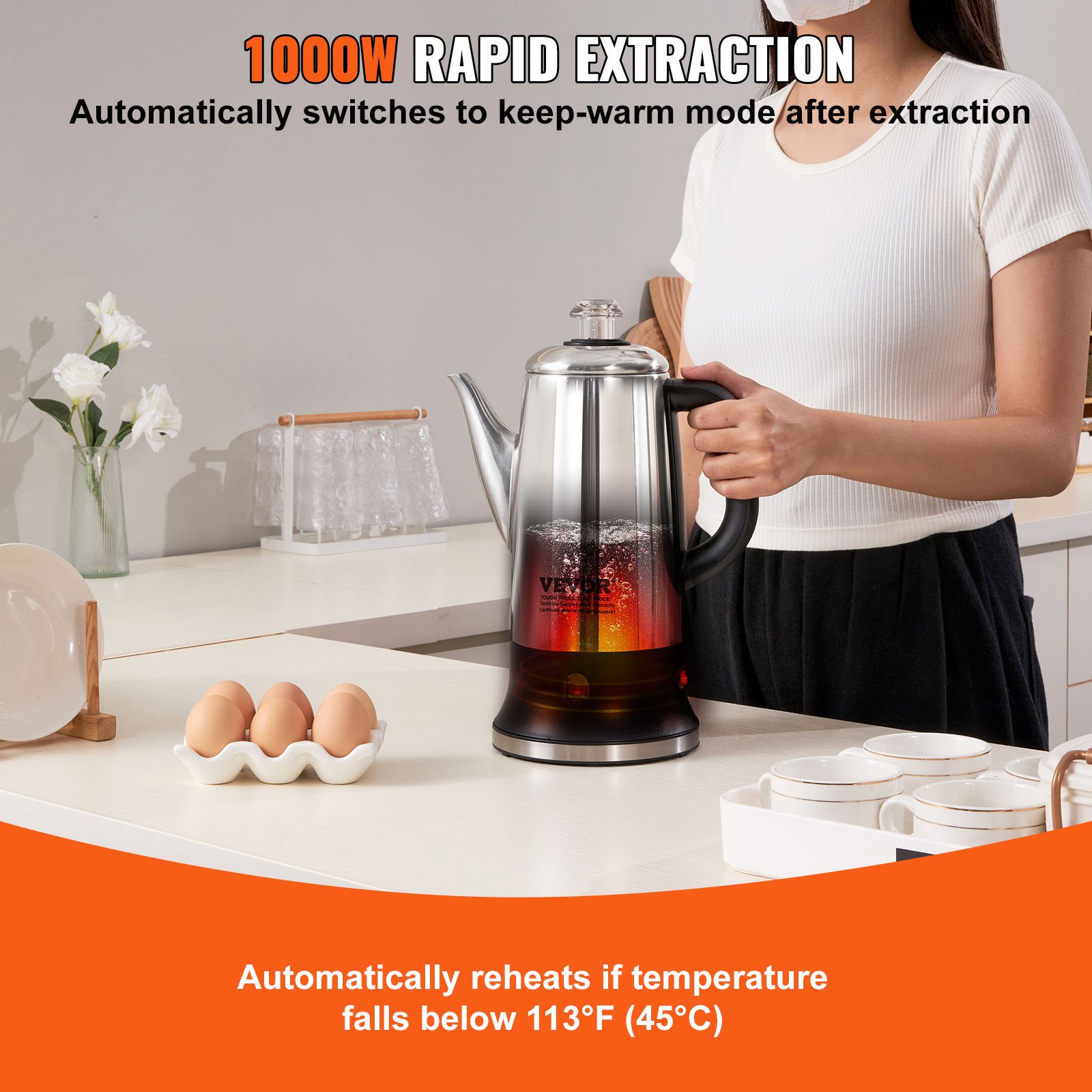 12-Cup Electric Percolator Coffee Pot, 304 Stainless Steel With Keep Warm Function & Heat-Resistant Handle, Classic Maker, Quick Brew & Easy-Pour Spout, Silver$50.99View on Mallflare
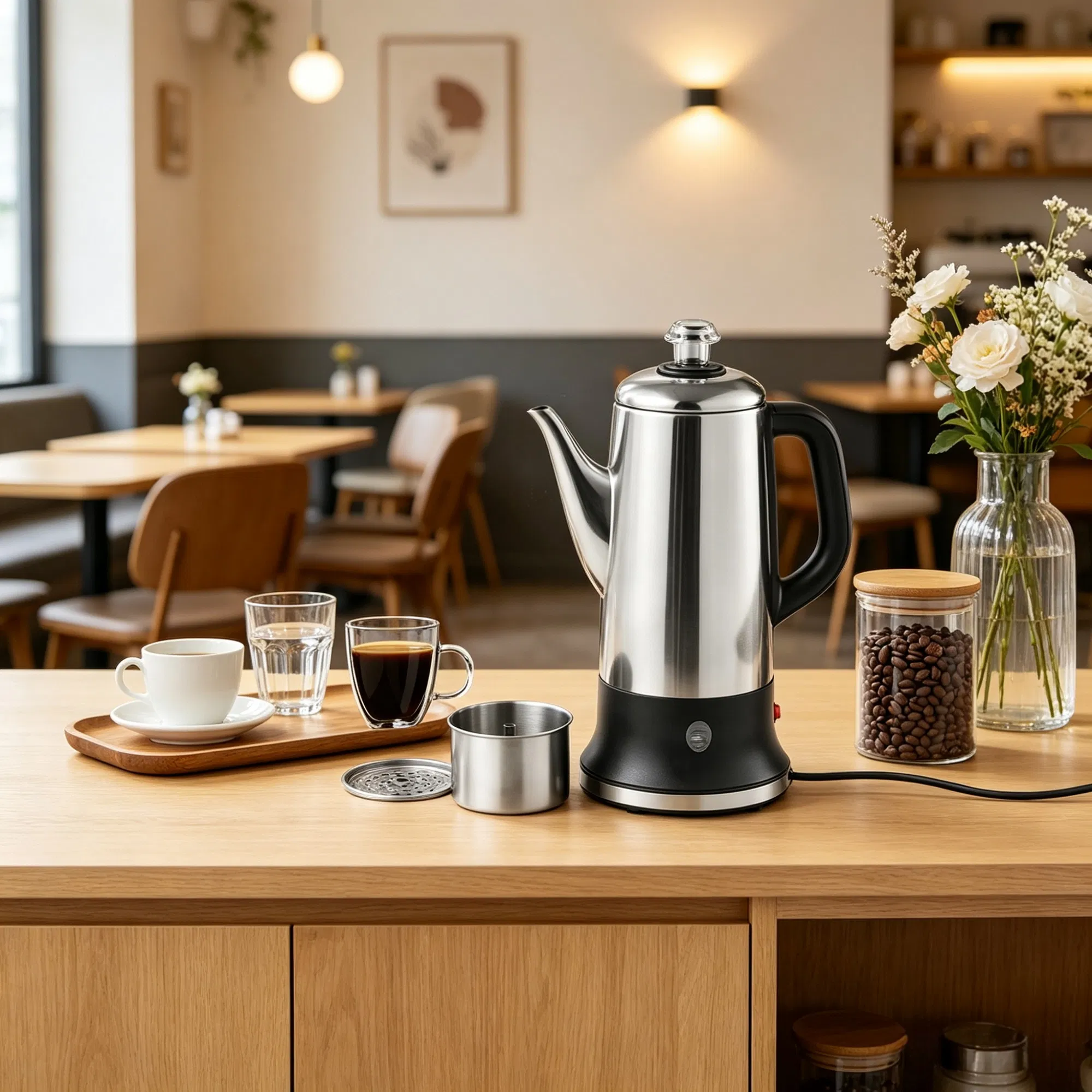 12-Cup Electric Percolator Coffee Pot, Maker with Keep Warm Function & Heat-Resistant Handle, Silver$109.99View on Mallflare
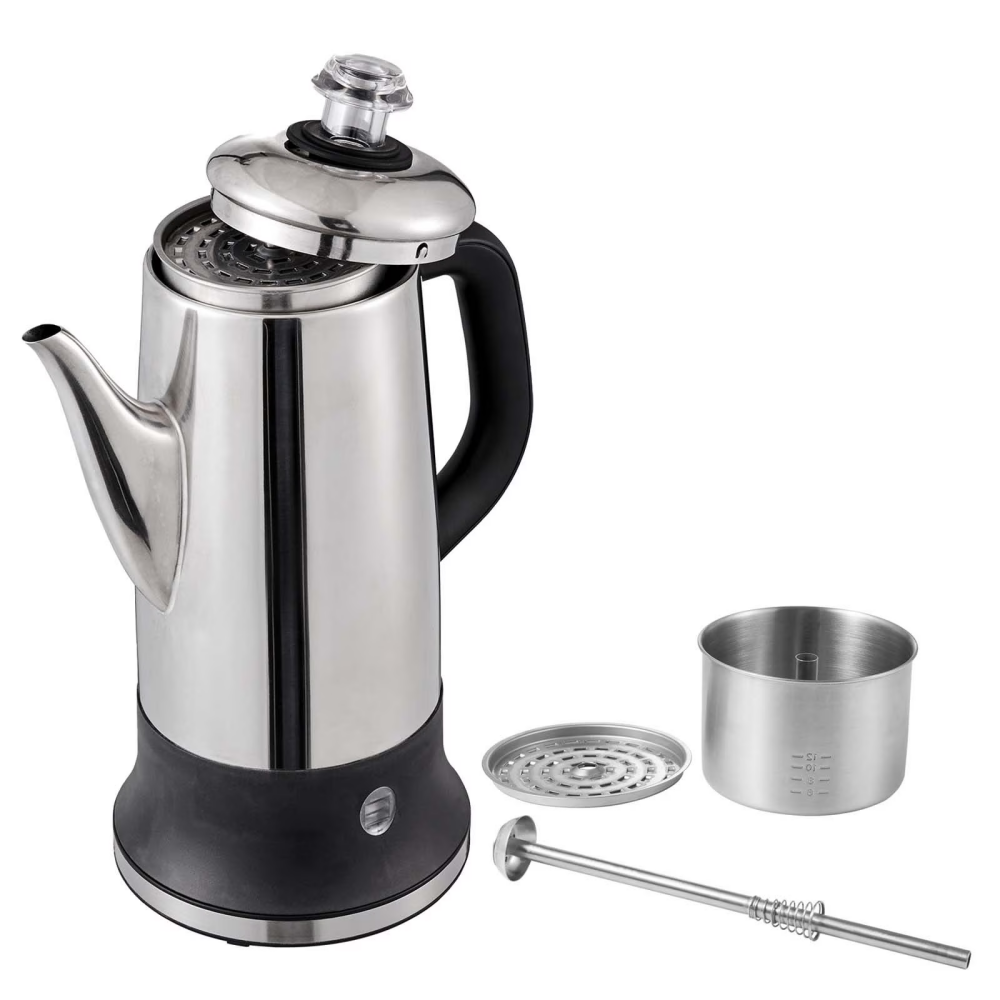 12-Cup Electric Percolator Coffee Pot Stainless Steel Maker Silver$123.99View on Mallflare
Highlights
- 304 stainless steel is the durability benchmark: resists pitting from acidic coffee and chlorinated water, unlike aluminum which oxidizes and can impart metallic off-flavors over time.
- Electric percolators add a keep-warm element and thermostat—typically holding 180–190°F—while stovetop models rely on your burner and a glass knob for perc visibility.
- Capacity maps to cup count at roughly 5–6 oz per 'cup': a 9-cup pot yields about 45–54 oz, a 12-cup about 60–72 oz, so match to your actual mug volume, not nominal cups.
- Handle attachment is the failure point: riveted stainless or heat-resistant bakelite handles outlast glued or spot-welded handles that loosen after repeated thermal cycling.
Best use cases
- Camping and backpacking: pick a lightweight aluminum stovetop percolator (2–9 cup) for packability—skip electric models that need mains power.
- Daily kitchen brewing for a household: choose a 12-cup 304 stainless electric percolator with keep-warm and a heat-resistant handle; skip thin aluminum pots that pit.
- Large-batch entertaining or office: a 12-cup electric percolator with easy-pour spout and keep-warm suits continuous serving; skip 4-cup stovetop pots that require rebrewing.
- Replacing a broken carafe on a drip machine: match the exact bowl diameter and height to your model's warming plate; a generic pot will not seat or pour correctly—skip universal-fit guesses.
Buying tips
- Size by actual yield: multiply nominal cups by 5 oz; if you drink 16-oz mugs, a 12-cup pot fills only about 4 mugs—size up or brew twice.
- Choose 304 stainless over aluminum for anything used more than weekly; aluminum is acceptable only for occasional camp use where weight matters.
- For electric percolators, confirm the thermostat keeps coffee at 180–190°F—below 180°F risks sour, under-extracted brew and above 200°F scorches.
- Check handle and knob materials: heat-resistant bakelite or riveted stainless handles prevent burns; glass percolator knobs should be thick and seated with a gasket.
Specs
| Body Material | 304 stainless vs aluminum |
|---|---|
| Heat Source | Stovetop / electric / induction-ready |
| Capacity | 2–12 cups (5–6 oz per cup) |
| Handle Type | Riveted stainless / bakelite |
Related searches
What to check before buying
- Measure your burner or warming plate diameter and the pot's base—stovetop percolators need a flat base that sits stable on gas, electric coil, or induction (only magnetic stainless works on induction).
- Confirm your stove type: aluminum and non-magnetic stainless will not work on induction; choose magnetic 304 stainless or use gas/electric coil.
- For electric models, verify voltage and plug standard match your region (120V US vs 230V EU) and that the cord reaches your outlet without an extension.
- For replacement carafes, measure the old pot's height, base diameter, and spout position before ordering—drip machines are model-specific and generic pots leak or fail to trip the brew valve.
FAQ
Data sources: eBay / Amazon listings and product attribute feeds. Updated Nov 27, 2026.
Some links on this page are affiliate links. If you buy after clicking one, we may earn a commission at no extra cost to you. This does not change which products appear here or their order. Affiliate disclosure.