
Photos from current listings. Actual item, color, and included accessories may vary.
Commercial Espresso Machine With Grinder Buying Guide
A commercial espresso machine with grinder is a matched pair of high-duty brewing and grinding equipment sized for cafes, offices, and high-volume home bars. The primary trade-off is thermal stability and duty cycle versus electrical infrastructure: single-boiler or heat-exchanger units cycle slowly under back-to-back shots, while dual-boiler and multi-group machines hold brew temperature but demand dedicated circuits and plumbing. The decision rule is simple: match group count and boiler architecture to your peak hourly shot volume, then pair a stepless burr grinder rated for that same throughput — never undersize the grinder to save on the machine.
Median $219.00 · Pre-owned listings
Key takeaways
- Boiler architecture dictates recovery: dual-boiler machines brew and steam simultaneously, heat-exchanger units share one boiler with a brew circuit, and single-boiler units force a steam-to-brew purge cycle.
- Grinder burr type and diameter set shot consistency: flat 64–83 mm burrs give high clarity and speed for medium roasts, while 68–83 mm conical burrs suit darker roasts and single-dosing workflows.
- Group count maps to volume: a 1-group machine suits low-volume bars and offices, 2-group handles standard cafe peaks, and 3-group is reserved for drive-thru or high-traffic counters.
At a glance
- Category
- Coffee Makers & Espresso
- Last updated
- Nov 27, 2026
Current offers
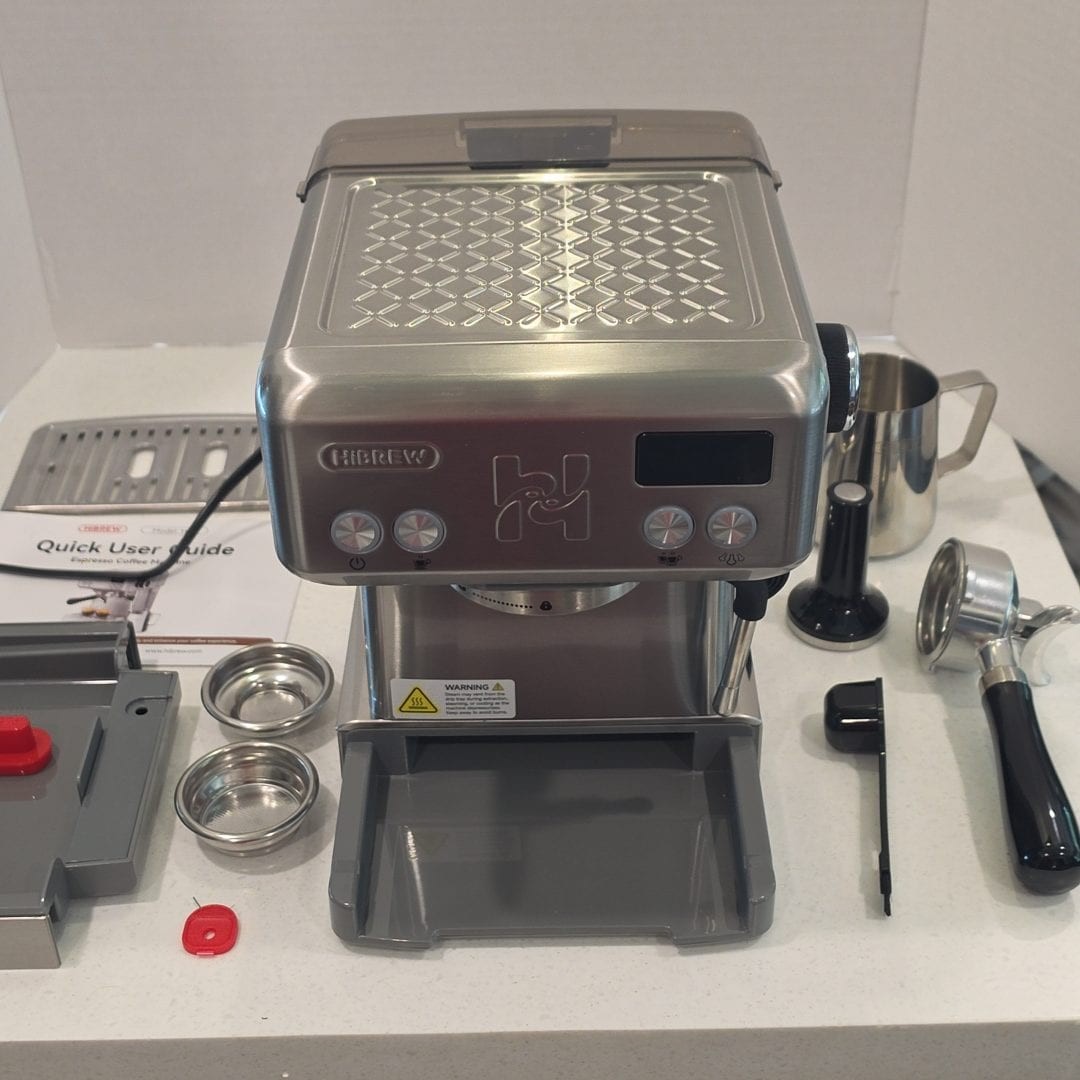 HIBREW H10 Espresso Machine 58mm Commercial Group Head Stainless Steel$147.00View on eBay
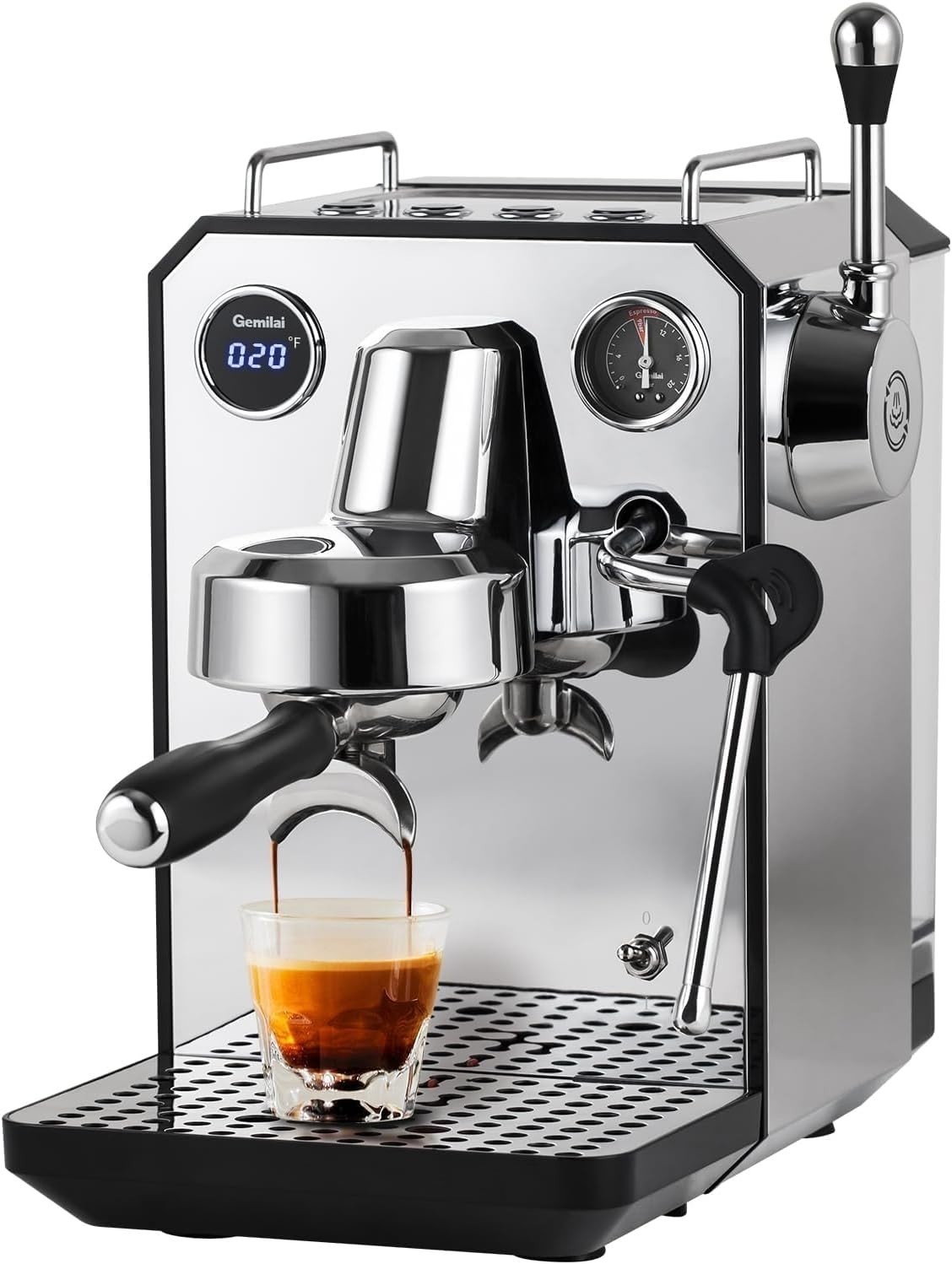 Gemilai Owl G3006 Espresso Machine 58Mm Commercial Group Head & PID Temp Control$219.00Open box · Last checked Nov 23, 2026View on eBay
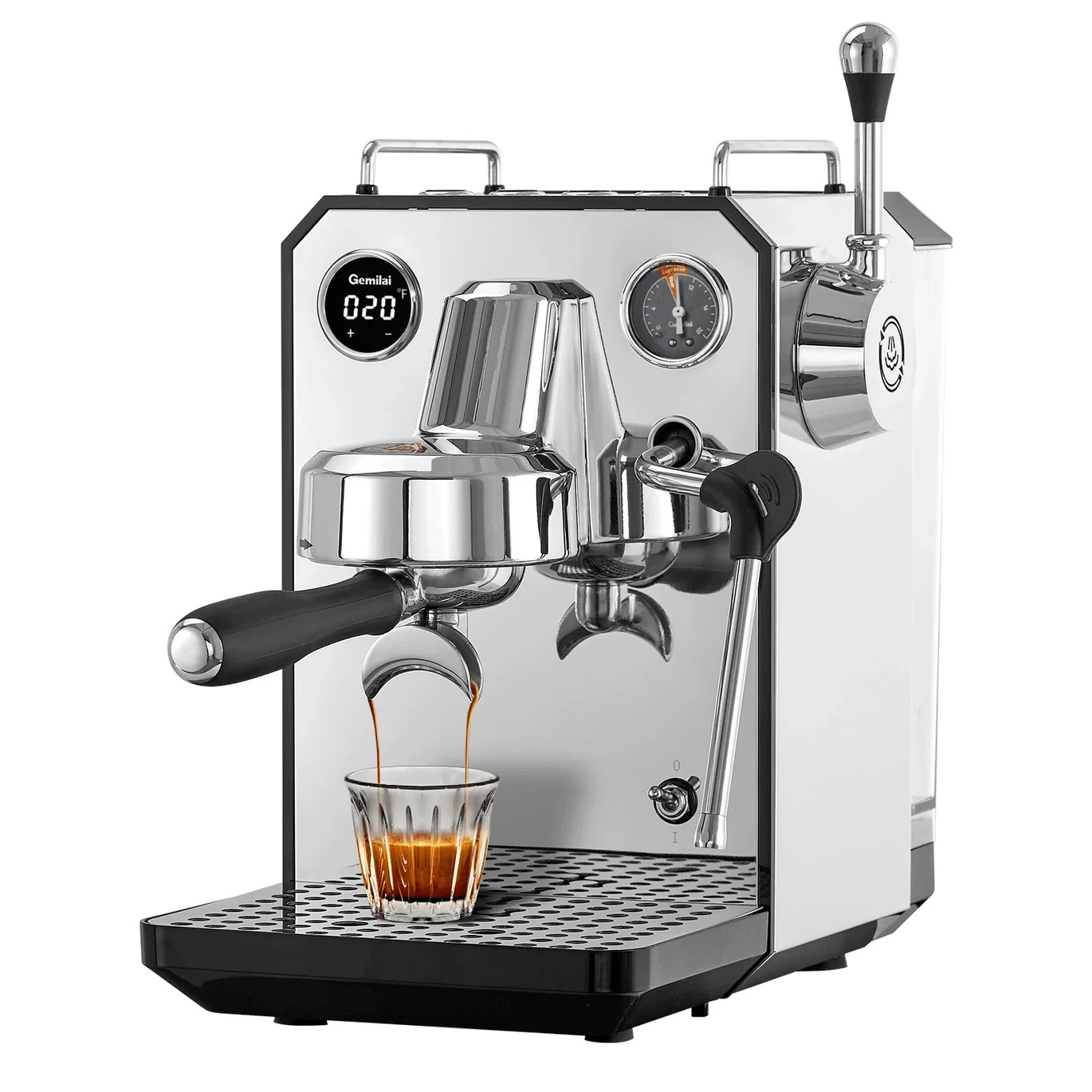 Gemilai Owl G3006 Espresso Machine 58Mm Commercial Group Head & PID Temp Control$229.00Open box · Last checked Nov 21, 2026View on eBay
Highlights
- Boiler architecture dictates recovery: dual-boiler machines brew and steam simultaneously, heat-exchanger units share one boiler with a brew circuit, and single-boiler units force a steam-to-brew purge cycle.
- Grinder burr type and diameter set shot consistency: flat 64–83 mm burrs give high clarity and speed for medium roasts, while 68–83 mm conical burrs suit darker roasts and single-dosing workflows.
- Group count maps to volume: a 1-group machine suits low-volume bars and offices, 2-group handles standard cafe peaks, and 3-group is reserved for drive-thru or high-traffic counters.
- Voltage and plumbing standards differ by market: 220–240 V units typically need a dedicated 16–32 A circuit, while rotary-pump plumbed models require 3/8-inch water supply and a pressure regulator set near 2–3 bar.
Best use cases
- Best fit: a cafe pulling 100–300 shots daily should choose a 2-group dual-boiler machine with rotary pump, plumbed water, and a 64–83 mm flat-burr commercial grinder — skip prosumer single-boiler units that cannot recover during a rush.
- Best fit: an office or low-volume bar under 50 drinks daily can run a 1-group heat-exchanger machine with a 64 mm flat-burr grinder on a dedicated 220 V circuit — skip 3-group machines that idle cold and waste energy.
- Wrong fit: a home kitchen with only 120 V/15 A outlets and no drain line should not buy a plumbed 2-group commercial rig — a reservoir-fed prosumer dual-boiler with a 64 mm grinder is the correct tier.
- Wrong fit: buying a machine with a built-in grinder to save counter space — integrated grinders are usually smaller burr sets with poor repeatability; a separate commercial grinder is the decisive upgrade.
Buying tips
- Size the grinder first: a commercial grinder should produce a 18–20 g dose in under 4 seconds and hold zero retention under 1 g; if the burr set is below 64 mm flat or 68 mm conical, it will bottleneck a 2-group machine.
- Match power to supply: confirm the machine's rated amperage — 1-group units often pull 10–16 A at 220–240 V, 2-group units 16–32 A; a 120 V/15 A circuit cannot support simultaneous brew and steam on commercial boilers.
- Check boiler capacity against recovery: brew boilers of 1.5–2 L suit low volume, 2–3.5 L suit 2-group cafe use, and 3.5 L+ steam boilers are needed for continuous milk steaming on 3-group machines.
- Plan water treatment: commercial machines require softened, filtered water at 0–3 grains of hardness and 2–3 bar inlet pressure; untreated hard water scales heat exchangers and voids most warranties.
Specs
| Boiler Type | Dual boiler / HX / Single |
|---|---|
| Group Count | 1 / 2 / 3 groups |
| Grinder Burrs | Flat 64-83mm / Conical 68-83mm |
| Power Supply | 120V 15A vs 220-240V 16-32A |
Related searches
What to check before buying
- Measure counter depth and overhead clearance: 2-group machines often need 55–70 cm depth and 50–60 cm height, plus top clearance for bean hopper removal — confirm the grinder fits beside or under the machine.
- Verify electrical service: a dedicated 220–240 V circuit with the correct amperage and plug type (often NEMA 6-20 or 6-30, or local equivalent) must exist at the install point — a shared circuit trips under simultaneous brew and steam.
- Confirm water supply and drain: plumbed models need a 3/8-inch supply line with shutoff valve, pressure regulator, and a drain or drip tray capacity rated for backflushing volume.
- Check floor and ventilation: commercial machines radiate significant heat and weigh 30–70 kg; ensure a level, load-rated counter and 10–15 cm rear ventilation gap for the grinder motor and machine electronics.
FAQ
Data sources: eBay / Amazon listings and product attribute feeds. Updated Nov 27, 2026.
Some links on this page are affiliate links. If you buy after clicking one, we may earn a commission at no extra cost to you. This does not change which products appear here or their order. Affiliate disclosure.